
Steady Heat for Peoria County's Long Winters.
Elmwood winters push well below freezing for months at a time. Find the right gas fireplace or insert for your home, and get matched with a trusted local dealer.
Every Project Starts From One of These Five Situations
Reliable warmth without tending a fire.
Elmwood sits in Peoria County at 631 feet in central Illinois's climate zone 5A, where winter lows average 14°F and the area logs a winter heating season about as long and cold as Madison, Wisconsin's. For a village of just over 2,100 people spread across mostly farmland and older homes, that means months of real heating demand, not just an occasional cold snap.
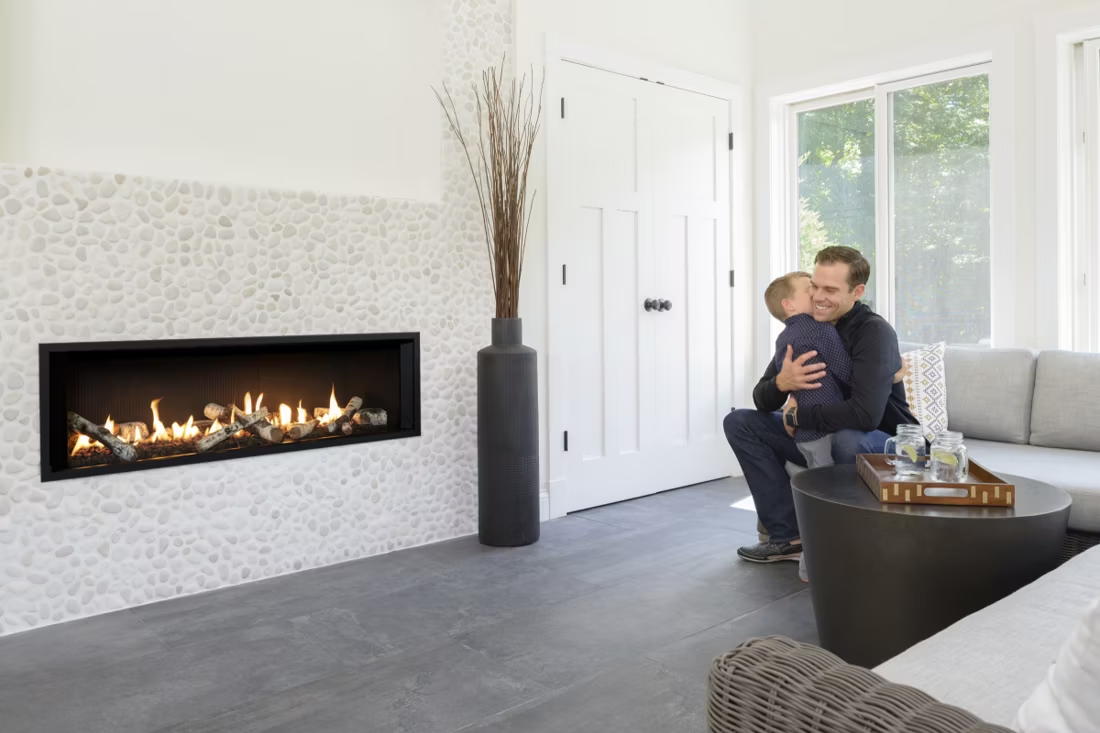
Many homes around Elmwood were built well before municipal gas mains reached this far into rural Peoria County, so propane delivered by tank remains the standard fuel for a lot of households outside town, while in-town homes are more likely to have access to piped natural gas. Either way, a modern direct-vent gas fireplace or insert gives you push-button heat that doesn't depend on splitting or hauling wood—a real advantage on the farms and acreages that surround Elmwood, where AMEREN ILLINOIS supplies electricity but a fireplace or insert running on gas or propane keeps working even when the power doesn't.
Three steps. No salesperson until you're ready.
Tell us about your project
Your zip code, your situation, and the fuel you're leaning toward—or let the answers point you to one.
See what's actually available
The brands dealers within 100 miles genuinely carry—real options, never a catalog mirage.
Get your dealer & Project Guide
A trusted local dealer, plus the free Project Guide & Parts List that names every component of the job.
Frequently Asked Questions
How much does a gas fireplace installation cost in Elmwood?
Most gas fireplace and insert installations in and around Elmwood run somewhere between $4,000 and $10,000, depending on the unit, whether you're on propane or natural gas, and how much venting or gas line work is involved. A direct-vent insert going into an existing masonry fireplace with gas already run to that wall sits toward the lower end. A new propane tank, a longer gas line across a rural lot, or venting through a wall where none exists pushes costs toward the higher end. A local dealer can give you a firm number after seeing your home.
Can I convert an old wood-burning fireplace to gas?
Yes, and it's a common project on the older farmhouses around Elmwood, many of which still have a masonry fireplace originally built to burn the oak, hickory, or walnut that grows on the surrounding land. A gas insert slides into that existing opening, uses a stainless liner run up the current chimney, and gets you real heat output without hauling or splitting wood. Whether you're on propane or piped gas will change the fittings your installer uses, but the conversion itself is straightforward for a licensed gas-fitter.
Is natural gas available in Elmwood, or is propane more common?
It depends on where you are. In-town homes in Elmwood are more likely to have access to piped natural gas, while properties out in the surrounding Peoria County farmland typically rely on propane delivered and stored in a tank on the property. If you're not sure which you have, check your existing water heater or furnace fuel—most homes use the same fuel for a new fireplace as they already use for other appliances. A local hearth dealer can also confirm what's feasible at your address before you buy anything.
Will a gas fireplace still work if the power goes out?
Most will, which matters here—ice storms and high winds move through central Illinois most winters and can knock out power for hours or longer. Units with intermittent pilot ignition (IPI) run on a small battery backup that kicks in automatically, so the fireplace lights and runs even without electricity. A few brands, like Valor, go a step further and generate their own power off the pilot flame's thermocouple, so there's no battery to remember at all. Ask your dealer specifically about the ignition system on any model you're considering.
Fireplace, insert, or stove—which fits my home?
A gas fireplace is a fully built-in unit, usually chosen for new construction or a remodel where there's no existing opening to work with. A gas insert is built to slide into an existing masonry fireplace—the more common route for Elmwood's older farmhouses that already have a chimney. A gas stove is a freestanding cabinet unit, closer in footprint to a wood stove, and works well in a room without any existing fireplace opening. Most homeowners here with an old wood-burning fireplace end up choosing an insert.
Do I need a permit for a gas fireplace in Elmwood?
Yes—expect to need both a building permit and sign-off on the gas line work, whether that goes through the Village of Elmwood or Peoria County depending on your address. A licensed gas-fitter has to handle the actual gas connection regardless of jurisdiction. Most hearth dealers who install in this area are used to pulling these permits themselves as part of the job, so it's worth asking upfront whether that's included in your quote.
What's the difference between vented and vent-free gas units?
Vented (direct-vent) units draw combustion air from outside and exhaust the byproducts back outside through sealed pipe—they're the standard choice and the one most installers here recommend without reservation. Vent-free units burn without any outside venting at all, releasing some moisture and combustion byproducts into the room, and they're legal in Illinois with proper room-sizing and an oxygen depletion sensor, but they're a harder sell in a tightly sealed, well-insulated older farmhouse where indoor air quality is already a consideration. For most Elmwood homes, a direct-vent fireplace or insert is the better fit.
How often does a gas fireplace need to be serviced?
Plan on an annual inspection, ideally before the heating season starts. A technician checks the burner, pilot assembly, gas connections, and venting, and cleans the glass and interior—usually $150 to $225 for the visit. It's a quick job compared to a wood chimney sweep, but skipping it is how small issues, like a dirty pilot or a failing thermocouple, turn into a fireplace that won't light on the coldest night of the year.
Should I go with gas instead of a wood-burning fireplace?
For most homes in and around Elmwood today, yes. Central Illinois has plenty of oak, hickory, walnut, and maple in the surrounding farm woodlots, and older homes here often still have a wood-burning fireplace as a legacy feature—but new wood stove installations have become uncommon locally, since there's little in the way of dedicated firewood infrastructure or public cutting land the way there is out West, and most homeowners here prioritize the convenience of flipping a switch over splitting and stacking cordwood. Gas delivers consistent heat with none of the ash or chimney maintenance, which is why it's become the default choice for anyone upgrading or replacing an old fireplace in this area.
Is my gas fireplace wasting gas?
If it was installed more than 15 years ago, probably. Older gas fireplaces keep a standing pilot light burning all the time, and that little flame can cost a couple hundred dollars a year. Newer models use pilot-on-demand ignition—the pilot lights only when you use the fireplace and goes out when you turn it off.
Why is a fireplace insert so efficient?
An insert does two things: it seals the chimney completely, so you stop losing air you already paid to heat, and it radiates warmth into the room through the firebox and glass. Most add a heat-exchange fan that pulls cool room air underneath, wraps it around the hot firebox, and pushes it back out warm. Your home is more efficient before you've even lit the first fire.
Does a fireplace add value to my home?
On average, a fireplace adds back to the home about the same amount you spent installing it. Add the monthly savings from heating the rooms you actually use instead of the whole house—often hundreds of dollars a year—and the value case is strong before you even count what a fire does for how your family uses the room.
Can a fireplace actually lower my heating bill?
Yes—by creating a comfort zone. A furnace heats every square foot of the house just to warm the one room you're in; a gas fireplace on low burns roughly a sixth of the gas a typical furnace does. Set the furnace around 55–60 degrees as a baseline, then heat the rooms your family actually uses. Families who heat this way commonly save $20–$60 a month.
Nearby Dealers
Hearth shops serving Elmwood and the surrounding area. Every listing shows whether it is a WhyFire partner, a dealer we have verified as authorized for the brands we recommend, or a local business carrying hearth products. No manufacturer pays for placement. How we verify dealers →
Kbl Design Center
Hampton Distributing
Trouble-Free Plumbing Heating & Cooling Inc.
Find your gas fireplace in Elmwood.
Tell us about your home and we'll put together a free Project Guide & Parts List—the right gas fireplace or insert, the exact parts including the vent kit, and a trusted local dealer near Elmwood to install it.
Find Your Fireplace →