
Keep Your Family Warm and Safe—No Matter What
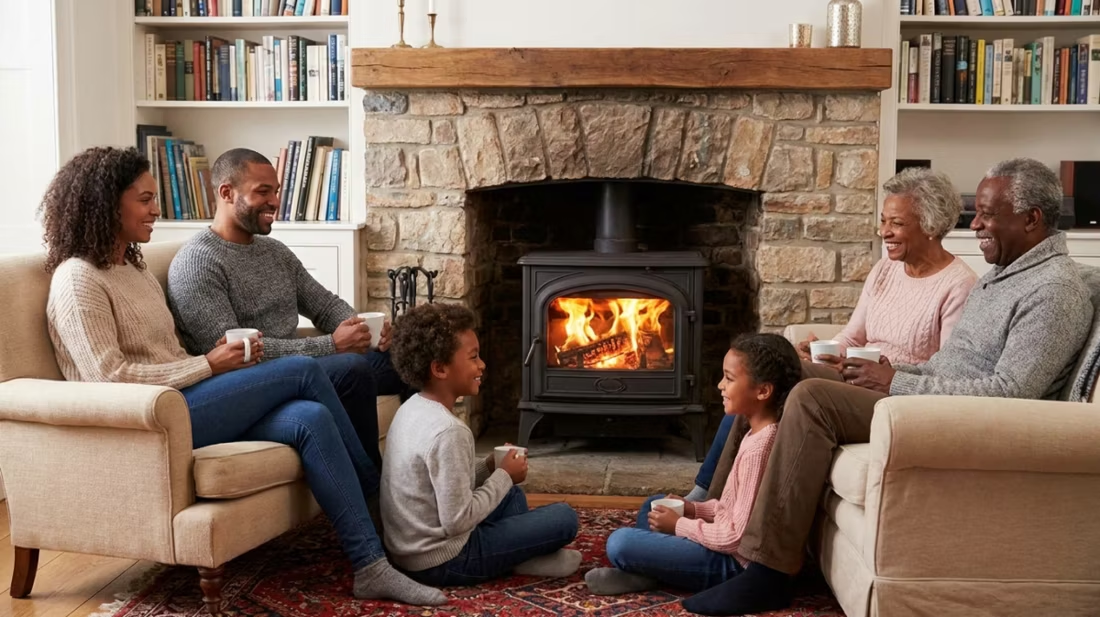
On a river peninsula reached by bridge and ferry, with oak, hickory, and walnut woodlots on nearly every family farm, wood heat has always made sense here. Find the right stove or insert and connect with a trusted local dealer.
Every Project Starts From One of These Five Situations
The county's timber and its winters go hand in hand.
Calhoun County is the least populated county in Illinois, sitting on a narrow peninsula wedged between the Illinois River and the Mississippi River. There's one bridge, at Hardin, and the ferries at Brussels and Kampsville still carry traffic on and off the peninsula. That geography shapes how people here heat their homes—climate zone 5A brings a real humid-continental winter, and a lot of the housing stock is older farmhouses on family land, many sitting on their own woodlot of oak, hickory, walnut, or maple. Wood heat isn't a lifestyle accessory in Calhoun County; it's what a lot of households have always done, and the timber to do it is often standing on the same property as the house.
Unlike counties near St. Louis or Chicago that fall under winter air-quality non-attainment rules, Calhoun County has no listed air quality concerns, so there are no curtailment days or burn-ban seasons to plan around here. Combined with dense hardwood species like oak and hickory—both well above the BTU output of softer woods—a properly sized wood stove or insert can carry real heat load through a Calhoun County winter, whether that's a bottomland home near Batchtown or a bluff-top place above Kampsville catching more wind. A lot of families also aren't on natural gas service at all, which makes wood (often supplemented with propane) the practical backbone of home heating rather than a backup plan.
Three steps. No salesperson until you're ready.
Tell us about your project
Your zip code, your situation, and the fuel you're leaning toward—or let the answers point you to one.
See what's actually available
The brands dealers within 100 miles genuinely carry—real options, never a catalog mirage.
Get your dealer & Project Guide
A trusted local dealer, plus the free Project Guide & Parts List that names every component of the job.
Frequently Asked Questions
How much does a wood stove installation cost in Calhoun County?
Expect a typical wood stove installation in Calhoun County to run somewhere between $3,500 and $8,500, depending on the stove itself, whether you're venting through an existing masonry chimney or need new Class A pipe run through a roof, and any hearth pad work required for clearance-to-combustibles code. Older farmhouses without an existing chimney—common on the peninsula's bottomland properties—tend to land toward the higher end once full venting is factored in. Because dealers serving Calhoun County are based in nearby towns like Jerseyville or Alton, ask upfront whether a travel charge applies for the install.
What size wood stove do I need for my Calhoun County home?
It depends on square footage, insulation, and how exposed the site is. A lot of Calhoun County housing is older farm construction—drafty by modern standards—which pushes sizing up compared to a tightly built new home of the same square footage. Homes on exposed bluff tops above the river valleys, where wind load is higher, often need a step up in stove capacity compared to a similarly sized home tucked into a river-bottom hollow near Brussels or Golden Eagle. A small stove (under 1,000 sq ft) suits a single room or cabin; medium stoves (1,000–2,000 sq ft) cover most farmhouse living areas; larger stoves handle a well-insulated whole home. A local dealer can size this correctly with an in-home visit—oversizing leads to smoldering and creosote, undersizing leaves you cold on the worst nights.
Where can I find a certified wood stove installer near Calhoun County?
Look for NFI (National Fireplace Institute) or CSIA (Chimney Safety Institute of America) certification—both indicate real training in wood-burning appliance venting and clearances, not just general contracting experience. Because Calhoun County's population is small and spread across towns like Hardin, Kampsville, and Batchtown, most certified dealers are based just off the peninsula in Jerseyville, Alton, or Godfrey and travel in for installs—factor in a bit of drive time and possibly a small travel fee, especially for homes reached only by the Brussels or Kampsville ferry. Avoid a general handyman install on a wood-burning unit; improper clearances and venting are the leading cause of chimney fires.
What's the difference between a wood stove and a wood insert?
A wood stove is a freestanding unit on its own hearth pad, vented through a chimney, and can go almost anywhere with the right clearances. A wood insert slides into an existing masonry fireplace and turns a drafty, inefficient opening into a real heat source using the chimney that's already there. Calhoun County has plenty of older homes with existing masonry fireplaces—for those, an insert is usually the more cost-effective upgrade. Newer construction or additions without an existing fireplace are typically better matched to a freestanding stove.
Do I need a permit to install a wood stove in Calhoun County?
Yes—a new wood stove or insert installation generally requires a building permit through Calhoun County's building and zoning office, covering clearance-to-combustibles and venting code compliance. Most established hearth dealers handle the permit paperwork as part of the installation, so you typically aren't filing it yourself. On the burning side, Calhoun County has no listed air quality non-attainment status and no seasonal curtailment program, so unlike some Illinois counties near metro non-attainment zones, there are no winter burn-ban days to track here.
What's the best wood stove for Calhoun County's climate?
Zone 5A winters here call for a stove that can hold a fire overnight without constant reloading, especially on exposed bluff-top properties. Catalytic stoves from brands like Blaze King are built for exactly that—some hold a burn 20+ hours on a load, which matters when you're heating an older farmhouse through a stretch of sub-freezing nights. Given the abundance of dense local hardwood—oak, hickory, and walnut all burn hot and long compared to softer species—a mid-to-large stove paired with well-seasoned local wood covers most Calhoun County homes efficiently. A local dealer can match stove size to your specific square footage and construction.
How often should my chimney be inspected in Calhoun County?
The CSIA recommends an annual inspection for any wood-burning appliance in regular use, and that's a good baseline for Calhoun County—ideally scheduled in late summer before the first cold snap. It's worth taking seriously here in particular: the county's rural layout, with a single bridge at Hardin and ferry crossings at Brussels and Kampsville, means emergency response can take longer than in a denser suburb. Heavy wood-burning households—those relying on wood as a primary heat source through a full winter—sometimes need a mid-season cleaning if creosote builds up faster than expected.
Where does firewood come from in Calhoun County?
A large share of Calhoun County households cut their own firewood from family land or a farm woodlot—oak, hickory, walnut, and maple are all common on the peninsula's timbered acreage, and none of it requires a Forest Service cutting permit the way national forest land elsewhere would, since it's private ground. For homes without their own woodlot, a handful of local sellers and neighboring operations around Jerseyville and Hardin sell seasoned cordwood, typically running $180 to $300 per cord depending on species and how well seasoned it is. Oak and hickory command a premium for their higher BTU output and longer burn time compared to softer or greener wood.
Wood stove vs. pellet stove—which is right for Calhoun County?
Wood stoves run on cordwood, work with zero electricity, and pair naturally with the self-cut firewood culture already common on Calhoun County farms—a real advantage given how isolated the peninsula can get during winter storms if power lines go down and the bridge or ferries are affected. Pellet stoves, using bagged fuel from regional suppliers like Indeck Energy Services, Lignetics, or Somerset Pellet Fuel, are more convenient day-to-day—load the hopper, set the thermostat, less ash—but they need electricity to run the auger and blower, so they aren't a fallback during an outage. For most Calhoun County homes, especially those relying on wood as backup heat for exactly that kind of scenario, a wood stove remains the more resilient choice; pellet stoves suit households prioritizing convenience with reliable grid power.
What's the difference between an insert and a zero-clearance fireplace?
An insert is a fireplace that slides into a pre-existing wood-burning fireplace—if you don't have one, there's nothing to insert it into. A zero-clearance fireplace is built into a framed wall, which makes it the answer for remodels and new construction. Simple test: existing masonry fireplace means insert; blank or framed wall means zero-clearance.
Why is my open fireplace making my house colder?
Open fireplaces suck—literally. As the fire burns, it consumes air your furnace already paid to heat and pulls it out through the chimney, so the house is actually colder after the fire goes out than before you lit it. An insert fixes this: it seals the chimney, puts fixed glass across the front, and turns that hole in your house into a real heat source.
How much should I budget for a fireplace?
For an average home—covering the fireplace, the vent pipe, and basic installation—a budget between $3,900 and $5,500 gives you a lot of options across wood, gas, and pellet. By the time you add finish work, gas line, and electrical, the average complete installation lands between $5,000 and $12,000 all-in. In a remodel or new build, a good rule is to put about 2.5% of the total project cost toward the fireplace.
Can a fireplace actually lower my heating bill?
Yes—by creating a comfort zone. A furnace heats every square foot of the house just to warm the one room you're in; a gas fireplace on low burns roughly a sixth of the gas a typical furnace does. Set the furnace around 55–60 degrees as a baseline, then heat the rooms your family actually uses. Families who heat this way commonly save $20–$60 a month.
Find your wood fireplace in Calhoun County.
Tell us a bit about your home and we'll match you with the right wood stove or insert, plus a free Project Guide & Parts List—the exact parts, including the vent kit, and a trusted local dealer to install it.
Find Your Fireplace →