
Find your electric fireplace in Calhoun County.
Simple, no-venting heat and ambiance for homes on the Calhoun peninsula between the Mississippi and Illinois Rivers. Find the right unit and connect with a trusted local dealer.
Every Project Starts From One of These Five Situations
No chimney, no gas line, no permit headaches.
Calhoun County is Illinois' only county with no rail line and no direct highway bridge to the mainland outside of Hardin and the Brussels ferry—a rural peninsula of orchards and river towns bounded by the Mississippi on one side and the Illinois River on the other. With just over 1,500 residents spread across small communities like Hardin, Kampsville, and Batchtown, most homes here are older farmhouses, river cottages, and single-story ranches that were never built with a masonry chimney or a nearby gas main. Winters in this 5A climate zone bring the kind of steady cold that Madison, WI or Buffalo, NY residents would recognize—not brutal, but real, sustained heating-season weather that runs from late fall through early spring.
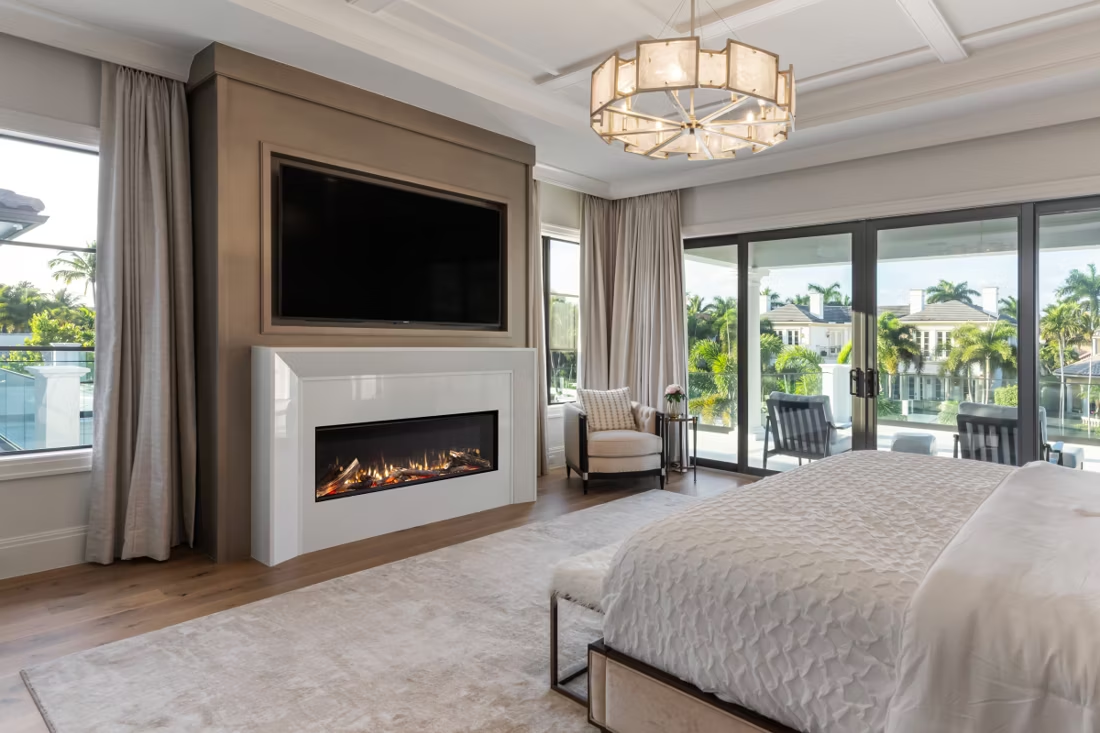
For a lot of Calhoun County homeowners, electric fireplaces solve a practical problem: you get supplemental heat and real flame-look ambiance in a bedroom, den, or seasonal river cabin without running gas line across the peninsula's limited utility infrastructure or building a chimney onto a home that was never designed for one. A zero-clearance electric insert or wall unit plugs into a standard outlet, mounts almost anywhere, and can be up and running the same day it's installed—a meaningful advantage for the county's many part-time and vacation properties along the rivers.
Three steps. No salesperson until you're ready.
Tell us about your project
Your zip code, your situation, and the fuel you're leaning toward—or let the answers point you to one.
See what's actually available
The brands dealers within 100 miles genuinely carry—real options, never a catalog mirage.
Get your dealer & Project Guide
A trusted local dealer, plus the free Project Guide & Parts List that names every component of the job.
Frequently Asked Questions
How much does an electric fireplace installation cost in Calhoun County?
Most electric fireplace installations in Calhoun County run $400 to $1,200, and that range covers the vast majority of projects—a wall-mounted unit hung above a stud finder's mark, a built-in insert set into an existing mantel surround, or a freestanding stove-style unit that just needs a standard outlet nearby. There's no chimney work, no gas line, and no combustion venting to price in, which is exactly why electric tends to be the lowest-cost option of the four fuel types for county homeowners. If a dedicated 20-amp circuit needs to be run for a larger built-in unit, expect a modest add for electrician time, especially for older farmhouses in Hardin or Kampsville with dated panels.
Will an electric fireplace actually heat my room, or is it just for looks?
Most electric fireplaces sold today include a real heating element—typically a 1,500-watt unit capable of warming a single room, roughly 400 to 1,000 square feet depending on ceiling height and insulation. That's genuinely useful supplemental heat for a den, bedroom, or sunroom in a Calhoun County home during the shoulder seasons and moderately cold nights typical of this 5A zone. It is not a substitute for a furnace on the coldest stretches of winter, and most units let you run the flame visual with the heater switched off—useful for river cottages used mainly in warmer months where ambiance matters more than BTUs.
Do I need a permit to install an electric fireplace in Calhoun County?
Generally, no. Because electric fireplaces don't involve combustion, venting, or gas lines, most plug-in and even most hardwired wall units fall outside the building permit requirements that apply to wood and gas installations elsewhere in the county. If you're having an electrician add a new dedicated circuit or breaker for a larger built-in unit, that electrical work itself may require a permit and inspection depending on the scope—your installer or electrician can tell you if your specific project crosses that line. This is one of the reasons electric fireplaces are popular for Calhoun County's seasonal river properties, where owners want a quick, code-simple upgrade without navigating construction timelines from a distance.
What's the difference between an electric insert, a wall-mounted unit, and a freestanding electric stove?
An electric insert is built to slide into an existing fireplace opening—a common retrofit for the older farmhouses around Hardin and Brussels that have a masonry firebox but no working chimney draft anymore. A wall-mounted unit hangs on the wall like a flat-screen TV and works well in newer construction or remodeled rooms with no existing fireplace. A freestanding electric stove sits on the floor, resembles a traditional wood stove, and is popular for cabin-style river properties where a rustic look matters. All three plug into a standard outlet or a dedicated circuit and produce the same flame-effect and heat output—the choice comes down to the room and the look you want.
How does electric compare to propane for heating in Calhoun County?
Since Calhoun County has no natural gas mains reaching most of the peninsula, propane is the realistic gas alternative here, and it comes with tank rental or purchase, delivery scheduling, and the ongoing cost of propane itself—which fluctuates and tends to run higher per BTU than electricity for supplemental room heating. Electric fireplaces have no fuel cost beyond your electric bill, no delivery logistics, and no tank to maintain, which matters for the county's many part-time residences where nobody wants to manage a propane account for a property they visit a few weekends a month. Propane still wins for whole-home heating capacity in a full gas fireplace, but for supplemental or secondary heat in a den or bedroom, electric is typically the simpler and cheaper path.
Can I install an electric fireplace myself, or should I hire someone?
Plug-in electric fireplaces and many wall-mounted units are genuinely DIY-friendly—mounting brackets and a standard 120V outlet are all that's required, and plenty of Calhoun County homeowners handle this themselves over a weekend. Where it makes sense to bring in a local dealer or licensed electrician is when you want a hardwired built-in look with no visible cord, need a new dedicated circuit for a larger unit, or are installing into an insert opening where the surround and trim need custom fitting. A local retailer can also make sure you're buying a unit sized correctly for your room—oversized units waste money and undersized ones disappoint.
Are electric fireplaces a good fit for Calhoun County's seasonal and river properties?
Yes—this is actually one of the strongest use cases in the county. Cabins and cottages along the Mississippi and Illinois River bluffs are often occupied intermittently, which makes wood heat impractical (nobody wants to manage a woodpile at a property they visit twice a month) and makes gas line installation hard to justify given the low natural gas availability across the peninsula. An electric fireplace can sit dormant all winter with zero maintenance risk, then switch on instantly the moment you arrive for a weekend—no chimney to inspect, no pilot light to relight, no tank to check.
What size electric fireplace do I need for my Calhoun County home?
For most rooms in the county's older farmhouses and river cottages—bedrooms, dens, and sunrooms in the 200 to 600 square foot range—a standard 1,500-watt insert or wall unit (usually 30 to 50 inches wide) provides both adequate supplemental heat and a good visual proportion for the room. Larger open-concept living areas benefit from a wider unit (50 inches plus) or a linear built-in model, though keep in mind that heat output caps out around 1,500 watts regardless of the unit's width—wider units spread more flame visual but don't necessarily heat a bigger area. A local dealer can walk your specific room dimensions before you buy.
Electric vs. wood—which makes more sense for my Calhoun County home?
Wood remains a strong choice in Calhoun County given the abundant local oak, hickory, walnut, and maple, no air quality restrictions on burning, and genuine backup-heat value during the ice storms that occasionally take down power lines on the peninsula. Electric fireplaces, by contrast, offer zero maintenance, instant on-off convenience, and lower installation cost—but they do require grid power, meaning they won't help during an outage the way a wood stove will. For a primary residence in Hardin or Kampsville where backup heat during a winter power outage matters, wood or a wood/electric combination often makes sense. For a seasonal river cottage or a secondary room where convenience and simplicity matter more than off-grid resilience, electric is usually the better fit.
Can I put a TV above my fireplace?
Yes—with an asterisk. Fireplaces are hot and TVs don't like heat. Either put a mantel between them to deflect rising warmth, or choose a fireplace with heat-management technology that creates a cool zone on the wall above—the wall stays around 125 degrees, barely warm, while the room still gets full heat. If you like clean lines and don't want a mantel, heat management is the answer.
What fireplace styles should I know before shopping?
Four cover most of the market: screen-front traditional (mesh front, open feel, fits craftsman homes), traditional door set (the classic look you grew up with), modern linear (wide, low, the statement piece for entertaining), and clean face contemporary (no trim—your tile or stone runs right to the fire's edge). Walk in knowing those four terms and you're ahead of most buyers.
How much should I budget for a fireplace?
For an average home—covering the fireplace, the vent pipe, and basic installation—a budget between $3,900 and $5,500 gives you a lot of options across wood, gas, and pellet. By the time you add finish work, gas line, and electrical, the average complete installation lands between $5,000 and $12,000 all-in. In a remodel or new build, a good rule is to put about 2.5% of the total project cost toward the fireplace.
Does a fireplace add value to my home?
On average, a fireplace adds back to the home about the same amount you spent installing it. Add the monthly savings from heating the rooms you actually use instead of the whole house—often hundreds of dollars a year—and the value case is strong before you even count what a fire does for how your family uses the room.
Get your free Project Guide & Parts List.
Tell us about your Calhoun County home and we'll match you with a trusted local dealer and send a free Project Guide & Parts List—the right electric fireplace or insert, sized correctly, with the parts you need to get it installed.
Find Your Fireplace →