
Pellet Heat Is Rare in Blue Island—But It's Still Possible.
Blue Island runs on natural gas and Commonwealth Edison electricity, not cordwood or pellet hoppers. For the handful of homeowners who still want a pellet stove, here's an honest look at cost, fit, and how to find a dealer who'll actually install one.
Every Project Starts From One of These Five Situations
Natural gas, not pellets, heats most Blue Island homes.
Blue Island is a dense, fully built-out city of roughly 23,000 people in Cook County, just south of Chicago—a grid of bungalows, foursquares, and older frame houses on lots that leave little room for bulk pellet storage or long exterior venting runs. With winter lows averaging 20°F and 5,699 heating degree days a year, the climate here is genuinely cold, not far off from Madison, Wisconsin, but the housing stock and utility infrastructure point homeowners toward natural gas furnaces and boilers almost by default.
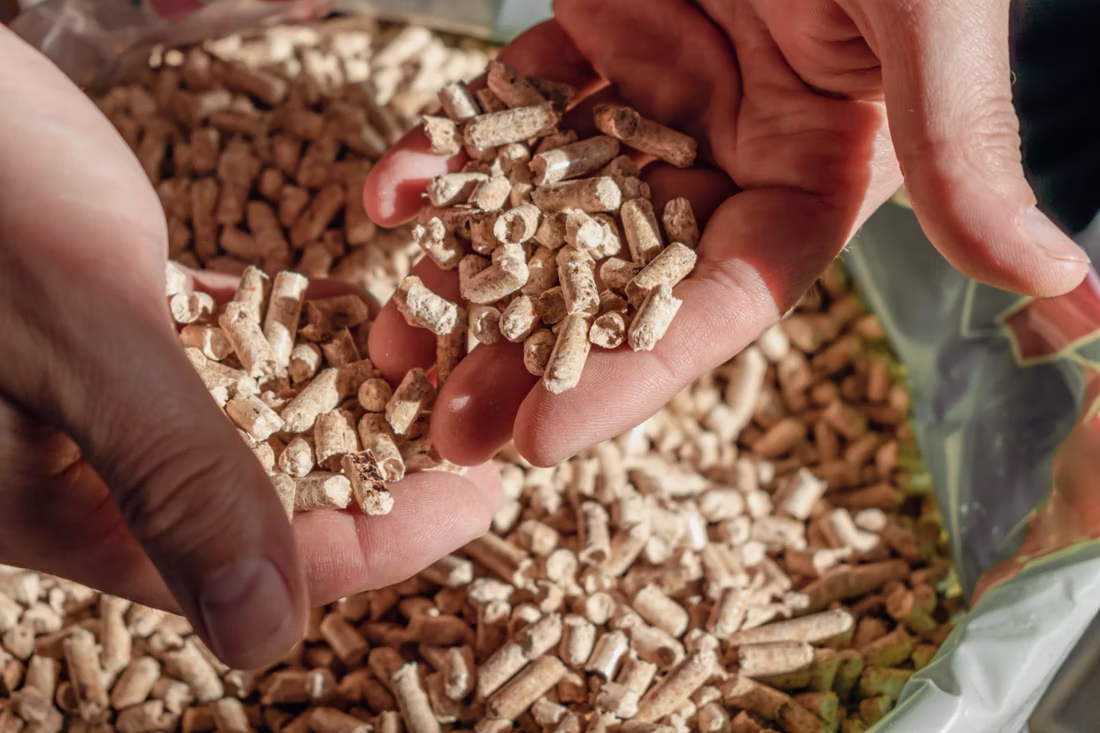
That's why pellet fuel relevance is essentially non-applicable for Blue Island in our data: there's no meaningful local install base, and hearth retailers who stock pellet appliances are scarce this close to the city center. Pellets themselves aren't hard to find—regional suppliers like Indeck Energy Services, Lignetics, and Somerset Pellet Fuel all serve the greater Chicago market—but very few Blue Island homes are actually set up to burn them. The exceptions tend to be finished basements looking for supplemental zone heat or homeowners replacing an old wood stove who want something cleaner and easier to load. If that's you, we can still connect you with a dealer who covers this part of Cook County.
Three steps. No salesperson until you're ready.
Tell us about your project
Your zip code, your situation, and the fuel you're leaning toward—or let the answers point you to one.
See what's actually available
The brands dealers within 100 miles genuinely carry—real options, never a catalog mirage.
Get your dealer & Project Guide
A trusted local dealer, plus the free Project Guide & Parts List that names every component of the job.
Frequently Asked Questions
Are pellet stoves actually available in Blue Island?
They're available, but they're a niche choice here. Blue Island's housing stock and its near-universal access to natural gas mean most local homeowners heat with a gas furnace or boiler, not a pellet appliance. A handful of hearth dealers serving the greater Chicago south suburbs will install a pellet stove or insert in Blue Island, but you won't find the density of pellet-specific retailers you'd see in a more rural, off-natural-gas market. If a pellet stove is genuinely what you want—for a finished basement, a sunroom, or a specific look—it's doable, just less common than gas.
How much does a pellet stove installation cost in Blue Island?
Because installations are infrequent in this specific market, there isn't a well-established local price benchmark the way there is for gas furnace work. Regionally, a freestanding pellet stove with a basic through-wall vent kit typically runs $3,500 to $6,500 installed, while a pellet insert into an existing masonry fireplace tends to land higher, roughly $5,000 to $8,000, once a liner and hearth adjustments are factored in. The real cost driver in Blue Island's older housing stock is usually the venting path—homes without a usable chimney chase need new wall penetrations, and exterior vent termination clearances have to clear tight lot lines.
Where can I buy pellet fuel near Blue Island?
Pellet fuel is easier to find than pellet stoves. Regional producers and distributors—including Indeck Energy Services, Lignetics, and Somerset Pellet Fuel—supply the broader Chicago market, and bags typically show up at hardware and farm supply retailers throughout Cook County during heating season. Expect Midwest-typical pricing, generally in the $5 to $6 per 40-pound-bag range. The bigger challenge isn't sourcing pellets—it's finding a dealer close to Blue Island who installs and services the appliance itself.
Will a pellet stove keep my house warm if the power goes out?
No—and this is the most important thing to understand before buying one. Pellet stoves rely on an electric auger to feed fuel and a blower to circulate heat, so a Commonwealth Edison outage shuts the stove down along with everything else in the house. If backup heat during storm-related outages is your main goal, a wood-burning appliance or a battery-backed gas unit is a better fit than pellet. Pellet stoves are best thought of as clean, low-maintenance supplemental heat for normal-power conditions, not an outage solution.
What size pellet stove fits a typical Blue Island home?
Most housing in Blue Island consists of older bungalows and foursquares in the 1,000 to 1,800 square foot range, usually already served by a central gas furnace. In that context, a pellet stove is typically sized as supplemental zone heat for a single level or finished basement rather than whole-home heat—a small to mid-size unit rated for roughly 1,000 to 1,500 square feet is usually plenty. Actual sizing still depends on insulation, ceiling height, and how open the floor plan is, so a local installer should walk the space before you commit to a model.
Pellet vs. gas—which makes more sense in Blue Island?
For nearly all Blue Island homes, gas wins on convenience and infrastructure—natural gas service reaches most of the city, and a gas fireplace or furnace runs without hauling fuel or emptying an ash pan. Pellet makes sense in narrower cases: a finished basement without gas access, a homeowner who wants the ambiance and lower emissions of a real flame without cordwood mess, or a supplemental unit to take pressure off a gas bill during the coldest stretches. A pellet stove's electric components add only a modest load at Commonwealth Edison's residential rate of about 13.4 cents per kWh—the pellets themselves are the real fuel cost. For most homeowners here, gas remains the default; pellet is a deliberate choice.
Do I need a permit to install a pellet stove in Blue Island?
Yes. Any new vented heating appliance, including a pellet stove or insert, needs a permit through the City of Blue Island's building department, and the installation has to meet manufacturer venting clearances and local setback requirements from property lines and windows—often tighter to satisfy on Blue Island's narrower lots than in a rural setting. A dealer who regularly works in Cook County will already know how to navigate this, which is one more reason to skip the big-box install and use someone familiar with the jurisdiction.
Is a pellet stove worth it given how cold Blue Island winters get?
Blue Island sees real winter cold—average lows around 20°F and just under 5,700 heating degree days a season, in the same range as a lot of the Upper Midwest. That's plenty cold enough for a pellet stove to earn its keep as supplemental heat. The limiting factor isn't the climate, it's the infrastructure: with natural gas so widely available, most homeowners here don't need pellet as a primary heat source the way someone off the gas grid might. It's a legitimate option for the right room or the right home, just not the default.
How does Find My Fireplace help if pellet stoves are so uncommon here?
That's exactly the situation we're built for. When a fuel type is a minority choice in a given city, it's harder to find a dealer who both stocks the right equipment and knows the local permitting—search results just point you to whoever ranks highest, not whoever actually serves Blue Island well. We're not a manufacturer or retailer ourselves; we match you with a trusted local dealer who genuinely installs pellet appliances in this part of Cook County, and we send you a free Project Guide & Parts List so you walk into that conversation knowing what the job actually requires.
Why is a fireplace insert so efficient?
An insert does two things: it seals the chimney completely, so you stop losing air you already paid to heat, and it radiates warmth into the room through the firebox and glass. Most add a heat-exchange fan that pulls cool room air underneath, wraps it around the hot firebox, and pushes it back out warm. Your home is more efficient before you've even lit the first fire.
What does it take to replace an existing fireplace?
Fireplaces are like icebergs—bigger behind the wall than in front of it. Replacement means removing the surrounding tile or stone (the finish material laps onto the fireplace face), pulling the old unit, setting the new one in the same enclosure, and re-finishing the wall. A hearth professional can determine what's behind your wall without demolition during an in-home preview.
How much should I budget for a fireplace?
For an average home—covering the fireplace, the vent pipe, and basic installation—a budget between $3,900 and $5,500 gives you a lot of options across wood, gas, and pellet. By the time you add finish work, gas line, and electrical, the average complete installation lands between $5,000 and $12,000 all-in. In a remodel or new build, a good rule is to put about 2.5% of the total project cost toward the fireplace.
Can I install a fireplace myself?
If you're putting a fire in your house on purpose, it's best to work with an expert. Unless you're genuinely experienced in framing, gas line, vent pipe, and the national code on clearances to combustibles, have a professional do it—and ideally the same company that sells you the fireplace, so warranty, service, and liability all live under one roof.
Nearby Dealers
Hearth shops serving Blue Island and the surrounding area.
Fireside Collection By Fireplaces Plus
Pellet Brands Stocked Around Blue Island
Manufacturers will point you to the nearest stocking dealer.
Find your pellet stove option in Blue Island.
Tell us about your home and we'll match you with a local dealer who actually installs pellet stoves in the Blue Island area, plus a free Project Guide & Parts List—the exact equipment and vent kit your project needs.
Find Your Fireplace →