
Add real heat to any room in Blue Island—no chimney required.
Blue Island's older bungalows and two-flats rarely have a chimney ready for wood or gas. Electric heat solves that—plug it in or wire it in, and you're done.
Every Project Starts From One of These Five Situations
The easiest heat upgrade for a housing stock built before chimneys were optional.
Blue Island's housing stock runs heavy on century-old brick bungalows, workers' cottages, and two-flats built along the Cal-Sag Channel corridor—homes designed around coal stoves or steam radiators, not masonry fireplaces suited for cordwood. With winter lows averaging 20°F, Blue Island sits solidly in cold-climate territory, though it's meaningfully milder than places like Minneapolis or Duluth, where winters run noticeably longer and colder. That means residents need real supplemental heat for four to five months a year, but rarely have the chimney infrastructure—or, in many cases, the yard space—that wood or pellet heating assumes.
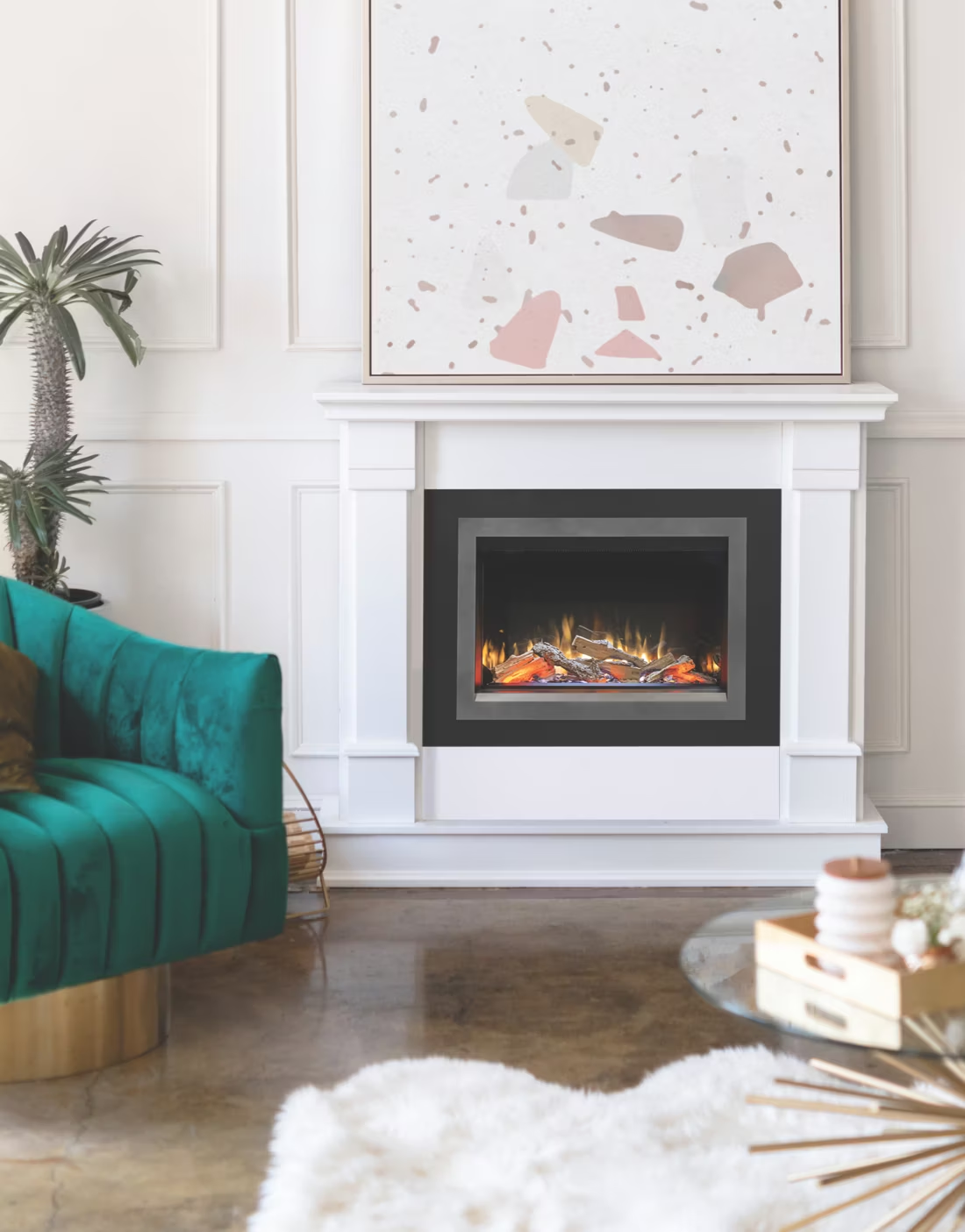
That's exactly the gap electric fireplaces fill. There's no flue, no combustion air requirement, and no clearance-to-combustibles calculation the way there is with a wood stove. Commonwealth Edison serves Blue Island at a residential rate around $0.134 per kWh, which keeps daily operating costs for a zone-heating unit modest. Whether you're finishing a basement, updating a rental unit, or converting an old decorative firebox that hasn't burned wood in decades, an electric insert or built-in gives you real warmth and ambiance without touching the masonry or running new gas line.
Three steps. No salesperson until you're ready.
Tell us about your project
Your zip code, your situation, and the fuel you're leaning toward—or let the answers point you to one.
See what's actually available
The brands dealers within 100 miles genuinely carry—real options, never a catalog mirage.
Get your dealer & Project Guide
A trusted local dealer, plus the free Project Guide & Parts List that names every component of the job.
Frequently Asked Questions
How much does an electric fireplace installation cost in Blue Island?
Plug-in electric inserts and freestanding units are the least expensive option, often $300 to $900 installed, since there's no venting or gas line to run—a licensed electrician may only need to confirm the outlet load. Hardwired built-ins or linear wall units set into custom cabinetry typically run $1,500 to $4,000 once framing, trim, and dedicated circuit work are included. Retrofitting an electric insert into an old decorative masonry firebox—common in Blue Island's older bungalows—usually lands in the $800 to $2,000 range depending on the insert size and whether the existing surround needs modification.
Do I need a permit to install an electric fireplace in Blue Island?
A plug-in unit that uses a standard outlet generally doesn't require a permit. If you're hardwiring a built-in unit or adding a new dedicated circuit, that electrical work falls under the Village of Blue Island Building Department's standard electrical permit process, and it should be pulled by a licensed electrician regardless of the fireplace brand. Unlike wood or gas installations, there's no chimney inspection, no venting clearance review, and no combustion-air requirement to satisfy—which is a large part of why electric projects move faster start to finish.
Can an electric fireplace actually heat a room, or is it just for looks?
Most electric fireplaces include a real heating element—typically a 1,500-watt unit rated around 5,000 BTU—that can noticeably warm a single room, which is enough for a den, finished basement, or bedroom in a Blue Island two-flat. They're not designed to heat an entire house the way a furnace does, and they won't replace central heat on a 10-degree January night. Where they earn their keep is zone heating: running the electric unit in the room you're actually using and turning the thermostat down elsewhere.
What does it cost to run an electric fireplace in Blue Island?
At ComEd's residential rate of roughly $0.134 per kWh, a typical 1,500-watt electric fireplace running on high costs about 20 cents per hour to operate. Run four hours a night through a cold stretch and you're looking at roughly $24 a month in electricity—far less than most homeowners expect, and with no fuel deliveries, cordwood storage, or pellet bags to manage. Most units also let you run the flame effect alone, without the heater, for pennies an hour if you just want the ambiance.
Can I put an electric insert into my old fireplace opening?
In many cases, yes. A number of Blue Island's older homes have a decorative masonry firebox that hasn't burned wood or coal in decades—sometimes because the flue was capped or removed years ago. An electric insert is often the simplest way to bring that opening back to life, since it doesn't need a working chimney at all. A local dealer can measure the firebox opening and confirm whether a standard insert size fits or whether a custom surround is needed.
Electric vs. gas fireplace—which makes more sense for my Blue Island home?
Gas delivers more heat output and the closer look and sound of a real flame, but it requires either a natural gas line or propane tank, proper venting, and a larger installation budget. Electric skips all of that—no gas line, no venting, and a much lower install cost—in exchange for a more modest heat output and a flame effect that, while improved in recent LED models, still reads as a flame effect rather than real combustion. For a finished basement, a rental unit, or a room where running new gas line isn't practical, electric is usually the more sensible call. For a primary living space where you want the fireplace to be the visual and thermal centerpiece, gas is worth the larger investment.
What types of electric fireplaces are available for a Blue Island home?
Wall-mounted units hang like a flat-screen TV and need only an outlet, making them popular for apartments and rentals where permanent changes aren't an option. Inserts are built to slide into an existing fireplace opening, which suits Blue Island's older housing stock with decorative fireboxes. Mantel packages pair an electric firebox with a surround and mantel shelf for a more traditional look. Linear built-ins are wider, low-profile units set into a wall or custom cabinetry for a modern, minimal appearance. A local dealer can walk through which format fits your specific room and wall structure.
Are electric fireplaces safe for renters, kids, and pets?
Yes—electric fireplaces are generally the safest hearth option available, since there's no open flame, no combustible gas, and the glass front stays cool to the touch on most models. That makes them a common choice for Blue Island's rental units and two-flats where a landlord may not allow wood-burning or gas appliances. There's also no chimney to maintain, no annual sweep needed, and no carbon monoxide risk to plan around, which simplifies both insurance and everyday peace of mind.
What brands of electric fireplaces do local dealers carry?
Hearth dealers in the Chicago south suburbs typically stock national electric fireplace brands like Dimplex, Napoleon, Amantii, Touchstone, and SimpliFire, spanning everything from budget wall-mount units to high-end linear built-ins with realistic flame technology. Availability and pricing vary by dealer and by which lines they're authorized to install and service, so it's worth confirming with your matched local dealer which models they carry before settling on a specific unit.
Can I put a TV above my fireplace?
Yes—with an asterisk. Fireplaces are hot and TVs don't like heat. Either put a mantel between them to deflect rising warmth, or choose a fireplace with heat-management technology that creates a cool zone on the wall above—the wall stays around 125 degrees, barely warm, while the room still gets full heat. If you like clean lines and don't want a mantel, heat management is the answer.
Does an electric fireplace need a vent or chimney?
No—that's its superpower. An electric fireplace needs a wall and an outlet, period. No vent pipe, no gas line, no clearances to design around, which is why it works in bedrooms, offices, apartments, and walls where venting a gas or wood unit would be impractical or impossible. Installation is typically the simplest and least expensive of any fireplace type.
Can a fireplace actually lower my heating bill?
Yes—by creating a comfort zone. A furnace heats every square foot of the house just to warm the one room you're in; a gas fireplace on low burns roughly a sixth of the gas a typical furnace does. Set the furnace around 55–60 degrees as a baseline, then heat the rooms your family actually uses. Families who heat this way commonly save $20–$60 a month.
What is an in-home preview and do I need one?
It's a visit where a hearth professional measures your space, confirms the model you picked actually works in your home, and walks the specs—framing, gas line, venting, finish work—before anything is ordered. Some details you just can't know until you see the house. Never make a down payment without one; it's the single most-skipped step that burns buyers.
Nearby Dealers
Hearth shops serving Blue Island and the surrounding area.
Fireside Collection By Fireplaces Plus
Electric Service in Blue Island
An electric fireplace's heater draws about 1,500 watts—pennies per hour at local rates.
Commonwealth Edison Co
Find your electric fireplace in Blue Island.
Tell us about your room and your home's wiring situation, and we'll send a free Project Guide & Parts List—the right unit, the parts you need, and a trusted local dealer to install it.
Find Your Fireplace →