
Find a pellet stove built for the Magic Valley's cold, dry winters.
From Twin Falls to Buhl, Filer, and Hansen, a properly sized pellet stove delivers steady, low-maintenance heat through the county's cold, six-month winters. Get matched with a vetted local dealer who can size and install it right.
Every Project Starts From One of These Five Situations
Consistent heat, less handling, than cordwood.
Twin Falls County sits on the Snake River Plain in south-central Idaho, with winter lows averaging around 22°F and a heating season that runs from October through April. That's a milder profile than places like Bismarck ND or Duluth MN, but still cold enough that supplemental heat matters most of the season, and homeowners across the county—from the canyon rim in Twin Falls to farm properties around Filer, Hansen, and Kimberly—are increasingly turning to pellet stoves as an alternative to cordwood.
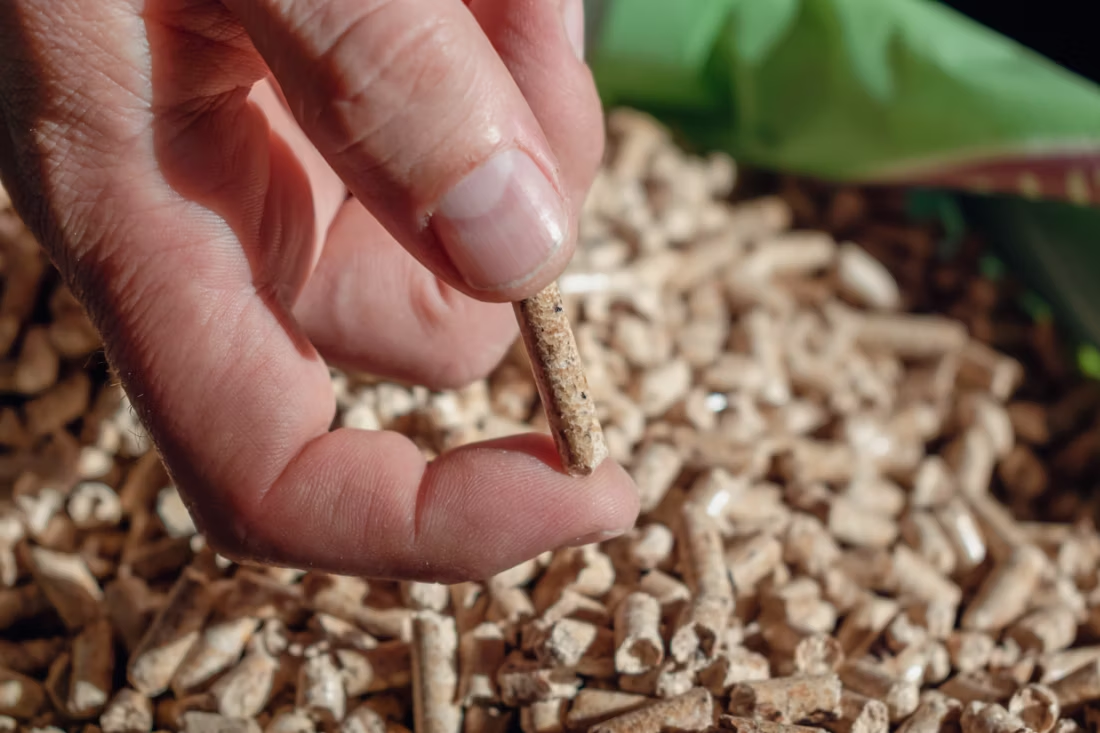
Regional pellet brands including Bear Mountain, Lignetics, and Pacific Pellet are widely stocked in the Magic Valley, which keeps fuel logistics simpler than in areas without local pellet manufacturing nearby. A pellet stove loads from a hopper rather than a wood pile, burns cleaner (a real consideration given the wildfire smoke that settles into the valley some summers and falls), and produces a steady, thermostatically controlled heat that a lot of Twin Falls County homeowners prefer to babysitting a wood fire—especially in homes where nobody wants to be stacking cordwood cut under a Sawtooth National Forest or BLM Twin Falls District permit every fall.
Three steps. No salesperson until you're ready.
Tell us about your project
Your zip code, your situation, and the fuel you're leaning toward—or let the answers point you to one.
See what's actually available
The brands dealers within 100 miles genuinely carry—real options, never a catalog mirage.
Get your dealer & Project Guide
A trusted local dealer, plus the free Project Guide & Parts List that names every component of the job.
Frequently Asked Questions
How much does a pellet stove installation cost in Twin Falls County?
Pellet stove installations in Twin Falls County typically run in the range you'd expect for a straightforward vent-through-wall setup—most projects land in the low-to-mid thousands once you account for the stove itself, the 3-inch PL vent kit, and any hearth pad work needed for clearance. Costs run higher if the installation requires venting through a masonry chimney or if electrical work is needed to run a dedicated circuit for the auger and blower. A local dealer can give you a firm number after seeing your home, but pellet installs are generally simpler and less expensive than a full masonry wood fireplace or chimney-vented gas unit.
What size pellet stove do I need for my Twin Falls County home?
Sizing depends on square footage, ceiling height, and how open your floor plan is. Smaller units work fine for a single large room or a ranch-style home under about 1,200 square feet; mid-size units handle most main living areas in the 1,200 to 2,000 square foot range common in Twin Falls, Kimberly, and Filer homes. Older farmhouses around Hansen or Murtaugh with less insulation may need to size up even if the square footage is modest. A pellet stove that's undersized will run constantly at high burn rates and go through fuel fast; one that's oversized will cycle on and off more than you'd like. A trusted local dealer will size this correctly during an in-home visit.
Where do I buy pellets in Twin Falls County, and how much do they cost?
Pellets from regional brands like Bear Mountain, Lignetics, and Pacific Pellet are commonly stocked at hearth retailers and farm supply stores throughout the Magic Valley. Prices fluctuate with softwood pellet demand each fall, but stocking up early in the season—before the first cold snap drives demand up—is the standard local strategy. Buying by the ton (roughly 50 forty-pound bags) rather than by the bag typically brings the per-bag cost down, and several local dealers offer seasonal pre-buy discounts if you order ahead of winter.
Do pellet stoves work during a power outage?
No—this is the biggest tradeoff to understand before choosing pellet over wood. Pellet stoves rely on an electric auger to feed fuel and a blower to distribute heat, so they shut down when the power goes out. Some homeowners in rural parts of Twin Falls County pair a pellet stove with a small battery backup or generator specifically to keep it running through winter storm outages; others keep a wood stove or fireplace as backup heat. If reliable off-grid heat during outages is a priority for your property, that's worth discussing with a local dealer before you commit to pellet as your only heat source.
Do I need a permit to install a pellet stove in Twin Falls County?
Yes, a building permit is generally required for a new pellet stove installation, and the unit needs to meet current EPA emissions standards. Permitting requirements and the review process can vary depending on whether your property is inside city limits (Twin Falls, Filer, Kimberly, Buhl) or in unincorporated Twin Falls County, so check with your local building department before starting work. Most established hearth dealers in the area handle permit paperwork as part of the installation, which is one advantage of using a certified local installer instead of doing a DIY install.
What's the best pellet stove for Twin Falls County's climate?
With winter lows averaging around 22°F, most homes here don't need the extreme sustained-burn capacity that a place like Fargo ND or Caribou ME would demand. Mid-range pellet stoves and inserts from mainstream manufacturers handle the Magic Valley's winters well, and a unit with a good hopper capacity (40+ pounds) reduces how often you need to refill during cold stretches. Homeowners who want a pellet insert to upgrade an existing masonry fireplace should confirm chimney liner compatibility with a local dealer—that's a common project for older homes in Twin Falls' historic neighborhoods.
How often does a pellet stove need to be serviced?
Annual servicing is standard—a technician should clean the burn pot, exhaust venting, and hopper/auger mechanism, and inspect the gaskets and blower motor. Heavy users who run the stove as primary heat through the full Twin Falls County winter may want a mid-season cleaning if ash buildup accelerates. Skipping service isn't just an efficiency issue; a dirty burn pot or clogged vent can trigger safety shutoffs or, in worse cases, create a fire risk. Most local dealers who sell pellet stoves also offer service plans.
Pellet stove vs. wood stove—which is right for my property?
Wood stoves work without electricity, which matters for rural Twin Falls County properties where outages during winter storms aren't rare, and pair well with cutting permits through the Sawtooth National Forest or BLM Twin Falls District if you're willing to cut and haul your own fuel. Pellet stoves trade that self-sufficiency for convenience: automated feed, thermostatic control, cleaner burn, and less hands-on tending, but they need electricity and a steady pellet supply. For in-town properties in Twin Falls or Kimberly with reliable power, pellet is often the easier day-to-day choice. For outlying acreage around Murtaugh or Hansen where storm outages linger, wood remains the more resilient backup.
Can I convert my existing wood fireplace into a pellet insert?
Yes—this is a common upgrade for older homes in Twin Falls with an existing masonry fireplace that's inefficient or rarely used. A pellet insert fits into the existing fireplace opening and vents through the chimney with a proper liner, converting a drafty, low-efficiency fireplace into a controlled heat source. The conversion typically costs less than replacing wood-only chimney venting for a new wood stove, since pellet inserts use a smaller vent pipe. A local dealer can confirm your chimney's dimensions are compatible during a home visit.
Why is my open fireplace making my house colder?
Open fireplaces suck—literally. As the fire burns, it consumes air your furnace already paid to heat and pulls it out through the chimney, so the house is actually colder after the fire goes out than before you lit it. An insert fixes this: it seals the chimney, puts fixed glass across the front, and turns that hole in your house into a real heat source.
What's the difference between an insert and a zero-clearance fireplace?
An insert is a fireplace that slides into a pre-existing wood-burning fireplace—if you don't have one, there's nothing to insert it into. A zero-clearance fireplace is built into a framed wall, which makes it the answer for remodels and new construction. Simple test: existing masonry fireplace means insert; blank or framed wall means zero-clearance.
Can I install a fireplace myself?
If you're putting a fire in your house on purpose, it's best to work with an expert. Unless you're genuinely experienced in framing, gas line, vent pipe, and the national code on clearances to combustibles, have a professional do it—and ideally the same company that sells you the fireplace, so warranty, service, and liability all live under one roof.
What is an in-home preview and do I need one?
It's a visit where a hearth professional measures your space, confirms the model you picked actually works in your home, and walks the specs—framing, gas line, venting, finish work—before anything is ordered. Some details you just can't know until you see the house. Never make a down payment without one; it's the single most-skipped step that burns buyers.
Stove and Fireplace Dealers in Twin Falls County
Pellet Brands Stocked Around Twin Falls County
Manufacturers will point you to the nearest stocking dealer.
Get your free pellet stove Project Guide & Parts List for Twin Falls County.
Tell us about your home and we'll match you with a trusted local dealer serving Twin Falls County, and send over a free Project Guide & Parts List—the exact parts, including the vent kit, and a recommended installer near you.
Find Your Fireplace →