
Set-and-forget heat for Twin Falls winters.
Thermostat-controlled, hopper-fed heat for the Magic Valley's cold snaps—find the right pellet stove or insert and connect with a trusted local dealer.
Every Project Starts From One of These Five Situations
Steady heat without the woodpile.
Twin Falls sits at 3,731 feet on the Snake River Plain, where winter lows average 22°F and the heating season runs long enough to rack up roughly 5,655 heating degree days—comparable to what a place like Bozeman, Montana sees most winters. Around here, a lot of homeowners who grew up splitting cordwood from lodgepole pine, ponderosa pine, or douglas fir stands in the Sawtooth National Forest are switching to pellet stoves for the same radiant heat without the chainsaw, the wood shed, or the ash cleanup that comes with a wood stove.
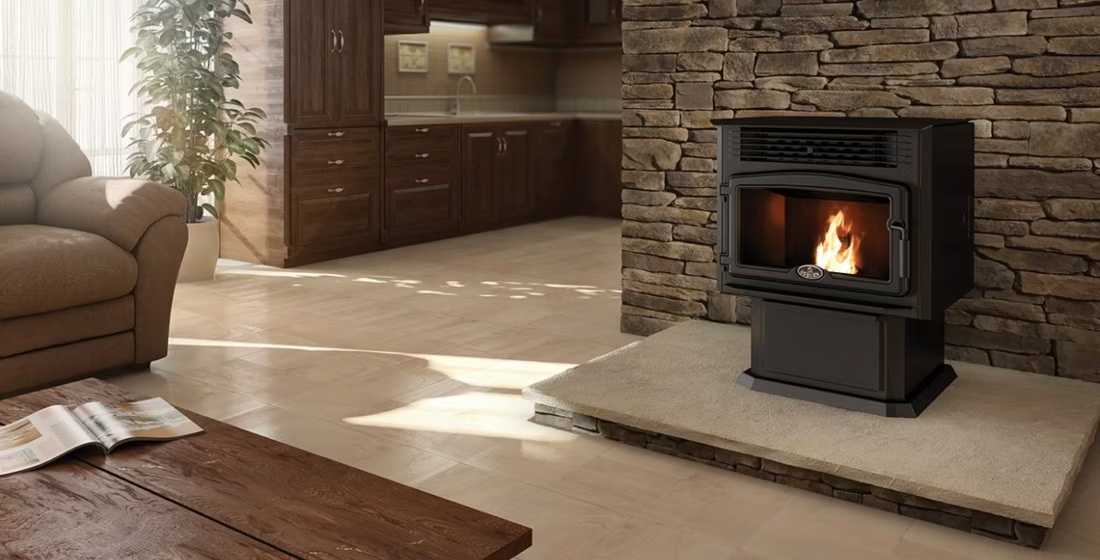
Pellet stoves burn compressed sawdust pellets from regional suppliers like Bear Mountain, Lignetics, and Pacific Pellet, feeding a hopper that can run 24 to 48 hours between refills depending on the setting. They're also relevant during the Magic Valley's wildfire smoke season—pellet appliances burn cleaner than cordwood, producing a fraction of the particulate output, which matters when regional smoke advisories are already stressing local air quality.
Three steps. No salesperson until you're ready.
Tell us about your project
Your zip code, your situation, and the fuel you're leaning toward—or let the answers point you to one.
See what's actually available
The brands dealers within 100 miles genuinely carry—real options, never a catalog mirage.
Get your dealer & Project Guide
A trusted local dealer, plus the free Project Guide & Parts List that names every component of the job.
Frequently Asked Questions
How much does a pellet stove installation cost in Twin Falls?
Most pellet stove or insert installations in Twin Falls run $3,500 to $6,500, depending on whether you're installing a freestanding stove with a simple through-wall vent or a pellet insert into an existing masonry fireplace. Pellet appliances don't require a full masonry chimney like a wood stove does—venting is typically 3-inch or 4-inch PVC or stainless pipe run through an exterior wall, which keeps installation costs and labor lower than a wood-burning setup. Local hearth dealers can give you a firm number after seeing your hearth or wall configuration.
How much do pellets cost, and where can I buy them in Twin Falls?
Bagged pellets from regional producers like Bear Mountain, Lignetics, and Pacific Pellet typically run $230 to $320 per ton in the Magic Valley, sold in 40-pound bags (50 bags to a ton) through local hearth shops, farm stores, and some hardware retailers. A home using a pellet stove as primary heat through a Twin Falls winter—with 5,655 heating degree days to cover—typically burns 3 to 5 tons per season; supplemental use in one room runs closer to 1 to 2 tons. Buying a full season's supply in fall, before demand spikes, usually gets the best price.
What size pellet stove do I need for my home?
Pellet stove output is rated in BTUs, and sizing depends on square footage, ceiling height, and how well-insulated your home is. As a rough guide for Twin Falls's winters: a stove rated around 40,000-50,000 BTU handles a single large room or open living area, while a 60,000+ BTU unit can carry a whole small-to-mid-size home as primary heat. Because pellet stoves run on a thermostat, sizing tends to be more forgiving than a wood stove—an oversized pellet unit just cycles down rather than smoldering. Still, a local dealer walking your space will get you a tighter number than a square-footage chart.
Pellet stove vs. wood stove—which makes more sense in Twin Falls?
Wood stoves burn cordwood you can often cut yourself—Sawtooth National Forest and the BLM Twin Falls District both issue personal-use cutting permits, running $5 to $20 per cord depending on the unit and season (roughly May through October). That makes wood cheaper if you have the time and a truck. Pellet stoves trade that labor for convenience: load the hopper, set the thermostat, and the auger and igniter handle the rest, with a much cleaner burn and no chimney sweep needed. The tradeoff is electricity—a pellet stove's auger, igniter, and blower all need power, so it won't run during an outage unless you add a battery backup or generator. For Twin Falls homes without a wood-cutting habit, or households that want thermostat convenience, pellet usually wins.
Will my pellet stove work during a power outage?
Not without backup power. Pellet stoves rely on an electric auger to feed fuel, an igniter to start combustion, and a blower to circulate heat—all of which stop working the moment Idaho Power service drops. Winter storms in the Magic Valley don't cause frequent long outages, but they do happen. Some homeowners pair their pellet stove with a small battery backup unit (sold by several stove manufacturers) that can run the appliance for several hours, or a portable generator sized to the stove's wattage draw, usually under 500 watts on standby. If backup heat during outages is a top priority, ask your local dealer about battery-backup-compatible models before you buy.
Do I need a permit to install a pellet stove in Twin Falls?
Most jurisdictions in Twin Falls County require a building permit for a new pellet stove installation, particularly when it involves new venting through an exterior wall or floor. Your local hearth dealer typically pulls this permit as part of the installation and will make sure the unit meets current EPA emissions certification. Because pellet stoves are exempt from most wood-burning curtailment rules in areas that have them, permitting tends to be more straightforward than a wood stove install—but it's still worth confirming with the city or county building department before work starts.
What are the best pellet stove brands for Twin Falls homes?
Look for EPA-certified models from established manufacturers like Harman, Quadra-Fire, and Englander, all commonly stocked by hearth dealers serving the Magic Valley. For fuel, regional producers Bear Mountain, Lignetics, and Pacific Pellet are widely available and formulated for consistent Btu output and low ash—worth checking which pellet brand your dealer recommends for the specific stove model, since burn characteristics vary between hardwood and softwood pellet blends.
Are pellet stoves a good choice given wildfire smoke concerns in the area?
Yes—pellet stoves are one of the cleanest-burning solid-fuel heating options available, producing a fraction of the particulate emissions of an open wood fire or older wood stove. That matters in the Magic Valley, where regional wildfire smoke already pushes air quality into unhealthy ranges some summers and falls. Pellet appliances are EPA-certified well below emissions limits and don't add meaningfully to local particulate load the way uncertified wood stoves can, making them a reasonable choice for households already managing air quality sensitivities.
Pellet stove vs. electric heat—which costs less to run in Twin Falls?
At Idaho Power's residential rate of roughly $0.1176 per kWh, electric resistance heat is generally more expensive per BTU than pellet fuel, especially during Twin Falls's long heating season. A pellet stove burning $250-per-ton fuel typically costs meaningfully less to run through a full winter than electric baseboard or space heaters covering the same square footage, though the gap narrows if you're only using electric heat occasionally in one room. Electric stoves and inserts do have a much lower upfront installation cost and no fuel storage requirement, which is worth weighing against the pellet stove's lower running cost.
How often does a pellet stove need cleaning?
A clean pellet stove is a happy pellet stove. Plan on cleaning the burn pot about once a week when you're burning regularly—ash and clinkers gum up the air holes just like a pellet barbecue. Most pellet stove problems trace back to skipped cleaning that nobody explained up front. Some designs make it easy with a trapdoor burn pot: pull a lever and the gunk drops into the ash pan.
What's the difference between an insert and a zero-clearance fireplace?
An insert is a fireplace that slides into a pre-existing wood-burning fireplace—if you don't have one, there's nothing to insert it into. A zero-clearance fireplace is built into a framed wall, which makes it the answer for remodels and new construction. Simple test: existing masonry fireplace means insert; blank or framed wall means zero-clearance.
Does a fireplace add value to my home?
On average, a fireplace adds back to the home about the same amount you spent installing it. Add the monthly savings from heating the rooms you actually use instead of the whole house—often hundreds of dollars a year—and the value case is strong before you even count what a fire does for how your family uses the room.
How much should I budget for a fireplace?
For an average home—covering the fireplace, the vent pipe, and basic installation—a budget between $3,900 and $5,500 gives you a lot of options across wood, gas, and pellet. By the time you add finish work, gas line, and electrical, the average complete installation lands between $5,000 and $12,000 all-in. In a remodel or new build, a good rule is to put about 2.5% of the total project cost toward the fireplace.
Preferred Dealer in Twin Falls
Pellet Brands Stocked Around Twin Falls
Manufacturers will point you to the nearest stocking dealer.
Find your pellet stove in Twin Falls.
Tell us about your home and heating goals, and we'll match you with a trusted local dealer and a free Project Guide & Parts List—the exact parts, vent kit, and recommended installer for your Twin Falls pellet project.
Find Your Fireplace →