
Clean, flameless warmth for every corner of Twin Falls County.
No chimney, no gas line, no smoke—just plug-in or hardwired ambiance and supplemental heat for homes across the Magic Valley, from downtown Twin Falls to Kimberly, Filer, Buhl, and Hansen. Find the right unit and connect with a trusted local dealer.
Every Project Starts From One of These Five Situations
The cleanest way to add fire—no chimney, no smoke, no permit headaches.
Twin Falls County sits in Idaho's Magic Valley, straddling the Snake River Canyon with a moderately long heating season and winter lows averaging around 22°F—cold enough to matter, but nowhere near the sub-zero stretches you'd see in Bozeman or Fargo. That climate profile means most homes here are already carrying a furnace or heat pump as primary heat, which leaves electric fireplaces to do what they do best: zone heat a specific room, warm up a basement or bonus room, and add real ambiance without asking a homeowner to manage a chimney or gas line.
Wildfire smoke is the county's recurring air quality concern, especially in late summer and early fall when regional fires push haze into the Snake River Canyon. Electric units produce zero combustion byproducts—no smoke, no particulates, nothing to worry about during a smoke advisory—which makes them an easy fit for households that want fire without adding to indoor or outdoor air quality issues. They're also the simplest install in the county: no venting, no gas permit, and often no inspection at all for plug-in units. That simplicity is why they show up everywhere from downtown Twin Falls apartments to rural homes in Hansen and Murtaugh where running a new gas line or chimney isn't worth the cost.
Three steps. No salesperson until you're ready.
Tell us about your project
Your zip code, your situation, and the fuel you're leaning toward—or let the answers point you to one.
See what's actually available
The brands dealers within 100 miles genuinely carry—real options, never a catalog mirage.
Get your dealer & Project Guide
A trusted local dealer, plus the free Project Guide & Parts List that names every component of the job.
Frequently Asked Questions
How much does an electric fireplace installation cost in Twin Falls County?
Costs vary widely by unit type. A plug-in freestanding or wall-mount electric fireplace typically runs $300 to $800 including the unit itself, since most just need a standard outlet. A built-in electric insert or a linear wall unit that requires a dedicated 120V or 240V circuit runs closer to $1,200 to $2,500 once an electrician is involved for the wiring and a carpenter frames the surround. Homes in Twin Falls, Kimberly, and Filer with modern electrical panels usually land on the lower end; older farmhouses around Hansen or Murtaugh sometimes need panel upgrades that push costs higher. A local dealer will size the job during an in-home visit.
Do I need a permit to install an electric fireplace in Twin Falls County?
Most plug-in electric fireplaces don't require a permit since no new wiring or gas work is involved. If you're installing a built-in unit that needs a dedicated circuit, an electrical permit is typically required and issued through the county or city building department depending on whether you're inside Twin Falls city limits or in unincorporated Twin Falls County. A licensed electrician pulling the permit is standard practice, and most hearth dealers coordinate that step for you rather than leaving you to schedule it yourself.
What size electric fireplace do I need for my room?
Electric fireplaces are rated for supplemental heat, not whole-home heating—most units comfortably warm 400 to 1,000 square feet, which covers a living room, bedroom, or finished basement. Given Twin Falls County's moderately long heating season, don't expect an electric unit to replace your furnace during a January cold snap; think of it as zone heat for the room you're actually sitting in, plus year-round ambiance when the heater's switched off. A local dealer can match wattage and BTU output to your specific room dimensions.
What's the difference between an electric insert, a wall-mount unit, and a freestanding electric stove?
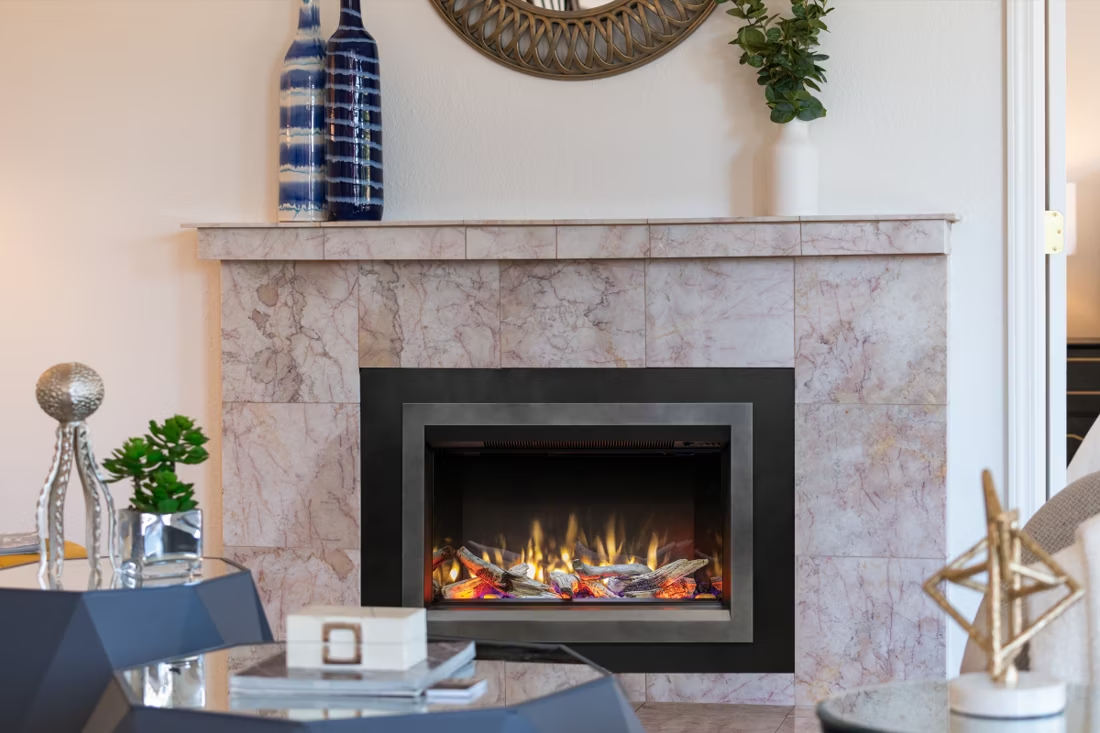
An electric insert is designed to slot into an existing masonry fireplace opening, giving old fireboxes a modern flame effect and real heat without touching the chimney. A wall-mount or linear electric fireplace is a built-in unit recessed into a wall or media console, popular in newer Twin Falls and Kimberly homes without existing fireplaces. A freestanding electric stove looks like a traditional wood stove but plugs into a standard outlet—a good fit for renters or homes in Filer and Buhl where a permanent install isn't practical. All three deliver similar heat output; the choice usually comes down to whether you have an existing fireplace opening and how permanent you want the install to be.
Will my electric fireplace work during a power outage?
No—electric fireplaces require grid power to run both the flame effect and the heater, so they go dark during an outage just like any other electrical appliance. This is worth weighing against wood, which keeps working when the power's out. For Twin Falls County homes that also want backup heat during winter storms, some households pair an electric unit for daily convenience with a wood or pellet stove for outage resilience. A whole-home generator is the other common solution among rural customers around Hansen and Murtaugh.
What's the best electric fireplace for Twin Falls County homes?
Look for units with a true infrared or fan-forced heater rated for at least 1,400 watts if you want meaningful supplemental heat rather than just flame effect—brands like Dimplex and Napoleon build both into most of their linear and insert lines. If ambiance matters more than heat output, a lower-wattage decorative unit is fine for a room already served by central heat. Since summer and fall wildfire smoke is the county's main air quality issue, some households also choose electric specifically as a smoke-free alternative for evenings when outdoor burning or venting anything outside isn't appealing. A local dealer can walk through wattage, flame technology, and mounting options for your specific space.
Are electric fireplaces a good choice during wildfire smoke season?
Yes—this is one of the strongest arguments for electric in Twin Falls County. Wildfire smoke is the region's recurring air quality concern, typically worst in late summer and early fall, and it's a period when many households want to avoid adding any additional smoke or particulates indoors. Electric units produce zero combustion byproducts, so they're a reasonable way to keep enjoying a fire feature even during a smoke advisory that might have you thinking twice about running a wood stove.
How much does it cost to run an electric fireplace day to day?
Idaho Power serves most of Twin Falls County, and electric fireplace operating costs are modest—a typical 1,500-watt heater setting costs roughly 15 to 25 cents per hour to run at current residential rates, meaning a few hours of evening use adds maybe a dollar or two to your monthly bill. Running the flame effect alone without the heater draws far less power, often just a few cents an hour, since the LED lighting used for the flame simulation is low-wattage. This makes electric units cheap to operate for ambiance-only use, even if you rarely turn the heater on.
Electric vs. wood or gas—which is right for my Twin Falls County home?
Wood offers real primary heat and keeps working during power outages, and the Sawtooth National Forest and BLM Twin Falls District both issue affordable cutting permits—typically $5 to $20 per cord—for households willing to self-cut lodgepole pine, ponderosa pine, or Douglas fir. Gas delivers instant, higher-output heat without wood handling but requires a gas line or propane tank and periodic servicing. Electric wins on simplicity: no venting, no fuel storage, no combustion byproducts, and the easiest install of the three—but it's supplemental heat only and does nothing during an outage. For most homes in Twin Falls, Kimberly, and Filer, electric works best paired with an existing furnace or heat pump rather than as a standalone heat source.
Do electric fireplaces actually produce heat?
Yes—most put out around 4,800–5,000 BTUs from a standard outlet, which comfortably warms a bedroom, office, or den as a comfort-zone heater. What they won't do is carry a whole house the way wood, gas, or pellet can. Think of electric as ambiance-first with honest supplemental heat: flames on with no heat in July, flames plus warmth in January.
Does an electric fireplace need a vent or chimney?
No—that's its superpower. An electric fireplace needs a wall and an outlet, period. No vent pipe, no gas line, no clearances to design around, which is why it works in bedrooms, offices, apartments, and walls where venting a gas or wood unit would be impractical or impossible. Installation is typically the simplest and least expensive of any fireplace type.
Can a fireplace actually lower my heating bill?
Yes—by creating a comfort zone. A furnace heats every square foot of the house just to warm the one room you're in; a gas fireplace on low burns roughly a sixth of the gas a typical furnace does. Set the furnace around 55–60 degrees as a baseline, then heat the rooms your family actually uses. Families who heat this way commonly save $20–$60 a month.
How much should I budget for a fireplace?
For an average home—covering the fireplace, the vent pipe, and basic installation—a budget between $3,900 and $5,500 gives you a lot of options across wood, gas, and pellet. By the time you add finish work, gas line, and electrical, the average complete installation lands between $5,000 and $12,000 all-in. In a remodel or new build, a good rule is to put about 2.5% of the total project cost toward the fireplace.
Stove and Fireplace Dealers in Twin Falls County
Find your electric fireplace in Twin Falls County.
Tell us a bit about your home and we'll match you with the right electric fireplace, insert, or wall unit—plus a free Project Guide & Parts List and a trusted local dealer to install it.
Find Your Fireplace →