
Warm Your Home Without Adding to Cache Valley's Winter Haze.
Franklin County sits at the south end of Cache Valley, where winter inversions trap smoke close to the ground for weeks at a time. A clean-burning pellet stove heats your home through a long, cold heating season without making that haze worse. Find the right unit and connect with a trusted local dealer.
Every Project Starts From One of These Five Situations
Clean heat for a valley that traps its own smoke.
Franklin County—home to Preston, the town of Franklin (Idaho's oldest permanent settlement), Dayton, Weston, and the smaller communities scattered along the valley floor—sits in a basin that collects cold air and holds it. With a long, cold heating season and average winter lows near 15°F, the county's overall winter severity runs close to what a place like Madison, Wisconsin sees over a season. But it's the geography, not just the cold, that shapes heating choices here: Cache Valley's winter inversions are well known on both the Idaho and Utah sides, and by mid-January the valley can sit under a lid of trapped particulate for days.
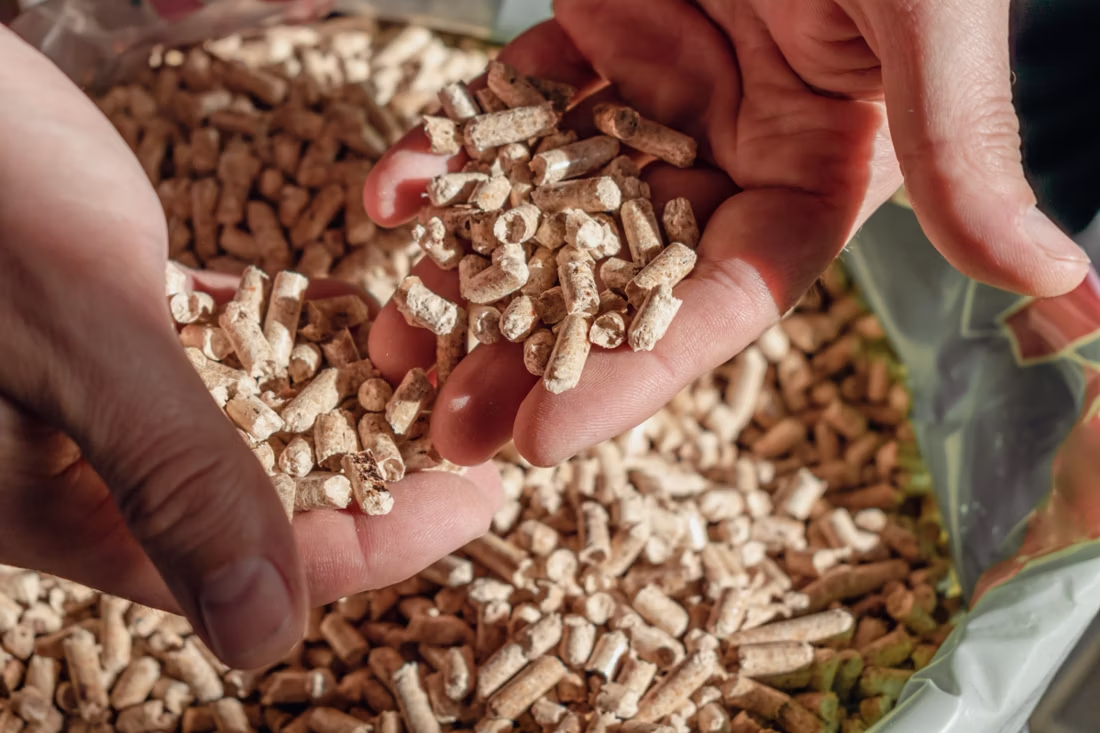
That's a big part of why pellet appliances make sense for Franklin County. EPA-certified pellet stoves burn fuel more completely and produce far less particulate than an uncertified wood stove, which matters when local air quality advisories restrict burning during inversion events—pellet units are frequently exempt from those curtailment periods where wood stoves are not. Fuel is straightforward to source too: regional brands like Bear Mountain, Lignetics, and Pacific Pellet are milled from Pacific Northwest and Intermountain West timber byproducts and are commonly stocked at farm-and-ranch stores and hardware retailers throughout the region, so you're not driving to Salt Lake City every time the hopper runs low.
Three steps. No salesperson until you're ready.
Tell us about your project
Your zip code, your situation, and the fuel you're leaning toward—or let the answers point you to one.
See what's actually available
The brands dealers within 100 miles genuinely carry—real options, never a catalog mirage.
Get your dealer & Project Guide
A trusted local dealer, plus the free Project Guide & Parts List that names every component of the job.
Frequently Asked Questions
How much does a pellet stove installation cost in Franklin County?
Most pellet stove installations in Franklin County run in the $3,000 to $6,000 range, depending on the unit's hopper size, whether it's a freestanding stove or an insert going into an existing masonry fireplace, and what electrical or venting work is needed. Because pellet stoves rely on an auger motor and combustion blower, every installation needs a dedicated electrical outlet nearby—that's an added step for older farmhouses around Franklin, Dayton, or Weston that weren't wired with a receptacle near the hearth. Venting is simpler than wood stove installation since pellet units use a smaller-diameter vent pipe, which can help keep costs down on straightforward installs.
Is a pellet stove a good fit for Franklin County's air quality concerns?
Yes—arguably more so than a standard wood stove. Cache Valley's winter inversions concentrate wood smoke and other particulate near the ground for extended stretches, and Franklin County shares that geography. EPA-certified pellet stoves burn more completely than older or uncertified wood-burning units, producing a fraction of the smoke output, and they're commonly allowed to keep operating during air quality advisories that restrict conventional wood burning. If you're choosing a heat source with an eye on winter haze days, pellet is usually the cleaner-burning option for daily use.
What size pellet stove do I need for my home?
Sizing depends on square footage, ceiling height, and how drafty the house is—a real consideration in older farmhouses around Franklin and Preston. As a rough guide for Franklin County's cold-climate reality, smaller pellet stoves (under 1,000 sq ft) work well for a single room, den, or shop, while medium units (1,000-1,800 sq ft) handle most main living areas, and larger units can carry a well-insulated whole home through 15°F overnight lows. Homes at slightly higher elevation on the valley's eastern benches typically need a bit more heating capacity than the same square footage down in Preston. A local dealer will size your space during an in-home visit rather than relying on a generic chart.
Where can I buy pellets in Franklin County, and what do they cost?
Regional brands like Bear Mountain, Lignetics, and Pacific Pellet are the most common options carried by farm-and-ranch and hardware retailers serving the county, with pricing generally running $250 to $350 per ton depending on the brand and time of year. Buying a full season's supply—typically 2 to 4 tons for a primary heat source in a Franklin County home—before winter sets in usually beats paying per-bag prices later when local supply tightens during a hard winter.
Do I need a permit to install a pellet stove in Franklin County?
In most cases, yes—a building permit is required for a new pellet stove installation, and the local Franklin County building department can confirm specific requirements for your address, including whether you're inside city limits in Preston or in the unincorporated county. Most local dealers handle the permit paperwork as part of the installation, so you generally don't have to navigate it yourself. Unlike wood stoves, pellet stoves aren't typically subject to burn curtailment restrictions during winter inversion advisories, which simplifies day-to-day operation once the unit is installed.
What's the best pellet stove for Franklin County's winters?
With a long, cold heating season and regular overnight lows near 15°F, look for a pellet stove with a larger hopper capacity—60 to 80 pounds—so it can run through a cold night without a mid-sleep refill. Higher-BTU models are worth the upgrade if you're heating an older, less-insulated farmhouse near Dayton or Weston rather than a newer, tightly built home in Preston. A local dealer can match hopper size, BTU output, and venting configuration to your specific house rather than a one-size-fits-all recommendation.
How often does a pellet stove need to be cleaned and serviced?
Plan on cleaning the burn pot and glass every one to two weeks during regular winter use, a deeper cleaning of the exhaust venting and combustion blower once a season, and a full professional inspection annually—usually in late summer or early fall before the county's inversion season and cold weather set in together. Regular ash and burn pot maintenance also keeps the unit burning efficiently, which matters when you're running it daily through a long Franklin County winter.
Will my pellet stove work if the power goes out?
Not on its own—pellet stoves need electricity to run the auger motor, igniter, and combustion blower, so a power outage stops the stove even with a full hopper. For rural parts of Franklin County where winter storms can knock out power for a stretch, some homeowners pair a pellet stove with a small backup battery system or a generator sized to run the stove's low electrical draw. If uninterrupted backup heat during outages is a priority for your household, ask your local dealer about a wood stove as a secondary option—it's a common pairing in this county for exactly that reason.
Pellet stove vs. wood stove—which makes more sense for my Franklin County home?
Wood stoves burn local species like lodgepole pine, ponderosa pine, Douglas fir, and larch, work without electricity, and give you an authentic fire—but they produce more particulate, which matters on inversion-heavy days in this part of Cache Valley. Pellet stoves burn cleaner, are easier to load and regulate, and often keep operating during air quality advisories that restrict wood burning, but they depend on electricity and a steady pellet supply. For a primary living space where day-to-day convenience and cleaner air matter most, pellet tends to win in Franklin County. For backup heat during power outages, or if you have easy access to local firewood, wood still has a real place here—some households run both.
Why is a fireplace insert so efficient?
An insert does two things: it seals the chimney completely, so you stop losing air you already paid to heat, and it radiates warmth into the room through the firebox and glass. Most add a heat-exchange fan that pulls cool room air underneath, wraps it around the hot firebox, and pushes it back out warm. Your home is more efficient before you've even lit the first fire.
What's the difference between an insert and a zero-clearance fireplace?
An insert is a fireplace that slides into a pre-existing wood-burning fireplace—if you don't have one, there's nothing to insert it into. A zero-clearance fireplace is built into a framed wall, which makes it the answer for remodels and new construction. Simple test: existing masonry fireplace means insert; blank or framed wall means zero-clearance.
Does a fireplace add value to my home?
On average, a fireplace adds back to the home about the same amount you spent installing it. Add the monthly savings from heating the rooms you actually use instead of the whole house—often hundreds of dollars a year—and the value case is strong before you even count what a fire does for how your family uses the room.
Can a fireplace actually lower my heating bill?
Yes—by creating a comfort zone. A furnace heats every square foot of the house just to warm the one room you're in; a gas fireplace on low burns roughly a sixth of the gas a typical furnace does. Set the furnace around 55–60 degrees as a baseline, then heat the rooms your family actually uses. Families who heat this way commonly save $20–$60 a month.
Stove and Fireplace Dealers in Franklin County
Pellet Brands Stocked Around Franklin County
Manufacturers will point you to the nearest stocking dealer.
Find your pellet stove in Franklin County.
Tell us about your home and we'll match you with a trusted local dealer and send you a free Project Guide & Parts List—the exact stove, vent kit, and parts your Franklin County pellet installation needs, no big-box guesswork.
Find Your Fireplace →