
Find heating that stands up to a Franklin County winter.
Wood, gas, pellet, and electric fireplace resources for every town in Franklin County—from Preston and Franklin to Dayton, Weston, Clifton, and Fairview. Find the right unit and connect with a trusted local hearth retailer.
Every Project Starts From One of These Five Situations
Cache Valley cold meets high-desert wood heat.
Franklin County sits in the southeastern corner of Idaho, tucked into the Cache Valley along the Bear River and hard against the Utah border. Elevations run around 4,500 to 5,000 feet, with the Bear River Range and Caribou-Targhee National Forest land forming the eastern edge of the county. Winters are long and genuinely cold—an average winter low near 15°F and a heating load in the same range as Buffalo, NY. The heating season typically stretches from October through April. Lodgepole pine, ponderosa pine, Douglas fir, and larch are the wood species locals actually burn, much of it self-cut under Caribou-Targhee National Forest permits rather than purchased by the cord.
With a population under 8,500 spread across a handful of small towns, Franklin County doesn't have a large concentration of hearth retailers of its own—most residents either work with a Preston-based dealer or drive the short distance across the state line into the Logan, UT market for a full multi-fuel showroom. This hub rolls up retailers, service technicians, and fuel suppliers covering the whole county, from Franklin—Idaho's oldest town—down to Weston and Clifton along the valley floor. Pick your fuel below for installation costs, recommended units, and dealer detail specific to Franklin County homes.
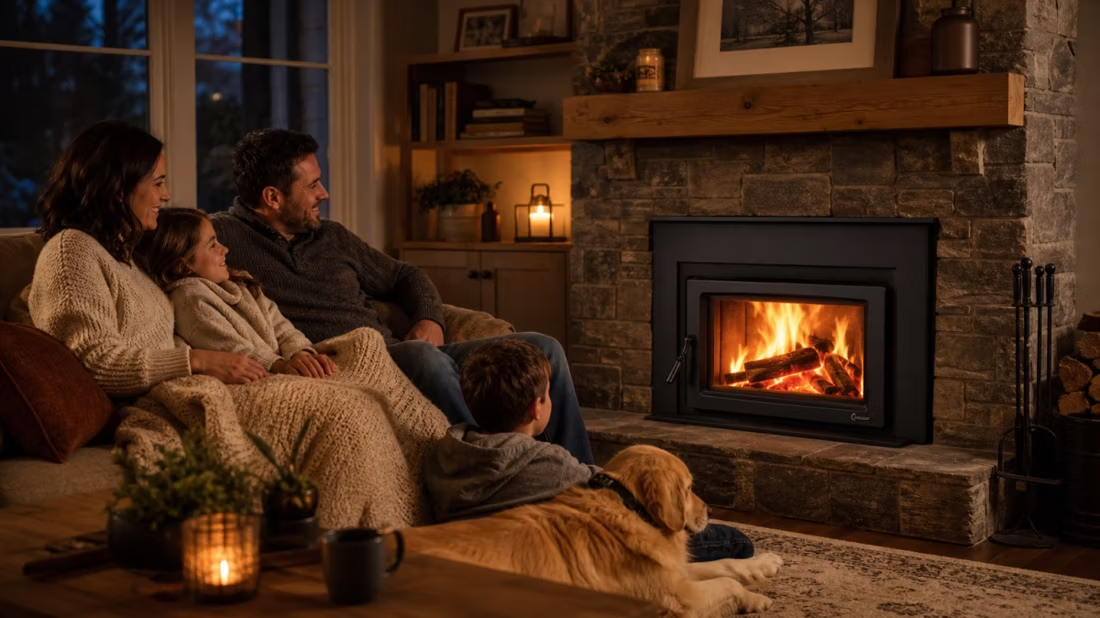
Four fuels. One honest answer for Franklin County.
Three steps. No salesperson until you're ready.
Tell us about your project
Your zip code, your situation, and the fuel you're leaning toward—or let the answers point you to one.
See what's actually available
The brands dealers within 100 miles genuinely carry—real options, never a catalog mirage.
Get your dealer & Project Guide
A trusted local dealer, plus the free Project Guide & Parts List that names every component of the job.
Frequently Asked Questions
Which fireplace fuel makes the most sense for a Franklin County winter?
It depends on where you are in the county and what you're heating. Wood remains a genuinely practical primary fuel here—lodgepole pine, ponderosa pine, Douglas fir, and larch are all locally available, much of it self-cut under a Caribou-Targhee National Forest permit, and a modern EPA-certified stove will carry a home through a 15°F night without much trouble. Natural gas through Intermountain Gas Company is an option in and near Preston, where line coverage exists, but most outlying homes in Dayton, Weston, and Clifton rely on propane instead—still a convenient, thermostat-controlled option, just delivered rather than piped. Pellet stoves are a solid middle ground, with regional brands like Bear Mountain distributed through the area, though they do require reliable delivery access in winter. Electric fireplaces work well as supplemental heat in bedrooms or finished basements but shouldn't be counted on as a home's only heat source given the length of this county's heating season.
Do I need a permit to install a fireplace or stove in Franklin County?
Yes, in most cases. New wood stoves, wood inserts, gas fireplaces, gas inserts, and pellet stoves require a building permit through the Franklin County Building Department, and any new wood-burning appliance needs to meet current EPA 2020 NSPS emissions standards. Gas installations also require a separate gas-line permit and a licensed gas fitter for the connection work—this applies whether you're on Intermountain Gas service near Preston or running a new propane line out in Dayton or Weston. Electric fireplaces generally skip the permit unless the installation involves new wiring or a dedicated circuit. Most local retailers pull these permits as part of the installation, so it's worth confirming that's included before you sign a quote.
Are there air quality restrictions on wood burning in Franklin County?
Cache Valley, which Franklin County sits at the northern end of, is well known regionally for severe winter temperature inversions—cold air gets trapped against the valley floor and traps wood smoke and other particulates with it. While Franklin County itself hasn't faced the same formal nonattainment designation as parts of Cache Valley just across the Utah line, inversion conditions still affect air quality here in the same way, and residents should expect voluntary burn-conscious guidance on the worst inversion days. In summer, wildfire smoke drifting in from surrounding forest land is the bigger seasonal concern. New wood stove installations must meet EPA 2020 NSPS standards, which cuts down significantly on particulate output compared to older uncertified units.
Can one local retailer handle all four fuel types in Franklin County?
Not always, and that's worth knowing before you start shopping. With a county population under 8,500, Franklin County doesn't support a large roster of hearth dealers, and some Preston-area retailers lean toward wood and pellet without carrying a full gas or electric lineup. For homeowners who want to compare all four fuels side by side with working displays, the closer full-service option is often a multi-fuel showroom in Logan, UT, about a 20 to 30 minute drive south across the state line. If you already know your fuel—say, a wood insert or a propane fireplace—a local Preston dealer can usually handle the whole project without the drive.
What's the typical installation cost range across fuel types in Franklin County?
Wood stove or insert installation typically runs $4,000 to $8,500 for a standard install, more if new chimney chase work is needed on an older Franklin or Weston farmhouse. Gas fireplace, insert, or stove installation runs $4,000 to $10,000, with propane tank and line setup adding to the low end of that range for rural properties without existing service. Pellet stove or insert installs generally fall between $4,000 and $7,000. Electric fireplaces run $200 to $3,000 for the unit itself, with $300 to $1,000 in labor for anything beyond a plug-and-play wall unit. Rural properties outside Preston should budget for a modest travel fee on top of these figures, since most installers are based in town.
How does firewood access and seasonal timing work in Franklin County?
A lot of Franklin County wood burners cut their own fuel under a Caribou-Targhee National Forest personal-use permit rather than buying cords outright—lodgepole pine and Douglas fir are common permit-area species, with ponderosa pine and larch also showing up depending on the unit. Permits are typically sold in late summer and fall, so it's worth planning a cutting trip before the first snow closes forest roads. For installation timing, late summer through early fall (before the October start of the heating season) is the easiest window to schedule a stove or insert install—appointments get tighter once temperatures drop and existing units start failing under daily use.
How much should I budget for a fireplace?
For an average home—covering the fireplace, the vent pipe, and basic installation—a budget between $3,900 and $5,500 gives you a lot of options across wood, gas, and pellet. By the time you add finish work, gas line, and electrical, the average complete installation lands between $5,000 and $12,000 all-in. In a remodel or new build, a good rule is to put about 2.5% of the total project cost toward the fireplace.
Can I install a fireplace myself?
If you're putting a fire in your house on purpose, it's best to work with an expert. Unless you're genuinely experienced in framing, gas line, vent pipe, and the national code on clearances to combustibles, have a professional do it—and ideally the same company that sells you the fireplace, so warranty, service, and liability all live under one roof.
What are the biggest mistakes people make buying a fireplace?
Five come up constantly: budgeting for the unit but not the full job (vent, gas line, electrical, finish work); drowning in options instead of starting from style and fuel; buying without an in-home preview; handing installation to a handyman instead of a pro; and giving up out of sheer indecision. Every one is avoidable with a clear plan—step one, step two, step three.
Can a fireplace actually lower my heating bill?
Yes—by creating a comfort zone. A furnace heats every square foot of the house just to warm the one room you're in; a gas fireplace on low burns roughly a sixth of the gas a typical furnace does. Set the furnace around 55–60 degrees as a baseline, then heat the rooms your family actually uses. Families who heat this way commonly save $20–$60 a month.
Stove and Fireplace Dealers in Franklin County
Listings include WhyFire partner dealers, dealers we have verified as authorized for the brands we recommend, and established local businesses that carry hearth products. Every listing shows which one it is. The ones marked Preferred run on WhyFire's software, so they can show you real pricing and book your appointment right here. No manufacturer pays for placement. How we verify dealers →
Mr Cool Inc
Gary Ricks Services
Advanced Fireplace And Stove
Bear Lake Heating
Get matched with a Franklin County hearth dealer.
Tell us about your project and we'll match you with a trusted local dealer and send a free Project Guide & Parts List—the right unit, the vent kit, and a plan built for your fuel and your home.
Find Your Fireplace →