
Find the right electric fireplace for your Franklin County home.
Zone heat and ambiance for Cache Valley winters, from Preston to the outlying farm communities—matched with a local dealer who installs it right.
Every Project Starts From One of These Five Situations
Supplemental warmth for a valley that gets genuinely cold.
Franklin County sits at the southern end of Idaho's Cache Valley, with roughly 6,994 heating degree days and average winter lows around 15°F—a climate closer to Bismarck, ND than to most of the Mountain West's ski-town reputation implies. Zone 6B winters here run long, and the valley's winter inversions trap cold air (and wildfire smoke in fire season) against the Bear River Range for days at a time. Most homes in and around Preston lean on wood or propane for primary heat, but electric fireplaces have carved out a real role as supplemental, no-fuss heat for bedrooms, basements, and additions where running a chimney or gas line isn't practical.
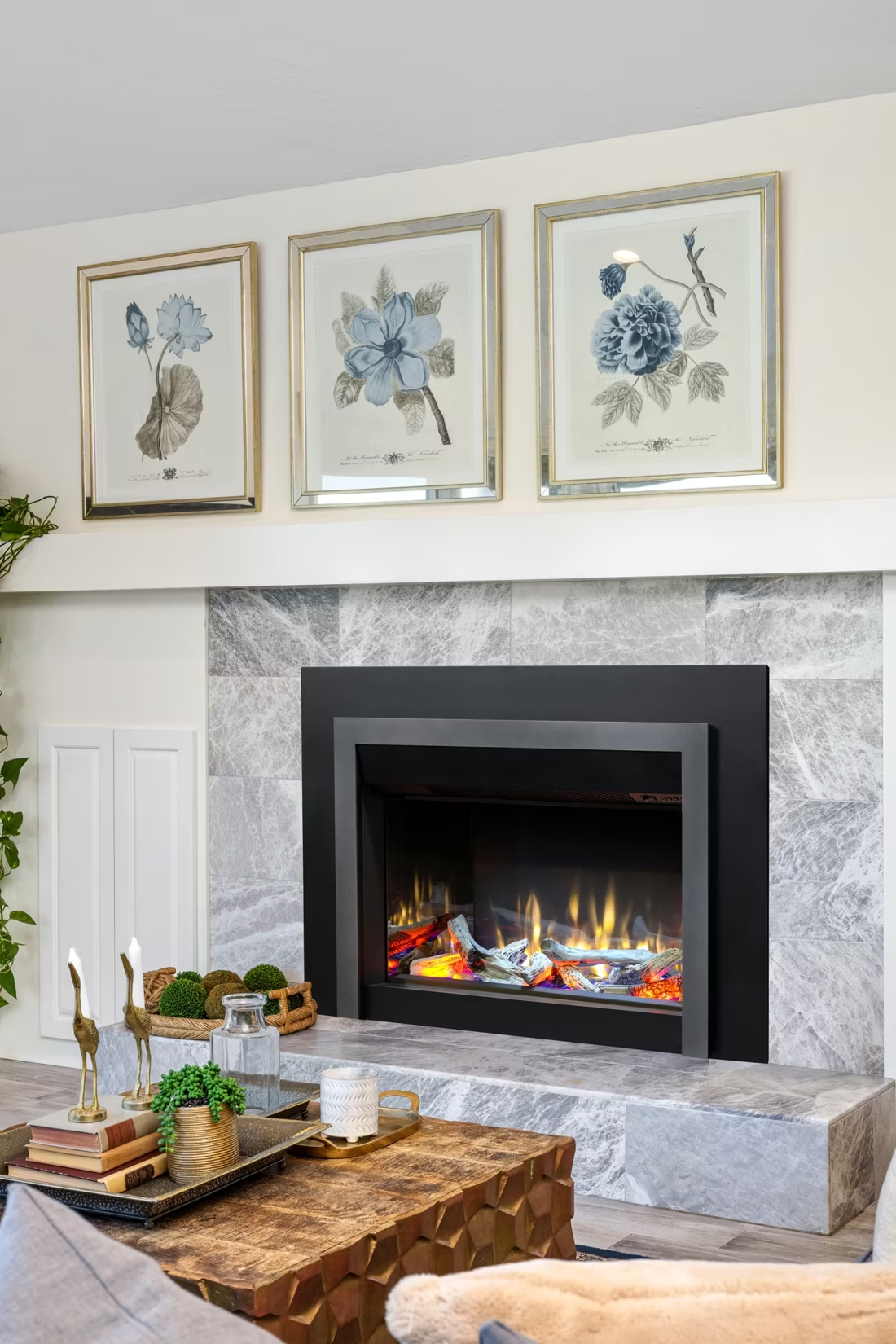
An electric fireplace or insert in Franklin County isn't going to replace a wood stove on a sub-zero night, but it's the fastest, cleanest way to add heat and ambiance to a specific room—no permits for the unit itself, no venting, and simple 120V or 240V circuit work that most local electricians handle in an afternoon. For rental properties, finished basements, and additions in Preston, Franklin, Dayton, or the smaller farm communities scattered across the county, electric is often the practical answer where a masonry chimney was never in the plans.
Three steps. No salesperson until you're ready.
Tell us about your project
Your zip code, your situation, and the fuel you're leaning toward—or let the answers point you to one.
See what's actually available
The brands dealers within 100 miles genuinely carry—real options, never a catalog mirage.
Get your dealer & Project Guide
A trusted local dealer, plus the free Project Guide & Parts List that names every component of the job.
Frequently Asked Questions
How much does an electric fireplace installation cost in Franklin County?
Most electric fireplace and insert installations in Franklin County run $400 to $1,200, which covers the unit, mounting or framing, and basic electrical work on a standard 120V circuit. Larger built-in units or installations that need a dedicated 240V circuit run for higher heat output will sit toward the top of that range, especially if a local electrician has to open a wall in an older farmhouse near Preston or Franklin. Compared to the $4,500-plus most wood or gas installs run in this county, electric is the low-cost, low-disruption option—one reason it's popular for basement finishes and additions where a full chimney or gas line was never part of the plan.
Will an electric fireplace actually heat my room in a Franklin County winter?
It depends on the room and your expectations. Most electric fireplaces are rated for 400-1,500 watts of supplemental heat, enough to comfortably take the edge off a 200-400 square foot bedroom, office, or basement family room. With average winter lows around 15°F and roughly 6,994 heating degree days a year—similar to what Fargo, ND sees—an electric unit alone won't carry a whole farmhouse through January. Think of it as zone heat that lets you turn down the thermostat in one room rather than a primary heat source for the whole house. For whole-home heat during a cold snap, most Franklin County homeowners still lean on their furnace, wood stove, or propane.
Do I need a permit to install an electric fireplace in Franklin County?
Generally no permit is required for the fireplace unit itself, since there's no venting, gas line, or combustion involved. If your installation requires new electrical circuit work—particularly a dedicated 240V line for a larger built-in unit—an electrical permit through the county building department may apply, and any licensed electrician doing that work will typically pull it as part of the job. Simple plug-in units on an existing 120V outlet generally don't trigger any permitting at all. This is one of the simplest hearth projects available in the county from a code standpoint, which is part of the appeal for renters and short-timeline projects.
What's the difference between an electric fireplace, insert, and mantel unit?
An electric insert is designed to slide into an existing masonry fireplace opening, giving an old wood-burning fireplace a clean, ash-free heat source without touching the chimney. A built-in or wall-mounted electric fireplace is installed into new framing, common in additions or basement finishes around Preston where there's no existing hearth. A mantel or freestanding unit is furniture-style and simply plugs into a wall outlet—no installation required beyond finding a spot near a circuit. For Franklin County homes with an old, rarely-used masonry fireplace, an insert is usually the best value since it reuses an opening that's otherwise doing nothing.
Is electric a good fit compared to wood or propane in Franklin County's climate?
Electric works best as a complement, not a replacement, here. With winter lows averaging around 15°F and a heating season that stretches from October well into April, most Franklin County homes still need a primary heat source with real BTU output—wood stoves burning local lodgepole pine, ponderosa pine, or Douglas fir, or propane furnaces, are common choices given limited natural gas infrastructure in the county. Electric fireplaces shine in secondary spaces: a finished basement, a converted garage, a guest bedroom, or a rental unit where installing a chimney or running a gas line doesn't make financial sense. If you lose power in a winter storm, though, an electric fireplace goes dark right along with everything else—worth keeping in mind if backup heat matters to you.
How much does it cost to run an electric fireplace in Franklin County?
A typical electric fireplace on a 1,500-watt heat setting costs roughly 15-25 cents per hour to run, depending on your electric utility rate. Run several hours a day through a Cache Valley winter and that adds up to a modest monthly increase—far less than running a whole-house furnace but not free. Most homeowners use the flame-only setting (a few watts, essentially decorative) during the day and switch on the heater setting only when they're actually in the room, which keeps costs down while still getting the ambiance most people are after.
Can I install an electric fireplace myself in Franklin County?
Plug-in mantel and freestanding units can be installed by a homeowner in an afternoon—set it in place, plug it into a standard outlet, and it's done. Wall-mounted or built-in units that require new framing, a recessed opening, or a dedicated circuit are better left to a licensed electrician or the retailer's install team, especially if you're adding a 240V line for a larger unit. Given how inexpensive these projects already are compared to wood or gas installs in the county, most homeowners still bring in a local dealer to make sure the unit is mounted securely and wired to code, particularly for units going above a TV or fireplace mantel where weight matters.
Do electric fireplaces produce real flame or heat, or just an LED effect?
Modern electric fireplaces produce genuine heat via a resistive coil or infrared quartz heater, typically rated 4,600-5,100 BTU on the highest setting—real, usable heat for a single room, not just a light show. The flame effect itself is a visual illusion, usually LED lights reflected through glass or a rotating mist for realism, and can be run independently of the heater (flame with no heat, for year-round ambiance). Quality varies by price point, and local dealers can walk you through flame realism side-by-side, which is hard to judge from photos alone.
Electric vs. wood—which is right for my Franklin County home?
Wood offers real primary heat output, works during power outages (a genuine consideration in rural Franklin County during winter storms), and taps into an established local firewood culture around lodgepole pine, ponderosa pine, and Douglas fir. Electric offers zero maintenance, no venting or permits, instant on-off control, and a far lower installation cost. For a primary heat source in a cold-climate home with 6,994 heating degree days a year, wood generally wins. For a finished basement, an extra bedroom, a rental unit, or anywhere adding a chimney doesn't make sense, electric is usually the better fit. Plenty of local homes end up with both—wood or propane for the bulk of the heating load, electric for a specific room.
Does an electric fireplace need a vent or chimney?
No—that's its superpower. An electric fireplace needs a wall and an outlet, period. No vent pipe, no gas line, no clearances to design around, which is why it works in bedrooms, offices, apartments, and walls where venting a gas or wood unit would be impractical or impossible. Installation is typically the simplest and least expensive of any fireplace type.
Can I put a TV above my fireplace?
Yes—with an asterisk. Fireplaces are hot and TVs don't like heat. Either put a mantel between them to deflect rising warmth, or choose a fireplace with heat-management technology that creates a cool zone on the wall above—the wall stays around 125 degrees, barely warm, while the room still gets full heat. If you like clean lines and don't want a mantel, heat management is the answer.
Can I install a fireplace myself?
If you're putting a fire in your house on purpose, it's best to work with an expert. Unless you're genuinely experienced in framing, gas line, vent pipe, and the national code on clearances to combustibles, have a professional do it—and ideally the same company that sells you the fireplace, so warranty, service, and liability all live under one roof.
What is an in-home preview and do I need one?
It's a visit where a hearth professional measures your space, confirms the model you picked actually works in your home, and walks the specs—framing, gas line, venting, finish work—before anything is ordered. Some details you just can't know until you see the house. Never make a down payment without one; it's the single most-skipped step that burns buyers.
Stove and Fireplace Dealers in Franklin County
Get your Franklin County electric fireplace Project Guide & Parts List.
Tell us about your room and your home, and we'll match you with a trusted local Franklin County dealer and send a free Project Guide & Parts List for your electric fireplace project.
Find Your Fireplace →