
Pellet Heat Rarely Makes Sense in Mililani Town.
With barely any heating needed all year and winter lows averaging 61°F, Mililani Town isn't a heating climate. If you still want a pellet unit for ambiance or a specific use case, we'll connect you with a local dealer who'll tell you the truth about it.
Every Project Starts From One of These Five Situations
A practically nonexistent heating season tells the whole story.
Mililani Town sits at 626 feet in central Oahu, squarely in climate zone 1A—the mildest, most tropical zone in the U.S. building code system. The average winter low here is 61°F, and the town's heating needs over a year add up to barely anything, a figure that would register as a single cold snap in a place like Duluth, MN. There is, in practical terms, no heating season. Homes here are built for ventilation and shade, not for retaining warmth, and central heating simply isn't part of the local building stock.
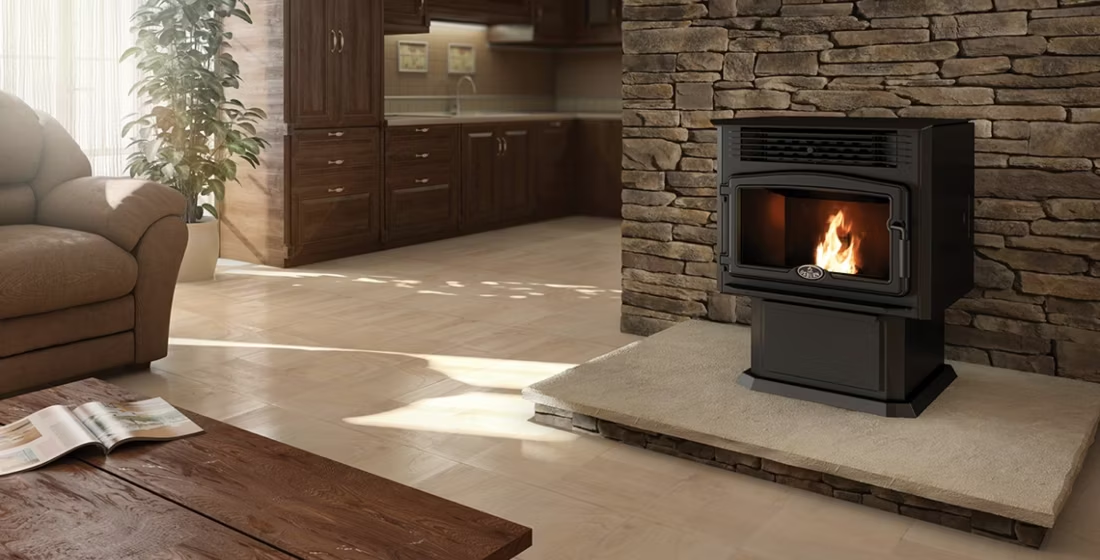
That reality shapes how we talk about pellet stoves in Mililani Town honestly: they're not a heating necessity, and we won't pretend otherwise. Where they do show up locally, it's almost always for the look—a mainland-style hearth feature in a great room, staging for a vacation rental that wants a cozy, cabin-adjacent feel, or a homeowner who simply likes the visual of a real flame. Pellets themselves aren't produced locally (Hawaii has no pellet mills), so any fuel—including brands like Lignetics that are available through some Oahu retailers—arrives by barge from the mainland, which affects both price and availability compared to places where pellets are milled from regional timber.
Three steps. No salesperson until you're ready.
Tell us about your project
Your zip code, your situation, and the fuel you're leaning toward—or let the answers point you to one.
See what's actually available
The brands dealers within 100 miles genuinely carry—real options, never a catalog mirage.
Get your dealer & Project Guide
A trusted local dealer, plus the free Project Guide & Parts List that names every component of the job.
Frequently Asked Questions
Does a pellet stove actually make sense in Mililani Town?
For heating, generally no. With next to no heating needed over a year and winter lows that rarely dip below the high 50s, there's no functional need for supplemental heat in a typical Mililani Town home. Where pellet stoves do get installed locally, it's almost always for the ambiance of a real flame—in a living room as a design feature, or in a vacation rental aiming for a cozy aesthetic that appeals to mainland guests. If you're chasing warmth, your money is better spent elsewhere; if you want the look and sound of a fire, a local dealer can walk you through whether a pellet unit or a gas alternative fits your space better.
Why would anyone install a pellet stove in a place that never gets cold?
The most common reasons we hear from Oahu homeowners are aesthetic, not thermal: a real flame adds warmth to a room's feel even when it isn't needed for temperature, vacation rental owners use a hearth feature to differentiate a listing, and some transplants from colder states simply miss having a fireplace as a focal point. None of these are wrong reasons to install one—they're just different from the heating-driven reasons a pellet stove gets installed in a place like Bozeman, MT. A good local dealer will size and vent the unit correctly either way, but they should also be upfront that you're buying ambiance, not BTUs you'll actually need.
Where do the pellets themselves come from, since Hawaii doesn't mill them?
All wood pellets used on Oahu are shipped in—there's no local pellet manufacturing given the lack of commercial softwood forestry here. Lignetics is one of the more commonly available brands at Oahu hearth and hardware retailers, but supply is thinner and less consistent than on the mainland, and pricing runs higher once inter-island and ocean freight are factored in. Because usage is low island-wide (there's little heating demand to sustain regular restocking), it's worth confirming with a retailer that pellets will be reliably available before committing to a pellet appliance over a gas or electric alternative.
Wouldn't a gas or electric unit make more sense than pellet in Mililani Town?
For most homeowners here, yes. If the goal is a flame feature rather than heat, an electric fireplace or insert avoids the fuel-sourcing headache entirely—no barged-in pellets, no auger or hopper maintenance, and a simpler install. The tradeoff is Hawaiian Electric's residential rate, currently around 43 cents per kWh, among the highest in the country, so running an electric unit for hours of ambiance does add up on the bill, though far less than the cost and hassle of sourcing pellets. A vented gas unit is another common choice if you already have LPG service. A local dealer can walk you through the real cost-of-ownership differences for your specific use case.
Do I need a permit to install a pellet stove in Mililani Town?
Yes—any new hearth appliance installation in Mililani Town falls under the City and County of Honolulu Department of Planning and Permitting (DPP), which reviews venting and structural work for compliance. Most established local dealers handle this paperwork as part of the installation, since DPP wants to see proper clearances and venting termination points documented regardless of whether the appliance is being used for heat or ambiance. Given how uncommon pellet installs are on Oahu compared to gas or electric fireplace inserts, it's worth confirming your installer has handled a DPP pellet-appliance permit before.
How does venting work for a pellet stove in an Oahu home?
Pellet stoves vent through a small-diameter pipe that can typically run horizontally through an exterior wall, which makes them installable in homes without an existing chimney—common in Mililani Town's mostly single-story, slab-on-grade construction. This is actually one of the easier parts of a pellet install here; the harder part is usually just confirming the appliance and fuel supply chain make sense for your situation before your dealer starts venting work.
Does vog or local air quality affect whether I should get a pellet stove?
Mililani Town doesn't have the wildfire smoke or winter inversion issues that drive air-quality restrictions in mainland cities, though Oahu does occasionally see vog—volcanic smog drifting over from Big Island eruptions. Pellet appliances burn considerably cleaner than open wood fires, producing minimal particulate output, so they don't meaningfully add to indoor air concerns on vog-heavy days. That said, if you're weighing any combustion appliance against an electric alternative specifically because of air quality sensitivity, electric avoids the question entirely.
What about local wood species like koa, ohia, and eucalyptus—could I just burn firewood instead?
Technically yes, but it's rare here for good reason. Koa and ohia are prized on Oahu for furniture, flooring, and carving—not firewood—and cutting them for fuel would be an unusual (and costly) use of premium hardwood. Eucalyptus is more plentiful as a fast-growing landscape tree and does get used informally as firewood in some rural pockets, but there's no organized firewood market or Forest Service-style cutting permit system on Oahu the way there is in mainland timber country. Between the lack of heating need and the lack of firewood infrastructure, a wood-burning stove isn't a practical option for most Mililani Town homes—pellet, gas, or electric are the more realistic routes if you want a hearth feature.
If I really want a fireplace feature, what should I actually choose in Mililani Town?
Given the fuel-sourcing challenges with pellets and the near-total absence of heating need, most Mililani Town homeowners end up happiest with either a vented gas unit (if LPG service is already in place) or a quality electric fireplace insert, both of which sidestep the barged-in fuel problem entirely. A pellet stove isn't a bad choice if you specifically want the sound and smell of a real wood fire and don't mind sourcing fuel through a limited number of Oahu retailers—it's just a smaller, more deliberate niche than it is in cold-climate states. A local dealer can lay out all three options side by side for your specific room and budget.
What's the difference between an insert and a zero-clearance fireplace?
An insert is a fireplace that slides into a pre-existing wood-burning fireplace—if you don't have one, there's nothing to insert it into. A zero-clearance fireplace is built into a framed wall, which makes it the answer for remodels and new construction. Simple test: existing masonry fireplace means insert; blank or framed wall means zero-clearance.
Why is my open fireplace making my house colder?
Open fireplaces suck—literally. As the fire burns, it consumes air your furnace already paid to heat and pulls it out through the chimney, so the house is actually colder after the fire goes out than before you lit it. An insert fixes this: it seals the chimney, puts fixed glass across the front, and turns that hole in your house into a real heat source.
What is an in-home preview and do I need one?
It's a visit where a hearth professional measures your space, confirms the model you picked actually works in your home, and walks the specs—framing, gas line, venting, finish work—before anything is ordered. Some details you just can't know until you see the house. Never make a down payment without one; it's the single most-skipped step that burns buyers.
Does a fireplace add value to my home?
On average, a fireplace adds back to the home about the same amount you spent installing it. Add the monthly savings from heating the rooms you actually use instead of the whole house—often hundreds of dollars a year—and the value case is strong before you even count what a fire does for how your family uses the room.
Nearby Dealers
Hearth shops serving Mililani Town and the surrounding area. Every listing shows whether it is a WhyFire partner, a dealer we have verified as authorized for the brands we recommend, or a local business carrying hearth products. No manufacturer pays for placement. How we verify dealers →
Island Pool And Supply
Pellet Brands Stocked Around Mililani Town
Manufacturers will point you to the nearest stocking dealer.
Find your pellet fireplace in Mililani Town.
Tell us about your space and what you're actually trying to achieve—ambiance, resale appeal, or something else—and we'll match you with a local dealer and send over a free Project Guide & Parts List, including an honest read on whether pellet is the right call for your home.
Find Your Fireplace →