
Gas Fireplaces Built for Style, Not Survival.
With winter lows averaging 61°F, nobody in Mililani Town needs a fireplace to stay warm. Find the right gas unit for ambiance and design, and connect with a trusted local dealer.
Every Project Starts From One of These Five Situations
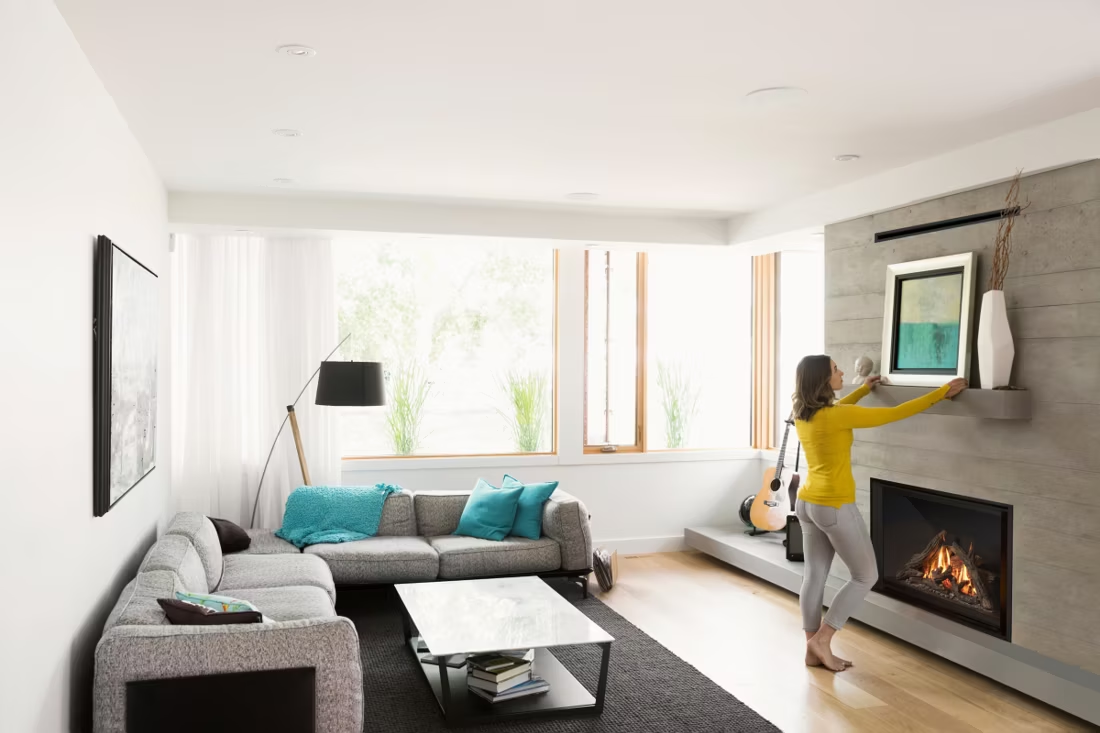
A fireplace here is a design choice, not a necessity.
Mililani Town sits at 626 feet in central Oahu, in climate zone 1A with a winter heating need so small it barely registers—a fraction of what a mainland home sees in a single cold week. There's no furnace-replacement logic driving a fireplace purchase here the way there is in, say, Duluth or Bozeman. When homeowners in this zip code add a gas fireplace, it's almost always for the visual anchor it gives a living room, the resale appeal, or simply because they like the look of a real flame.
Gas service on Oahu comes through Hawaii Gas, which delivers a propane-based utility gas rather than pipeline natural gas from the mainland—functionally similar for running a fireplace, but worth knowing when you're budgeting a line extension. Homes outside the utility gas footprint typically run on a standalone propane tank instead. Either way, gas makes sense as an ambiance play: Hawaiian Electric's residential rate sits around 42.87 cents per kWh, among the highest in the country, so a gas flame effect costs far less to run than an electric unit left on for hours of evening use. The City and County of Honolulu Department of Planning and Permitting handles the permitting for any new gas line or built-in unit.
Three steps. No salesperson until you're ready.
Tell us about your project
Your zip code, your situation, and the fuel you're leaning toward—or let the answers point you to one.
See what's actually available
The brands dealers within 100 miles genuinely carry—real options, never a catalog mirage.
Get your dealer & Project Guide
A trusted local dealer, plus the free Project Guide & Parts List that names every component of the job.
Frequently Asked Questions
How much does a gas fireplace installation cost in Mililani Town?
Because there's no chimney retrofit or cold-climate venting math to solve, most installations here are simpler than mainland projects—a direct-vent unit set into a wall or existing masonry surround, tied into either a Hawaii Gas utility line or a propane tank. Expect roughly $3,500 to $8,000 depending on the unit, whether a new gas line has to be run from the meter, and any custom surround or built-in cabinetry work. Homes already plumbed for gas (for a range or water heater) are usually on the lower end.
Do many Mililani Town homes already have a fireplace to convert?
Not really—most homes built in Mililani Town's planned-community era were designed without fireplaces or chimneys, since there was never a heating need to justify one. So this is less often a wood-to-gas conversion and more often a new build-out: a direct-vent gas fireplace framed into a wall during a remodel, or a freestanding gas stove added as a focal point. If your home is one of the rare ones with an existing masonry hearth (more common in older custom homes on larger Central Oahu lots), a gas insert can still be fitted into it using the existing flue.
Should I use utility gas or propane for my fireplace?
If your neighborhood has Hawaii Gas utility service already running to the house—common for water heaters and ranges in parts of Mililani Town—tying a fireplace into that line is usually the simplest and cheapest path. If you're not on the utility gas grid, a dedicated propane tank is the standard workaround, and most gas fireplace models can be configured for either fuel with the correct orifice. Your local dealer will check which gas source reaches your specific address before recommending a unit.
Will a gas fireplace still work if the power goes out?
Most direct-vent gas fireplaces with intermittent pilot ignition (IPI) run on a battery backup, so they'll still light and operate during a power outage—relevant in Mililani Town during tropical storm season when Hawaiian Electric outages can stretch for a day or more. Valor fireplaces go a step further: their pilot assembly generates its own electricity through the thermocouple, so there's no battery to remember or replace. Since a fireplace here isn't your heat source, this matters more for lighting and ambiance during an outage than survival heat—but it's still a real feature worth asking about.
Gas fireplace, insert, or stove—which fits a Mililani Town home?
A gas fireplace is a fully built-in unit framed into a wall—the most common choice for new construction or a remodel, and the typical pick here since most homes don't already have a masonry hearth. A gas insert drops into an existing fireplace opening and uses the chimney as its vent path, which applies mainly to older custom homes with a working hearth. A gas stove is a freestanding cabinet-style unit that sits on the floor—a good option if you want a movable focal point without cutting into a wall. Given how few Mililani Town homes have existing fireplaces, most projects here land on a built-in unit or a freestanding stove.
Do I need a permit to install a gas fireplace in Mililani Town?
Yes. The City and County of Honolulu Department of Planning and Permitting requires a building permit for the fireplace installation and a separate gas permit for any new line work, which has to be done by a licensed gas-fitter. A certified hearth dealer typically manages both permits and the inspection sign-off as part of the installation, so you're not coordinating separate trades yourself.
Should I get a vented or vent-free gas fireplace in Hawaii's climate?
Vented (direct-vent) units draw combustion air from outside and exhaust it back outside through a sealed pipe—clean, code-compliant everywhere, and the standard recommendation for Mililani Town. Vent-free units burn directly into the room and release water vapor as a byproduct, which is a bigger problem in Hawaii's already-humid air than it would be in a dry mainland climate—added moisture indoors can contribute to condensation and mold issues in a house that isn't fighting off dry winter air to begin with. For that reason, local dealers generally steer Oahu homeowners toward vented models even where vent-free is technically permitted.
How often does a gas fireplace need to be serviced here?
An annual inspection is still worth doing even in a climate with light use—a technician checks the burner, pilot assembly, gas connections, and venting, and cleans the glass. Central Oahu's humidity is milder than coastal salt-air exposure, but moisture can still accelerate wear on ignition components over years of intermittent use. Budget somewhere in the $150–$250 range for a standard annual service call from a local gas appliance technician.
Gas fireplace or electric fireplace—which makes more sense in Mililani Town?
With Hawaiian Electric's residential rate near 43 cents per kWh, running an electric fireplace's heating element for hours of evening ambiance adds up fast on the bill, even though electric units are cheaper to buy and require no gas line or venting at all. A gas fireplace costs more upfront and needs a permitted gas connection, but the ongoing fuel cost per hour of flame is lower, and the flame itself looks more like a real fire. Since neither option is doing meaningful heating work in this climate, the decision usually comes down to install budget and how much the realism of an actual flame matters to you—a local dealer can walk through both side by side.
Is my gas fireplace wasting gas?
If it was installed more than 15 years ago, probably. Older gas fireplaces keep a standing pilot light burning all the time, and that little flame can cost a couple hundred dollars a year. Newer models use pilot-on-demand ignition—the pilot lights only when you use the fireplace and goes out when you turn it off.
Why is my open fireplace making my house colder?
Open fireplaces suck—literally. As the fire burns, it consumes air your furnace already paid to heat and pulls it out through the chimney, so the house is actually colder after the fire goes out than before you lit it. An insert fixes this: it seals the chimney, puts fixed glass across the front, and turns that hole in your house into a real heat source.
Does a fireplace add value to my home?
On average, a fireplace adds back to the home about the same amount you spent installing it. Add the monthly savings from heating the rooms you actually use instead of the whole house—often hundreds of dollars a year—and the value case is strong before you even count what a fire does for how your family uses the room.
Can I install a fireplace myself?
If you're putting a fire in your house on purpose, it's best to work with an expert. Unless you're genuinely experienced in framing, gas line, vent pipe, and the national code on clearances to combustibles, have a professional do it—and ideally the same company that sells you the fireplace, so warranty, service, and liability all live under one roof.
Nearby Dealers
Hearth shops serving Mililani Town and the surrounding area. Every listing shows whether it is a WhyFire partner, a dealer we have verified as authorized for the brands we recommend, or a local business carrying hearth products. No manufacturer pays for placement. How we verify dealers →
Island Pool And Supply
Find your gas fireplace in Mililani Town.
Tell us a bit about your home and we'll put together a free Project Guide & Parts List—the exact parts, vent kit, and a recommended local Mililani Town dealer for your gas fireplace project.
Find Your Fireplace →