
A Gas Fireplace for Cool Kona Nights at Elevation.
Kaloko sits roughly 3,177 feet above Kailua-Kona, high enough that evenings can slip into the upper 50s even when the coast stays warm. Find the right propane gas fireplace or insert and connect with a trusted local dealer.
Every Project Starts From One of These Five Situations
Ambiance first, warmth on the nights you actually want it.
With an average winter low near 54°F and an extremely light winter heating load, Kaloko isn't a place that needs a furnace running around the clock the way a home in Duluth, MN would. But Kaloko's mauka elevation, well above sea-level Kailua-Kona, means residents feel a real temperature drop most evenings—enough that a gas fireplace earns its keep as more than decoration. It's less about survival heat and more about turning a living room into the kind of space you want to sit in after the trade winds cool things off.
The Big Island has no natural gas utility, so every gas fireplace here runs on propane, delivered and serviced by local suppliers like The Gas Company and independent Kona-area propane dealers. That matters for a second reason too: Hawaii Electric Light Co's residential rate sits around $0.4831 per kWh, among the highest in the country, which makes a propane appliance that runs on a tank—not the grid—an appealing hedge against both high electric bills and the occasional storm-related outage. New installations go through the County of Hawaii Building Division, and because there's no legacy of masonry wood fireplaces to convert here, most Kaloko projects are new direct-vent units built into new or renovated construction.
Three steps. No salesperson until you're ready.
Tell us about your project
Your zip code, your situation, and the fuel you're leaning toward—or let the answers point you to one.
See what's actually available
The brands dealers within 100 miles genuinely carry—real options, never a catalog mirage.
Get your dealer & Project Guide
A trusted local dealer, plus the free Project Guide & Parts List that names every component of the job.
Frequently Asked Questions
How much does a gas fireplace installation cost in Kaloko?
Expect a wider range here than on the mainland—typically $5,500 to $13,000—largely because propane tank setup, shipped equipment, and licensed gas-fitter labor all cost more on the Big Island than in a market with local supply chains. A freestanding direct-vent unit with a new propane line and an above-ground tank sits toward the lower end; a built-in gas fireplace requiring a larger buried tank, custom framing, or venting through tile or stone finishes pushes toward the higher end. A local dealer can give you a firm number after seeing your home.
Does a gas fireplace even make sense in a place as warm as Kaloko?
It's a fair question, and the honest answer is that most Kaloko households aren't buying one for survival heat—the winter heating need here is close to nothing compared to a mainland cold-climate home. What draws people in at this elevation is the evening chill that settles in after sunset, plus the visual and design appeal of real flame in an open-concept island home. If you're at a lower, coastal elevation in North Kona, a gas fireplace is more of an occasional-use luxury; up in Kaloko's cooler mauka air, it gets genuine use several months of the year.
Is there natural gas service in Kaloko, or is it all propane?
It's propane. The Big Island has no piped natural gas utility, so every gas fireplace, insert, or stove installed in Kaloko runs on propane supplied by The Gas Company or a local independent propane provider, either through an exchangeable cylinder setup for smaller units or a dedicated above-ground or buried tank for larger installations. Your dealer will size the tank and delivery schedule based on how often you plan to run the fireplace.
Will a gas fireplace work if the power goes out?
Yes, with the right ignition system, and this matters more in Kaloko than it might elsewhere—Big Island grid outages happen during Kona storms and high-wind events, and Hawaii Electric Light's rates already run near 48 cents per kWh, so a backup that doesn't depend on the grid has real value. Units with a millivolt or standing-pilot ignition system will light and run with no electricity at all. Models with intermittent pilot ignition need battery backup to operate during an outage. Ask your local dealer which ignition system a given model uses before you buy.
Do I need a permit to install a gas fireplace in Kaloko?
Yes—new gas fireplace and propane line installations go through the County of Hawaii Building Division, and the propane line work itself must be done by a licensed gas-fitter. Because propane tank placement also has to meet setback requirements from structures and property lines, it's worth having your installer handle both the building permit and the tank siting together rather than treating them as separate steps.
Should I get a built-in gas fireplace, an insert, or a freestanding stove?
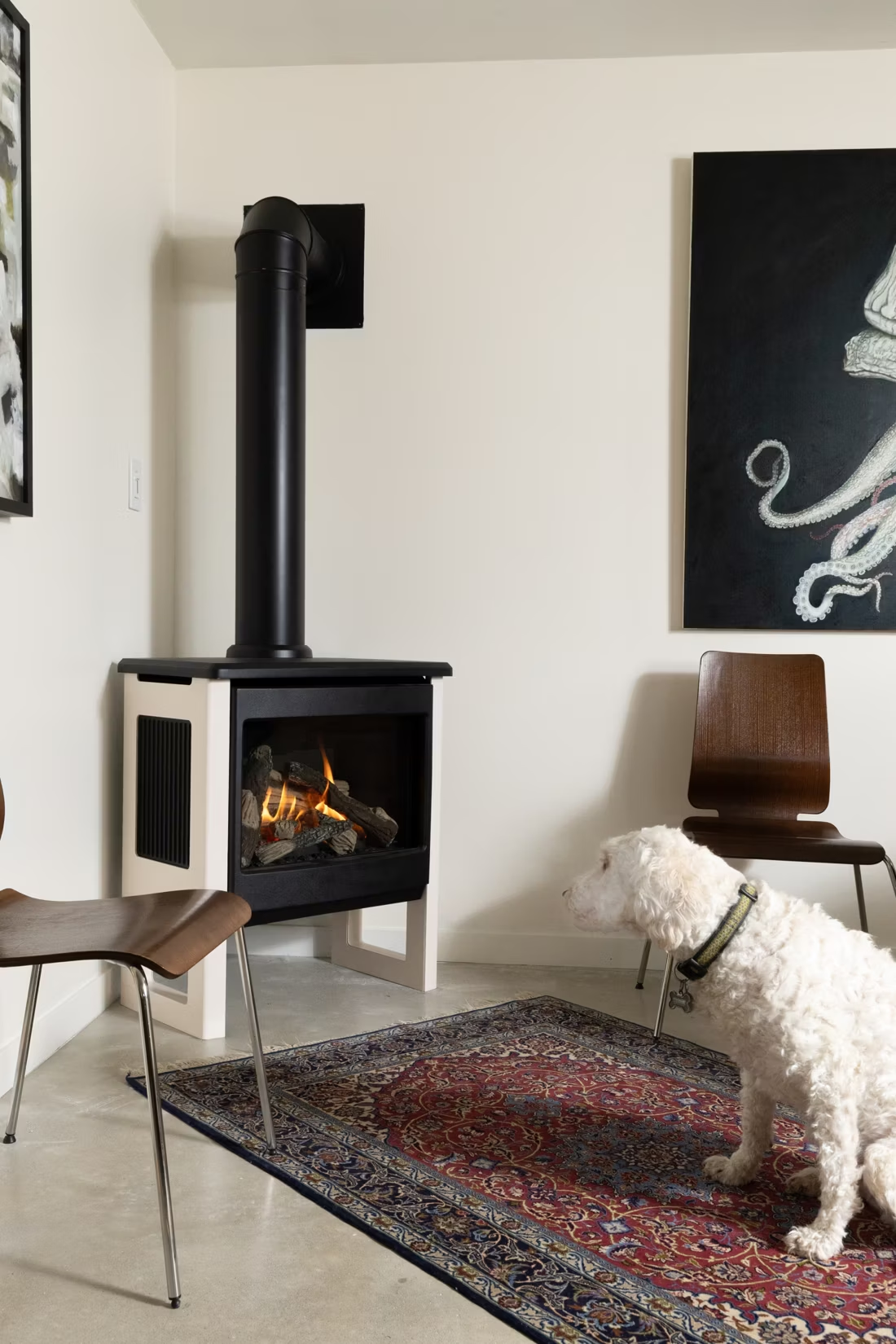
Since wood-burning fireplaces were never common on the Big Island, most Kaloko gas projects aren't conversions—they're new installations in new or remodeled homes. A built-in direct-vent gas fireplace works well for open living areas and lets you frame it into a wall feature. A freestanding gas stove is a simpler, lower-cost option that needs less structural work and can go almost anywhere with proper clearance. Inserts are the exception here, mainly relevant if your home happens to have an existing masonry fireplace shell from an older plantation-era build.
Vented or vent-free—which fits an island home better?
Direct-vent (fully vented) gas fireplaces are the standard recommendation almost everywhere, including Kaloko, because they draw combustion air from outside and exhaust it back outside through a sealed system. Vent-free units are technically an option, but many Kaloko homes rely on open floor plans and natural trade-wind ventilation rather than sealed, tightly-insulated construction, which changes how vent-free combustion byproducts behave indoors. A local dealer can walk through both options, but direct-vent is the safer default for most builds here.
How often does a gas fireplace need servicing in Kaloko?
An annual inspection is recommended, same as anywhere, covering the burner, pilot assembly, gas connections, and glass. It's worth noting that even at Kaloko's elevation, salt-laden trade winds off the Kona coast can accelerate corrosion on exterior propane fittings and tank hardware faster than in a dry mainland climate, so ask your service technician to check those connections specifically during the annual visit.
Gas fireplace vs. electric fireplace—which makes more sense here?
With Hawaii Electric Light Co's residential rate near $0.4831 per kWh—several times the mainland average—running an electric fireplace as a regular heat source gets expensive fast, even though electric units cost far less to install (typically under $1,500 versus $5,500 and up for gas). Electric fireplaces make sense as an occasional-use accent or in a room where running a propane line isn't practical. For a Kaloko home where the fireplace will see real evening use several months a year, propane gas is usually the more economical long-term choice despite the higher upfront installation cost.
Can I put a TV above my fireplace?
Yes—with an asterisk. Fireplaces are hot and TVs don't like heat. Either put a mantel between them to deflect rising warmth, or choose a fireplace with heat-management technology that creates a cool zone on the wall above—the wall stays around 125 degrees, barely warm, while the room still gets full heat. If you like clean lines and don't want a mantel, heat management is the answer.
What's the difference between an insert and a zero-clearance fireplace?
An insert is a fireplace that slides into a pre-existing wood-burning fireplace—if you don't have one, there's nothing to insert it into. A zero-clearance fireplace is built into a framed wall, which makes it the answer for remodels and new construction. Simple test: existing masonry fireplace means insert; blank or framed wall means zero-clearance.
What is an in-home preview and do I need one?
It's a visit where a hearth professional measures your space, confirms the model you picked actually works in your home, and walks the specs—framing, gas line, venting, finish work—before anything is ordered. Some details you just can't know until you see the house. Never make a down payment without one; it's the single most-skipped step that burns buyers.
How much should I budget for a fireplace?
For an average home—covering the fireplace, the vent pipe, and basic installation—a budget between $3,900 and $5,500 gives you a lot of options across wood, gas, and pellet. By the time you add finish work, gas line, and electrical, the average complete installation lands between $5,000 and $12,000 all-in. In a remodel or new build, a good rule is to put about 2.5% of the total project cost toward the fireplace.
Nearby Dealers
Hearth shops serving Kaloko and the surrounding area. Every listing shows whether it is a WhyFire partner, a dealer we have verified as authorized for the brands we recommend, or a local business carrying hearth products. No manufacturer pays for placement. How we verify dealers →
Island Pool & Spa Supply
Hawaii Fireplace – Kamuela
Fireplace & Home Center
Find your gas fireplace in Kaloko.
Tell us about your home and elevation, and we'll match you with the right propane gas fireplace or stove—plus a free Project Guide & Parts List and a trusted local dealer to install it.
Find Your Fireplace →