
Keep Your Family Warm and Safe—No Matter What
Hawaiian Ocean View isn't a heating climate, but the upper slopes of this Mauna Loa subdivision get cool after dark—and a wood stove means heat even when the grid doesn't cooperate. Find the right unit and a trusted local installer.
Every Project Starts From One of These Five Situations
Not a heating climate—but not irrelevant either.
Hawaiian Ocean View sits between about 1,000 and 3,000+ feet on the southwest flank of Mauna Loa, in the rain-shadow lava country of Ka'u. The community's average winter low hovers around 54°F and the area carries only a sliver of winter heating need each year—a rounding error next to the heavy winter heating load a place like Duluth, MN takes on each winter. Almost nobody here needs a wood stove to survive the season. But lots higher up the subdivision run noticeably cooler at night than that average suggests, and a fair number of homeowners want a real heat source for the handful of genuinely chilly evenings between December and February—not to mention the ambiance of an actual fire in a house built for open-air living.
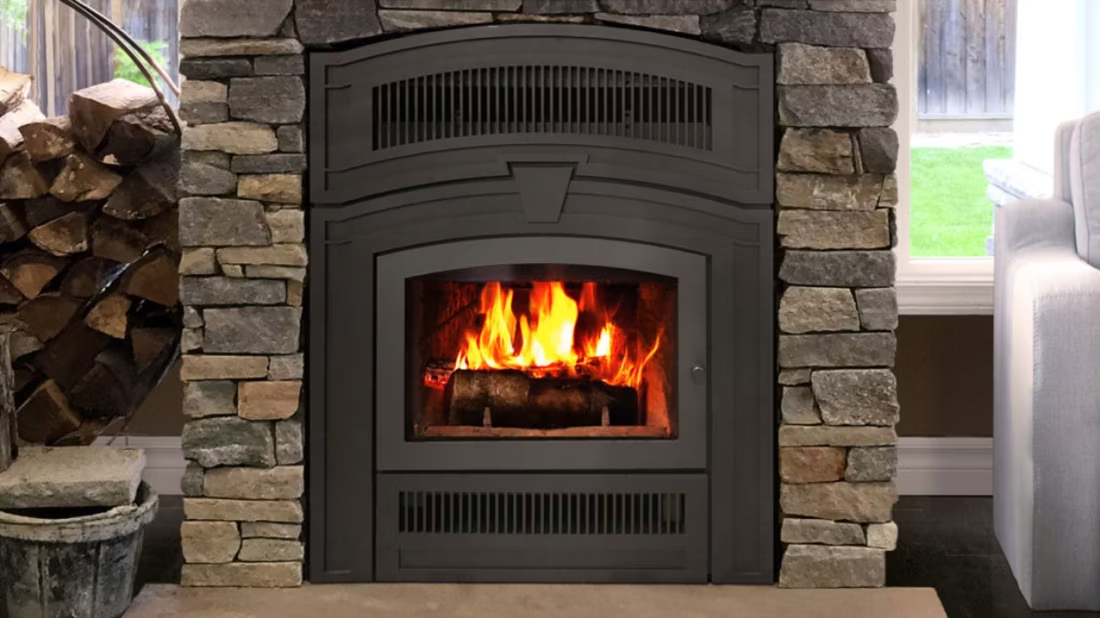
The bigger driver in HOVE isn't cold, it's the grid. Hawaii Electric Light Co. residential rates run about 48 cents per kWh—among the highest in the country—and this is a rural subdivision where many homes run on solar-battery systems, generators, or intermittent overhead lines rather than a rock-solid utility feed. There's no piped natural gas anywhere on the Big Island, so propane and electricity are the alternatives. A wood stove that needs no power and burns fuel you can often clear off your own lot is a genuinely practical backup, not just decor. Locally, eucalyptus (fast-growing and often removed as a nuisance species anyway), native ohia, and koa are the woods people actually burn.
Three steps. No salesperson until you're ready.
Tell us about your project
Your zip code, your situation, and the fuel you're leaning toward—or let the answers point you to one.
See what's actually available
The brands dealers within 100 miles genuinely carry—real options, never a catalog mirage.
Get your dealer & Project Guide
A trusted local dealer, plus the free Project Guide & Parts List that names every component of the job.
Frequently Asked Questions
How much does a wood stove installation cost in Hawaiian Ocean View?
Expect a wider range here than on the mainland, mostly because of freight: stoves, Class A chimney pipe, and hearth materials all have to be shipped by container to the Big Island and then trucked out to Ka'u, which adds cost and lead time compared to a Honolulu or West Coast install. A straightforward freestanding stove installation typically runs $6,000 to $12,000 once shipping, a code-compliant hearth pad, and through-roof venting are factored in. Homes already built with a chimney chase or masonry fireplace opening tend to land on the lower end; new installations in homes with no existing venting path run higher. A local installer familiar with HOVE's off-grid and post-and-pier construction can give you a firm number after seeing the site.
Does it actually make sense to install a wood stove somewhere this mild?
For most HOVE lots, a wood stove is supplemental rather than essential—with such a short, mild winter, you're not fighting a real winter. That said, the subdivision climbs from around 1,000 feet near the highway up past 3,000 feet toward the forest reserve boundary, and upper-elevation homes run meaningfully cooler after sunset than the community-wide 54°F average low suggests. Homeowners up there, plus anyone who wants heat that doesn't depend on HELCO's grid or a fuel delivery, are the ones who typically install a stove. If you're at lower elevation near the highway and mainly want ambiance, a smaller unit or even a gas alternative may suit you better—a local dealer can walk through both.
What kind of firewood is actually available around Hawaiian Ocean View?
Eucalyptus is the most common fuel wood locally—it grows fast, is considered a nuisance species by many landowners clearing lots, and splits and seasons reasonably well in Ka'u's dry, rain-shadow air. Ohia is a dense native hardwood that burns hot and long, but be aware the state has quarantine rules on moving ohia wood and plant material to slow the spread of Rapid Ohia Death, a fungal disease killing ohia forests across the islands—don't transport ohia logs off your property or across districts without checking current Hawaii Department of Agriculture guidance. Koa is prized enough for furniture and woodworking that most owners don't burn it, though downed or diseased koa sometimes ends up in a stove.
Do I need a permit to install a wood stove in Hawaiian Ocean View?
Yes—new solid-fuel stove installations go through the County of Hawaii Department of Public Works Building Division, which reviews the appliance, hearth clearances, and chimney venting for code compliance. The stove itself needs to meet current EPA emissions standards. Unlike wood-heavy mainland towns dealing with winter inversions, Hawaiian Ocean View has no air quality non-attainment issues and no seasonal burn curtailment—the trade winds and open Ka'u terrain keep smoke from accumulating the way it does in enclosed valleys. Most local installers handle the county paperwork as part of the job.
Is a wood stove a good backup for power outages in HOVE?
It's one of the better reasons to install one here. HOVE is served by overhead lines that run outages more often than urban Hilo or Kona, and Hawaii Electric Light Co. residential rates—around 48 cents per kWh—are among the highest in the nation, which already pushes many homeowners toward solar-battery setups or generators. A wood stove adds heat, and in a pinch, a cooking surface, with zero dependence on the grid, an inverter, or fuel deliveries. For off-grid and partially off-grid properties throughout the subdivision, that resilience is often the main draw, more than the mild heating need itself.
Wood stove or propane heater—which makes more sense here?
Since there's no natural gas utility anywhere on the island, propane is the realistic alternative to wood, typically delivered by truck or picked up in exchange tanks. A propane heater lights instantly and needs no wood handling, but you're paying for every delivery and it still depends on a functioning ignition system. A wood stove costs more upfront and needs fuel storage and occasional tending, but once installed, running it costs whatever it takes to source or cut wood—often close to free if you're clearing eucalyptus from your own lot anyway. For occasional-use ambiance, propane is simpler; for backup heat during outages, wood has the edge.
What size wood stove do I actually need for a HOVE home?
Given the mild climate, oversizing is the more common mistake here than undersizing. Most homes only run a stove on the coldest evenings from December through February, and a small to medium stove—rated for 1,000 to 1,500 square feet—is plenty even for a fairly open floor plan, since you're supplementing comfort rather than heating around the clock through a real winter. A stove sized for a Duluth-style cold season will run too hot and too often in a house that barely sees frost. A local installer can size to your elevation and square footage rather than a mainland rule of thumb.
Where do people get firewood in Hawaiian Ocean View?
Most HOVE homeowners source wood locally rather than buying cords delivered, since eucalyptus is abundant and frequently removed as an invasive nuisance tree during lot clearing. If you're cutting your own, split it small and season it a full few months even though Ka'u's dry, rain-shadow climate speeds drying compared to Hawaii's windward wet forests. A handful of small operators and landscaping crews around Ocean View and neighboring Ka'u will sell or deliver seasoned eucalyptus by the truckload if you'd rather not cut your own. Ohia and koa are harder to source in quantity and, in ohia's case, subject to movement restrictions tied to Rapid Ohia Death.
Wood stove vs. pellet stove—which fits a HOVE home better?
Pellet stoves burn cleaner and are simpler to load and run, and Lignetics pellets are available through regional suppliers serving the island. But pellet stoves need continuous electricity to run the auger and blower—a real drawback in a subdivision where grid reliability is inconsistent and HELCO rates run around 48 cents per kWh. A wood stove needs no power at all, which matters more here than in most places, and pairs naturally with the free or low-cost eucalyptus many owners are already clearing off their land. If your property has stable power and you want convenience over resilience, pellet is worth considering; otherwise wood is the more practical choice for HOVE.
Why is a fireplace insert so efficient?
An insert does two things: it seals the chimney completely, so you stop losing air you already paid to heat, and it radiates warmth into the room through the firebox and glass. Most add a heat-exchange fan that pulls cool room air underneath, wraps it around the hot firebox, and pushes it back out warm. Your home is more efficient before you've even lit the first fire.
Why won't my new wood stove get going like my old one?
New wood stoves are 70%+ efficient, so far less heat goes up the flue—which also means less draft to get a fire established. The rule: build a genuinely hot fire for about 45 minutes before you choke it down. Skip that and you get smoke in the room, creosote in the chimney, and a fire that never takes off. Most performance complaints trace straight back to this.
Can I install a fireplace myself?
If you're putting a fire in your house on purpose, it's best to work with an expert. Unless you're genuinely experienced in framing, gas line, vent pipe, and the national code on clearances to combustibles, have a professional do it—and ideally the same company that sells you the fireplace, so warranty, service, and liability all live under one roof.
Does a fireplace add value to my home?
On average, a fireplace adds back to the home about the same amount you spent installing it. Add the monthly savings from heating the rooms you actually use instead of the whole house—often hundreds of dollars a year—and the value case is strong before you even count what a fire does for how your family uses the room.
Nearby Dealers
Hearth shops serving Hawaiian Ocean View and the surrounding area. Every listing shows whether it is a WhyFire partner, a dealer we have verified as authorized for the brands we recommend, or a local business carrying hearth products. No manufacturer pays for placement. How we verify dealers →
Island Pool & Spa Supply
Fireplace & Home Center
Hawaii Fireplace – Kamuela
Find your wood fireplace in Hawaiian Ocean View.
Tell us about your home, your elevation on the mountain, and how you'll use it, and we'll match you with a trusted local installer plus a free Project Guide & Parts List—the exact parts, including the vent kit, for your wood stove project in Hawaiian Ocean View.
Find Your Fireplace →