
Warmth on demand for Wilmington Island's mild winters.
Chatham County rarely sees a hard freeze, but a gas fireplace still earns its keep on marsh-front evenings and during the power outages that follow a tropical storm. Find the right unit and connect with a trusted local dealer.
Every Project Starts From One of These Five Situations
Ambiance most nights, real backup during storm season.
At 15 feet of elevation on a barrier island east of Savannah, Wilmington Island sits in climate zone 2A with an average winter low around 40°F and a winter heating season so mild it adds up to just a fraction of what a place like Duluth, MN racks up before Thanksgiving. Heat pumps handle the real heating load here, which is exactly why gas fireplaces on the island are chosen for ambiance, zone comfort on the occasional 30-degree night, and something central HVAC can't do: keep working when the power goes out.
There's no natural gas utility serving Wilmington Island—Georgia Power handles electric service, but gas fireplace installations here run on propane, delivered and stored in above-ground or buried tanks. That changes the install conversation a bit from a natural-gas market: your local dealer will size a tank, plan the gas line run, and coordinate placement with Chatham County's floodplain and setback rules, since much of the island sits in an AE flood zone. Older island homes from the 1960s and 70s often have a masonry fireplace that rarely gets used in this climate—converting it to a propane insert is one of the most common projects local installers see.
Three steps. No salesperson until you're ready.
Tell us about your project
Your zip code, your situation, and the fuel you're leaning toward—or let the answers point you to one.
See what's actually available
The brands dealers within 100 miles genuinely carry—real options, never a catalog mirage.
Get your dealer & Project Guide
A trusted local dealer, plus the free Project Guide & Parts List that names every component of the job.
Frequently Asked Questions
How much does a gas fireplace installation cost on Wilmington Island?
A propane direct-vent insert into an existing masonry fireplace typically runs $3,500 to $7,000 on the island, including the gas line from an existing tank. If you don't already have a propane tank, add $1,000 to $2,500 for a new above-ground tank and the line run to the firebox—buried tanks cost more given the island's high water table. A new built-in gas fireplace for a remodel or addition, with framing and venting from scratch, typically lands in the $6,000 to $9,500 range. Local dealers will quote a firm number after seeing your existing fireplace or framing plans.
Is natural gas available on Wilmington Island, or is it all propane?
It's propane. There's no natural gas utility serving the island—Georgia Power provides electric service, but gas fireplaces, ranges, and water heaters here run on propane from a tank, typically supplied by regional providers like Blossman Gas or AmeriGas. This isn't unusual for barrier island communities, but it does mean your installation quote should include tank size, placement, and delivery setup rather than just a gas line tie-in.
Can I convert my existing wood fireplace to gas?
Yes, and it's one of the more common hearth projects on Wilmington Island, since wood heat has little practical role in this climate and many island homes have an underused masonry fireplace from the original construction. A propane insert typically runs $4,000 to $7,500 installed, using your existing chimney with a stainless liner as the vent path. The result keeps the look of the original fireplace while giving you instant, controllable heat and real flame—without the smoke, ash, or need to source firewood in a climate that barely calls for it.
Will my gas fireplace work during a power outage?
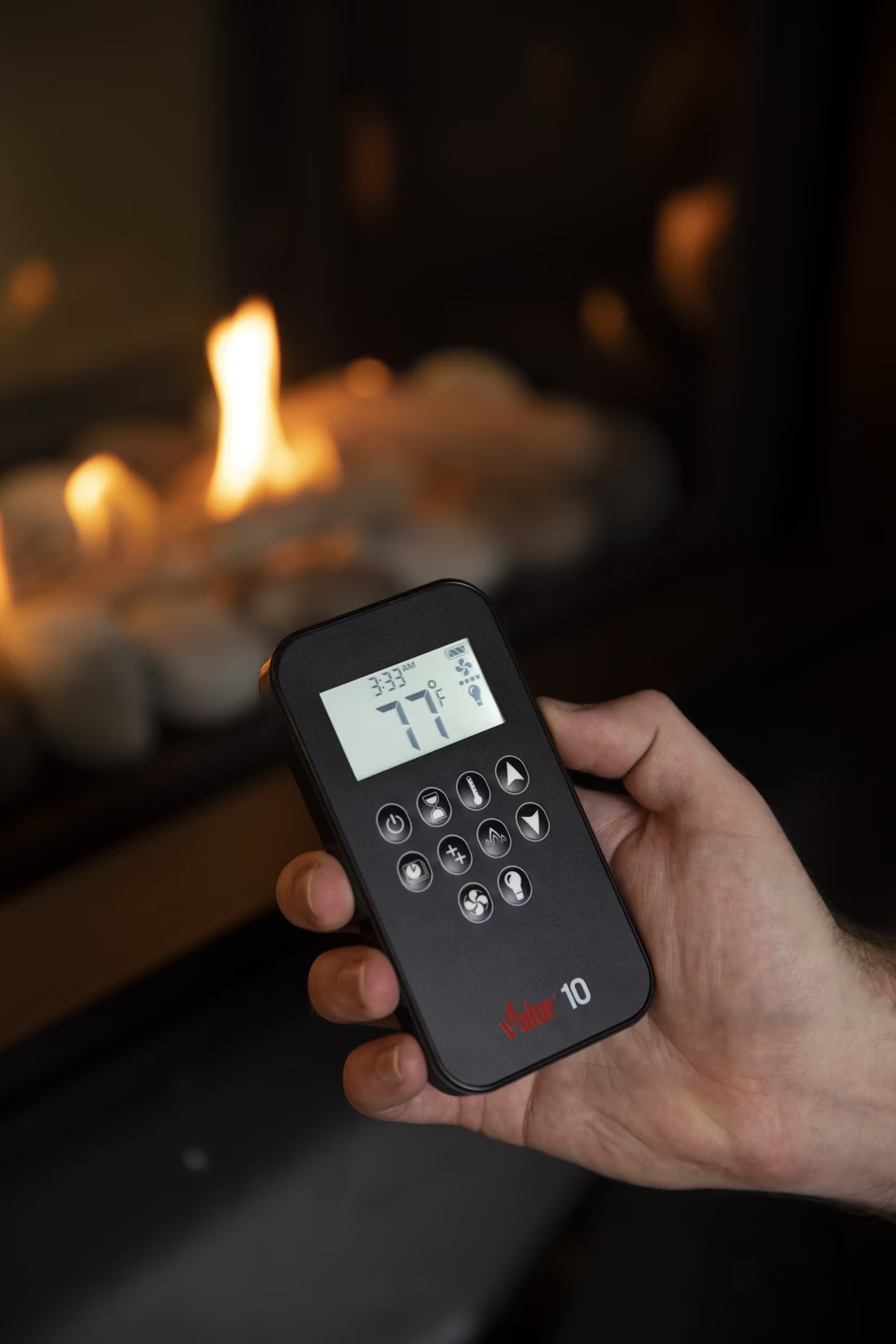
Most will, which matters here more than the mild winters might suggest—Chatham County sees regular tropical storm and hurricane-season outages that can stretch for days. Units with IPI (intermittent pilot ignition) run on a small battery backup that kicks in automatically when the power drops. Valor fireplaces go a step further: their pilot generates its own electricity through the thermocouple, so there's no battery to remember or replace. For an island where outages tend to follow storms rather than cold snaps, that's a real practical advantage worth asking your dealer about.
What's the difference between a gas fireplace, gas insert, and gas stove?
A gas fireplace is a fully built-in unit framed into a wall—the right call for new construction or an addition. A gas insert drops into an existing masonry fireplace opening and uses the chimney as its vent path, which fits the many older island homes built with a wood-burning hearth that now sees little use. A gas stove is a freestanding cabinet-style unit that vents through a wall or existing chimney without requiring a full fireplace opening—a good option for a sunroom or Florida room addition common on the island. Most Wilmington Island homeowners with an existing fireplace go with an insert.
Do I need a permit to install a gas fireplace on Wilmington Island?
Yes. Since Wilmington Island is unincorporated, permitting runs through Chatham County's Building Safety & Regulatory Services Department, and it covers both the fireplace installation and the gas line work from a licensed gas-fitter. If your project includes a new or relocated propane tank, expect the county to also check flood zone setback requirements—much of the island sits in an AE flood zone, and tank placement has to account for that. Most local dealers handle the full permit package as part of the installation.
Should I choose a vented or vent-free gas fireplace?
Vent-free (unvented) units are legal in Georgia within room-sizing limits, but they release some water vapor and combustion byproducts into the living space—a real consideration on a barrier island where indoor humidity and mold are already a year-round concern. Direct-vent, sealed units draw combustion air from outside and exhaust it back outside, which keeps that moisture out of the house entirely. For Wilmington Island's already-humid coastal air, most local dealers steer homeowners toward direct-vent models, reserving vent-free for smaller secondary spaces where venting isn't practical.
How often should my gas fireplace be serviced?
Plan on an annual inspection, and don't skip it here—the salt air off the marsh and ocean accelerates corrosion on burner components, gas valves, and log sets faster than it would inland. A technician should check the pilot assembly, gas connections, and venting for salt-air wear in addition to the standard cleaning. Given how lightly some island units get used outside of cool snaps and outages, a yearly checkup also catches any pilot or ignition issues before the one week a year you actually need the fireplace to work.
Gas vs. wood vs. electric—what actually makes sense on Wilmington Island?
Wood isn't really practical here—with average winter lows around 40°F and a winter heating season that stays short and mild all year, there's little demand for cordwood heat, and it's genuinely uncommon to see a wood stove installed on the island outside of a rare vacation-cabin holdover. Electric fireplaces and inserts (running on Georgia Power's roughly 15.5-cent residential rate) are a low-cost, no-venting option for ambiance in a bedroom or sunroom. Gas, run on propane, is the choice most islanders land on for a primary fireplace—it delivers real heat and flame, and unlike electric, it keeps working when a storm knocks the power out for a few days.
What's the difference between an insert and a zero-clearance fireplace?
An insert is a fireplace that slides into a pre-existing wood-burning fireplace—if you don't have one, there's nothing to insert it into. A zero-clearance fireplace is built into a framed wall, which makes it the answer for remodels and new construction. Simple test: existing masonry fireplace means insert; blank or framed wall means zero-clearance.
Why is a fireplace insert so efficient?
An insert does two things: it seals the chimney completely, so you stop losing air you already paid to heat, and it radiates warmth into the room through the firebox and glass. Most add a heat-exchange fan that pulls cool room air underneath, wraps it around the hot firebox, and pushes it back out warm. Your home is more efficient before you've even lit the first fire.
How much should I budget for a fireplace?
For an average home—covering the fireplace, the vent pipe, and basic installation—a budget between $3,900 and $5,500 gives you a lot of options across wood, gas, and pellet. By the time you add finish work, gas line, and electrical, the average complete installation lands between $5,000 and $12,000 all-in. In a remodel or new build, a good rule is to put about 2.5% of the total project cost toward the fireplace.
What is an in-home preview and do I need one?
It's a visit where a hearth professional measures your space, confirms the model you picked actually works in your home, and walks the specs—framing, gas line, venting, finish work—before anything is ordered. Some details you just can't know until you see the house. Never make a down payment without one; it's the single most-skipped step that burns buyers.
Nearby Dealers
Hearth shops serving Wilmington Island and the surrounding area. Every listing shows whether it is a WhyFire partner, a dealer we have verified as authorized for the brands we recommend, or a local business carrying hearth products. No manufacturer pays for placement. How we verify dealers →
Strickland Oil Co
La Source
Casual Living Fireside And Grillin'
Find your gas fireplace on Wilmington Island.
Tell us a bit about your home and we'll put together a free Project Guide & Parts List—the right unit, the vent kit, and a trusted local dealer who installs gas fireplaces on Wilmington Island.
Find Your Fireplace →