
Find a pellet stove built for Twiggs County's mild Piedmont winters.
Convenient, thermostat-controlled heat for the cool nights that reach Jeffersonville and every rural corner of Twiggs County. We match you with a trusted local dealer who knows what actually fits your home.
Every Project Starts From One of These Five Situations
Efficient, convenient heat for a short but real cold season.
Twiggs County sits in Georgia's Climate Zone 3A—hot, humid summers and a winter season that's short but still cold enough on January and February nights to matter. With a population just over 1,100 spread across mostly rural, wooded land near the fall line, most homes here run central heat pumps or propane as primary systems, and a pellet stove or insert as the room-by-room backup that actually gets used on the coldest nights without running up the whole-house heating bill. There's no dedicated hearth retailer inside the county, so most homeowners get matched with trusted installers based out of Macon or Warner Robins who already know the housing stock—brick ranch homes, single- and double-wide manufactured homes, and older farmhouses—common throughout Twiggs.
Georgia is a major timber-producing state, and that shows up directly in pellet fuel availability: Lignetics, Hamer Pellet Fuel (based in Boston, GA), and Greenway Renewable Energy (based in Waycross, GA) all manufacture pellets from in-state pine and hardwood byproducts, which keeps supply steady and shipping distances short compared to counties that rely on pellets trucked in from out of state. Twiggs County has no air quality non-attainment designation and no winter inversion concerns, so there are no curtailment periods or burn restrictions to plan around—pellet appliances here are simply about convenience and efficient supplemental heat, not compliance.
Three steps. No salesperson until you're ready.
Tell us about your project
Your zip code, your situation, and the fuel you're leaning toward—or let the answers point you to one.
See what's actually available
The brands dealers within 100 miles genuinely carry—real options, never a catalog mirage.
Get your dealer & Project Guide
A trusted local dealer, plus the free Project Guide & Parts List that names every component of the job.
Frequently Asked Questions
How much does a pellet stove installation cost in Twiggs County?
A typical pellet stove or insert installation runs roughly $3,000 to $6,500 depending on whether it's a freestanding stove with a simple through-wall PVC vent kit or a pellet insert going into an existing masonry fireplace with a full liner. Because there's no hearth retailer physically located in Twiggs County—the county's population is just over 1,100 people across a lot of rural land—most trusted installers travel out from Macon or Warner Robins, and that travel time is generally built into the quote rather than tacked on as a surprise. Homes without an existing fireplace or exterior wall access for venting tend to land on the higher end once framing and vent-path work are factored in.
What size pellet stove do I need for a home in Twiggs County?
Because Zone 3A winters here are relatively mild—cold snaps rather than sustained deep freezes—most Twiggs County homes don't need the largest hopper capacity or highest BTU output on the market. A small-to-medium pellet stove (rated for 1,000–1,800 sq ft) is usually plenty for zone heating a living area or open-plan ranch home, with central heat or propane covering the rest of the house. Manufactured and double-wide homes, which are common throughout the county, sometimes need special consideration for floor protection and combustible wall clearances rather than a larger unit. A local installer will size based on your square footage, ceiling height, and how much of the home you're actually trying to heat versus supplement.
Where can I find a certified pellet stove installer near Twiggs County?
Look for NFI (National Fireplace Institute)-certified installers, since pellet appliances involve specific venting and electrical requirements that a general contractor may not be familiar with. Given Twiggs County's small population, there isn't a hearth shop within the county itself—trusted dealers serving this area are typically based in Macon or Warner Robins and travel out for installs in Jeffersonville, Danville, and the surrounding rural areas. Working with an installer who already services this part of Middle Georgia means they've seen the mix of brick veneer ranch homes and manufactured housing common here and know how to vent each correctly.
What's the difference between a pellet stove and a pellet insert?
A pellet stove is a freestanding unit that sits on its own base or hearth pad and vents through an exterior wall or existing chimney—it can go almost anywhere with a clear path to the outside. A pellet insert is built to slide into an existing masonry wood fireplace, using a vent liner run up through the existing chimney to convert an old open hearth into an efficient, thermostat-controlled heat source. For the older brick homes scattered around Twiggs County that already have a wood fireplace, an insert is often the simpler and more cost-effective route. Homes without an existing fireplace—including most manufactured housing in the county—typically go with a freestanding stove and a direct through-wall vent instead.
Do I need a permit to install a pellet stove in Twiggs County?
Yes, a building permit is generally required for a new pellet stove or insert installation, issued through the Twiggs County building and zoning office. The process tends to be simpler than a wood-burning installation since pellet appliances use a smaller-diameter PVC or stainless vent kit rather than a full masonry chimney, and there's no air quality non-attainment designation in the county to complicate approval. Most trusted local installers handle the permit paperwork as part of the job, so homeowners rarely have to deal with the county office directly.
What's the best pellet stove for Twiggs County's climate?
Since Zone 3A winters in Twiggs County are short and mild rather than brutally cold, a mid-efficiency pellet stove from a brand like Harman, Englander, or US Stove Company is generally sufficient—you don't need the largest hopper or the longest unattended burn time that a colder-climate home might require. What matters more here is humidity management: Middle Georgia's humid subtropical air means bagged pellets need to be stored somewhere dry and sealed, since pellets that absorb moisture swell, jam the auger, and burn poorly. Ask your local installer about a stove with a reliable auger feed system and about proper indoor pellet storage before your first delivery.
How often does a pellet stove need to be cleaned and serviced?
Pellet stoves need less maintenance than a wood-burning chimney, but they're not maintenance-free. Plan on cleaning the burn pot and ash pan weekly during regular use, and have the vent pipe, auger, and combustion blower professionally inspected once a year—ideally in early fall, before the first cold nights hit Twiggs County, usually sometime in November. Skipping the annual service is the most common cause of auger jams and poor combustion, which show up as smoke smell or reduced heat output partway through the season.
Where can I buy pellet fuel near Twiggs County?
Bagged pellets from Georgia-based producers—Lignetics, Hamer Pellet Fuel out of Boston, GA, and Greenway Renewable Energy out of Waycross, GA—are the most commonly available brands at farm supply and hardware retailers serving Middle Georgia, including stores in Macon that many Twiggs County residents already shop at. Because these mills are in-state, supply tends to stay steady through cold snaps rather than running short like fuel trucked in from out of region. Expect to pay somewhere in the $250 to $320 per-ton range for a standard-grade bag pallet; buying a season's supply early, before the first real cold spell, avoids the local price bumps that can happen once demand picks up.
Pellet stove vs. wood stove—which makes more sense in Twiggs County?
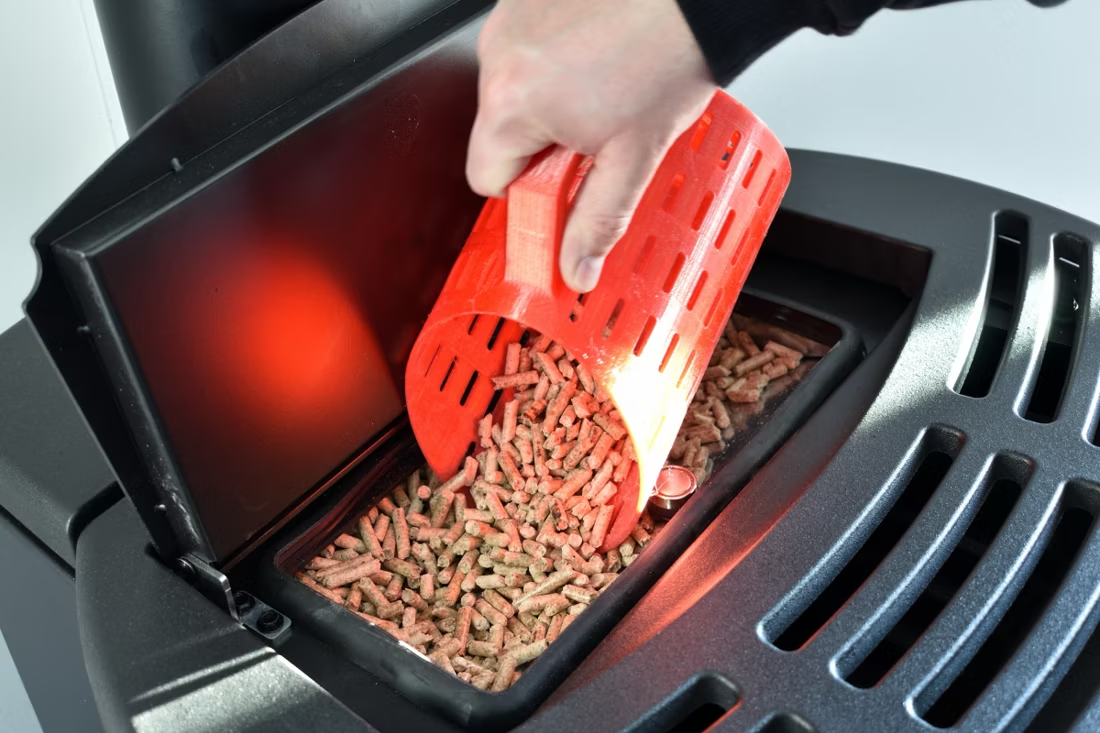
Twiggs County has plenty of local oak, pine, and hickory available for wood burning, and a wood stove works without electricity—a real advantage if the power goes out during a storm. But wood means splitting, stacking, hauling ash, and an annual chimney sweep. A pellet stove trades that labor for hopper loading and a thermostat, burns cleaner with far less ash, and is fed by fuel manufactured right here in Georgia from the state's own timber industry. The tradeoff is that pellet stoves need electricity to run the auger and blower, so they're not a backup heat source during outages. Given how mild and short winters are in Twiggs County, most homeowners lean toward pellet for the convenience and only keep wood as a secondary option if they already have the equipment and supply on hand.
What's the difference between an insert and a zero-clearance fireplace?
An insert is a fireplace that slides into a pre-existing wood-burning fireplace—if you don't have one, there's nothing to insert it into. A zero-clearance fireplace is built into a framed wall, which makes it the answer for remodels and new construction. Simple test: existing masonry fireplace means insert; blank or framed wall means zero-clearance.
Why is a fireplace insert so efficient?
An insert does two things: it seals the chimney completely, so you stop losing air you already paid to heat, and it radiates warmth into the room through the firebox and glass. Most add a heat-exchange fan that pulls cool room air underneath, wraps it around the hot firebox, and pushes it back out warm. Your home is more efficient before you've even lit the first fire.
What is an in-home preview and do I need one?
It's a visit where a hearth professional measures your space, confirms the model you picked actually works in your home, and walks the specs—framing, gas line, venting, finish work—before anything is ordered. Some details you just can't know until you see the house. Never make a down payment without one; it's the single most-skipped step that burns buyers.
Can I install a fireplace myself?
If you're putting a fire in your house on purpose, it's best to work with an expert. Unless you're genuinely experienced in framing, gas line, vent pipe, and the national code on clearances to combustibles, have a professional do it—and ideally the same company that sells you the fireplace, so warranty, service, and liability all live under one roof.
Pellet Brands Stocked Around Twiggs County
Manufacturers will point you to the nearest stocking dealer.
Find your pellet stove in Twiggs County.
Tell us about your home and we'll match you with a trusted local dealer serving Twiggs County, plus a free Project Guide & Parts List—the exact parts, including the vent kit, and the installer we recommend for your pellet project.
Find Your Fireplace →