
Simple, safe heat for Twiggs County's mild winters.
No chimney, no gas line, no venting—just plug-in or hardwired warmth for homes across Jeffersonville, Danville, Dry Branch, and the rest of rural Twiggs County. Find the right unit and connect with a trusted local dealer.
Every Project Starts From One of These Five Situations
The easiest fireplace to add to a Twiggs County home.
Twiggs County sits in climate zone 3A—warm, humid middle Georgia with short, mild winters and only occasional nights near freezing. With a population just over 1,150 spread across Jeffersonville, Danville, and Dry Branch, most homes here never need a full-time heating appliance running for months at a stretch the way a home in Duluth or Fargo would. What Twiggs County homes typically want is targeted, supplemental warmth for the handful of cold snaps each winter—and a fireplace that looks good the other ten months of the year.
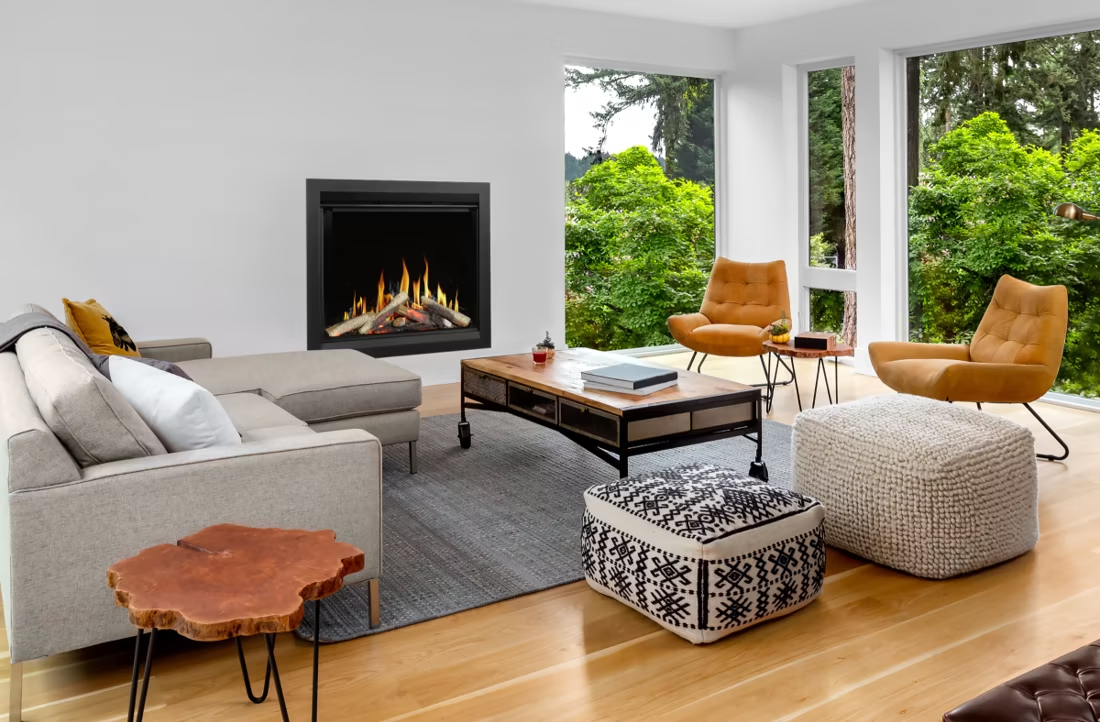
That's exactly where electric fireplaces earn their place. There's no chimney to build, no gas line to run, and no combustion byproducts to vent—a real advantage in a county with a large share of manufactured and site-built rural homes on Central Georgia EMC service, where adding gas infrastructure can be impractical or unavailable. Most units plug into a standard outlet or a simple 240-volt circuit for larger built-ins, install in an afternoon, and deliver instant zone heat and realistic flame ambiance without touching your home's structure. For a county where a hard freeze is the exception rather than the rule, electric is often the most practical fireplace on the table.
Three steps. No salesperson until you're ready.
Tell us about your project
Your zip code, your situation, and the fuel you're leaning toward—or let the answers point you to one.
See what's actually available
The brands dealers within 100 miles genuinely carry—real options, never a catalog mirage.
Get your dealer & Project Guide
A trusted local dealer, plus the free Project Guide & Parts List that names every component of the job.
Frequently Asked Questions
How much does an electric fireplace installation cost in Twiggs County?
Plug-in electric fireplaces and inserts that use an existing standard outlet typically run $300 to $1,000 installed, including mounting and trim work. Built-in electric fireplaces that require a dedicated 240-volt circuit—common for larger linear units in a living room remodel—run closer to $800 to $2,000 once electrical work is included. Because Twiggs County has no gas venting or chimney work involved, electric installs are consistently the least expensive fireplace option available locally, and most jobs are completed in a single visit.
Do I need an electrician for an electric fireplace, or can I install it myself?
A plug-in electric fireplace or insert that uses a standard 120-volt outlet is genuinely a DIY-friendly project—no electrician required. A built-in electric fireplace that needs a dedicated 240-volt circuit, however, should be wired by a licensed Georgia electrician, both for safety and because Twiggs County's building permit process for new circuits requires the work be inspected. Local hearth dealers serving the county typically coordinate this electrical work as part of the installation quote, so homeowners don't have to find and schedule a separate electrician.
Do I need a permit to install an electric fireplace in Twiggs County?
A simple plug-in electric fireplace generally does not require a permit since no new wiring or structural changes are involved. A built-in electric fireplace that requires a new dedicated circuit does require an electrical permit through the Twiggs County Building Department in Jeffersonville, and the work must pass inspection before it's signed off. This is far simpler than the permitting required for wood or gas installations in the county—there's no chimney inspection, no gas-fitter involved, and no clearance-to-combustibles review.
What's the difference between an electric fireplace, insert, and stove?
An electric fireplace is typically a built-in or wall-mounted unit designed for a living room or bedroom remodel. An electric insert is sized to slide into an existing masonry fireplace opening—a common upgrade for older Twiggs County homes with an unused wood-burning fireplace that homeowners want to convert to something maintenance-free. An electric stove is a freestanding cabinet-style unit that mimics the look of a wood stove, often chosen for a den or converted porch. All three run on standard household electricity and none require venting, so the right choice comes down to the space and the look you want rather than any technical constraint.
What size electric fireplace do I need for my home?
Because Twiggs County's mild winters mean most electric fireplaces are used for supplemental zone heat rather than whole-home heating, sizing is more about the room than the square footage of the house. A 1,500-watt insert or built-in comfortably heats a single living room or bedroom in the 300-400 square foot range. Larger linear units spanning 50 inches or more are usually chosen for visual impact in an open-concept living area rather than heat output alone, since most electric fireplaces top out around 5,000 BTU regardless of size. A local dealer can walk through your room dimensions and recommend a wattage that fits both the space and how you plan to use it.
Will my electric fireplace work during a power outage?
No—electric fireplaces require power to operate, including the fan, heating element, and flame effect. Rural Twiggs County, served largely by Central Georgia EMC, can see longer outage restoration times than in-town customers after ice storms or severe thunderstorms, so an electric fireplace shouldn't be relied on as your only heat source if losing power for an extended stretch is a real concern. Many Twiggs County homeowners pair an electric fireplace for everyday convenience and ambiance with a wood stove or propane heater as backup for the rare hard freeze or extended outage.
What's the best electric fireplace for a mild-climate home like mine?
Since Twiggs County's climate zone 3A winters rarely demand serious heating output, most local homeowners prioritize flame realism and design over raw wattage. Brands like Dimplex and Amantii make linear built-ins with strong ember-bed and flame effects that look convincing even with the heater switched off—a popular choice for year-round ambiance. For homes that do want meaningful supplemental heat during the county's occasional cold snaps, look for a unit with a 1,500-watt heater and a built-in thermostat so it cycles efficiently rather than running constantly. A local retailer can show you a few models running in person, which matters more for electric units than any other fireplace type since flame quality varies noticeably between brands.
How much does it cost to run an electric fireplace in Twiggs County?
A 1,500-watt electric fireplace running at full heat costs roughly 15 to 25 cents per hour on typical Central Georgia EMC residential rates—and since Twiggs County's winters are short, most homeowners only run the heater a few weeks a year, with the flame-only ambiance mode used far more often at a fraction of a cent per hour. That makes electric heat inexpensive compared to running a whole-home HVAC system for supplemental warmth, which is part of why electric fireplaces are popular as a low-cost second heat source in the county's older homes.
Electric vs. wood—which is right for my Twiggs County home?
Wood heat has deep roots in rural Twiggs County, where oak, pine, and hickory are all locally abundant and many homeowners still burn a stove for backup heat or tradition. But wood requires a chimney, regular cleaning, and fuel handling—real commitments for a fireplace that might only see use a handful of nights a year given the county's mild climate. Electric skips all of that: no chimney, no ash, no permit hassle beyond a simple electrical inspection if you're adding a circuit, and it can go anywhere in the house with an outlet. For most Twiggs County homes where the fireplace is about ambiance and occasional supplemental warmth rather than serious cold-weather survival heat, electric is usually the simpler and cheaper choice—though a wood stove remains the better backup if extended winter power outages are a real concern for your property.
Does an electric fireplace need a vent or chimney?
No—that's its superpower. An electric fireplace needs a wall and an outlet, period. No vent pipe, no gas line, no clearances to design around, which is why it works in bedrooms, offices, apartments, and walls where venting a gas or wood unit would be impractical or impossible. Installation is typically the simplest and least expensive of any fireplace type.
Can I put a TV above my fireplace?
Yes—with an asterisk. Fireplaces are hot and TVs don't like heat. Either put a mantel between them to deflect rising warmth, or choose a fireplace with heat-management technology that creates a cool zone on the wall above—the wall stays around 125 degrees, barely warm, while the room still gets full heat. If you like clean lines and don't want a mantel, heat management is the answer.
What is an in-home preview and do I need one?
It's a visit where a hearth professional measures your space, confirms the model you picked actually works in your home, and walks the specs—framing, gas line, venting, finish work—before anything is ordered. Some details you just can't know until you see the house. Never make a down payment without one; it's the single most-skipped step that burns buyers.
Can a fireplace actually lower my heating bill?
Yes—by creating a comfort zone. A furnace heats every square foot of the house just to warm the one room you're in; a gas fireplace on low burns roughly a sixth of the gas a typical furnace does. Set the furnace around 55–60 degrees as a baseline, then heat the rooms your family actually uses. Families who heat this way commonly save $20–$60 a month.
Find your electric fireplace in Twiggs County.
Tell us a bit about your home and we'll match you with the right electric fireplace, insert, or stove—plus a free Project Guide & Parts List and a trusted local dealer to install it.
Find Your Fireplace →