
Find your fireplace, anywhere in Twiggs County.
Wood, gas, pellet, and electric fireplace resources for every corner of the county, from Jeffersonville to Danville and Dry Branch. Pick a fuel and get matched with a local dealer who actually installs it out here.
Every Project Starts From One of These Five Situations
Mild middle-Georgia winters, plenty of oak and pine, and a county still built on wood heat.
Twiggs County sits along Georgia's Fall Line in IECC climate zone 3A, where winters are short and mild compared to most of the country—a real heating season, but not the kind of relentless cold that drives homeowners to size a stove for overnight sub-zero burns. With a population of roughly 1,154 spread across Jeffersonville, Danville, and Dry Branch, most households here own or have access to wooded acreage, and oak, pine, and hickory remain the wood species people actually burn, much of it self-cut or bought from a neighbor rather than pulled off public land through a permit office.
There's no non-attainment designation and no air-quality curtailment program to navigate here, which simplifies wood-burning considerably compared to counties that deal with winter inversions—new installs still need to meet EPA 2020 NSPS emissions standards, but there are no yellow-day burn bans to plan around. Municipal natural gas service is limited in a county this rural, so most gas installs run on propane rather than a piped utility. This hub rolls up hearth retailers, service techs, and fuel suppliers across the whole county. Pick your fuel below for local dealers, install costs, and recommendations specific to your town.
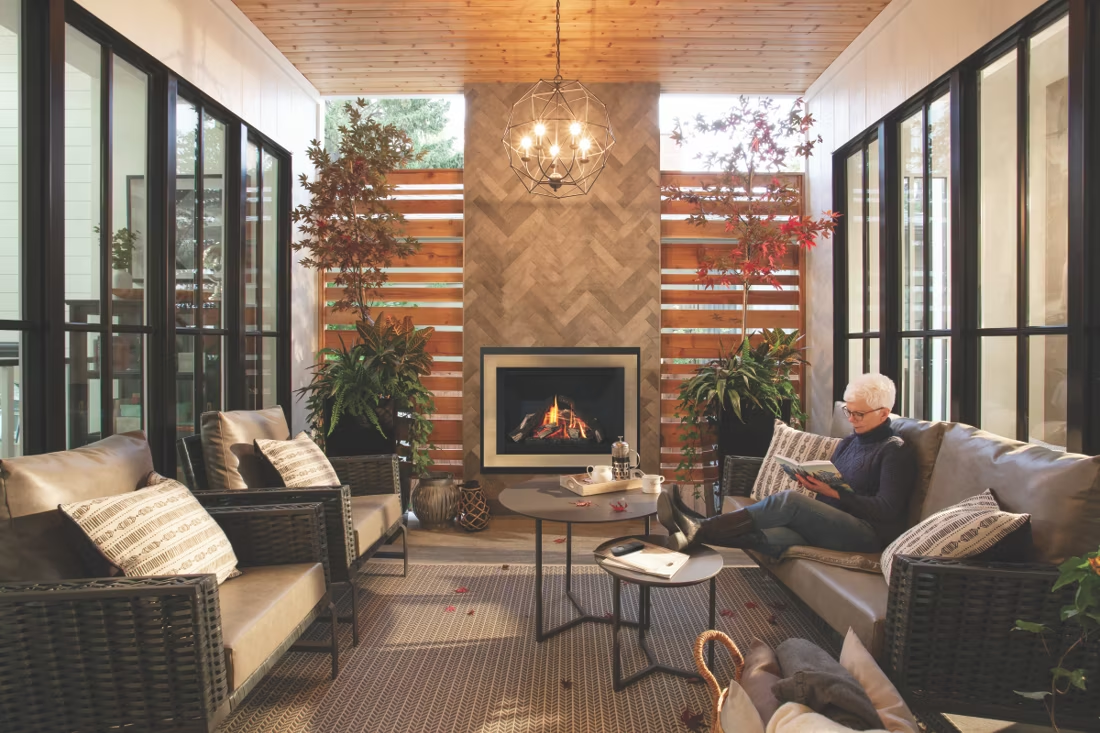
Four fuels. One honest answer for Twiggs County.
Three steps. No salesperson until you're ready.
Tell us about your project
Your zip code, your situation, and the fuel you're leaning toward—or let the answers point you to one.
See what's actually available
The brands dealers within 100 miles genuinely carry—real options, never a catalog mirage.
Get your dealer & Project Guide
A trusted local dealer, plus the free Project Guide & Parts List that names every component of the job.
Frequently Asked Questions
Which fireplace fuel makes the most sense in Twiggs County?
All four fuels work here, and the mild climate zone 3A winter means the choice comes down more to preference and budget than survival heating. Wood remains a natural fit given how much oak, pine, and hickory grows on private land throughout the county—a lot of households already have a wood source and just need a properly vented stove or insert. Gas fireplaces and stoves are popular for convenience, though most homes run on propane rather than piped natural gas given how rural the county is. Pellet stoves have a foothold too, with Lignetics, Hamer Pellet Fuel, and Greenway Renewable Energy all distributed in the region, and they're a good option if you want wood-like heat without splitting and stacking cordwood. Electric fireplaces do more real work here than they would in a harsher climate—with a shorter heating season, an electric insert or stove can genuinely carry a room through most of the winter on its own, not just supplement a bigger system.
Do I need a permit to install a wood stove or gas fireplace in Twiggs County?
Yes, for any new wood, gas, or pellet install you'll go through the Twiggs County Building Department for the building and venting permit. New wood stoves and inserts need to meet EPA 2020 NSPS emissions standards to be permitted, and gas installations require a separate gas-line permit along with a licensed gas fitter to make the propane connection. Unlike counties near national forest land, there's no public-land cutting permit to worry about here—most firewood in Twiggs County comes from private acreage or a local dealer. Electric fireplace installs usually skip the permit process unless you're hardwiring a built-in unit onto a new circuit. Most retailers we match homeowners with handle the paperwork as part of the install.
Since Twiggs County has no air-quality non-attainment issue, does that mean wood burning is unrestricted here?
There's no curtailment program in Twiggs County the way there is in counties that deal with winter inversions, so you won't run into yellow-day burn bans or seasonal restrictions on when you can use a wood stove. That said, any new stove or insert still has to meet EPA 2020 NSPS emissions standards to be legally permitted and installed, and your installer will still need to size the chimney and clearances to code. The absence of an air-quality designation mostly means fewer hoops to jump through, not that older, uncertified stoves are automatically fine to keep running indefinitely—it's still worth having an aging unit inspected before another heating season.
Is natural gas available in Twiggs County, or will I need propane?
Most of Twiggs County is outside any municipal natural gas service area, so gas fireplace and stove installs here typically run on propane, either from a buried tank or a smaller cylinder setup depending on how much fuel your unit uses. That's a normal setup for a county this rural and doesn't limit your options much—gas fireplaces, inserts, and log sets all run fine on propane, and your installer will size the regulator and line accordingly. If you're right in Jeffersonville, it's worth asking a local retailer directly whether piped gas reaches your specific address, but plan on propane as the default when you're budgeting.
What does a fireplace installation typically cost for homeowners in Twiggs County?
Costs run in line with the rest of middle Georgia, though because dealer density is thin in a county this size, expect installers to sometimes travel in from the Macon area, which can add a modest trip fee for the farthest addresses. Wood stove or insert installs generally run $3,500–$7,500 depending on chimney work. Propane fireplaces, inserts, and stoves typically land between $3,500–$8,500, with cost driven mostly by how much gas line has to be run. Pellet stove or insert installs usually fall around $3,500–$6,500. Electric fireplaces are the least expensive option—often $200–$2,500 for the unit, plus $300–$1,000 in labor unless it's a simple plug-and-play placement. The county + fuel pages above break these down further with local retailer pricing.
How should I decide between wood, gas, pellet, and electric in a mild climate like this one?
With a shorter heating season in climate zone 3A, the decision here often comes down to lifestyle rather than raw heating capacity. If you already have access to oak, pine, or hickory on your own land or a neighbor's, wood is the most economical route and the stoves hold up fine given the milder overnight lows. If convenience matters more than fuel cost, propane gives you instant on-off heat without splitting or stacking wood. Pellet stoves are a middle ground—less manual labor than cordwood, still a real heat source, with Lignetics and Hamer Pellet Fuel both available regionally. And because Twiggs County winters are mild enough that no single room needs a massive heat source, electric fireplaces are a legitimate primary option for a bedroom, den, or smaller home, not just a supplemental unit.
Wood, gas, pellet, or electric—how do I choose?
Match the fuel to your life, not the other way around. Wood: lowest fuel cost and total power-outage independence, but you're hauling and stacking. Gas: press a button, set a thermostat, no maintenance to speak of. Pellet: wood economics with automatic feeding, in exchange for weekly cleaning and a need for electricity. Electric: plugs in anywhere with honest supplemental heat. Nobody regrets the fuel that fits how they actually live.
Can I install a fireplace myself?
If you're putting a fire in your house on purpose, it's best to work with an expert. Unless you're genuinely experienced in framing, gas line, vent pipe, and the national code on clearances to combustibles, have a professional do it—and ideally the same company that sells you the fireplace, so warranty, service, and liability all live under one roof.
Does a fireplace add value to my home?
On average, a fireplace adds back to the home about the same amount you spent installing it. Add the monthly savings from heating the rooms you actually use instead of the whole house—often hundreds of dollars a year—and the value case is strong before you even count what a fire does for how your family uses the room.
How much should I budget for a fireplace?
For an average home—covering the fireplace, the vent pipe, and basic installation—a budget between $3,900 and $5,500 gives you a lot of options across wood, gas, and pellet. By the time you add finish work, gas line, and electrical, the average complete installation lands between $5,000 and $12,000 all-in. In a remodel or new build, a good rule is to put about 2.5% of the total project cost toward the fireplace.
Stove and Fireplace Dealers in Twiggs County
Listings include WhyFire partner dealers, dealers we have verified as authorized for the brands we recommend, and established local businesses that carry hearth products. Every listing shows which one it is. The ones marked Preferred run on WhyFire's software, so they can show you real pricing and book your appointment right here. No manufacturer pays for placement. How we verify dealers →
Evergreen Propane, LLC
Macon Spa & Wood Stoves
Advance Home Specialties
Ard Propane
Get matched with a local Twiggs County dealer.
Pick your fuel below and we'll put together a free Project Guide & Parts List—the right unit, the vent kit it needs, and the local dealer we recommend for your project.
Find Your Fireplace →