
Pellet stoves are uncommon in Newton County, but not unheard of.
With an average winter low of 34°F and a heating season that's short and mild, most Newton County homes are built and heated around mild Zone 3A winters—gas and electric do the heavy lifting. But a small, real segment of homeowners still want a pellet stove, and I can connect you with a local dealer who can actually get one installed correctly.
Every Project Starts From One of These Five Situations
Newton County's mild winters don't call for pellet heat—for most homes.
Newton County sits in the Atlanta metro's outer ring, in climate zone 3A with a mixed-humid profile far removed from the wood-heat culture of places like Duluth, MN or Burlington, VT. With a mild, short heating season and a winter low averaging 34°F, most heating seasons here are short and mild—a few cold snaps into the 20s, not weeks of sustained sub-zero cold. That's a fraction of what a serious pellet-heating climate sees, and it's the main reason pellet stoves never became a default heating choice in the county the way gas and electric systems did.
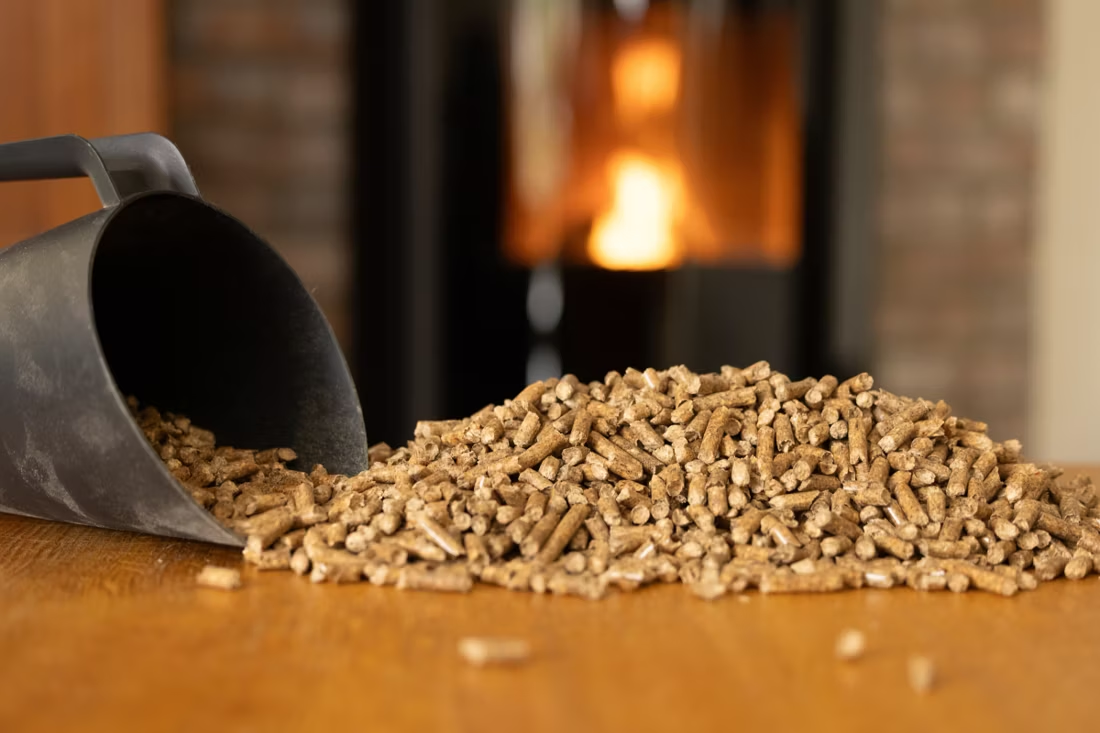
That said, pellet stoves haven't disappeared entirely. A handful of Newton County homeowners install them for supplemental heat in a detached workshop, a converted garage, a hunting cabin on acreage outside Covington or Mansfield, or simply because they like the look and lower ash mess compared to a wood stove. When someone does move forward, pellet fuel is sourced regionally from brands like Lignetics, Hamer Pellet Fuel, and Greenway Renewable Energy—all of which serve the broader Southeast even though local retail demand is thin. If you're one of the homeowners who wants this, the key is finding a dealer who actually installs and services pellet units regularly, not someone treating it as a rare special order.
Three steps. No salesperson until you're ready.
Tell us about your project
Your zip code, your situation, and the fuel you're leaning toward—or let the answers point you to one.
See what's actually available
The brands dealers within 100 miles genuinely carry—real options, never a catalog mirage.
Get your dealer & Project Guide
A trusted local dealer, plus the free Project Guide & Parts List that names every component of the job.
Frequently Asked Questions
Do pellet stoves actually make sense in Newton County?
For most homes, no—not as a primary heat source. With such a short, mild heating season and winter lows averaging 34°F, Newton County's heating season is short enough that gas and electric systems handle the job efficiently without the fuel logistics of pellets. Where pellet stoves do make sense here: a detached workshop or shop building without ductwork, a weekend cabin on rural acreage, a sunroom addition, or a homeowner who specifically wants the ambiance and lower mess of pellet over wood. I'll be direct with you if a pellet stove isn't the best fit for your situation—and point you toward gas or electric options that make more sense for Newton County's climate.
How much does a pellet stove installation cost in Newton County?
Nationally, a pellet stove installation typically runs $3,000 to $6,500 depending on the unit, whether venting is straightforward through an exterior wall, and whether electrical work is needed for the auger and blower circuit. Because pellet installs are infrequent in Newton County compared to, say, a mountain-climate county in the Northeast, expect fewer dealers to specialize in them—which can mean a slightly wider quote range than you'd see for a gas fireplace install. Get a firm, in-home quote from a dealer who has actually installed pellet units locally before committing.
Where can I buy pellet fuel near Newton County?
Pellet fuel bags aren't stocked on every hardware store shelf here the way they are in colder states, but regional brands including Lignetics, Hamer Pellet Fuel, and Greenway Renewable Energy distribute throughout Georgia and are available through farm supply stores, feed stores, and specialty hearth dealers who special-order by the pallet. If you install a pellet stove, plan to buy a season's supply (roughly 100-150 bags for typical supplemental use) in one or two orders rather than picking up bags as needed, since local retail turnover is low.
Will a pellet stove work as backup heat during a Newton County power outage?
No—this is worth knowing before you buy. Pellet stoves require electricity to run the auger that feeds fuel and the blower that circulates heat, so they shut down the moment the power goes out. Georgia does see occasional ice storms that knock out power for days across the Atlanta metro area, including Newton County, so if backup heating during an outage is your priority, a vented gas fireplace with battery-backup ignition—or a wood-burning unit—is a more reliable choice than pellet.
Should I get a pellet stove or a gas fireplace in Newton County?
For the vast majority of Newton County homes, gas is the better fit. Natural gas and propane fireplaces offer instant on-off heat, no fuel storage or ash cleanup, and (with the right ignition system) the ability to keep working through a power outage—a real consideration given the region's occasional ice storms. Pellet stoves make more sense for a specific secondary use case: a detached workshop, a cabin, or a homeowner who prefers the visual and tactile experience of a real flame over gas. If you're heating your main living space, start the conversation with a gas dealer; if you have a specific supplemental-heat project, a pellet-experienced dealer is who you want.
Do I need a permit to install a pellet stove in Newton County?
Most jurisdictions in Newton County, including unincorporated areas and the city of Covington, require a building permit for a new hearth appliance installation, particularly when it involves new venting or electrical circuits for the stove's auger and blower. Requirements can vary by whether you're inside city limits or in the unincorporated county, so confirm with your local building department before work starts. A dealer who regularly installs pellet units will typically handle the permit application as part of the job.
What size pellet stove do I need for a Newton County home or shop?
Given the mild climate, most Newton County pellet installations are sized for supplemental heat rather than whole-home heating—a small to mid-size unit (rated for 1,000-1,500 sq ft) is usually plenty for a workshop, converted garage, or single large room. Sizing up beyond that risks a stove that short-cycles constantly, since it rarely needs to run at full output in a Zone 3A winter. A local dealer can size the unit to your actual space rather than a generic BTU chart.
Georgia produces a lot of wood pellets—why is pellet heating still rare here?
It's a bit of a paradox: Georgia is one of the largest wood pellet manufacturing states in the country, with mills processing regional pine into pellets—but the vast majority of that output is industrial-grade fuel exported for power generation in Europe, not residential heating bags sold at the local hardware store. Newton County's own oak, pine, and hickory forests feed that broader timber economy, but the retail pellet-stove supply chain here serves a small residential niche rather than a mainstream heating market, which is why finding a local dealer who stocks and services pellet stoves takes more legwork than finding a gas fireplace dealer.
Pellet stove vs. wood stove—which is more practical in Newton County?
Both are niche choices in Newton County's mild climate, but they solve different problems. A wood stove burns cordwood from local oak, pine, or hickory, works without electricity, and appeals to homeowners who want a self-sufficient backup heat source. A pellet stove is more automated—load the hopper, set a thermostat, less ash—but it depends entirely on grid power and requires sourcing bagged fuel from regional suppliers rather than cutting your own. For most Newton County homeowners considering either, the honest answer is that gas or electric will serve better as primary heat; wood or pellet fits a specific secondary need like a workshop, cabin, or backup plan.
Why is a fireplace insert so efficient?
An insert does two things: it seals the chimney completely, so you stop losing air you already paid to heat, and it radiates warmth into the room through the firebox and glass. Most add a heat-exchange fan that pulls cool room air underneath, wraps it around the hot firebox, and pushes it back out warm. Your home is more efficient before you've even lit the first fire.
How often does a pellet stove need cleaning?
A clean pellet stove is a happy pellet stove. Plan on cleaning the burn pot about once a week when you're burning regularly—ash and clinkers gum up the air holes just like a pellet barbecue. Most pellet stove problems trace back to skipped cleaning that nobody explained up front. Some designs make it easy with a trapdoor burn pot: pull a lever and the gunk drops into the ash pan.
Can I install a fireplace myself?
If you're putting a fire in your house on purpose, it's best to work with an expert. Unless you're genuinely experienced in framing, gas line, vent pipe, and the national code on clearances to combustibles, have a professional do it—and ideally the same company that sells you the fireplace, so warranty, service, and liability all live under one roof.
What is an in-home preview and do I need one?
It's a visit where a hearth professional measures your space, confirms the model you picked actually works in your home, and walks the specs—framing, gas line, venting, finish work—before anything is ordered. Some details you just can't know until you see the house. Never make a down payment without one; it's the single most-skipped step that burns buyers.
Stove and Fireplace Dealers in Newton County
Pellet Brands Stocked Around Newton County
Manufacturers will point you to the nearest stocking dealer.
Find your pellet stove in Newton County.
Tell me about your project—workshop, cabin, or supplemental heat—and I'll match you with a trusted local dealer and send over a free Project Guide & Parts List with the exact parts, vent kit, and recommended installer for your Newton County home.
Find Your Fireplace →