
Fireplaces built for Newton County's mild winters.
Fireplace resources for Covington, Oxford, Porterdale, Mansfield, Newborn, and every community in Newton County. Get matched with a trusted local hearth retailer who knows what actually fits this climate.
Every Project Starts From One of These Five Situations
Mild-climate heating in Newton County, Georgia.
Newton County sits in climate zone 3A, about 35 miles east of Atlanta, with Covington as the county seat. Winters here are short and mild—the average winter low hovers around 34°F, and the county logs roughly 2,847 heating degree days a year, a fraction of what a colder market like Duluth, MN or Fargo, ND sees in a single season. Central HVAC handles nearly all of the heating load in a typical Newton County home, which is why wood stoves and pellet stoves have essentially no functional foothold here—they're not part of the local building demand the way they are farther north. Gas and electric fireplaces are the standard choice, used for ambiance, ready warmth on a cold front, and supplemental heat in sunrooms or bonus rooms. Some older homes around Covington and Oxford still have wood-burning masonry fireplaces, and local oak, pine, and hickory get burned occasionally for the atmosphere of a fire, but that's decorative use, not primary heat.
What you'll find on this hub: hearth retailers, service technicians, and fuel suppliers serving every community in the county—Covington, Oxford, Porterdale, Mansfield, Newborn, and the surrounding unincorporated areas. Pick your fuel below to see local dealers, installation costs, and the resources that match your project. Because wood and pellet appliances see so little local demand, most of what you'll find here centers on gas and electric fireplaces—the fuels Newton County homeowners actually install.
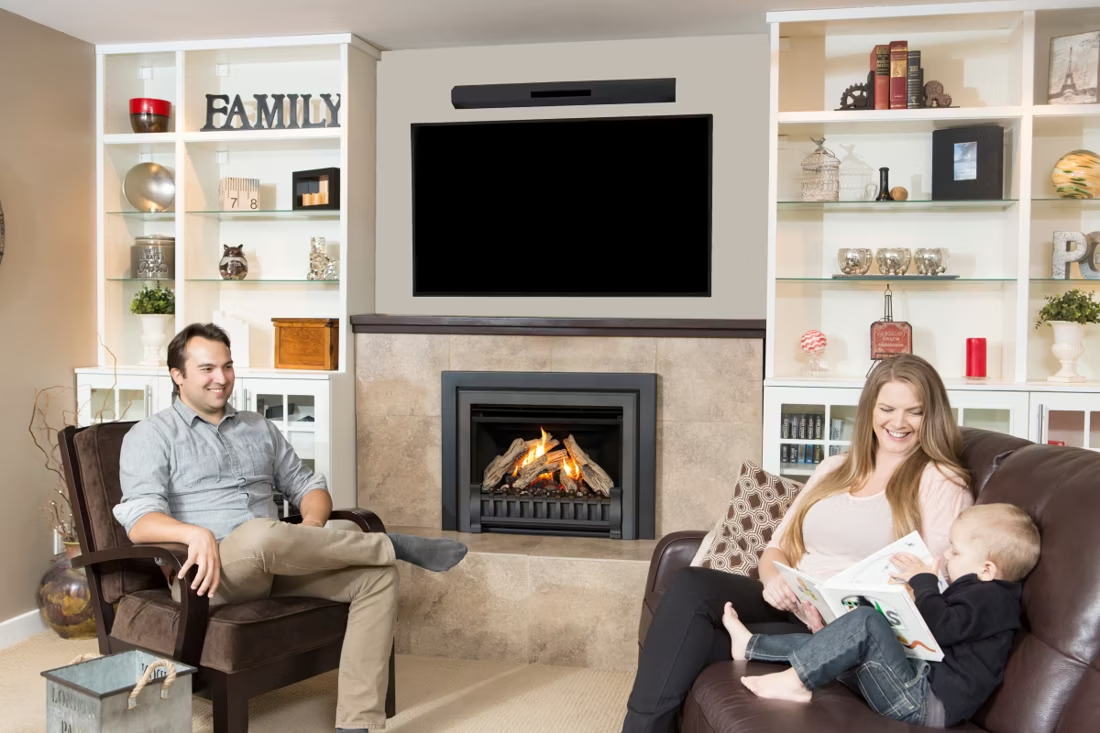
Four fuels. One honest answer for Newton County.
Three steps. No salesperson until you're ready.
Tell us about your project
Your zip code, your situation, and the fuel you're leaning toward—or let the answers point you to one.
See what's actually available
The brands dealers within 100 miles genuinely carry—real options, never a catalog mirage.
Get your dealer & Project Guide
A trusted local dealer, plus the free Project Guide & Parts List that names every component of the job.
Frequently Asked Questions
Which fuel works best in Newton County?
Gas is the standard functional choice here—natural gas or propane, instant heat, low maintenance, and enough output to take the edge off a cold front without relying on central HVAC alone. Electric fireplaces are popular in newer construction and for supplemental heat in sunrooms and bonus rooms. Wood-burning fireplaces still show up in older homes around Covington and Oxford, mostly for ambiance and the occasional fire using local oak, pine, or hickory, but they're not depended on as primary heat—Newton County's roughly 2,847 heating degree days are a fraction of what a colder climate like Bozeman, MT logs in a season. Pellet stoves are essentially absent from local building; the heating demand here doesn't justify the appliance or the fuel handling.
Are wood stoves or pellet stoves common in Newton County?
Not really. With winter lows averaging around 34°F and a heating season that's short compared to northern climates—Newton County sees roughly 2,847 heating degree days a year against 7,000-plus in a place like Fargo, ND—central HVAC covers nearly all of the heating load. Wood-burning appliances that do go in are almost always decorative masonry or factory-built fireplaces added for atmosphere, not functional wood stoves rated for overnight burns. Pellet stoves and pellet inserts are rare enough that most local hearth retailers don't keep them in stock; if you want one, expect a dealer to special-order it.
Do I need a permit for a gas fireplace in Newton County?
Yes. Gas fireplace, insert, or stove installations generally require a building permit plus a licensed gas-fitter for the gas line connection, whether you're on natural gas or propane. Inside Covington, Oxford, or Porterdale, permits are issued through the city; outside city limits, permits go through the Newton County building department. Electric fireplaces typically don't need a permit unless it's a built-in installation requiring new wiring or a dedicated circuit, which usually calls for an electrical permit. Most local retailers who sell and install gas or electric fireplaces handle the permit paperwork as part of the job.
What does a gas or electric fireplace cost to install in Newton County?
Gas fireplace, insert, or stove installations typically run $4,000–$9,000, with conversions of an existing wood-burning fireplace to gas logs or a gas insert landing toward the lower end. Electric fireplaces run $200–$2,500 for the unit, plus $300–$1,000 in labor for anything beyond plug-and-play, such as a built-in wall unit needing a dedicated circuit. Decorative wood-burning fireplace additions cost more here, often $6,000–$15,000-plus with chimney work, since they're uncommon enough in this market to require custom labor rather than a routine install.
Can one local retailer handle both gas and electric fireplaces?
Yes—since gas and electric are the two fuels Newton County homeowners actually install, most local hearth retailers based in or near Covington carry both lines, and many will also special-order a decorative wood-burning fireplace on request. Dealers who stock pellet stoves or functional wood stoves as standard inventory tend to be based farther out toward metro Atlanta or north Georgia, where colder microclimates support that demand.
How does hearth service work in the rural parts of Newton County?
Most gas and electric fireplace technicians serving Newton County are based in Covington and travel out to Oxford, Porterdale, Mansfield, Newborn, and the unincorporated county, typically within a 20-30 mile service radius. The main recurring visit is an annual gas line and igniter check; electric units rarely need more than an occasional blower or bulb replacement. If your home has one of the county's older masonry wood-burning fireplaces, chimney sweeps are a smaller pool locally than in colder regions, so it's worth booking in early fall before that limited group of sweeps fills up.
Wood, gas, pellet, or electric—how do I choose?
Match the fuel to your life, not the other way around. Wood: lowest fuel cost and total power-outage independence, but you're hauling and stacking. Gas: press a button, set a thermostat, no maintenance to speak of. Pellet: wood economics with automatic feeding, in exchange for weekly cleaning and a need for electricity. Electric: plugs in anywhere with honest supplemental heat. Nobody regrets the fuel that fits how they actually live.
How much should I budget for a fireplace?
For an average home—covering the fireplace, the vent pipe, and basic installation—a budget between $3,900 and $5,500 gives you a lot of options across wood, gas, and pellet. By the time you add finish work, gas line, and electrical, the average complete installation lands between $5,000 and $12,000 all-in. In a remodel or new build, a good rule is to put about 2.5% of the total project cost toward the fireplace.
What is an in-home preview and do I need one?
It's a visit where a hearth professional measures your space, confirms the model you picked actually works in your home, and walks the specs—framing, gas line, venting, finish work—before anything is ordered. Some details you just can't know until you see the house. Never make a down payment without one; it's the single most-skipped step that burns buyers.
Does a fireplace add value to my home?
On average, a fireplace adds back to the home about the same amount you spent installing it. Add the monthly savings from heating the rooms you actually use instead of the whole house—often hundreds of dollars a year—and the value case is strong before you even count what a fire does for how your family uses the room.
Stove and Fireplace Dealers in Newton County
Listings include WhyFire partner dealers, dealers we have verified as authorized for the brands we recommend, and established local businesses that carry hearth products. Every listing shows which one it is. The ones marked Preferred run on WhyFire's software, so they can show you real pricing and book your appointment right here. No manufacturer pays for placement. How we verify dealers →
Rutherford Equipment, Inc.
Fireplaces By Mike
C & P Fireplaces
Anything Fireplace
Find your fireplace in Newton County.
Get matched with a trusted local Newton County dealer and receive a free Project Guide & Parts List—the exact parts, vent kit, and recommended installer for your home.
Find Your Fireplace →