
Find the right electric fireplace for your Newton County home.
Mild winters, no gas line, no chimney to maintain—electric fireplaces fit the way most Newton County homes actually heat. Get matched with a trusted local dealer who can size and install it right.
Every Project Starts From One of These Five Situations
Supplemental warmth for a climate that rarely demands more.
Newton County sits in climate zone 3A with an average winter low around 34°F and a mild, short winter heating season—a fraction of what a place like Bismarck, ND or Duluth, MN sees in a single winter. Central HVAC handles the vast majority of heating load here, from Covington to Oxford to Porterdale, and the coldest stretches of the year are typically short cold snaps rather than sustained deep freezes. That's exactly the profile where electric fireplaces make the most sense: they don't need to carry the whole house through January, they just need to add ambiance and a little zone heat to the room you're actually in.
Because there's no combustion, no venting, and no gas line to run, electric units install faster and cheaper than almost any other hearth option—often into an existing wall, a converted masonry fireplace opening, or a simple built-in cabinet. For a county where wood-burning is largely off the table due to a lack of air quality concerns driving demand and where natural gas infrastructure varies by neighborhood, electric offers a clean, low-maintenance way to add a fireplace feature to a den, bedroom, or basement without touching your existing heating system.
Three steps. No salesperson until you're ready.
Tell us about your project
Your zip code, your situation, and the fuel you're leaning toward—or let the answers point you to one.
See what's actually available
The brands dealers within 100 miles genuinely carry—real options, never a catalog mirage.
Get your dealer & Project Guide
A trusted local dealer, plus the free Project Guide & Parts List that names every component of the job.
Frequently Asked Questions
How much does an electric fireplace installation cost in Newton County?
Most electric fireplace installations in Newton County run $400 to $1,200, and it's one of the more affordable hearth projects available. A plug-in insert into an existing fireplace opening or a wall-mount unit on a standard household outlet sits at the low end. Built-in units that require a dedicated 120V or 240V circuit, or custom mantel and surround carpentry, push toward the higher end. Because there's no venting or gas line involved, the bulk of the cost is the unit itself and any electrical work—a local dealer can walk you through options during an in-home visit in Covington, Oxford, or anywhere else in the county.
Do electric fireplaces actually produce useful heat, or are they just for looks?
Both, depending on the model. Most electric inserts and stoves include a built-in fan-forced heater rated around 4,600–5,000 BTU, enough to comfortably warm a single room of 400–1,000 square feet—plenty for a Newton County den or bedroom on a cold snap night when the average low dips into the low 30s. The flame effect can run independently of the heater, so you get ambiance year-round and supplemental warmth only when you want it. Don't expect an electric unit to replace your central HVAC system as primary heat; it's built for zone comfort, not whole-house heating load.
Do I need a permit to install an electric fireplace in Newton County?
In most cases, no separate permit is needed for a plug-in electric fireplace that uses an existing standard outlet—it's treated like any other appliance. If your installation requires new electrical wiring, a dedicated circuit, or a built-in unit with permanent wall modifications, an electrical permit through Newton County's building department may apply. A local dealer or licensed electrician handling the installation will know exactly what's required for your specific setup and can pull any necessary permit as part of the job.
What's the difference between an electric insert, an electric stove, and a wall-mount unit?
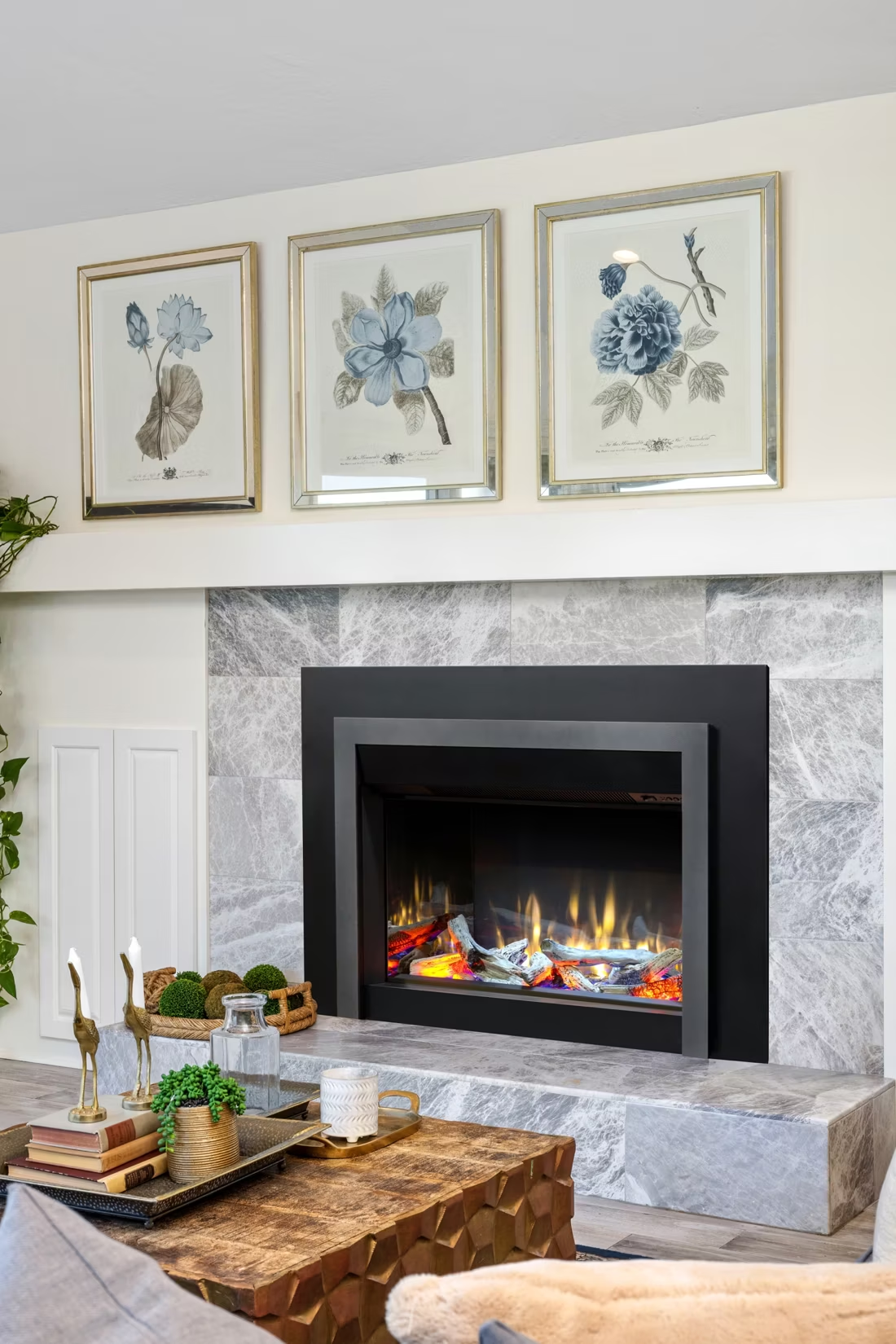
An electric insert is sized to slot into an existing fireplace opening—a good fit for Newton County homes with an old wood-burning fireplace that's no longer used. An electric stove is a freestanding unit styled like a traditional wood stove that plugs into a standard outlet and can sit almost anywhere. A wall-mount unit hangs flush or recessed into a wall like a piece of art, with a linear flame display that suits contemporary living rooms. For most homes with an existing masonry fireplace they want to reactivate without a chimney or gas line, an insert is the simplest path; for new construction or rooms without a fireplace, a wall-mount or freestanding stove works just as well.
Is wood or pellet heat available as an option in Newton County?
Technically yes, but it's uncommon and not something local demand supports the way it does farther north. With Newton County's mild, short winter heating season and no air quality restrictions driving alternative-heat adoption, most homeowners here don't need a supplemental heat source beyond their existing HVAC. A small number of rural properties with access to oak, pine, or hickory firewood do run a wood stove for backup heat or ambiance, and pellet stoves from brands like Lignetics or Hamer Pellet Fuel are occasionally installed, but neither is a mainstream choice locally. If you're set on either, a local dealer can tell you honestly whether it makes sense for your specific home.
Will my electric fireplace work during a power outage?
No—electric fireplaces require power to run both the flame effect and the heater, so they won't operate during an outage. This is worth factoring in if backup heat during storms matters to you; Newton County occasionally sees outages from severe thunderstorms or ice events. If reliable backup heat is a priority, a gas fireplace or a wood-burning option (even though wood is uncommon locally) would be a better complement to an electric unit rather than a replacement for one.
What size electric fireplace do I need for my room?
Sizing an electric fireplace is mostly about the room it's heating and the look you want, since even a modest unit can supply enough heat for typical room sizes in this climate. As a rough guide: a 26–32 inch insert or wall-mount suits a bedroom or small den, a 36–50 inch unit fits a standard living room, and 60-inch-plus linear models work for open-concept great rooms or as a statement piece in newer Newton County builds. Because the heating capacity tops out around 5,000 BTU regardless of physical size on most models, bigger units are primarily a visual choice rather than a heating one—a local dealer can help you match size to your actual space.
Can an electric fireplace be installed into an existing wood-burning fireplace?
Yes, and it's one of the most common projects for older Newton County homes with an existing masonry fireplace that's no longer in regular use. An electric insert slides into the opening, plugs into a nearby outlet (or a new dedicated circuit if the unit requires more power), and requires no venting, chimney liner work, or gas line. It's a straightforward way to convert a fireplace that's just collecting dust into a functional, low-maintenance feature—without the cost or ongoing maintenance of chimney sweeping.
Electric vs. gas—which is right for my Newton County home?
Gas offers higher heat output, the ability to serve as a real supplemental heat source on colder nights, and—with the right ignition system—the option to run during a power outage. Electric offers a much lower installation cost, no venting or gas line requirement, and the flexibility to install almost anywhere in the house, including rooms where running a gas line isn't practical. For a Newton County home with a mild, short winter heating season overall, electric is often the simpler and more cost-effective choice for ambiance and light supplemental warmth, while gas makes more sense if you want a fireplace that can genuinely offset your heating bill during cold snaps. A local dealer can walk through both options based on your specific room and budget.
Can I put a TV above my fireplace?
Yes—with an asterisk. Fireplaces are hot and TVs don't like heat. Either put a mantel between them to deflect rising warmth, or choose a fireplace with heat-management technology that creates a cool zone on the wall above—the wall stays around 125 degrees, barely warm, while the room still gets full heat. If you like clean lines and don't want a mantel, heat management is the answer.
Does an electric fireplace need a vent or chimney?
No—that's its superpower. An electric fireplace needs a wall and an outlet, period. No vent pipe, no gas line, no clearances to design around, which is why it works in bedrooms, offices, apartments, and walls where venting a gas or wood unit would be impractical or impossible. Installation is typically the simplest and least expensive of any fireplace type.
Does a fireplace add value to my home?
On average, a fireplace adds back to the home about the same amount you spent installing it. Add the monthly savings from heating the rooms you actually use instead of the whole house—often hundreds of dollars a year—and the value case is strong before you even count what a fire does for how your family uses the room.
Can a fireplace actually lower my heating bill?
Yes—by creating a comfort zone. A furnace heats every square foot of the house just to warm the one room you're in; a gas fireplace on low burns roughly a sixth of the gas a typical furnace does. Set the furnace around 55–60 degrees as a baseline, then heat the rooms your family actually uses. Families who heat this way commonly save $20–$60 a month.
Stove and Fireplace Dealers in Newton County
Get your free Project Guide & Parts List for an electric fireplace in Newton County.
Tell us about your room and we'll match you with a trusted local dealer and put together a free Project Guide & Parts List—the exact unit, mounting or insert kit, and electrical requirements for your space.
Find Your Fireplace →