
Find the right pellet stove for Mitchell County's short, mild winters.
From Camilla to Pelham and Baconton, Mitchell County doesn't need much heat most winters—but when an Arctic front rolls through southwest Georgia, a pellet stove delivers clean, controllable warmth. Find the right unit and connect with a trusted local dealer.
Every Project Starts From One of These Five Situations
Efficient heat for the occasional cold snap.
Mitchell County sits in USDA climate zone 2A in Georgia's coastal plain, with an average winter low around 38°F and a mild, short heating season—a fraction of what a place like Duluth, MN or Fargo, ND racks up in a single cold month. Most homes here run on electric heat pumps that barely work through December and January before easing off again by February. But southwest Georgia still gets its share of hard freezes and the occasional ice storm that knocks out power for days, and that's exactly when a supplemental heat source in the living room—one that doesn't require splitting wood or babysitting a fire—earns its keep.
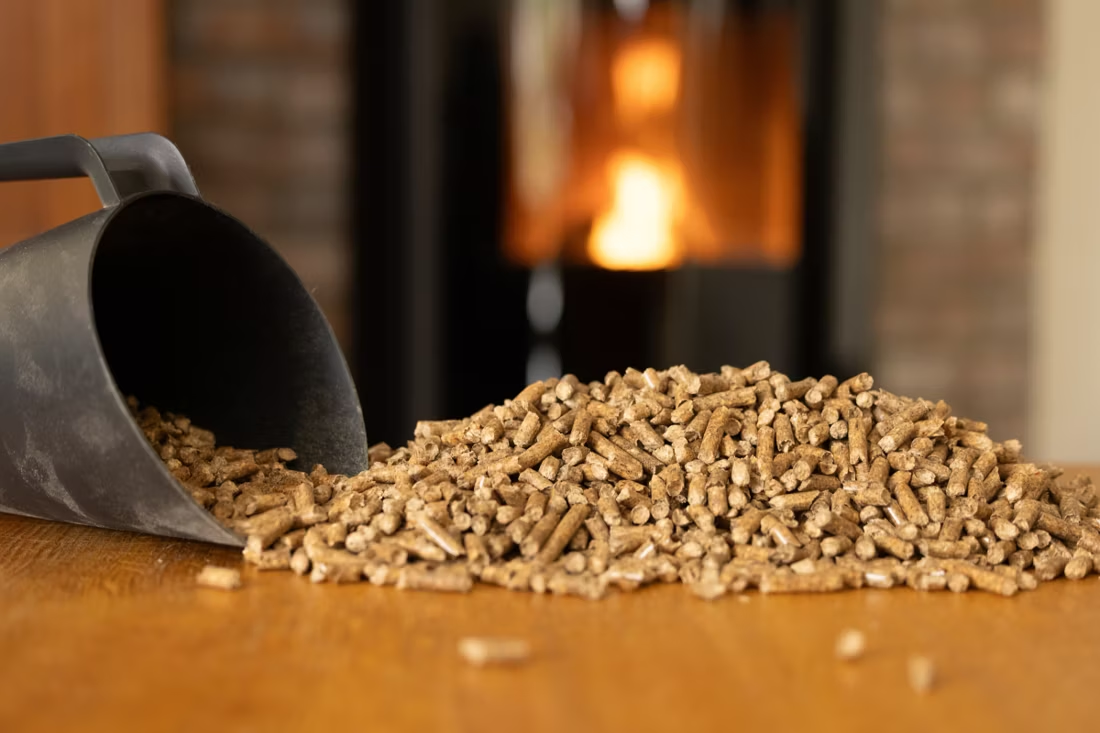
Pellet appliances fit well here for a few practical reasons. Mitchell County has no air quality non-attainment issues or winter burn restrictions, so pellet stoves run without the curtailment concerns some wood-burning counties deal with. Regional pellet mills including Hamer Pellet Fuel and Lignetics process the same pine, oak, and hickory that fill the county's timberland, keeping bagged pellets reasonably available at feed stores and hardware retailers in Camilla and Pelham. And because most Mitchell County homes only need heat for a handful of weeks a year, a modestly sized pellet stove—set-and-forget, thermostatically controlled—covers the gap without the overhead of a full wood-burning setup.
Three steps. No salesperson until you're ready.
Tell us about your project
Your zip code, your situation, and the fuel you're leaning toward—or let the answers point you to one.
See what's actually available
The brands dealers within 100 miles genuinely carry—real options, never a catalog mirage.
Get your dealer & Project Guide
A trusted local dealer, plus the free Project Guide & Parts List that names every component of the job.
Frequently Asked Questions
How much does a pellet stove installation cost in Mitchell County?
A typical pellet stove or insert installation in Mitchell County runs roughly $2,800 to $5,500, depending on whether you're installing a freestanding stove with a simple through-wall vent kit or converting an existing masonry fireplace to a pellet insert. Through-wall venting keeps costs on the lower end compared to a full chimney liner install, and most Mitchell County homes—especially ranch-style houses in Camilla and Pelham—are straightforward candidates for the simpler vent path. A hearth pad, if you don't already have one, adds a few hundred dollars. Local dealers will give a firm number after seeing the room and the wall you're venting through.
What size pellet stove do I need for my Mitchell County home?
Because Mitchell County only has a mild, short heating season—mild by almost any national standard—most homes don't need a large-output stove running as a primary heat source. A small to mid-size unit (rated for 1,000 to 1,800 square feet) is plenty for supplemental heat in a main living area during the coldest stretches of December and January. Homeowners using a pellet stove as their sole heat source, which is uncommon here but not unheard of on older rural properties without central HVAC, should size up and talk through hopper capacity with a local dealer.
Where can I buy pellets in Mitchell County?
Bagged pellets from regional producers like Lignetics, Hamer Pellet Fuel, and Greenway Renewable Energy are the most common options carried by hearth retailers and farm supply stores serving Camilla, Pelham, and Baconton. Pricing regionally tends to fall in the $250 to $300 per ton range, though it's worth buying early in the fall—southwest Georgia's mild winters mean local stock isn't always deep, and the coldest cold fronts tend to arrive with little warning. Because Mitchell County sits near Georgia's pine and hardwood belt, sourcing hasn't historically been a major issue, but stocking up before the first hard freeze is still smart.
Do I need a permit to install a pellet stove in Mitchell County?
Most pellet stove and insert installations require a building permit through the Mitchell County Building Department, primarily to confirm the venting and clearances meet code. Because pellet stoves vent through a wall rather than requiring a full masonry chimney, the permitting and inspection process is typically quicker than a wood stove install. Most local dealers handle the permit application and schedule the inspection as part of the installation, so homeowners rarely have to navigate it directly.
Will my pellet stove work during a power outage?
Not without a plan for backup power. Unlike a wood stove, a pellet stove depends on electricity to run the auger that feeds fuel and the blower that distributes heat—no power, no fire. That matters in Mitchell County, where southwest Georgia's occasional winter ice storms can knock out power for a day or more. Homeowners who want pellet heat as genuine backup heat should pair the stove with a small generator or a battery backup system sized for the stove's draw, which most local dealers can spec out. If uninterrupted heat during outages is the top priority, a wood stove is worth comparing against a pellet unit for that specific reason.
Pellet stove vs. wood stove—which is right for my Mitchell County home?
Wood stoves work without electricity, burn cordwood cut from the abundant oak, pine, and hickory around Mitchell County, and give you real backup heat during a storm-driven power outage. Pellet stoves are cleaner to run—no splitting, stacking, or ash shoveling—and offer thermostatic, set-and-forget heat that's easier to live with day to day. Since Mitchell County has no air quality restrictions that limit wood burning, the choice mostly comes down to convenience versus outage resilience. For a primary living space that gets occasional use during mild winters, pellet is usually the easier fit; for households prioritizing storm-proof backup heat, wood stays the safer bet.
Pellet stove vs. gas fireplace—which makes more sense here?
Gas fireplaces offer instant, no-hassle heat at the flip of a switch, and in Mitchell County that usually means propane, since natural gas service is limited outside town centers. Pellet stoves require periodically refilling a hopper and occasional ash cleanout, but they don't depend on a propane tank and delivery schedule, and many homeowners like the visible, more traditional flame a pellet stove produces compared to a gas unit. For a mild-winter county like this one, where either fuel only needs to carry the load a few weeks a year, the decision often comes down to whether you already have propane service on the property and how hands-on you want the appliance to be.
How often does a pellet stove need to be cleaned and serviced?
Pellet stoves need the ash pan emptied every few days during regular use and a deeper cleaning of the burn pot, glass, and exhaust venting every few weeks. An annual professional service—checking the auger motor, blower, gaskets, and venting—is recommended before each heating season, even in a mild-winter county like Mitchell where the stove might only see six to eight weeks of real use. Because usage here is lighter than in colder climates, wear and tear is generally gentler, but skipping the annual check still risks a stove that won't fire reliably on the one cold week you actually need it.
What's the best pellet stove for Mitchell County's climate?
Given how mild Mitchell County's winters run—an average low around 38°F with only occasional hard freezes—most homeowners do fine with a mid-efficiency, moderate-output pellet stove rather than a high-BTU unit built for sustained sub-zero cold. Look for a model with a reliable auger system and a hopper large enough to run overnight without a refill, since pellet demand here tends to spike suddenly during a short cold front rather than staying steady all season. A local dealer familiar with regional pellet supply from producers like Hamer Pellet Fuel and Lignetics can match a stove to your square footage and typical usage pattern.
Why is my open fireplace making my house colder?
Open fireplaces suck—literally. As the fire burns, it consumes air your furnace already paid to heat and pulls it out through the chimney, so the house is actually colder after the fire goes out than before you lit it. An insert fixes this: it seals the chimney, puts fixed glass across the front, and turns that hole in your house into a real heat source.
How often does a pellet stove need cleaning?
A clean pellet stove is a happy pellet stove. Plan on cleaning the burn pot about once a week when you're burning regularly—ash and clinkers gum up the air holes just like a pellet barbecue. Most pellet stove problems trace back to skipped cleaning that nobody explained up front. Some designs make it easy with a trapdoor burn pot: pull a lever and the gunk drops into the ash pan.
Does a fireplace add value to my home?
On average, a fireplace adds back to the home about the same amount you spent installing it. Add the monthly savings from heating the rooms you actually use instead of the whole house—often hundreds of dollars a year—and the value case is strong before you even count what a fire does for how your family uses the room.
Can I install a fireplace myself?
If you're putting a fire in your house on purpose, it's best to work with an expert. Unless you're genuinely experienced in framing, gas line, vent pipe, and the national code on clearances to combustibles, have a professional do it—and ideally the same company that sells you the fireplace, so warranty, service, and liability all live under one roof.
Pellet Brands Stocked Around Mitchell County
Manufacturers will point you to the nearest stocking dealer.
Find your pellet stove in Mitchell County.
Tell us a bit about your home and we'll match you with the right pellet stove or insert, plus a free Project Guide & Parts List—the exact parts, including the vent kit, and a trusted local Mitchell County dealer to install it.
Find Your Fireplace →