
Add Fireplace Warmth to Your Mitchell County Home—No Chimney Required.
With winter lows averaging 38°F and a mild, brief heating season, Mitchell County doesn't need a cast-iron furnace—it needs a clean, simple way to add ambiance and take the edge off a cool January evening in Camilla, Pelham, or Baconton. Find the right electric unit and connect with a trusted local dealer.
Every Project Starts From One of These Five Situations
Mild winters call for straightforward installs.
Mitchell County sits in climate zone 2A in the coastal plain of southwest Georgia, where winter is short and rarely severe—average lows hover around 38°F, and the county has a mild, brief heating season, a fraction of what a Duluth, MN or Bozeman, MT household deals with. Homes here run on central HVAC most of the year, and wood is plentiful (oak, pine, and hickory are all common locally), but plenty of homeowners in Camilla, Pelham, Baconton, and Sale City are choosing electric fireplaces for a very different reason than heat load: they want the look and glow of a fire without a wood supply, a gas line, or a chimney to maintain.
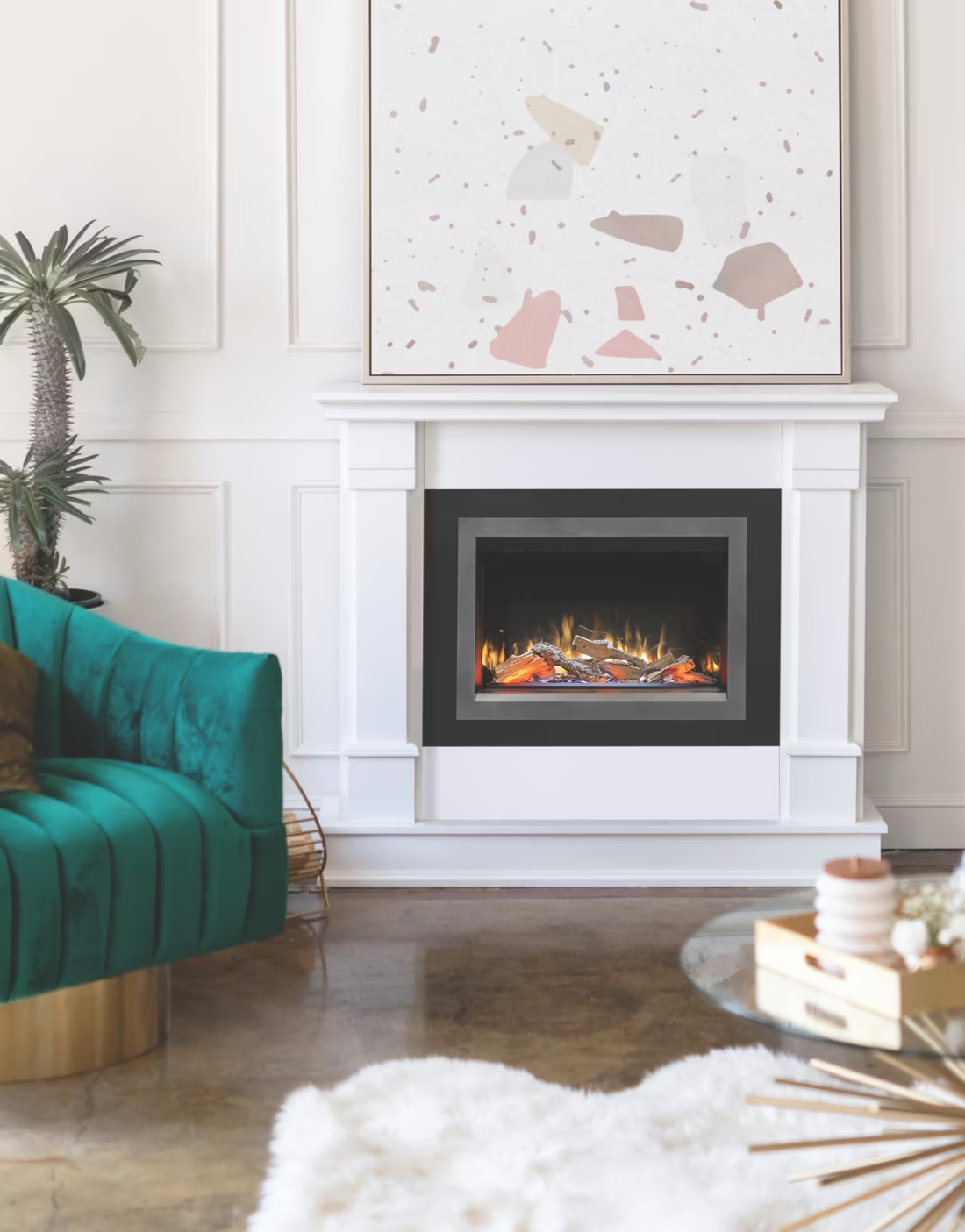
Electric fireplaces and inserts install almost anywhere with an outlet or a dedicated 120V/240V circuit—no venting, no combustion air intake, no clearance-to-combustible calculations like a wood or gas unit requires. Mitchell EMC, the electric cooperative serving most of the county, powers the grid these units plug into, and because there's no flame or exhaust, there's nothing to trip local air quality rules (Mitchell County has no air quality non-attainment concerns to navigate either way). For a county where the heating season is short and the summer cooling season is long, an electric fireplace gives you real ambiance in a den or bedroom without adding a system you'll only use a handful of weeks a year.
Three steps. No salesperson until you're ready.
Tell us about your project
Your zip code, your situation, and the fuel you're leaning toward—or let the answers point you to one.
See what's actually available
The brands dealers within 100 miles genuinely carry—real options, never a catalog mirage.
Get your dealer & Project Guide
A trusted local dealer, plus the free Project Guide & Parts List that names every component of the job.
Frequently Asked Questions
How much does an electric fireplace installation cost in Mitchell County?
A plug-in freestanding or wall-mount electric fireplace can run as little as $300 to $800 installed, since many units simply plug into an existing outlet with no electrical work needed. Built-in linear electric fireplaces or inserts that require a dedicated 240V circuit—common for larger units meant to be a focal point in a living room—typically run $1,500 to $3,500 once you factor in an electrician to run new wiring and a breaker. Because there's no venting or gas line to install, electric is consistently the least expensive fireplace fuel to add to a Mitchell County home, whether you're in a Camilla neighborhood or a rural property outside Baconton.
What size electric fireplace do I need?
Electric fireplaces aren't sized for whole-home heat the way a wood stove is in a colder climate—most units put out around 1,500 watts (roughly 5,000 BTU), enough to noticeably warm a single room of 300 to 400 square feet on a cool evening. Given Mitchell County's mild, brief heating season, most homeowners here are buying electric fireplaces as supplemental warmth and ambiance for a specific room—a den, a primary bedroom, a sunroom—rather than trying to heat an entire house. If you want a larger visual centerpiece (a 50-inch or 60-inch linear unit) purely for the look, that's a different sizing conversation than heat output, and a local dealer can walk you through both.
Do I need a permit to install an electric fireplace in Mitchell County?
A simple plug-in unit generally doesn't require a permit since it's not altering your home's wiring. If you're installing a built-in electric fireplace or insert that needs a new dedicated circuit, an electrical permit is typically required, and the work needs to be done by a licensed electrician—this applies whether you're inside Camilla city limits or in unincorporated Mitchell County. Most local dealers either employ a licensed electrician or coordinate with one as part of the installation, so the permitting gets handled without you having to track it down yourself.
Will my electric fireplace work during a power outage?
No—this is the one real tradeoff with electric heat. Unlike a wood stove, which needs no utility at all, or a gas fireplace with battery-backup ignition, an electric fireplace goes dark the moment Mitchell EMC's lines go down, which does happen during southwest Georgia's severe thunderstorms and occasional tropical systems. If backup heat during outages matters to you, pair an electric fireplace (for everyday ambiance and convenience) with a wood stove or a propane heater as your actual outage plan—a combination several homes across the county already run.
What's the difference between an electric fireplace, insert, and wall-mount unit?
A freestanding electric fireplace looks like a stove or media console and can be placed almost anywhere with an outlet. An electric insert is built to slide into an existing masonry or wood-burning fireplace opening, giving you flame visuals and modest heat without the maintenance of an open hearth—a popular option for older Camilla-area homes with a fireplace that's rarely used. A wall-mount or built-in linear unit is recessed into a wall or mounted flush against it, usually wired to a dedicated circuit, and functions as a design feature as much as a heat source. Which one makes sense depends mostly on whether you're retrofitting an existing fireplace or building something new.
What's the best electric fireplace for Mitchell County's climate?
Since actual heat load is light here, most homeowners prioritize flame realism and room fit over raw BTU output. Linear electric inserts from brands like Dimplex or Napoleon offer strong LED flame effects and a supplemental heat mode you can leave off entirely during Georgia's long warm season, then switch on for the handful of genuinely cool nights each winter. For a masonry fireplace retrofit, an electric insert sized to your existing opening tends to look and perform best. A local dealer can match a specific model to your room size and whether you want it purely decorative or genuinely functional on cold nights.
How much maintenance does an electric fireplace need?
Very little compared to wood or gas. There's no chimney to sweep, no ash to clean, no gas line to inspect, and no combustion byproducts to worry about. Maintenance is mostly dusting the unit, occasionally replacing an LED module (which can last a decade or more), and keeping the blower vents free of dust. This low-maintenance profile is part of why electric fireplaces work well as a secondary or accent heat source in Mitchell County homes that already rely on central HVAC for the bulk of their heating.
Electric vs. wood—which makes sense for my Mitchell County home?
Wood is genuinely abundant here—oak, pine, and hickory are all common locally, and a wood stove works with zero dependence on the power grid, which matters during a storm-related outage. But Mitchell County's mild, brief heating season means most homes don't need wood as a primary heat source, and the upkeep (fuel supply, ash cleanup, annual chimney inspection) is real work for a heating season that's genuinely short here. Electric wins on simplicity, cost, and cleanliness for homeowners who mainly want fireplace ambiance in a den or living room. If backup heat during outages is a priority, a wood stove is worth considering alongside—or instead of—an electric unit.
How much does it cost to run an electric fireplace day to day?
Running costs are modest. A typical 1,500-watt electric fireplace run on heat mode for a few hours an evening costs roughly a dollar or two a week at Mitchell EMC's residential rates—and if you're running it flame-only with the heater off, the cost is negligible. Given the short cool season in this part of southwest Georgia, most homeowners find the total annual operating cost of an electric fireplace is a fraction of what a wood stove's fuel or a gas fireplace's monthly propane bill would run.
Can I put a TV above my fireplace?
Yes—with an asterisk. Fireplaces are hot and TVs don't like heat. Either put a mantel between them to deflect rising warmth, or choose a fireplace with heat-management technology that creates a cool zone on the wall above—the wall stays around 125 degrees, barely warm, while the room still gets full heat. If you like clean lines and don't want a mantel, heat management is the answer.
Do electric fireplaces actually produce heat?
Yes—most put out around 4,800–5,000 BTUs from a standard outlet, which comfortably warms a bedroom, office, or den as a comfort-zone heater. What they won't do is carry a whole house the way wood, gas, or pellet can. Think of electric as ambiance-first with honest supplemental heat: flames on with no heat in July, flames plus warmth in January.
What is an in-home preview and do I need one?
It's a visit where a hearth professional measures your space, confirms the model you picked actually works in your home, and walks the specs—framing, gas line, venting, finish work—before anything is ordered. Some details you just can't know until you see the house. Never make a down payment without one; it's the single most-skipped step that burns buyers.
Can I install a fireplace myself?
If you're putting a fire in your house on purpose, it's best to work with an expert. Unless you're genuinely experienced in framing, gas line, vent pipe, and the national code on clearances to combustibles, have a professional do it—and ideally the same company that sells you the fireplace, so warranty, service, and liability all live under one roof.
Find your electric fireplace in Mitchell County.
Tell us a bit about your home and we'll match you with the right electric fireplace, insert, or wall-mount unit—plus a free Project Guide & Parts List and a trusted local dealer to install it.
Find Your Fireplace →