
Find the right fireplace for your Mitchell County, Georgia home.
Wood, gas, pellet, and electric fireplace resources for Camilla, Pelham, Baconton, Sale City, and every community in Mitchell County. See what a real local dealer can install near you, and what it costs.
Every Project Starts From One of These Five Situations
Mild winters, real heat needs, in Mitchell County, Georgia.
Mitchell County sits in southwest Georgia's climate zone 2A, where the average winter low hovers around 38°F and the heating season runs light—just a short, mild winter, a fraction of what a place like Duluth, Minnesota logs in a single hard winter. That doesn't mean fireplaces don't matter here. Cold snaps still hit the pecan orchards and cotton fields around Camilla, and a fireplace or stove earns its keep on the handful of nights each winter when temperatures drop into the 20s—plus it's a reliable backup when severe weather knocks out power, which happens more than most homeowners plan for in this part of the state.
What you'll find on this hub: hearth retailers, service technicians, and fuel suppliers covering every town in the county—from the county seat of Camilla out to Pelham, Baconton, Sale City, and Doerun. Local oak, pine, and hickory keep wood stoves fed cheaply, propane fills the gap where natural gas lines don't reach, and regional pellet brands like Lignetics, Hamer Pellet Fuel, and Greenway Renewable Energy keep pellet stoves supplied without long shipping. Pick your fuel below for dealer-specific detail, or browse the county-wide directories here to see who's actually covering your town.
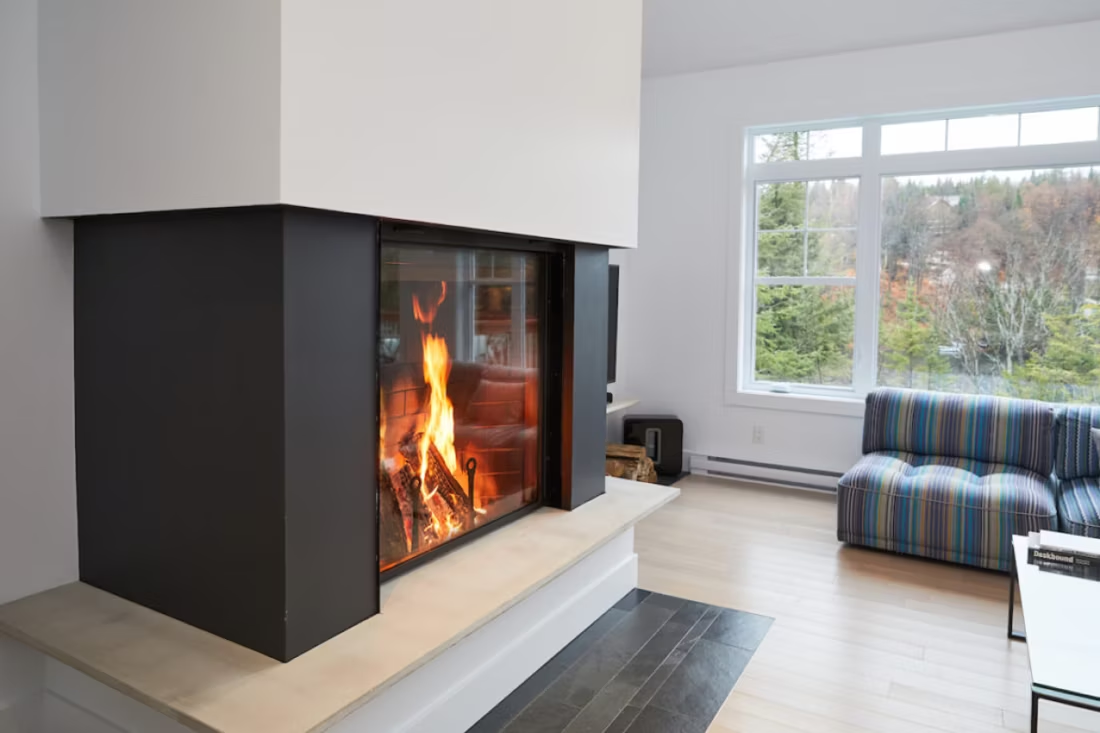
Four fuels. One honest answer for Mitchell County.
Three steps. No salesperson until you're ready.
Tell us about your project
Your zip code, your situation, and the fuel you're leaning toward—or let the answers point you to one.
See what's actually available
The brands dealers within 100 miles genuinely carry—real options, never a catalog mirage.
Get your dealer & Project Guide
A trusted local dealer, plus the free Project Guide & Parts List that names every component of the job.
Frequently Asked Questions
Which fuel works best in Mitchell County?
With winter lows averaging around 38°F and only a short, mild winter to get through, Mitchell County doesn't demand the round-the-clock heat output that a colder region like Buffalo, New York would require—so the calculus here is more about ambiance, occasional real heat, and power-outage backup than pure survival heating. Wood is popular because local oak, pine, and hickory are cheap and plentiful, and a wood stove keeps working when the power doesn't—a real consideration during Georgia's severe-weather season. Gas, mostly propane-fed in this rural county, gives instant convenience with none of the wood-stacking labor. Pellet stoves are a solid middle ground, and regional brands like Lignetics and Hamer Pellet Fuel keep local supply steady without long freight hauls. Electric fireplaces do well here precisely because the mild climate means most homes don't need heavy supplemental heat—electric covers the ambiance and occasional chill without any venting at all. Many Mitchell County homes end up choosing based on aesthetic preference and outage-readiness more than raw heating necessity.
Do I need a permit to install a fireplace in Mitchell County?
Generally yes for anything that involves new venting, gas lines, or structural changes—new wood stoves, wood inserts, gas fireplaces, gas inserts, and gas stoves typically require a building permit through the county building department, and any propane line work should go through a licensed gas installer regardless of permit requirements. Electric fireplaces usually skip the permit process unless you're hardwiring a built-in unit into a new circuit, in which case an electrical permit applies. Most local hearth retailers pull the permit as part of the installation quote, so it's rarely something homeowners have to chase down themselves—worth confirming upfront with whichever dealer you match with.
Are there air quality restrictions on wood burning in Mitchell County?
No—Mitchell County doesn't carry the wintertime inversion or non-attainment issues you'd find in a basin community like Klamath Falls, Oregon, so there are no burn advisories or curtailment periods to plan around here. That said, it's still worth installing an EPA-certified wood stove if you're buying new—modern catalytic and non-catalytic units burn oak and hickory more cleanly and use less wood per BTU than an old uncertified unit, which matters for chimney buildup and creosote risk even without any regulatory pressure.
Can one local hearth retailer handle all four fuel types?
It varies by dealer, and coverage in a smaller county like Mitchell tends to concentrate in Camilla with service radiating out to Pelham, Baconton, and Sale City. Some retailers stock a full range—wood, gas, pellet, and electric—while others specialize, particularly in propane gas units given how common propane is out here versus piped natural gas. If you're not sure which fuel fits your home, a multi-fuel dealer is worth visiting first since they can walk you through working displays and give you a straight comparison instead of a single-fuel sales pitch. The retailer directory above notes which fuels each dealer actually carries.
How does service work in a small, rural county like Mitchell?
Most chimney sweeps and gas technicians serving Mitchell County are based out of Camilla or travel in from Albany or Thomasville, the larger nearby cities with more year-round service demand. Expect a modest travel charge for outlying stops in Baconton, Sale City, or Doerun—typically in the $40–$75 range depending on distance. Because the heating season here is short, scheduling annual service in early fall (before the first real cold front) is easier than trying to book a technician once temperatures drop, since the same handful of local techs tend to get booked solid during the brief cold stretch.
What's the typical cost range for fireplace installation across all fuel types in Mitchell County?
Wood stove or insert: roughly $4,000–$8,000 installed, including venting, since chimney work is usually the biggest line item. Gas fireplace, insert, or stove: $4,000–$10,000, with propane tank setup or line work driving the range—conversions where propane service already exists run toward the lower end. Pellet stove or insert: $4,000–$7,000 for a typical install. Electric fireplace: $200–$3,000 for the unit itself, plus $300–$1,000 in labor for anything beyond a simple plug-and-play placement, such as a built-in wall unit. Given the mild climate here, many homeowners lean toward the lower end of these ranges since they're prioritizing ambiance and outage backup over maximum heat output—worth discussing directly with whichever local dealer you're matched with.
What is an in-home preview and do I need one?
It's a visit where a hearth professional measures your space, confirms the model you picked actually works in your home, and walks the specs—framing, gas line, venting, finish work—before anything is ordered. Some details you just can't know until you see the house. Never make a down payment without one; it's the single most-skipped step that burns buyers.
How much should I budget for a fireplace?
For an average home—covering the fireplace, the vent pipe, and basic installation—a budget between $3,900 and $5,500 gives you a lot of options across wood, gas, and pellet. By the time you add finish work, gas line, and electrical, the average complete installation lands between $5,000 and $12,000 all-in. In a remodel or new build, a good rule is to put about 2.5% of the total project cost toward the fireplace.
Can I install a fireplace myself?
If you're putting a fire in your house on purpose, it's best to work with an expert. Unless you're genuinely experienced in framing, gas line, vent pipe, and the national code on clearances to combustibles, have a professional do it—and ideally the same company that sells you the fireplace, so warranty, service, and liability all live under one roof.
Wood, gas, pellet, or electric—how do I choose?
Match the fuel to your life, not the other way around. Wood: lowest fuel cost and total power-outage independence, but you're hauling and stacking. Gas: press a button, set a thermostat, no maintenance to speak of. Pellet: wood economics with automatic feeding, in exchange for weekly cleaning and a need for electricity. Electric: plugs in anywhere with honest supplemental heat. Nobody regrets the fuel that fits how they actually live.
Stove and Fireplace Dealers in Mitchell County
Listings include WhyFire partner dealers, dealers we have verified as authorized for the brands we recommend, and established local businesses that carry hearth products. Every listing shows which one it is. The ones marked Preferred run on WhyFire's software, so they can show you real pricing and book your appointment right here. No manufacturer pays for placement. How we verify dealers →
Ever-Glo Propane Propane Gas Service, Inc.
Conger Lp Gas Inc.
Plantation Propane Inc.
Get your Mitchell County fireplace project matched with a local dealer.
Pick your fuel below, and I'll match you with a trusted local dealer and send over a free Project Guide & Parts List—the exact parts your home needs, including the vent kit, and who to call in Camilla, Pelham, or wherever you're located in the county.
Find Your Fireplace →