
Efficient pellet heat, built for Millen and Jenkins County.
Clean-burning, thermostat-controlled heat for Jenkins County's short, mild winters—without the labor of splitting and stacking wood. Find the right stove and connect with a trusted local dealer.
Every Project Starts From One of These Five Situations
A mild climate makes pellet heat an easy add-on.
Jenkins County sits in Georgia's coastal plain roughly halfway between Augusta and Savannah, with the county seat of Millen anchoring a mostly rural footprint of just over 3,000 residents. Winters here are short—climate zone 3A, an average winter low around 36°F, and just 2,301 heating degree days a year, less than a quarter of what a northern city like Fargo, North Dakota sees in a typical winter. That mild profile means pellet stoves in Jenkins County are almost always supplemental heat for a den, living room, or sunroom rather than a whole-home primary furnace replacement.
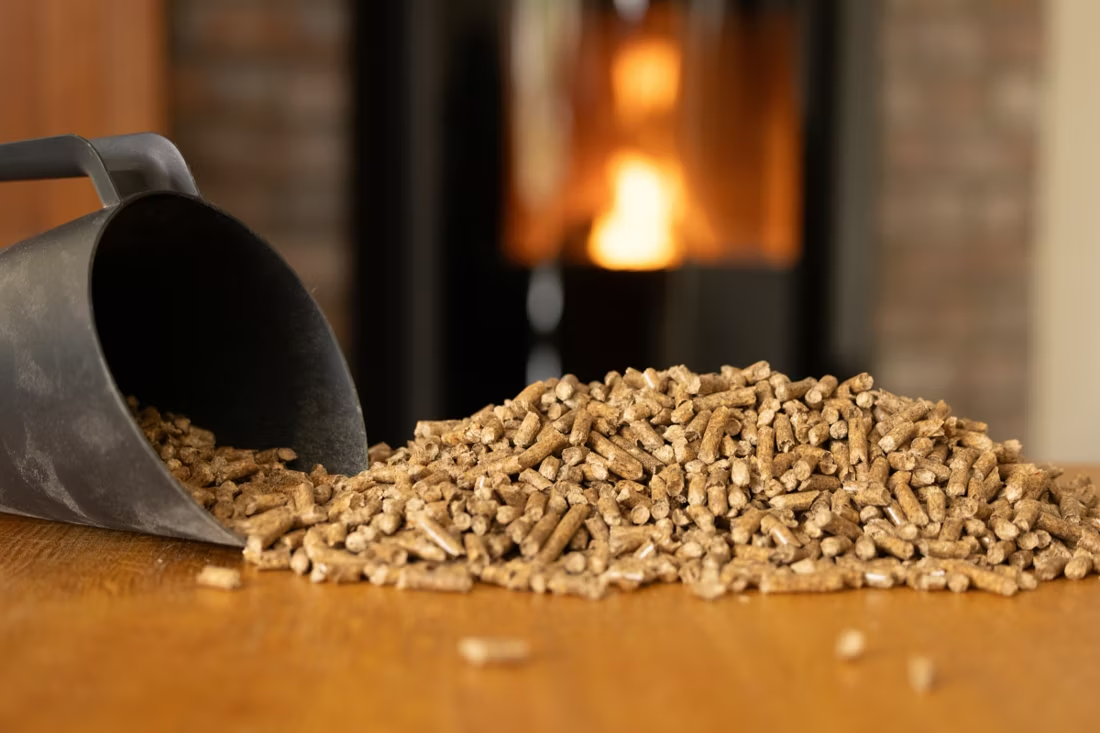
Oak, pine, and hickory are all common on county land, and plenty of longtime residents still burn wood out of habit or cost. Pellet stoves appeal to a different instinct: load a hopper, set a thermostat, and skip the chainsaw work entirely. Georgia is also one of the largest wood pellet-producing states in the country, with several mills within a few hours of Jenkins County—which keeps regional brands like Lignetics, Hamer Pellet Fuel, and Greenway Renewable Energy reasonably priced and easy to find at farm supply and hardware stores in and around Millen.
Three steps. No salesperson until you're ready.
Tell us about your project
Your zip code, your situation, and the fuel you're leaning toward—or let the answers point you to one.
See what's actually available
The brands dealers within 100 miles genuinely carry—real options, never a catalog mirage.
Get your dealer & Project Guide
A trusted local dealer, plus the free Project Guide & Parts List that names every component of the job.
Frequently Asked Questions
How much does a pellet stove installation cost in Jenkins County?
Across this part of Georgia, a freestanding pellet stove installation typically runs $3,000 to $6,000 including the vent pipe and hearth pad, and a pellet insert into an existing fireplace often lands in a similar range depending on liner needs. In a smaller market like Jenkins County, expect quotes toward the lower half of that range compared to larger metro Georgia dealers, since travel and overhead costs are generally lower for installers serving Millen and the surrounding county. A local dealer can give you a firm number after an in-home look at your venting path.
What size pellet stove do I need for my Jenkins County home?
Given the mild climate—winter lows averaging 36°F and only 2,301 heating degree days a year—most Jenkins County homeowners don't need a stove sized to carry the whole house. A small to mid-size unit with a 40- to 60-pound hopper is usually plenty to supplement central heat in a den, living room, or added sunroom. For open floor plans where the stove is meant to cover more square footage, a mid-size unit rated for 1,200 to 1,800 square feet typically does the job without running constantly on low.
Where can I buy pellet fuel in Jenkins County?
Regional brands like Lignetics, Hamer Pellet Fuel, and Greenway Renewable Energy are commonly stocked at farm supply stores, hardware stores, and home centers in Millen and nearby Statesboro. Because several Georgia pellet mills are within a few hours of the county—many of them built for the export market—supply is generally steady and pricing is reasonable compared to regions farther from production. Buying by the ton ahead of the short heating season, typically December through February, locks in better pricing before cold-snap demand pushes bag prices up.
Is a pellet stove or a wood stove better for a Jenkins County home?
Oak, pine, and hickory are all common on Jenkins County land, and plenty of homeowners still burn wood for heritage or cost reasons. But pellet stoves are appealing precisely because the county's short, mild heating season doesn't reward the labor of splitting, stacking, and seasoning firewood—you buy pellets by the bag or ton, load a hopper, and let a thermostat handle the rest. For a supplemental unit in a den or living room, most homeowners here find the pellet stove's convenience worth the modest premium in fuel cost per BTU.
Do I need a permit to install a pellet stove in Jenkins County?
Yes—a new pellet stove installation requires a building permit through the Jenkins County building department, covering the vent pipe routing and hearth clearances. The process is usually simpler than a wood stove permit since pellet units vent through a smaller-diameter pipe and don't require a full masonry chimney. Most local hearth dealers handle the permit paperwork as part of the installation, so it's rarely something you have to manage yourself.
What's the best pellet stove for Jenkins County's climate?
Because the heating season here is short and winter lows average in the mid-30s, you don't need an oversized, cold-climate workhorse built for sub-zero nights the way a stove in Duluth, Minnesota might be. A mid-size unit in the 40,000 to 50,000 BTU range, paired with pellets from Lignetics, Hamer Pellet Fuel, or Greenway Renewable Energy, is plenty for most Jenkins County homes. If you want the stove to double as backup heat during a winter storm outage, ask your local dealer about models with a battery-backup option for the auger and blower.
How much maintenance does a pellet stove need?
Pellet stoves need more attention than a gas unit but less than a wood stove: plan to empty the ash pan every few days during regular use, clean the burn pot weekly, and schedule a full professional cleaning and inspection once a year, ideally before the heating season starts each fall. Georgia's humid subtropical climate makes dry, sealed pellet storage more important here than in drier regions—keep bags in a garage or shed rather than an open carport, since pellets absorb moisture and swell if left exposed.
Will my pellet stove work during a power outage?
Not without a backup power source—pellet stoves rely on electricity to run the auger, igniter, and blower, so a standard unit shuts down when the power does. For Jenkins County's occasional storm-related outages, some homeowners pair their stove with a small battery backup or a portable generator rated for its low wattage draw. If uninterrupted heat during outages is the priority, a wood stove or a battery-independent gas unit alongside your pellet stove may be a better combination.
Pellet stove vs. gas or electric heat—which fits my home?
Compared to a gas fireplace, a pellet stove doesn't require a gas line or propane tank—you're simply buying bagged fuel, which matters in parts of Jenkins County where natural gas service is limited. Compared to a portable electric heater, a pellet stove puts out sustained, real heat for a room rather than just warming the air right around the unit, and most homeowners prefer the visible flame. For a den or living room in a Jenkins County home, pellet often ends up as the middle option—more heat and ambiance than electric, less infrastructure than a new gas line.
What's the difference between an insert and a zero-clearance fireplace?
An insert is a fireplace that slides into a pre-existing wood-burning fireplace—if you don't have one, there's nothing to insert it into. A zero-clearance fireplace is built into a framed wall, which makes it the answer for remodels and new construction. Simple test: existing masonry fireplace means insert; blank or framed wall means zero-clearance.
Why is my open fireplace making my house colder?
Open fireplaces suck—literally. As the fire burns, it consumes air your furnace already paid to heat and pulls it out through the chimney, so the house is actually colder after the fire goes out than before you lit it. An insert fixes this: it seals the chimney, puts fixed glass across the front, and turns that hole in your house into a real heat source.
Can a fireplace actually lower my heating bill?
Yes—by creating a comfort zone. A furnace heats every square foot of the house just to warm the one room you're in; a gas fireplace on low burns roughly a sixth of the gas a typical furnace does. Set the furnace around 55–60 degrees as a baseline, then heat the rooms your family actually uses. Families who heat this way commonly save $20–$60 a month.
Can I install a fireplace myself?
If you're putting a fire in your house on purpose, it's best to work with an expert. Unless you're genuinely experienced in framing, gas line, vent pipe, and the national code on clearances to combustibles, have a professional do it—and ideally the same company that sells you the fireplace, so warranty, service, and liability all live under one roof.
Pellet Brands Stocked Around Jenkins County
Manufacturers will point you to the nearest stocking dealer.
Find your pellet stove in Jenkins County.
Tell us a bit about your home and we'll match you with the right pellet stove or insert—plus a free Project Guide & Parts List and a trusted local dealer to install it.
Find Your Fireplace →