
Warm, comfortable heat for Jenkins County's short mild winters.
With just a mild, short heating season overall and winter lows averaging 36°F, Jenkins County doesn't need a furnace running around the clock—but a gas fireplace still earns its keep on the cold snaps that roll through Millen and the surrounding farmland. We'll match you with a trusted local dealer who knows what's actually installable here.
Every Project Starts From One of These Five Situations
Gas heat that fits a mild Georgia winter.
Jenkins County sits in climate zone 3A, with an average winter low around 36°F and a mild, short heating season overall—a fraction of what a place like Duluth, Minnesota racks up in a single January. That's not a knock on the county's need for heat; it just means the calculus is different. Most Jenkins County homes don't need a whole-house heating appliance sized for sub-zero nights. They need something that takes the edge off a 30-degree evening in Millen, adds real warmth to a den or living room, and looks good doing it every day of the year, not just three months of it.
With a population under 3,100 spread across a mostly rural county, natural gas utility infrastructure is limited outside the immediate Millen area, and propane is the standard fuel for most gas hearth appliances here—supplied by regional propane companies who also handle tank installation and refills. Plenty of older Jenkins County homes still have a masonry fireplace built for burning oak, pine, or hickory; converting that fireplace to a gas insert is one of the most common upgrades local dealers see, trading ash and stacked wood for a switch or remote.
Three steps. No salesperson until you're ready.
Tell us about your project
Your zip code, your situation, and the fuel you're leaning toward—or let the answers point you to one.
See what's actually available
The brands dealers within 100 miles genuinely carry—real options, never a catalog mirage.
Get your dealer & Project Guide
A trusted local dealer, plus the free Project Guide & Parts List that names every component of the job.
Frequently Asked Questions
How much does a gas fireplace installation cost in Jenkins County?
Cost depends mainly on three things: whether you're installing into an existing masonry fireplace or building new, whether you're on propane (which means tank placement and gas line runs) or already have gas service near the house, and which unit you choose. A direct-vent gas insert dropped into an existing fireplace with a liner run through the existing chimney is typically the least involved and least expensive path. New construction or a fireplace built from scratch, with framing, venting, and a propane line run from a new tank, sits higher. A local dealer who's worked in Jenkins County before can walk your home and give you a firm number rather than a guess.
Can I convert my existing wood fireplace to gas?
Yes, and it's a common project in a county like Jenkins where a lot of the housing stock is older and was built with a masonry fireplace originally meant to burn oak, pine, or hickory. A gas insert slides into that existing opening, and a stainless liner runs up the chimney you already have—no need to build new venting from scratch. The tradeoff is fuel: without natural gas lines reaching most of the county, you're typically running the insert on propane, which means either an existing tank or a new one set by a local propane supplier.
Is natural gas available in Jenkins County, or do I need propane?
Outside of pockets near Millen, most of Jenkins County does not have natural gas utility lines reaching individual homes—this is a rural county with under 3,100 residents spread across a wide area, and gas infrastructure hasn't followed. Propane is the practical answer for the vast majority of gas fireplace installations here, and it performs identically to natural gas in terms of flame quality and heat output. Your dealer will configure the unit's orifice and regulator for propane and coordinate tank delivery with a local supplier if you don't already have one.
Will my gas fireplace work during a power outage?
Most modern gas fireplaces will, which matters in a rural county like Jenkins where ice storms and summer thunderstorm outages can knock out power for a while before crews reach outlying farms. Units with intermittent pilot ignition (IPI) run on a small battery backup that kicks in the moment the power drops, so the fireplace still lights on demand. Valor's lineup goes a step further—their pilot assembly generates its own electricity off the thermocouple, so there's no battery to remember to replace. Either way, ask your dealer about the ignition system before you buy if backup heat matters to you.
What's the difference between a gas fireplace, gas insert, and gas stove?
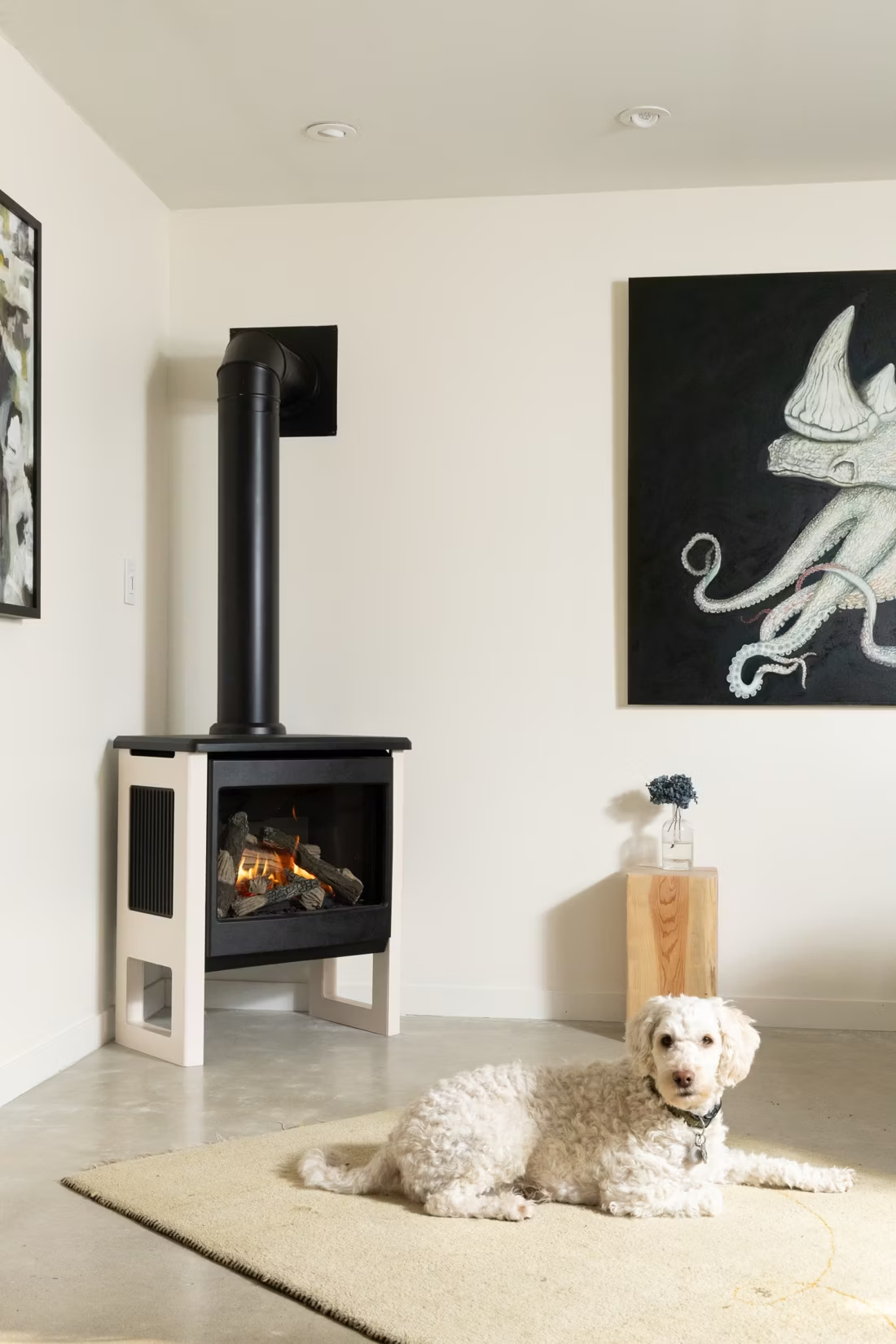
A gas fireplace is a fully built-in unit, framed into a wall—the right call for new construction or a room without an existing chimney. A gas insert is built to slide into an existing masonry fireplace opening and use the chimney you already have as the vent path, which is the common choice for Jenkins County's older homes. A gas stove is freestanding, sits on its own hearth pad, and can go almost anywhere clearances allow—a good option for a den or sunroom addition that never had a fireplace to begin with.
Do I need a permit to install a gas fireplace in Jenkins County?
Generally yes—new gas fireplace installations require a building permit and, since gas line or propane line work is involved, a licensed gas-fitter to make those connections. Permitting runs through the Jenkins County building and permitting office for unincorporated areas, or through the City of Millen if the home is inside city limits. Most established local dealers handle the permit paperwork as part of the installation quote, so it's rarely something you have to chase down yourself.
What's the difference between vented and vent-free gas fireplaces?
Vented (direct-vent) gas fireplaces pull combustion air from outside and exhaust the byproducts back outside through a sealed vent—they're the cleanest, safest option and code-legal everywhere, including Georgia. Vent-free units burn directly into the room air without external venting; they're legal in Georgia but come with strict room-size and ventilation requirements, and some states restrict them outright. For Jenkins County's mild climate, where a fireplace might run only a handful of months, direct-vent units are still the most commonly recommended choice—full heat output with no compromise on indoor air quality.
How often should my gas fireplace be serviced?
Plan on an annual inspection, ideally before the first cold snap hits in late fall. A technician checks the burner, pilot assembly, gas connections, and venting, and cleans the glass. It's a quicker, less involved visit than a wood chimney sweep, but skipping it is how small issues—a dirty pilot, a failing thermocouple—turn into no-heat calls on the one night you actually need the fireplace running.
Gas vs. wood—which is right for my Jenkins County home?
Wood is still practical here—oak, pine, and hickory are all locally available, air quality concerns are minimal, and a wood-burning fireplace or insert works fine without power. But with such a mild, short heating season overall, most Jenkins County households don't burn enough to make firewood handling worth it for daily use. Gas wins on convenience: instant on-off, no ash, no stacking, and a consistent flame whenever you flip the switch—which is why it's become the default choice for primary living spaces in newer and updated homes across the county, while wood stoves tend to stick around in older farmhouses and as backup heat.
Why is a fireplace insert so efficient?
An insert does two things: it seals the chimney completely, so you stop losing air you already paid to heat, and it radiates warmth into the room through the firebox and glass. Most add a heat-exchange fan that pulls cool room air underneath, wraps it around the hot firebox, and pushes it back out warm. Your home is more efficient before you've even lit the first fire.
What's the difference between an insert and a zero-clearance fireplace?
An insert is a fireplace that slides into a pre-existing wood-burning fireplace—if you don't have one, there's nothing to insert it into. A zero-clearance fireplace is built into a framed wall, which makes it the answer for remodels and new construction. Simple test: existing masonry fireplace means insert; blank or framed wall means zero-clearance.
What is an in-home preview and do I need one?
It's a visit where a hearth professional measures your space, confirms the model you picked actually works in your home, and walks the specs—framing, gas line, venting, finish work—before anything is ordered. Some details you just can't know until you see the house. Never make a down payment without one; it's the single most-skipped step that burns buyers.
Can I install a fireplace myself?
If you're putting a fire in your house on purpose, it's best to work with an expert. Unless you're genuinely experienced in framing, gas line, vent pipe, and the national code on clearances to combustibles, have a professional do it—and ideally the same company that sells you the fireplace, so warranty, service, and liability all live under one roof.
Find your gas fireplace in Jenkins County.
Tell us a little about your home and your existing fireplace, and we'll match you with a trusted local dealer serving Jenkins County—plus a free Project Guide & Parts List with the exact parts, including the vent kit, for your project.
Find Your Fireplace →