
Electric warmth for Jenkins County—no chimney required.
With winter lows averaging 36°F and one of the shortest, mildest winter heating seasons around, Jenkins County rarely needs a full wood or gas heating system. An electric fireplace adds real ambiance and useful zone heat to a Millen-area home without venting, permits, or firewood. Find the right unit and connect with a trusted local dealer.
Every Project Starts From One of These Five Situations
Mild winters make electric heat the practical choice.
Jenkins County sits in climate zone 3A—hot, humid summers and short, mild winters that rarely test a home's heating system. With a winter heating season only a fraction as long and demanding as places like Duluth, MN or Fargo, ND, where wood stoves and pellet boilers are load-bearing appliances, the county sees far less need for serious heating power. Around Millen and the rest of the county's roughly 3,000 residents, most homes already have central HVAC doing the heavy lifting. An electric fireplace fits into that picture as an accent for the living room or a supplemental heater for the handful of nights each winter when temperatures actually dip toward freezing.
Electric service in Jenkins County runs through Georgia Power and rural electric cooperatives that serve much of southeast Georgia's unincorporated land. Because electric fireplaces don't need a chimney, gas line, or Class A venting, installation is far simpler than a wood or gas project—most plug into a standard 120V outlet, and larger built-in units are hardwired by an electrician into a dedicated circuit. Jenkins County's small population means there isn't a big-box hearth showroom in town; homeowners typically drive to Statesboro or Swainsboro for in-person shopping, or work with a regional dealer who serves the county directly. That's exactly the gap a trusted local match closes—someone who knows the local code requirements and installs correctly the first time.
Three steps. No salesperson until you're ready.
Tell us about your project
Your zip code, your situation, and the fuel you're leaning toward—or let the answers point you to one.
See what's actually available
The brands dealers within 100 miles genuinely carry—real options, never a catalog mirage.
Get your dealer & Project Guide
A trusted local dealer, plus the free Project Guide & Parts List that names every component of the job.
Frequently Asked Questions
How much does an electric fireplace installation cost in Jenkins County?
A plug-in electric insert or wall-mounted unit typically runs $300 to $2,500 installed, since there's no chimney or venting work involved—the bulk of the cost is the unit itself and any surround or mantel carpentry. A built-in linear electric fireplace with custom framing, trim, and a dedicated 240V circuit run by an electrician climbs to $2,500-$5,000. Compare that to a wood or gas project in Jenkins County, which often requires chimney or gas line work—electric is consistently the lowest-cost hearth option for local homeowners, which is part of why it's popular in smaller, single-story homes around Millen.
Do I need a permit to install an electric fireplace in Jenkins County?
Usually not for a simple plug-in unit—it's treated like any other appliance you plug into an existing outlet. If you're installing a built-in electric fireplace that requires a new dedicated circuit or panel work, that electrical work does need a permit through the Jenkins County Building Department, and it should be pulled and performed by a licensed electrician regardless of whether you're inside Millen's city limits or in the unincorporated county. Ask your installer whether your chosen unit needs its own circuit before you commit to a location—it affects both the permit and the final cost.
Can an electric fireplace actually heat a room, or is it just for looks?
Both, depending on the model. Ambiance-focused units (roughly 750-1,500 watts) throw some warmth but are mainly about the flame effect. Heater-rated electric fireplaces put out around 4,600-5,000 BTUs per hour—enough to noticeably warm a bedroom or den on Jenkins County's occasional cold night, though not enough to replace a central system. Given the county's mild 36°F average winter low, most homeowners here use electric fireplaces exactly this way: supplemental zone heat for a specific room rather than a whole-house heating source.
What's the difference between an electric insert, a mantel package, and a wall-mounted unit?
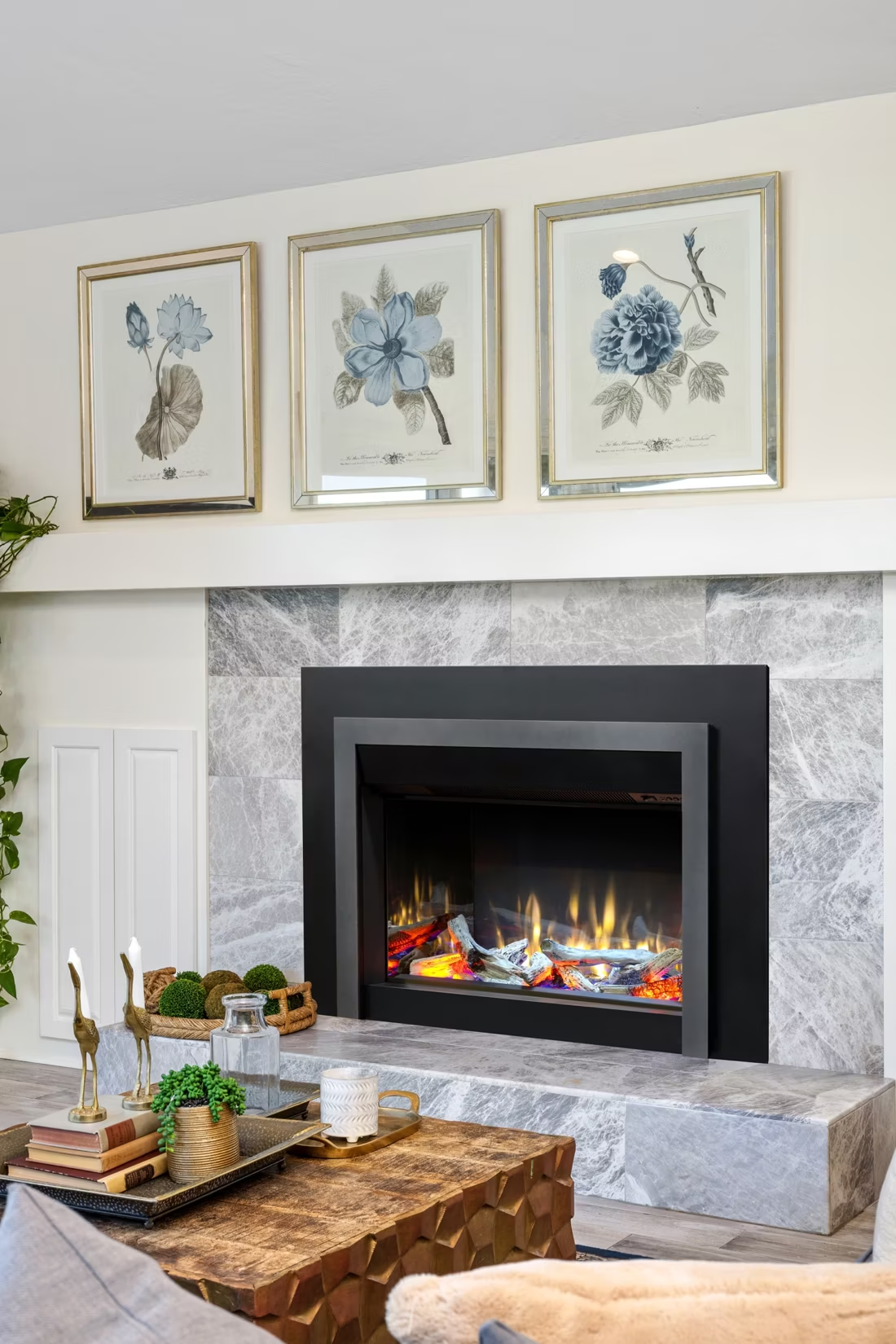
An electric insert is built to slide into an existing masonry fireplace opening, which makes it a natural upgrade if a Jenkins County home has an old wood-burning fireplace that's gone unused. A mantel package pairs a freestanding or built-in electric firebox with a surrounding cabinet or mantel shelf, often used where there's no existing fireplace opening. A wall-mounted unit hangs flush or recessed into drywall like a flat-screen TV, with no mantel at all—popular in newer or renovated homes going for a modern look. All three run on standard household power; the difference is purely about how they fit into the room.
Will my electric fireplace work during a power outage?
No—and this is the honest tradeoff. An electric fireplace has no function at all without grid power, unlike a wood stove or a battery-backed gas unit. Georgia Power and the rural cooperatives serving Jenkins County generally keep reliable service, but ice events and severe thunderstorms do knock out rural lines here on occasion. If backup heat during outages matters to your household, that's a reason to pair an electric fireplace with a wood stove or generator rather than relying on electric as your only heat source.
What size electric fireplace do I need for a Jenkins County home?
For ambiance in a standard living room or den, a 36-to-50-inch unit with a heater rated around 4,600-5,000 BTU comfortably supplements a 200-400 square foot room. Larger open-concept spaces common in newer Jenkins County builds may call for two zone units rather than one oversized fireplace, since electric heaters lose effectiveness at distance. Because the county's heating load is modest, err on the side of a smaller unit chosen for looks and buy heat capacity as a bonus rather than sizing around a worst-case cold night.
Does an electric fireplace even make sense given how mild Jenkins County winters are?
Yes, and in fact the mild climate is exactly why electric is such a common choice locally. With such a short, mild winter heating season each year, Jenkins County homes don't need a wood stove or gas furnace running around the clock the way a home in Bozeman, MT or Minneapolis, MN would. An electric fireplace gives you the look and feel of a fire, plus real supplemental warmth on the coldest nights, without committing to a heating system sized for a climate this county doesn't have.
Where can I find a local dealer or installer near Millen?
With a county population around 3,000, Jenkins County doesn't support a dedicated hearth showroom of its own—most homeowners end up driving to Statesboro or Swainsboro, or working with a regional installer who covers Millen and the surrounding rural areas as part of a broader southeast Georgia service territory. That's the exact situation Find My Fireplace is built for: rather than guessing which regional company actually services your address, we match you with a trusted local dealer who covers Jenkins County and can quote your specific project.
Electric vs. wood—which is right for my Jenkins County home?
Wood heat has deep roots in rural Georgia, and oak, pine, and hickory are all locally abundant if you want a real fire and lower fuel costs. But wood means ash cleanup, chimney maintenance, and sourcing firewood—a bigger commitment for a climate that only needs supplemental heat a handful of nights a year. Electric fireplaces skip all of that: no venting, no ash, no annual chimney sweep, and instant on-off operation. For most Jenkins County homes, where central HVAC already handles day-to-day comfort, electric is the lower-maintenance choice for adding warmth and ambiance to a specific room—wood remains the better fit for homeowners who want backup heat during outages or simply prefer tending a real fire.
Can I put a TV above my fireplace?
Yes—with an asterisk. Fireplaces are hot and TVs don't like heat. Either put a mantel between them to deflect rising warmth, or choose a fireplace with heat-management technology that creates a cool zone on the wall above—the wall stays around 125 degrees, barely warm, while the room still gets full heat. If you like clean lines and don't want a mantel, heat management is the answer.
How much does an electric fireplace cost to run?
With the heater on, a typical unit draws about 1,500 watts—at average electric rates that's roughly 20 cents an hour. Run the flame effect alone and it costs pennies; the flames are LED-driven and use about as much power as a light bulb. There's no pilot light, no fuel delivery, and essentially no maintenance.
What is an in-home preview and do I need one?
It's a visit where a hearth professional measures your space, confirms the model you picked actually works in your home, and walks the specs—framing, gas line, venting, finish work—before anything is ordered. Some details you just can't know until you see the house. Never make a down payment without one; it's the single most-skipped step that burns buyers.
Can a fireplace actually lower my heating bill?
Yes—by creating a comfort zone. A furnace heats every square foot of the house just to warm the one room you're in; a gas fireplace on low burns roughly a sixth of the gas a typical furnace does. Set the furnace around 55–60 degrees as a baseline, then heat the rooms your family actually uses. Families who heat this way commonly save $20–$60 a month.
Find your electric fireplace in Jenkins County.
Tell us about your home and we'll match you with a trusted local dealer serving Jenkins County, plus a free Project Guide & Parts List—the exact unit, mounting hardware, and electrical requirements for your space.
Find Your Fireplace →