
Electric Warmth Without a Chimney, Right Here in Duluth.
Duluth winters rarely demand serious heat—electric gives you real ambiance and supplemental warmth with no venting, no gas line, and no chimney to maintain. Get matched with a trusted local dealer.
Every Project Starts From One of These Five Situations
Mild Winters, Modern Convenience.
Duluth, Georgia shares its name with Duluth, Minnesota, but the climates could hardly be more different. Where Duluth, MN sees a heating season with the intensity of nearly nine winters' worth of cold packed into one, this Duluth—tucked into Gwinnett County at just over 1,000 feet elevation—has a much milder winter heating load, roughly a third of that, with average winter lows sitting around 33°F. That's a climate where a furnace handles the real heating load and a fireplace is there for ambiance, zone warmth on the occasional cold snap, and the visual anchor of a living room or basement remodel.
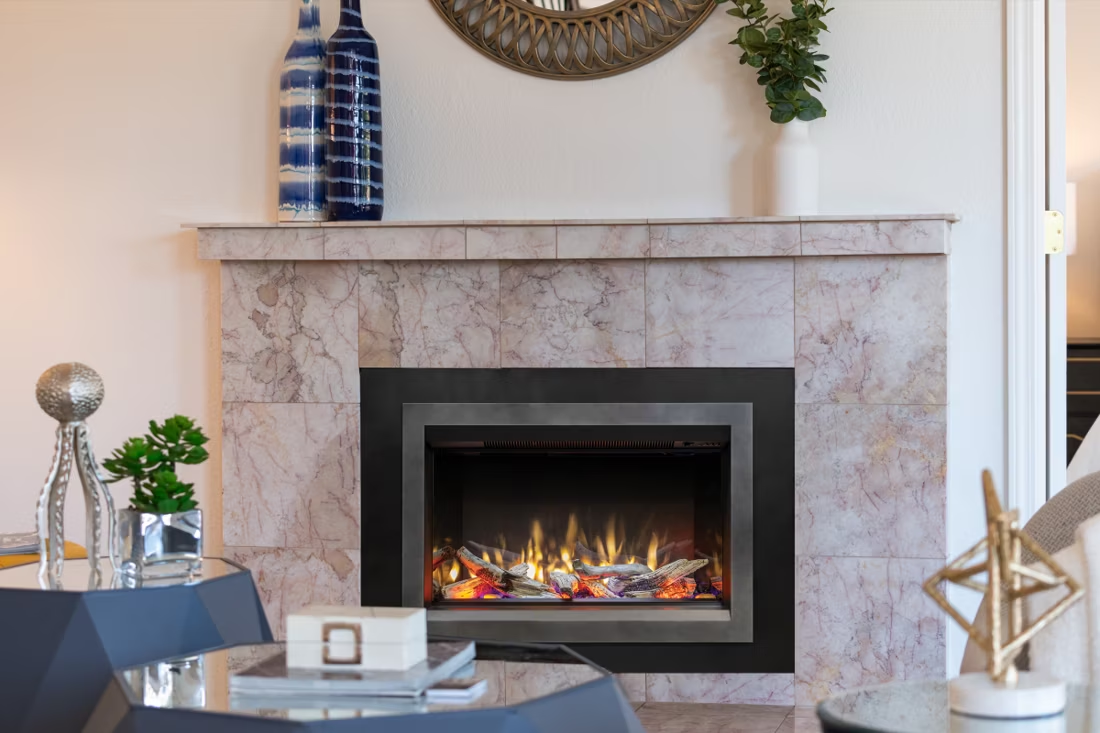
That's exactly the situation electric fireplaces are built for. With Georgia Power serving Duluth homes at roughly $0.1549 per kWh, running an electric insert or built-in a few hours an evening costs pennies compared to sizing a furnace zone for the same room. No chimney, no gas line, no combustion byproducts to vent—which makes electric units popular in the newer townhomes and renovated ranch homes around Sugarloaf Parkway and the Gwinnett Place corridor, especially where an HOA or condo association would balk at anything requiring exterior venting.
Three steps. No salesperson until you're ready.
Tell us about your project
Your zip code, your situation, and the fuel you're leaning toward—or let the answers point you to one.
See what's actually available
The brands dealers within 100 miles genuinely carry—real options, never a catalog mirage.
Get your dealer & Project Guide
A trusted local dealer, plus the free Project Guide & Parts List that names every component of the job.
Frequently Asked Questions
How much does an electric fireplace installation cost in Duluth?
Most electric fireplace projects in Duluth run $500 to $3,500 total. A plug-in insert dropped into an existing mantel opening or media console can be on the low end—sometimes just the cost of the unit itself, since no dedicated circuit or venting is required. A built-in wall unit or a linear electric fireplace set into new framing, which usually calls for a dedicated 20-amp circuit run by a licensed electrician, lands in the $1,500 to $3,500 range depending on the wall opening work and finish materials. Compare that to venting a wood or gas unit through a roofline, and it's clear why electric is the budget-friendly option for Duluth's mild-winter ambiance projects.
Do I need a permit to install an electric fireplace in Duluth?
For a plug-in unit that uses an existing outlet, no permit is typically required—it's treated like any other appliance. If your installer is adding a new dedicated circuit or doing wall framing for a built-in unit, that electrical work generally needs a permit through Gwinnett County's Department of Planning and Development, and it should be pulled by a licensed electrician regardless of whether you're inside Duluth city limits or unincorporated Gwinnett County. A reputable local dealer will tell you upfront whether your specific installation crosses that line.
Electric vs. gas fireplace—which makes more sense for a Duluth home?
Gas is the standard choice in Duluth for homeowners who want a fireplace that can genuinely contribute to heating a room during the occasional hard freeze, and it's widely available given the area's mix of natural gas and propane service. Electric makes more sense when the priority is appearance, flexibility, and low upfront cost—no gas line, no combustion venting, and it can go on almost any interior wall, including upstairs bedrooms or basements where running gas line is impractical. Given how mild Duluth winters run (average lows around 33°F), plenty of homeowners here choose electric specifically because they don't need furnace-level backup heat from the fireplace—just supplemental warmth and the visual of a fire.
What type of electric fireplace works best for my Duluth home?
Inserts are the right call if you have an existing masonry fireplace you want to reactivate without a full gas or wood retrofit—they slide into the existing firebox opening and plug into a nearby outlet or a newly added circuit. Wall-mounted linear units are popular in the newer construction and renovated homes around Duluth's Sugarloaf and Berkeley Lake-adjacent neighborhoods, often installed under a mounted TV. Freestanding electric stoves work well in basements or as a secondary heat source in a home office or sunroom. A local dealer can walk your specific wall and room dimensions before you commit to a style.
How much does it cost to run an electric fireplace in Duluth?
At Georgia Power's residential rate of about $0.1549 per kWh, a typical 1,500-watt electric fireplace running on high costs roughly 23 cents an hour to operate. Running it three hours a night through a mild Duluth winter adds up to somewhere around $15-$20 a month—far less than what it costs to run a furnace for the same stretch, since most electric fireplace heat settings are used for zone warmth in one room rather than heating a whole house.
Can an electric fireplace actually heat a room in Duluth, or is it just for looks?
Most electric fireplaces include a built-in fan heater rated around 1,500 watts, enough to noticeably warm a single room in the 300-400 square foot range—plenty for Duluth's climate, where winter lows average 33°F and hard freezes are the exception rather than the rule. On the coldest nights, it works well as supplemental heat alongside your central system rather than a replacement for it. If you're expecting it to heat an open-concept great room on its own, talk to a local dealer about wattage and room size before buying.
Will my HOA allow an electric fireplace installation in Duluth?
Almost always, yes—this is one of the biggest practical advantages of electric in Duluth's many HOA-governed communities. Because electric units don't require any exterior venting, roof penetration, or chimney modification, they typically don't trigger the same architectural review that a wood-burning chimney or gas flue installation would. Some HOAs do have rules about exterior wall-mounted TV brackets or built-in cabinetry visible from outside, so it's worth a quick check of your community's covenants before a built-in wall installation, but this is rarely an issue for interior inserts or freestanding units.
Does my electric fireplace need its own dedicated circuit?
It depends on the unit's wattage and what else is on the circuit you'd be using. Most full-size electric fireplaces draw close to 1,500 watts on their heater setting, which is close to the limit of a standard 15-amp household circuit, especially if other appliances share that circuit. For a permanent built-in installation, most electricians in the Duluth area recommend running a dedicated 20-amp circuit to avoid tripped breakers on cold mornings when the heater and lighting are both running. Plug-in inserts used mainly for the flame effect with the heater off draw far less and are less likely to need a dedicated line.
How much maintenance does an electric fireplace need?
Very little compared to wood or gas. There's no chimney to sweep, no gas lines to inspect, and no combustion byproducts to worry about. Maintenance is mostly dusting the unit, occasionally cleaning the glass front, and replacing the LED light source down the road if your model doesn't use standard bulbs, which on most modern units is rated for tens of thousands of hours. If the built-in fan heater gets noisy or stops producing heat, that's usually a straightforward component swap a local dealer's service tech can handle rather than a full unit replacement.
Can I put a TV above my fireplace?
Yes—with an asterisk. Fireplaces are hot and TVs don't like heat. Either put a mantel between them to deflect rising warmth, or choose a fireplace with heat-management technology that creates a cool zone on the wall above—the wall stays around 125 degrees, barely warm, while the room still gets full heat. If you like clean lines and don't want a mantel, heat management is the answer.
Does an electric fireplace need a vent or chimney?
No—that's its superpower. An electric fireplace needs a wall and an outlet, period. No vent pipe, no gas line, no clearances to design around, which is why it works in bedrooms, offices, apartments, and walls where venting a gas or wood unit would be impractical or impossible. Installation is typically the simplest and least expensive of any fireplace type.
Can I install a fireplace myself?
If you're putting a fire in your house on purpose, it's best to work with an expert. Unless you're genuinely experienced in framing, gas line, vent pipe, and the national code on clearances to combustibles, have a professional do it—and ideally the same company that sells you the fireplace, so warranty, service, and liability all live under one roof.
Can a fireplace actually lower my heating bill?
Yes—by creating a comfort zone. A furnace heats every square foot of the house just to warm the one room you're in; a gas fireplace on low burns roughly a sixth of the gas a typical furnace does. Set the furnace around 55–60 degrees as a baseline, then heat the rooms your family actually uses. Families who heat this way commonly save $20–$60 a month.
Nearby Dealers
Hearth shops serving Duluth and the surrounding area.
Gas Equipment Company - Lawrenceville
Electric Service in Duluth
An electric fireplace's heater draws about 1,500 watts—pennies per hour at local rates.
Georgia Power Co
Find your electric fireplace in Duluth.
Tell us a bit about your home and we'll match you with the right electric fireplace or insert, plus a free Project Guide & Parts List and a trusted local Duluth-area dealer to install it.
Find Your Fireplace →