
Pellet stoves are the exception in Fayette County, not the rule.
With only a short, mild winter and winter lows averaging 34°F, Fayette County rarely needs full-time supplemental heat. Some homeowners in Fayetteville, Peachtree City, and Tyrone still add a pellet stove for a den, sunroom, or finished basement—and we can match you with a trusted local dealer who will tell you honestly whether it's the right fit for your house.
Every Project Starts From One of These Five Situations
Fayette County's mild winters don't need a full-time pellet stove.
Fayette County sits in climate zone 3A—mixed-humid, with a short heating season that runs roughly from late November through February. With a winter that mild and a winter low average of 34°F, the county is heating far less aggressively than a place like Duluth, MN, which faces close to a nine-month heating season in a typical year. Most homes in Fayetteville, Peachtree City, Tyrone, Brooks, and Woolsey rely on heat pumps or gas furnaces sized for a mild season, not solid-fuel heating appliances meant to carry a house through months of sub-freezing nights.
That's part of why pellet stoves are genuinely uncommon here. Pellet fuel isn't a local commodity the way it is in New England or the Upper Midwest—you won't find bags stacked at every hardware store. Regional and national brands like Lignetics, Hamer Pellet Fuel, and Greenway Renewable Energy do supply the Southeast, but Fayette County homeowners typically order pallets ahead of the season rather than picking up a few bags on the way home. Where pellet stoves do show up, it's usually for a specific reason: ambiance in a finished basement or sunroom, supplemental warmth for an older home without a masonry fireplace, or a homeowner who relocated from a colder region and wants a familiar heat source. If you're weighing pellet against gas, keep in mind gas fireplace fuel is standard and widely available throughout the county, which is why it remains the far more common choice for daily use.
Three steps. No salesperson until you're ready.
Tell us about your project
Your zip code, your situation, and the fuel you're leaning toward—or let the answers point you to one.
See what's actually available
The brands dealers within 100 miles genuinely carry—real options, never a catalog mirage.
Get your dealer & Project Guide
A trusted local dealer, plus the free Project Guide & Parts List that names every component of the job.
Frequently Asked Questions
Do pellet stoves make sense in Fayette County's climate?
For most homes, not as a primary heat source. Fayette County's short, mild winter and 34°F average winter low put it well outside the range where pellet stoves are typically justified—compare that to a cold-climate market like Fargo, ND, where a pellet or wood stove can genuinely offset a heating bill for six months a year. Here, a pellet stove is more often a supplemental or ambiance appliance for a specific room—a den in Peachtree City, a finished basement in Fayetteville—used on the coldest handful of nights rather than run continuously.
How much does a pellet stove installation cost in Fayette County?
Because pellet stoves are installed infrequently in this market, there isn't a deep local pricing history the way there is for gas fireplace conversions. As a national ballpark, a freestanding pellet stove with a through-wall vent kit typically installs for $2,500 to $5,000, depending on the unit, hearth pad requirements, and whether existing wall or floor prep is needed. A local dealer matched through Find My Fireplace can give you a firm number after seeing your room, since venting path and hearth clearance are the two biggest cost variables.
Where can I buy pellet fuel near Fayette County?
Pellet fuel isn't stocked on every corner here the way it is farther north, but it is available. Brands like Lignetics, Hamer Pellet Fuel, and Greenway Renewable Energy distribute through the Southeast and are carried seasonally at farm-supply retailers such as Tractor Supply, or through direct pallet orders. Because Fayette County demand is light, it's worth ordering ahead of the first cold snap rather than assuming bags will be on the shelf when temperatures drop.
Why are both wood and pellet stoves uncommon in Fayette County?
It comes down to climate, not lack of wood. Oak, pine, and hickory are all common locally and would burn perfectly well in a stove—the issue is that Fayette County's short, mild heating season doesn't create the sustained demand that drives wood or pellet heat adoption in colder states. Most homes here are built and equipped around heat pumps and gas, with solid-fuel appliances installed as an occasional-use or aesthetic choice rather than a heating necessity.
Will a pellet stove work if the power goes out?
No—pellet stoves depend on electricity to run the auger that feeds fuel and the blower that distributes heat, so they shut down in an outage just like a furnace. If backup heat during storms is your main concern, a gas fireplace or insert with battery-backed ignition is a better fit for Fayette County, since natural gas and propane are standard, widely available fuels here. A pellet stove should be thought of as a supplemental or ambiance appliance, not an emergency heat source.
Do I need a permit to install a pellet stove in Fayette County?
Yes. Solid-fuel appliance installations, including pellet stoves, require a building permit through the Fayette County Building Permits & Inspections Department (or the relevant city office if you're inside Fayetteville or Peachtree City). Permitting covers the through-wall vent termination and hearth clearances. Most dealers who install pellet equipment in this market handle the permit application as part of the job, since they do it far less often than gas conversions and know exactly what the inspector will check.
What size pellet stove do I need for a Fayette County home?
Given the mild climate, most installations here are sized for a single room rather than whole-house heating—think 1,000 to 1,500 square feet of coverage for a den, bonus room, or finished basement in a Peachtree City or Fayetteville subdivision. Oversizing is a common mistake: a stove built to carry a Minnesota farmhouse through January will run far too hot for occasional use in a Georgia den. A local dealer can size the unit to the specific room rather than the whole house.
Pellet stove vs. gas fireplace—which is right for my Fayette County home?
For most homeowners here, gas wins on convenience: natural gas and propane are standard fuels throughout the county, a direct-vent gas fireplace or insert can run during a power outage with battery-backed ignition, and there's no fuel to store or order ahead. A pellet stove offers a more traditional flame and radiant heat, but it means sourcing bagged fuel from brands like Lignetics or Hamer Pellet Fuel, running a hopper and auger, and dealing with ash cleanup—all for a heating season that's short to begin with. Pellet tends to appeal to homeowners who specifically want that fuel type; gas tends to be the practical default.
When does a pellet stove actually make sense in Fayette County?
The homeowners who are happiest with a pellet stove here usually fall into one of a few categories: someone finishing a basement or sunroom in Peachtree City or Tyrone who wants a real flame without a masonry chimney, a transplant from a colder state who's used to solid-fuel heat and wants that same feel, or a household that wants a low-cost backup for a gas furnace failure (paired with a generator, since pellet stoves need power). If none of those describe your situation, a gas insert is very likely the better fit for a Fayette County home—but if one does, a trusted local dealer can walk you through a properly sized, properly vented pellet install.
Are pellet stoves loud?
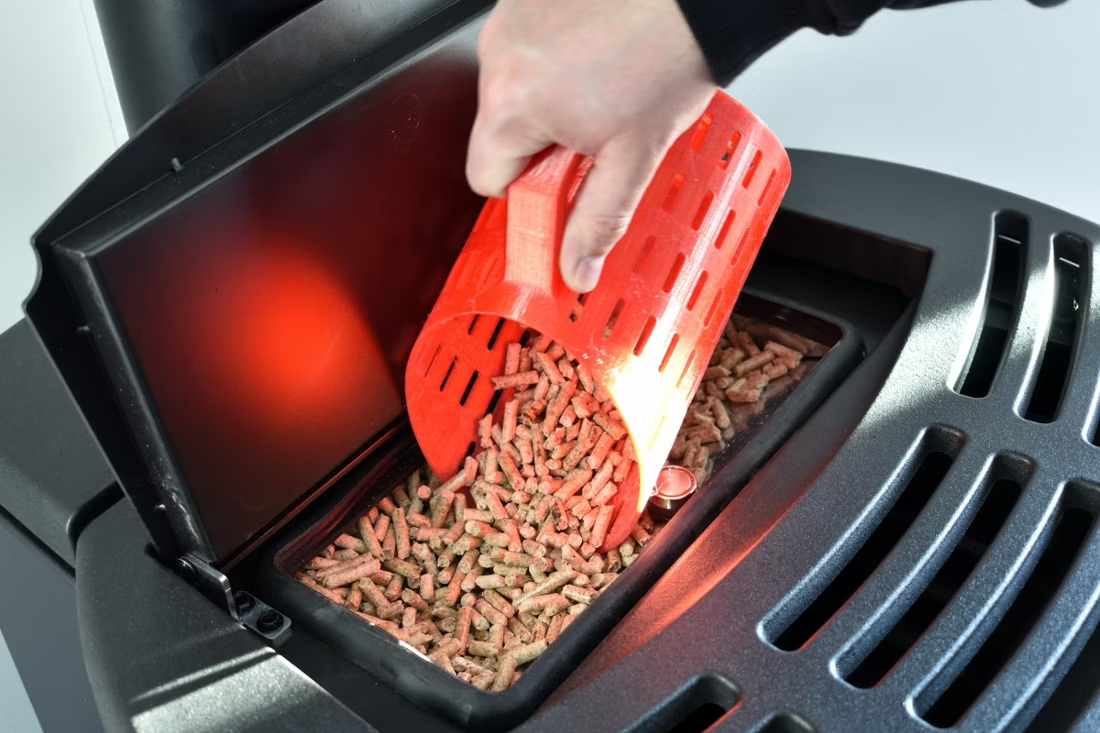
They make some noise—there are two fans running plus an auger motor that turns as it feeds pellets. But there's a real range: premium models are engineered quiet, and the best offer a whisper-quiet mode you can comfortably watch TV next to. If noise matters in your room, ask to hear a stove running before you buy—it's a five-minute test that saves years of annoyance.
Why is a fireplace insert so efficient?
An insert does two things: it seals the chimney completely, so you stop losing air you already paid to heat, and it radiates warmth into the room through the firebox and glass. Most add a heat-exchange fan that pulls cool room air underneath, wraps it around the hot firebox, and pushes it back out warm. Your home is more efficient before you've even lit the first fire.
How much should I budget for a fireplace?
For an average home—covering the fireplace, the vent pipe, and basic installation—a budget between $3,900 and $5,500 gives you a lot of options across wood, gas, and pellet. By the time you add finish work, gas line, and electrical, the average complete installation lands between $5,000 and $12,000 all-in. In a remodel or new build, a good rule is to put about 2.5% of the total project cost toward the fireplace.
What is an in-home preview and do I need one?
It's a visit where a hearth professional measures your space, confirms the model you picked actually works in your home, and walks the specs—framing, gas line, venting, finish work—before anything is ordered. Some details you just can't know until you see the house. Never make a down payment without one; it's the single most-skipped step that burns buyers.
Pellet Brands Stocked Around Fayette County
Manufacturers will point you to the nearest stocking dealer.
See if a pellet stove is right for your Fayette County home.
Tell us about your room and your goals, and we'll give you an honest read on whether pellet makes sense—plus a free Project Guide & Parts List with the exact venting components and a trusted local dealer if it does.
Find Your Fireplace →