
Real flame look, zero venting, for Fayette County homes.
With winter lows averaging 34°F and just a short, mild heating season, Fayette County doesn't need a wood-burning furnace—it needs a clean, flexible fireplace that adds ambiance and takes the edge off a cool evening. Find the right electric unit and connect with a trusted local dealer.
Every Project Starts From One of These Five Situations
Built for mild winters, not mountain cold.
Fayette County sits in climate zone 3A, part of the fast-growing south Atlanta suburbs that include Fayetteville, Peachtree City, Tyrone, Brooks, and Woolsey. With a mild, short heating season and winter lows that average around 34°F, this is nowhere close to the wood-stove country of the upper Midwest or northern New England—a place like Duluth, MN sees more than double Fayette County's heating load in a typical winter. Homes here need occasional supplemental warmth on the coldest nights, not a heating system built to survive weeks below zero.
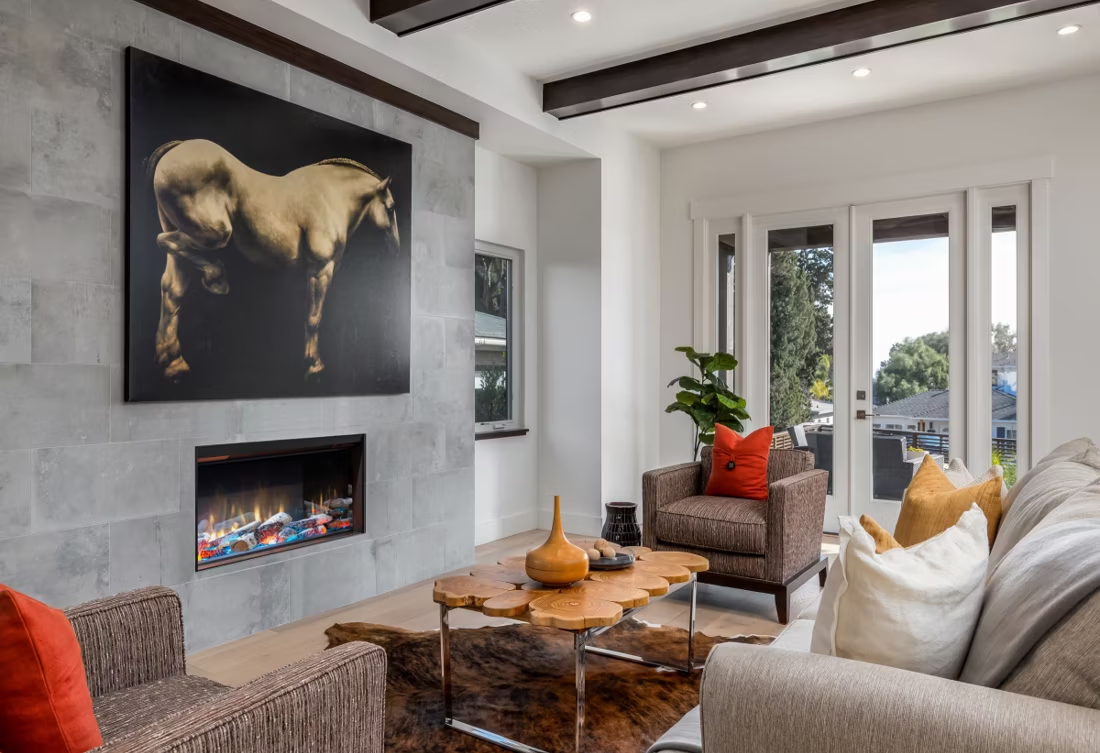
That climate reality is why wood stoves and pellet stoves see almost no demand in Fayette County, even though oak, hickory, and pine are common in the surrounding landscape—they're shade trees and construction lumber here, not the primary heat source they'd be farther north. Instead, homeowners lean toward gas and electric units. Electric fireplaces in particular fit the county's newer subdivisions, townhomes, and condo product around Peachtree City's golf-cart-path neighborhoods, where HOA covenants or attached-wall construction make a chimney or gas line impractical. No venting, no gas permit, and a 120V or 240V circuit is often all that's required—which is a big part of why electric has become the standard choice for a huge share of Fayette County retrofits and remodels.
Three steps. No salesperson until you're ready.
Tell us about your project
Your zip code, your situation, and the fuel you're leaning toward—or let the answers point you to one.
See what's actually available
The brands dealers within 100 miles genuinely carry—real options, never a catalog mirage.
Get your dealer & Project Guide
A trusted local dealer, plus the free Project Guide & Parts List that names every component of the job.
Frequently Asked Questions
How much does an electric fireplace installation cost in Fayette County?
Costs vary widely by unit type. A plug-in electric insert that drops into an existing masonry or gas fireplace opening typically runs $300 to $1,200 installed, since there's no venting to run—just fitting the insert and confirming the outlet. A built-in electric fireplace set into new framing, common in Peachtree City remodels and new-construction homes, runs $1,500 to $4,000 once an electrician adds a dedicated 240V circuit and a finish carpenter builds the surround. Wall-mount units are usually the least expensive to install since they only need a standard outlet or a simple circuit addition. Ask your local dealer for a firm quote once they've seen your wall, framing, and electrical panel capacity.
Do electric fireplaces actually put out heat, or are they just for looks?
Most electric fireplaces include a real electric-resistance heater, typically rated around 5,000 to 5,200 BTU (roughly 1,500 watts), which is enough to noticeably warm a single room in Fayette County's mild climate. Given average winter lows around 34°F, that's often plenty to take the chill off a living room or bonus room without running central heat as hard. Some homeowners run the flame effect with the heater off for ambiance most of the year and switch on the heat only during the county's occasional cold snaps. Just confirm your circuit can handle the draw—most units need a dedicated 15 or 20-amp circuit if it's the only thing on that line.
Is a permit required to install an electric fireplace in Fayette County?
A small plug-in insert that uses an existing outlet generally doesn't require a permit. But if your installation involves adding a new electrical circuit, running new wiring, or building out framing for a built-in unit, Fayette County's building and electrical permitting process applies, and the electrical work should be done by a licensed electrician. Most local hearth and electrical dealers handle the permit paperwork as part of the installation, so you're not left tracking it down yourself. Because there's no gas line, chimney, or combustion venting involved, electric installs are generally the simplest fireplace permitting path in the county.
What's the difference between an electric insert, a built-in, and a wall-mount unit?
An electric insert is sized to slide into an existing fireplace opening—a common choice for Fayette County homes converting an old wood-burning or gas fireplace they no longer want to maintain. A built-in electric fireplace is framed into a wall as part of new construction or a remodel, often with a custom surround, and is the most common choice in newer Peachtree City and Fayetteville subdivisions. A wall-mount unit hangs directly on the wall like a flat-screen TV, needs no framing, and works well in condos, townhomes, or rental properties where a permanent build-out isn't practical. A local dealer can walk your space and tell you which format fits your wall and budget.
Are electric fireplaces a good fit for townhomes and condos in Peachtree City?
Yes—this is one of the strongest use cases for electric in Fayette County. Peachtree City's attached housing and HOA-governed neighborhoods often restrict exterior venting, chimney additions, or gas line modifications, which rules out wood and most gas options. An electric insert or wall-mount unit sidesteps that entirely: no exterior penetration, no combustion byproducts, and no chimney to maintain. It's also a practical choice for renters or homeowners who want to add a fireplace without committing to structural changes that would need HOA approval.
Electric vs. gas—which is right for my Fayette County home?
Gas fireplaces deliver more real heat output and a more authentic flame, and Fayette County has both natural gas and propane service available for homeowners who want that option. Electric fireplaces trade some heat output and flame realism for dramatically simpler installation—no gas line, no venting, and lower upfront cost, especially in attached housing where gas venting isn't practical. For a primary living space in a single-family Fayetteville or Tyrone home, gas is often worth the extra installation cost. For a bedroom, condo, basement, or secondary room where ambiance and convenience matter more than heat output, electric is usually the better fit. Many local dealers carry both and can walk through the tradeoff for your specific room.
What will an electric fireplace add to my power bill?
Most electric fireplaces draw around 1,500 watts when the heater is running, which costs roughly 15 to 25 cents per hour depending on your rate with Georgia Power or Coweta-Fayette EMC, the two utilities serving most of Fayette County. Run several hours a night during a cold stretch, that adds up to a modest increase—nothing like the cost of heating a whole home, since most owners use the fireplace to supplement a single room rather than replace central heat. With the flame effect running alone and the heater off, power draw is minimal, often under 100 watts.
Can I install an electric fireplace myself, or do I need a professional?
A basic plug-in insert or wall-mount unit that uses an existing standard outlet is within reach for a handy homeowner—it's largely a matter of mounting brackets and clearances. But if your unit needs a dedicated circuit, a 240V hookup, or any wiring inside a wall, that work should go through a licensed electrician, both for safety and because Fayette County permitting requires it for new circuits. Built-in units that involve framing and a finished surround are usually best handled by a hearth dealer who coordinates the electrical work and the carpentry together.
Why don't wood or pellet stoves show up much in Fayette County?
With only a short, mild heating season and winter lows averaging 34°F, Fayette County's heating season is short and mild compared to wood-stove regions farther north—nothing like Bozeman, MT or Fargo, ND, where a 20-hour overnight burn matters for survival heat. Oak, hickory, and pine are common trees around the county, but they function as landscape and lumber species here, not a fuel supply chain most residents tap into. Air quality isn't a driver either, since Fayette County has no wood-smoke non-attainment concerns. The practical result is that most new fireplace installations here are gas or electric, and pellet stoves see essentially no local demand or dealer support.
Can I put a TV above my fireplace?
Yes—with an asterisk. Fireplaces are hot and TVs don't like heat. Either put a mantel between them to deflect rising warmth, or choose a fireplace with heat-management technology that creates a cool zone on the wall above—the wall stays around 125 degrees, barely warm, while the room still gets full heat. If you like clean lines and don't want a mantel, heat management is the answer.
Do electric fireplaces actually produce heat?
Yes—most put out around 4,800–5,000 BTUs from a standard outlet, which comfortably warms a bedroom, office, or den as a comfort-zone heater. What they won't do is carry a whole house the way wood, gas, or pellet can. Think of electric as ambiance-first with honest supplemental heat: flames on with no heat in July, flames plus warmth in January.
How much should I budget for a fireplace?
For an average home—covering the fireplace, the vent pipe, and basic installation—a budget between $3,900 and $5,500 gives you a lot of options across wood, gas, and pellet. By the time you add finish work, gas line, and electrical, the average complete installation lands between $5,000 and $12,000 all-in. In a remodel or new build, a good rule is to put about 2.5% of the total project cost toward the fireplace.
Does a fireplace add value to my home?
On average, a fireplace adds back to the home about the same amount you spent installing it. Add the monthly savings from heating the rooms you actually use instead of the whole house—often hundreds of dollars a year—and the value case is strong before you even count what a fire does for how your family uses the room.
Find your electric fireplace in Fayette County.
Tell us about your room and your home, and I'll match you with a trusted local Fayette County dealer and send over a free Project Guide & Parts List—the right electric unit, the exact parts, and a dealer who can get it installed correctly.
Find Your Fireplace →