
Fireplaces built for Fayette County's mild winters.
With winter lows averaging 34°F and only about 2,600 heating degree days a year, most Fayette County homeowners—from Peachtree City to Fayetteville, Tyrone, Brooks, and Woolsey—choose fireplaces for ambiance and supplemental heat rather than survival warmth. Find the right unit and a trusted local hearth retailer below.
Every Project Starts From One of These Five Situations
Ambiance-first heating in Fayette County, Georgia.
Fayette County sits in the southern Atlanta metro, anchored by Fayetteville as the county seat and Peachtree City's distinctive golf-cart-path neighborhoods, with Tyrone, Brooks, and Woolsey rounding out the county's smaller communities. Climate zone 3A here means genuinely mild winters—average lows of 34°F and roughly 2,587 heating degree days a season, less than a third of what a place like Duluth MN sees in a typical year. Oak, pine, and hickory grow throughout the county and plenty of homes have a wood-burning masonry fireplace built in decades ago, but sustained wood heat as a primary source is rare. Most residents fire up a fireplace a handful of evenings a year, not through months of hard cold.
That climate reality shapes what you'll find on this hub: gas and electric fireplace resources dominate, because that's what actually gets installed and used across Fayetteville, Peachtree City, Tyrone, Brooks, and Woolsey. Wood and pellet pages are still here for the homeowner with an existing masonry chimney, a vacation property elsewhere, or a specific reason to go that route—but we'll tell you plainly when a fuel type is uncommon locally rather than pretend otherwise. Pick your fuel below to see local dealers, realistic costs, and the right next step for your home.
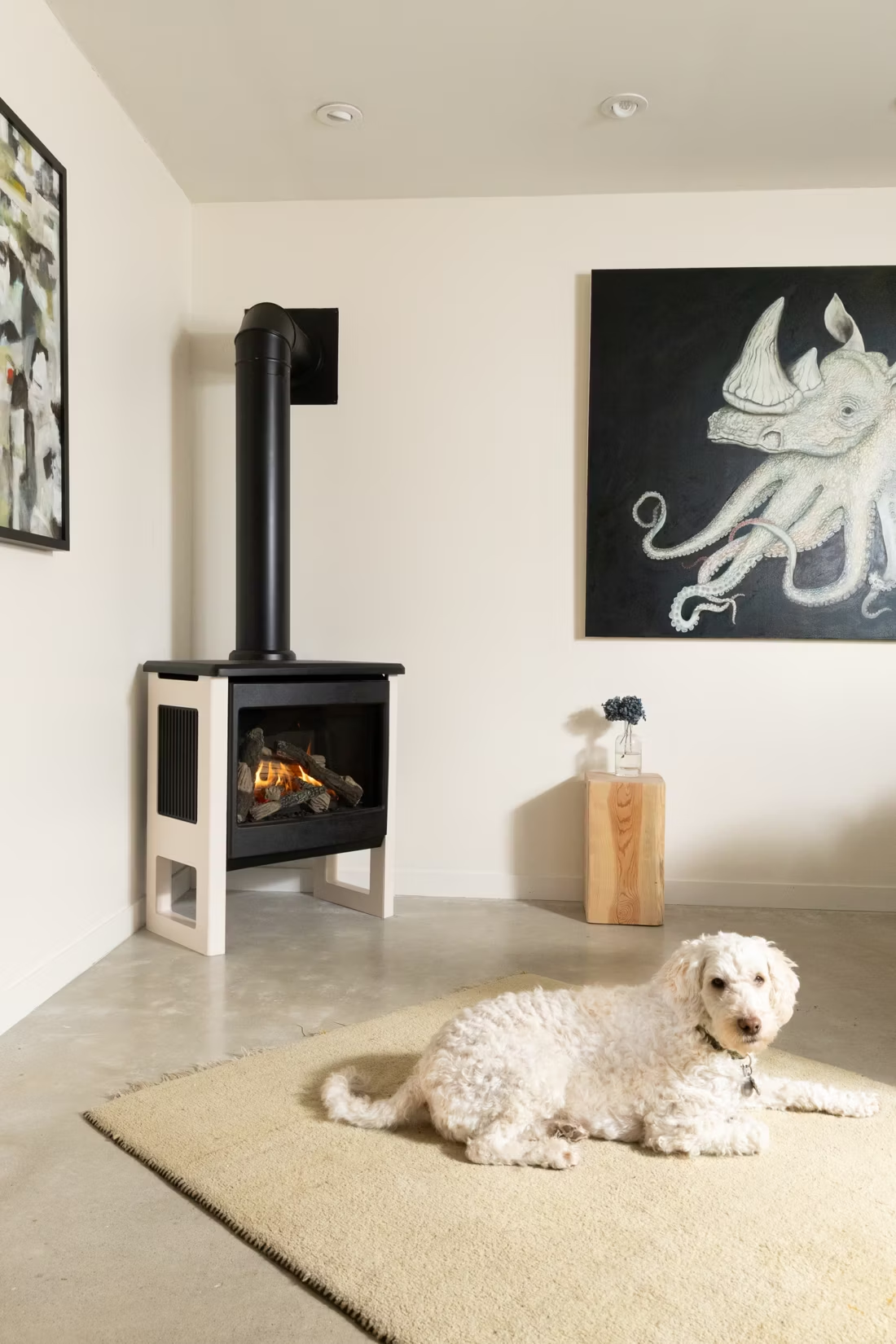
Four fuels. One honest answer for Fayette County.
Three steps. No salesperson until you're ready.
Tell us about your project
Your zip code, your situation, and the fuel you're leaning toward—or let the answers point you to one.
See what's actually available
The brands dealers within 100 miles genuinely carry—real options, never a catalog mirage.
Get your dealer & Project Guide
A trusted local dealer, plus the free Project Guide & Parts List that names every component of the job.
Frequently Asked Questions
Which fuel works best in Fayette County?
Gas is the most common choice for Fayette County homeowners—whether natural gas or propane, it delivers instant flame with no venting through a full masonry chase, which fits how most people here actually use a fireplace: for evenings and ambiance rather than round-the-clock heat. Electric fireplaces are a close second, especially for condos and townhomes in Peachtree City where zero-clearance installation and no gas line make sense. Wood is genuinely rare as a primary heat source here—average winter lows of 34°F and roughly 2,587 heating degree days a year don't create the demand that drives wood heat in colder climates. Some Fayetteville and Tyrone homes still have an existing wood-burning masonry fireplace and use it a few times a season, but new wood installs are uncommon. Pellet stoves are essentially absent locally—the mild climate doesn't create the heating-cost case that makes pellet appliances popular in places like Minneapolis or Bozeman.
Do I need a permit to install a fireplace in Fayette County?
For gas fireplaces, gas inserts, and gas stoves, yes—you'll need a building permit and, separately, a licensed gas fitter for the gas line connection. Permits are issued by whichever jurisdiction you're in: the City of Fayetteville, City of Peachtree City, or Town of Tyrone each handle their own permitting, while unincorporated parts of the county (including Brooks and Woolsey) go through Fayette County's building department. Electric fireplace installs typically don't require a permit unless you're doing a built-in unit with new wiring or a dedicated circuit. Most local gas and electric retailers handle the permit paperwork as part of the installation, so you're rarely filing it yourself.
Are there air quality restrictions on wood burning in Fayette County?
No—Fayette County has no non-attainment designation and no winter burn advisories, unlike basin or valley communities that trap wood smoke during temperature inversions. That said, air quality isn't really the reason wood heat is uncommon here; it's the climate. With winter lows averaging 34°F, most homeowners simply don't need—or want—the daily upkeep of a wood stove for a handful of cold nights a year. If you do have an existing wood-burning fireplace, there's no local restriction stopping you from using it occasionally.
Can one local hearth retailer handle all four fuel types?
Most Fayette County hearth retailers concentrate on gas and electric, since that's where local demand actually is—you'll find working showroom displays of both at dealers serving Fayetteville and Peachtree City. Wood and pellet units are less commonly stocked; a retailer might special-order or refer you elsewhere if you're set on either, since so few local households request them. If you want to compare gas against electric directly, the county's gas-and-electric-focused dealers are the better starting point than hunting for a four-fuel showroom that doesn't really exist here.
How does service work across the different Fayette County communities?
Technicians are generally based out of Fayetteville or Peachtree City and travel out to Tyrone, Brooks, and Woolsey for service calls—expect a modest travel fee for the more rural south-county addresses. Gas fireplace service (pilot assemblies, thermocouples, IPI systems) is the most requested call, followed by chimney inspections for the older masonry wood fireplaces scattered through Fayetteville and Tyrone's established neighborhoods. Because the heating season here is short, scheduling isn't as seasonally jammed as it is in colder states—you can typically get an appointment within a couple weeks even in December.
What's the typical cost range for fireplace installation across fuel types in Fayette County?
Gas fireplace, insert, or stove: roughly $4,000–$10,000 depending on whether a new gas line has to be run and how much venting work is involved—homes already on natural gas service tend to land at the lower end. Electric fireplace: $200–$3,000 for the unit itself, plus $400–$1,200 in labor for anything beyond a simple plug-in wall unit, such as a built-in with dedicated wiring. Wood and pellet installations are quoted case-by-case here rather than following a standard local range, since so few installers in the county handle them regularly—expect pricing similar to national averages but fewer dealers to compare against. For dealer-specific numbers, the gas and electric county-plus-fuel pages above have the most current local pricing.
Can a fireplace actually lower my heating bill?
Yes—by creating a comfort zone. A furnace heats every square foot of the house just to warm the one room you're in; a gas fireplace on low burns roughly a sixth of the gas a typical furnace does. Set the furnace around 55–60 degrees as a baseline, then heat the rooms your family actually uses. Families who heat this way commonly save $20–$60 a month.
Wood, gas, pellet, or electric—how do I choose?
Match the fuel to your life, not the other way around. Wood: lowest fuel cost and total power-outage independence, but you're hauling and stacking. Gas: press a button, set a thermostat, no maintenance to speak of. Pellet: wood economics with automatic feeding, in exchange for weekly cleaning and a need for electricity. Electric: plugs in anywhere with honest supplemental heat. Nobody regrets the fuel that fits how they actually live.
Does a fireplace add value to my home?
On average, a fireplace adds back to the home about the same amount you spent installing it. Add the monthly savings from heating the rooms you actually use instead of the whole house—often hundreds of dollars a year—and the value case is strong before you even count what a fire does for how your family uses the room.
What are the biggest mistakes people make buying a fireplace?
Five come up constantly: budgeting for the unit but not the full job (vent, gas line, electrical, finish work); drowning in options instead of starting from style and fuel; buying without an in-home preview; handing installation to a handyman instead of a pro; and giving up out of sheer indecision. Every one is avoidable with a clear plan—step one, step two, step three.
Stove and Fireplace Dealers in Fayette County
Listings include WhyFire partner dealers, dealers we have verified as authorized for the brands we recommend, and established local businesses that carry hearth products. Every listing shows which one it is. The ones marked Preferred run on WhyFire's software, so they can show you real pricing and book your appointment right here. No manufacturer pays for placement. How we verify dealers →
Blossman Gas And Appliance
L&w Insulation And Fireplaces
Cr Design Center - Westside
Atlanta Chimney Worx
Find your fireplace in Fayette County.
Tell us about your home and we'll match you with a trusted local dealer and send over a free Project Guide & Parts List—the exact parts, including the vent kit, and the retailer best suited to install it in Fayetteville, Peachtree City, Tyrone, Brooks, or Woolsey.
Find Your Fireplace →