
Find the right pellet stove for Early County's mild winters.
From Blakely to Jakin and Damascus, Early County's coastal-plain winters rarely demand a primary heat source—but a pellet stove still earns its keep on the coldest nights. Find the right size unit and connect with a trusted local dealer.
Every Project Starts From One of These Five Situations
Convenient heat for occasional cold snaps.
Early County sits in Georgia's coastal plain, in climate zone 3A, where the average winter low hovers around 38°F and the county has a short, mild winter heating season—a fraction of what a place like Fargo, ND racks up in the same season. That mild profile means most Early County homes, whether in Blakely, out toward Kolomoki Mounds State Park, or in the farmland around Jakin and Damascus, don't rely on a stove to survive winter the way homes further north do. What a pellet stove offers here is targeted, thermostat-controlled zone heat for the den or living room on the nights temperatures dip into the 20s and 30s, without the splitting, stacking, and ash volume of a full wood-burning setup.
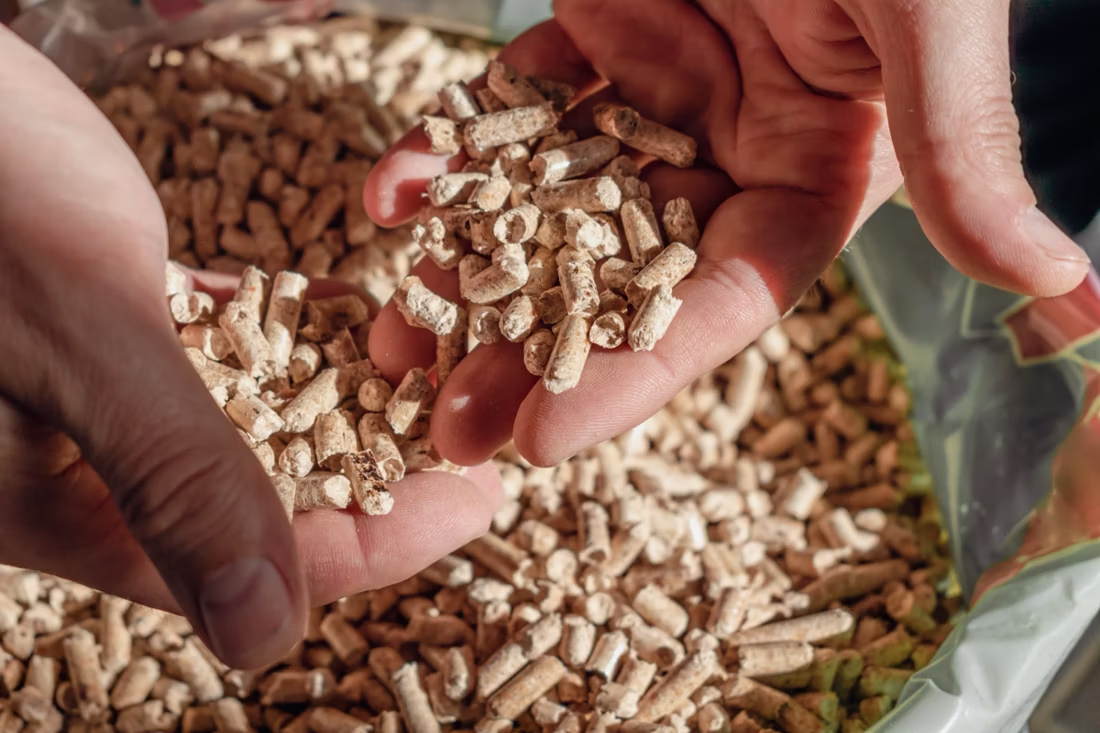
Early County has no non-attainment status or winter inversion concerns, so there's nothing here like the burn curtailment rules some western counties deal with—you can run a pellet stove whenever you want without checking an air quality advisory first. Pellets themselves are widely available through regional suppliers like Lignetics, Hamer Pellet Fuel, and Greenway Renewable Energy, all of which draw on the Southern yellow pine industry that runs through this part of Georgia. One honest trade-off worth knowing up front: pellet stoves need electricity to run the auger and blower, so during the ice storms and tropical-system remnants that occasionally knock out power in southwest Georgia, a pellet stove without a battery backup won't run. A local dealer can walk you through backup options if that matters for your household.
Three steps. No salesperson until you're ready.
Tell us about your project
Your zip code, your situation, and the fuel you're leaning toward—or let the answers point you to one.
See what's actually available
The brands dealers within 100 miles genuinely carry—real options, never a catalog mirage.
Get your dealer & Project Guide
A trusted local dealer, plus the free Project Guide & Parts List that names every component of the job.
Frequently Asked Questions
How much does a pellet stove installation cost in Early County?
Nationally, a straightforward pellet stove installation—unit, hearth pad if needed, and PL vent run through an exterior wall—typically falls in the $3,000 to $6,000 range, with the low end covering a smaller freestanding stove in an existing room and the high end covering longer vent runs or a pellet insert into an existing masonry fireplace. Because Early County's mild climate means most installs are supplemental units in a single room rather than whole-home systems, many local jobs land toward the lower end of that range. A local dealer serving Blakely and the surrounding county will give you a firm number after seeing your room layout and existing venting situation.
Do I need a permit to install a pellet stove in Early County?
Yes—a new pellet stove installation typically requires a building permit through the Early County Building Department, since it involves a wall penetration for venting and, in some cases, a hearth pad for clearance to combustibles. Most local hearth dealers handle the permit application as part of the installation, so you generally don't have to file anything yourself. Because pellet stoves vent through a small-diameter PL pipe rather than a full masonry chimney, the permit and inspection process is usually simpler and faster than it is for a wood stove or gas fireplace with more extensive venting.
What size pellet stove do I need for a home in Early County?
With only a short, mild winter heating season and winter lows that average in the high 30s, most Early County homes don't need a large, whole-house pellet system—a small-to-medium unit rated around 40,000 to 50,000 BTUs is usually plenty to heat a main living area or open den. That's a noticeably smaller stove than what you'd size for a home in a colder climate zone, where the same square footage might call for a unit rated well above 60,000 BTUs. If you're looking for supplemental heat in one or two rooms rather than a primary heat source, a local dealer can right-size the unit so it's not overpowering a small space on Early County's milder days.
Which pellet brands are available near Early County?
Regional suppliers serving southwest Georgia include Lignetics, Hamer Pellet Fuel, and Greenway Renewable Energy, all of which are within reasonable delivery or pickup range of Early County. Georgia's pine plantation industry keeps softwood pellet supply relatively steady in this part of the state, though it's still worth buying your season's supply—typically by the ton—early in the fall rather than waiting for the first cold snap, when farm supply stores and hardware retailers can sell through their stock quickly. Your local dealer can point you toward whichever supplier is stocking closest to Blakely at the time you're shopping.
Will my pellet stove work during a power outage?
Not without a battery backup. Pellet stoves rely on an electric auger to feed fuel and a blower to distribute heat, so a standard unit goes dark the moment the power does. That's a real consideration in Early County, where ice storms and the remnants of Gulf tropical systems occasionally knock out power for a day or more. If backup heat during outages matters to your household, ask your local dealer about battery backup kits or a small generator sized to run the stove—or consider whether a wood-burning unit, which needs no electricity, makes more sense as your primary or backup source.
With oak, pine, and hickory firewood readily available locally, is a pellet stove worth it over a wood stove?
It depends on what you're optimizing for. Early County has plenty of oak, pine, and hickory available for cordwood, and wood heat runs cheaper if you're cutting or sourcing your own. Pellet stoves trade that lower fuel cost for convenience: no splitting or stacking, a hopper that feeds itself for a day or more between reloads, a thermostat that holds a steady temperature, and far less ash and creosote to manage. For a household that wants set-it-and-forget-it supplemental heat in a den or living room without the labor of wood, pellet is usually the better fit. For a household with easy access to free or cheap hardwood and no concern about running a stove during a power outage, wood may pencil out better over time.
How much maintenance does a pellet stove need?
Day to day, plan on emptying the ash pan every few days to weekly depending on how much you run the stove, and giving the burn pot a quick scrape to keep airflow clean. Beyond that, most manufacturers recommend a full cleaning of the hopper, auger, and venting once a season, plus an annual professional inspection to check the exhaust fan, gaskets, and vent termination for blockage or wear. Because Early County's mild winters mean lighter overall use than a colder climate, many households find their stove needs less frequent deep cleaning than the manufacturer's worst-case schedule assumes—but skipping the annual inspection entirely isn't worth the risk.
When's the best time to install a pellet stove in Early County?
Because Early County's heating season is short and mild, there's no hard installation deadline the way there is in colder climates—you can install a pellet stove in spring or summer without missing much use. That said, scheduling the installation before the first cold snaps in December and January means you're not waiting on a dealer's busy season, and it gives you time to order your first ton or two of pellets from a supplier like Lignetics or Greenway Renewable Energy before local stock tightens up heading into winter.
Are there rebates or tax credits available for a pellet stove in Early County?
Federal tax credits are the main incentive homeowners in Early County can currently claim: qualifying biomass-fueled stoves—including pellet stoves rated at 75% efficiency or higher—are eligible for a 30% federal tax credit, capped at $2,000 per year, under the current energy-efficient home improvement credit. Keep your dealer invoice and the manufacturer's certification statement, since you'll need both to claim the credit. Georgia doesn't currently layer a separate state rebate on top of the federal credit, so ask your local dealer to confirm the unit you're considering qualifies before you buy.
Why is a fireplace insert so efficient?
An insert does two things: it seals the chimney completely, so you stop losing air you already paid to heat, and it radiates warmth into the room through the firebox and glass. Most add a heat-exchange fan that pulls cool room air underneath, wraps it around the hot firebox, and pushes it back out warm. Your home is more efficient before you've even lit the first fire.
Why is my open fireplace making my house colder?
Open fireplaces suck—literally. As the fire burns, it consumes air your furnace already paid to heat and pulls it out through the chimney, so the house is actually colder after the fire goes out than before you lit it. An insert fixes this: it seals the chimney, puts fixed glass across the front, and turns that hole in your house into a real heat source.
How much should I budget for a fireplace?
For an average home—covering the fireplace, the vent pipe, and basic installation—a budget between $3,900 and $5,500 gives you a lot of options across wood, gas, and pellet. By the time you add finish work, gas line, and electrical, the average complete installation lands between $5,000 and $12,000 all-in. In a remodel or new build, a good rule is to put about 2.5% of the total project cost toward the fireplace.
Can a fireplace actually lower my heating bill?
Yes—by creating a comfort zone. A furnace heats every square foot of the house just to warm the one room you're in; a gas fireplace on low burns roughly a sixth of the gas a typical furnace does. Set the furnace around 55–60 degrees as a baseline, then heat the rooms your family actually uses. Families who heat this way commonly save $20–$60 a month.
Pellet Brands Stocked Around Early County
Manufacturers will point you to the nearest stocking dealer.
Find your pellet stove in Early County.
Tell us a bit about your home and we'll match you with a trusted local dealer serving Early County, plus a free Project Guide & Parts List—the sized-right stove, the vent kit, and the exact parts your installer will need.
Find Your Fireplace →