
Every fuel type, every corner of Early County.
Wood, gas, pellet, and electric fireplace resources for the whole county—from Blakely out through Jakin and Damascus. Pick a fuel and get matched with a local dealer who actually installs it here.
Every Project Starts From One of These Five Situations
Mild winters, 1,988 heating degree days, and a hearth that's more about comfort than survival.
Early County sits in southwest Georgia's coastal plain, where winter lows average around 38°F and the heating season adds up to roughly 1,988 heating degree days—a fraction of what a place like Duluth, Minnesota racks up in a single hard winter. That's climate zone 3A territory: mild, humid winters with only a handful of nights that dip near freezing. Oak, hickory, and pine are the wood species most local households have on hand, much of it cleared from their own land or bought from a neighbor rather than hauled in from a supplier, which keeps wood heat an easy, low-cost option even where it isn't strictly necessary.
There's no non-attainment designation or curtailment program here—Early County has none of the winter air-quality restrictions that shape hearth choices in colder, more populated basins. That means the fuel decision comes down to comfort, cost, and what a household is used to rather than regulation. A lot of homes here run a wood-burning fireplace or insert for ambiance and occasional real heat, propane or gas logs for convenience since natural gas infrastructure is limited outside Blakely, and pellet stoves for households that want the wood look with less daily tending. This hub rolls up hearth retailers, service techs, and fuel suppliers across the whole county, from Blakely down to Jakin and out toward Damascus and Arlington. Pick your fuel below for local dealers, install costs, and unit recommendations specific to your town.
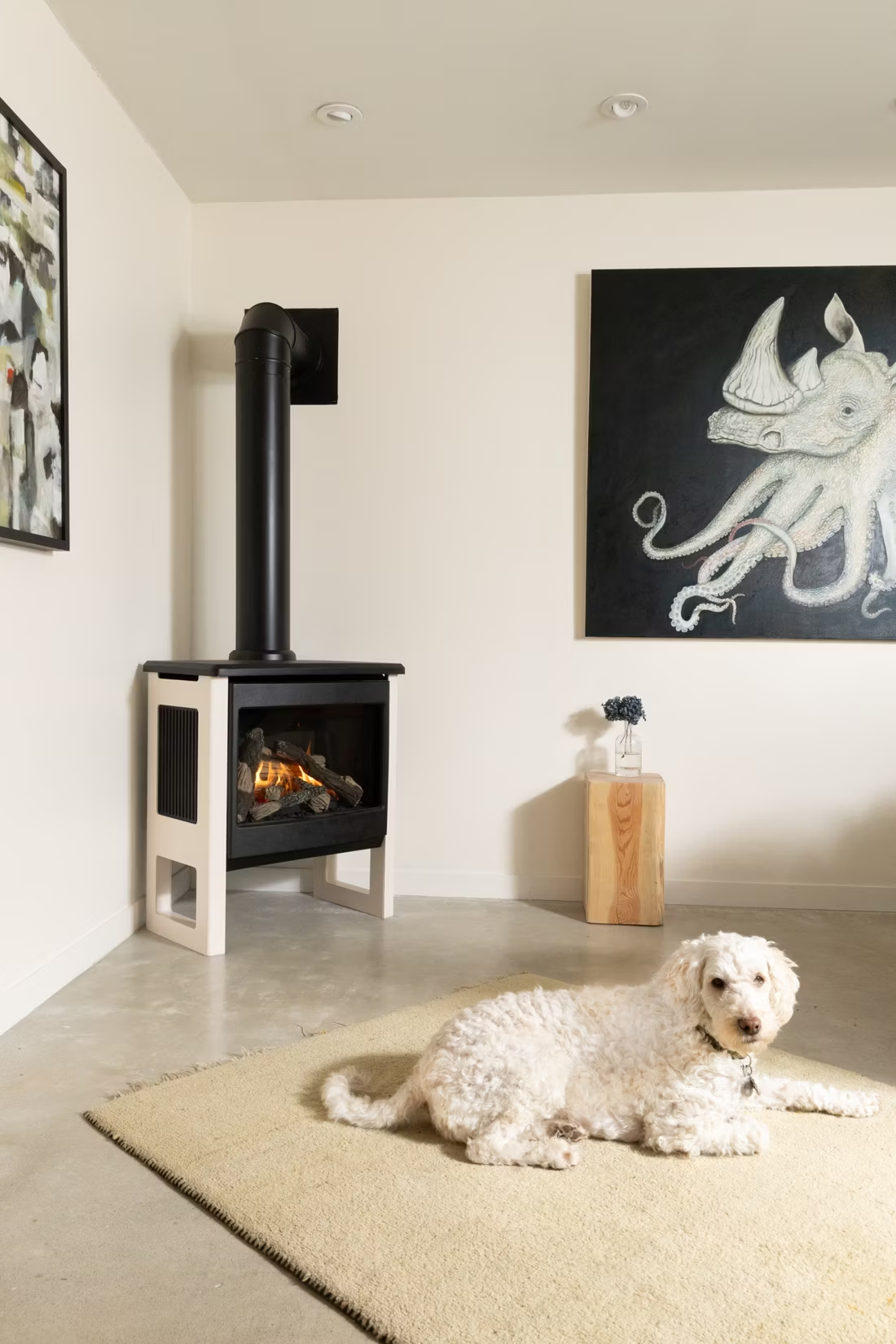
Four fuels. One honest answer for Early County.
Three steps. No salesperson until you're ready.
Tell us about your project
Your zip code, your situation, and the fuel you're leaning toward—or let the answers point you to one.
See what's actually available
The brands dealers within 100 miles genuinely carry—real options, never a catalog mirage.
Get your dealer & Project Guide
A trusted local dealer, plus the free Project Guide & Parts List that names every component of the job.
Frequently Asked Questions
Which fireplace fuel makes the most sense in Early County?
With winter lows averaging around 38°F and under 2,000 heating degree days, no fuel here is fighting for survival the way it would in a colder state—so the choice comes down to what a household wants day to day. Wood remains popular because oak, hickory, and pine are cheap or free locally, and a basic wood-burning fireplace or insert covers the handful of genuinely cold nights just fine. Gas logs or a propane insert are the low-maintenance choice for people who want instant heat without tending a fire, though natural gas lines are mostly limited to in-town Blakely, so most rural gas installs run on propane. Pellet stoves have a following among households that like the look of a wood fire but want a thermostat-controlled, hands-off unit—Lignetics and Hamer Pellet Fuel are both distributed in the region. Electric fireplaces work well as a supplemental, no-venting option for a bedroom or den, though given how mild the winters run here, they're plenty capable of handling the coldest nights on their own in a well-insulated room.
Do I need a permit to install a wood stove or gas fireplace in Early County?
Generally yes for anything involving new venting, a chimney, or a gas line. New installations typically go through the county building permitting process, and any propane or natural gas connection needs a licensed gas installer to sign off before it's inspected. Because Early County has no air-quality non-attainment designation, there's no EPA emissions curtailment or seasonal burn-day restriction to navigate—the permit process here is about safe construction and code compliance, not smoke management. Electric fireplace installs usually skip the permit process entirely unless you're adding a dedicated circuit for a built-in unit. Most hearth retailers we match homeowners with pull the necessary permits as part of the installation, so it's rarely something you handle on your own.
Is wood heat still practical in a climate this mild?
It is, and it's actually one of the more common setups in the county. With winter lows only occasionally dipping near freezing, a household burning wood isn't relying on it to survive the way a Fargo, North Dakota homeowner would—it's more about having a real fire on the cold nights and a backup if the power goes out. Oak and hickory both burn long and hot, which is more heat output than most Early County homes actually need most of the season, so a lot of households run their wood fireplace or insert lightly rather than around the clock. Pine is common too, mostly for kindling and shoulder-season fires given it burns faster and cooler.
Can I find a retailer that carries more than one fuel type?
Yes—most hearth retailers serving Early County carry two or three fuel types rather than specializing in just one, which fits how households here actually shop. A homeowner might come in undecided between a wood insert and a pellet stove, or want to compare propane gas logs against an electric unit for a room that doesn't have existing venting. Multi-fuel dealers let you look at working displays side by side and talk through what actually fits your house and budget rather than getting steered toward one fuel by default. We match you with the retailer whose fuel lineup and service area fit your project, whether that's in Blakely proper or out toward Damascus.
How does installation and service work outside Blakely?
Most retailers and service technicians are based in or near Blakely but regularly travel to Jakin, Damascus, and the farm properties scattered throughout the county. Expect a modest trip fee for the farthest calls, but scheduling doesn't get nearly as tight here as it would in a colder market—there's no hard curtailment season driving a rush of installs before winter. That said, booking your annual chimney sweep or gas inspection in late summer still beats waiting until the first cold front, since a lot of households wait until then and service techs get backed up for a few weeks.
What does a fireplace installation typically cost in Early County?
Costs run in line with regional norms for the fuel and scope of work involved. Wood stove or insert installs typically land around $3,500–$7,500, less than colder-climate markets since venting requirements are simpler and units don't need to be sized for extreme cold. Gas fireplaces or gas log sets, mostly running on propane here, run roughly $3,000–$8,000 depending on whether a new gas line has to be run. Pellet stove installs generally fall between $4,000–$6,500. Electric fireplaces remain the most affordable option—$200–$2,500 for the unit, plus $300–$1,000 in labor if it's more than a plug-and-play placement. The county + fuel pages above break these numbers down further with local retailer pricing.
How much should I budget for a fireplace?
For an average home—covering the fireplace, the vent pipe, and basic installation—a budget between $3,900 and $5,500 gives you a lot of options across wood, gas, and pellet. By the time you add finish work, gas line, and electrical, the average complete installation lands between $5,000 and $12,000 all-in. In a remodel or new build, a good rule is to put about 2.5% of the total project cost toward the fireplace.
Can a fireplace actually lower my heating bill?
Yes—by creating a comfort zone. A furnace heats every square foot of the house just to warm the one room you're in; a gas fireplace on low burns roughly a sixth of the gas a typical furnace does. Set the furnace around 55–60 degrees as a baseline, then heat the rooms your family actually uses. Families who heat this way commonly save $20–$60 a month.
Can I install a fireplace myself?
If you're putting a fire in your house on purpose, it's best to work with an expert. Unless you're genuinely experienced in framing, gas line, vent pipe, and the national code on clearances to combustibles, have a professional do it—and ideally the same company that sells you the fireplace, so warranty, service, and liability all live under one roof.
What is an in-home preview and do I need one?
It's a visit where a hearth professional measures your space, confirms the model you picked actually works in your home, and walks the specs—framing, gas line, venting, finish work—before anything is ordered. Some details you just can't know until you see the house. Never make a down payment without one; it's the single most-skipped step that burns buyers.
Stove and Fireplace Dealers in Early County
Listings include WhyFire partner dealers, dealers we have verified as authorized for the brands we recommend, and established local businesses that carry hearth products. Every listing shows which one it is. The ones marked Preferred run on WhyFire's software, so they can show you real pricing and book your appointment right here. No manufacturer pays for placement. How we verify dealers →
Plantation Propane Inc.
Driver Energies LLC
Get matched with a local Early County dealer.
Pick your fuel below and we'll put together a free Project Guide & Parts List—the right unit, the vent kit it needs, and the local dealer we recommend for your project.
Find Your Fireplace →