
Keep Your Family Warm and Safe—No Matter What
With winter lows averaging in the low 30s, most Druid Hills homes don't need wood as primary heat. But for the century-old homes with existing masonry fireplaces near Emory and Ponce de Leon, a wood insert still has a place. We'll connect you with a local dealer who can tell you honestly whether it makes sense for your house.
Every Project Starts From One of These Five Situations
A mild climate where wood is optional, not essential.
Druid Hills sits in climate zone 3A at just under 900 feet elevation, with an average winter low around 33°F and a mild heating season overall—a fraction of what a place like Duluth, MN or Burlington, VT sees. Most of the historic Olmsted-designed neighborhood's Craftsman bungalows and Tudor Revival homes from the 1910s and 1920s were built with fireplaces for ambiance and occasional use, not as a serious heating strategy, and that hasn't changed.
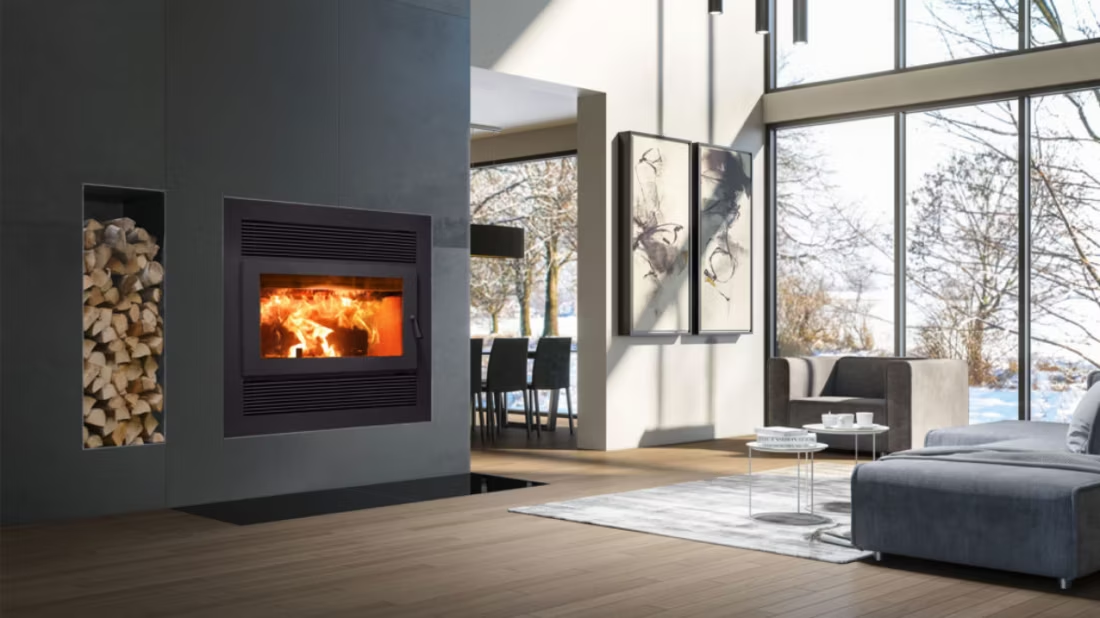
That said, wood isn't irrelevant here. A number of Druid Hills homeowners have existing masonry fireplaces that came with the house, and converting one to a modern wood-burning insert is a real project some pursue—for the look of a real fire, for backup heat during the ice storms that occasionally knock out power in DeKalb County, or simply because the chimney is already there. Georgia has no statewide burn restrictions to navigate here, and oak, hickory, and pine firewood are all readily available around metro Atlanta. Most homeowners in Druid Hills are still better served by gas or electric options for everyday heat, and a trusted local dealer will tell you plainly which route fits your home.
Three steps. No salesperson until you're ready.
Tell us about your project
Your zip code, your situation, and the fuel you're leaning toward—or let the answers point you to one.
See what's actually available
The brands dealers within 100 miles genuinely carry—real options, never a catalog mirage.
Get your dealer & Project Guide
A trusted local dealer, plus the free Project Guide & Parts List that names every component of the job.
Frequently Asked Questions
Does it make sense to install a wood stove in Druid Hills at all?
For most homes, no—not as a primary heat source. With winter lows averaging around 33°F and a fairly light overall heating season, Druid Hills doesn't have the sustained cold that makes wood heat pay for itself the way it does in places like Bozeman, MT. Where it does make sense is a home with an existing masonry fireplace that a homeowner wants to convert into a functional wood-burning insert for ambiance, occasional use, or storm backup. A local dealer can walk your specific chimney and tell you honestly whether it's worth pursuing.
What does a wood-burning insert cost in a Druid Hills home?
Because most projects here involve converting an existing masonry fireplace rather than a new freestanding stove, the typical range in the metro Atlanta area runs roughly $3,000 to $6,500 depending on the insert, liner work, and whether the existing flue needs relining. Century-old Druid Hills chimneys often need a stainless liner as part of the job, which is standard practice and worth budgeting for rather than a surprise add-on.
Are there wood stove installers who work in Druid Hills?
Yes, though there are fewer specialists here than in colder-climate markets, simply because demand is lower. Look for NFI (National Fireplace Institute) or CSIA (Chimney Safety Institute of America) certification—both indicate real training in wood-burning appliance installation and venting. Metro Atlanta has several established hearth dealers who handle both new inserts and older masonry fireplace conversions; a local match matters more here than in most cities, since not every installer regularly works on wood in this climate zone.
Should I get a wood stove or a wood insert for my Druid Hills home?
If your home already has a masonry fireplace—common in Druid Hills' older Craftsman and Tudor homes—an insert is almost always the right call. It uses the chimney you already have and turns an inefficient, mostly decorative fireplace into a real heat source. A freestanding stove only makes sense if you're building new or don't have an existing chimney to work with, which is less common in this historic neighborhood.
Do I need a permit to install a wood insert in Druid Hills?
Yes—a building permit through DeKalb County is required for a new wood-burning insert installation, and the unit needs to meet current EPA emissions standards. There are currently no air quality nonattainment concerns or wood-burning curtailment periods in this area, unlike Western cities with winter inversion issues, so the process here is mainly about code compliance and clearance, not seasonal burn bans. Most local installers handle the permit paperwork as part of the job.
What's the best wood stove or insert for a mild climate like Druid Hills?
Since heating load is light here, an oversized catalytic stove built for 20-hour burns in subzero cold is overkill. Mid-size non-catalytic inserts from brands like Jotul, Vermont Castings, or Pacific Energy tend to fit better—they look right in a historic Druid Hills fireplace opening, heat a single room or living area well, and don't require the massive wood supply a whole-home setup would. A local dealer can match the insert size to your actual fireplace opening and room size.
How often should an older Druid Hills chimney be inspected?
Annually, and it matters more here than the average—many Druid Hills homes have original masonry chimneys from the 1910s and 1920s that haven't been used regularly in decades. Before installing any insert or resuming regular wood burning, get a Level 2 inspection to check the flue's structural condition, not just a standard sweep. CSIA-certified sweeps in the Atlanta area handle this regularly for older housing stock.
Where can I get firewood in the Druid Hills area?
Oak, hickory, and pine are the common species sold around metro Atlanta, with several regional suppliers delivering by the cord to DeKalb County addresses. Seasoned hardwood (oak and hickory) burns hotter and longer and is generally the better choice for an insert used for real heat rather than occasional ambiance; pine is more often sold as a cheaper, faster-burning option or kindling.
Wood vs. gas—which makes more sense for a Druid Hills home?
For most homes here, gas is the more practical everyday choice—natural gas service is widely available across metro Atlanta, and a gas insert or fireplace gives instant, consistent heat without wood handling, ash, or chimney maintenance. Wood still has a role for homeowners who want the experience of a real fire, have an existing masonry fireplace they want to bring back to life, or want a non-electric backup heat source for the occasional ice storm that knocks out power in DeKalb County. Many Druid Hills homes end up with gas for daily use and keep an existing wood-capable fireplace for backup and ambiance.
Why won't my new wood stove get going like my old one?
New wood stoves are 70%+ efficient, so far less heat goes up the flue—which also means less draft to get a fire established. The rule: build a genuinely hot fire for about 45 minutes before you choke it down. Skip that and you get smoke in the room, creosote in the chimney, and a fire that never takes off. Most performance complaints trace straight back to this.
Why is a fireplace insert so efficient?
An insert does two things: it seals the chimney completely, so you stop losing air you already paid to heat, and it radiates warmth into the room through the firebox and glass. Most add a heat-exchange fan that pulls cool room air underneath, wraps it around the hot firebox, and pushes it back out warm. Your home is more efficient before you've even lit the first fire.
Can I install a fireplace myself?
If you're putting a fire in your house on purpose, it's best to work with an expert. Unless you're genuinely experienced in framing, gas line, vent pipe, and the national code on clearances to combustibles, have a professional do it—and ideally the same company that sells you the fireplace, so warranty, service, and liability all live under one roof.
Can a fireplace actually lower my heating bill?
Yes—by creating a comfort zone. A furnace heats every square foot of the house just to warm the one room you're in; a gas fireplace on low burns roughly a sixth of the gas a typical furnace does. Set the furnace around 55–60 degrees as a baseline, then heat the rooms your family actually uses. Families who heat this way commonly save $20–$60 a month.
Nearby Dealers
Hearth shops serving Druid Hills and the surrounding area. Every listing shows whether it is a WhyFire partner, a dealer we have verified as authorized for the brands we recommend, or a local business carrying hearth products. No manufacturer pays for placement. How we verify dealers →
North Atlanta Fireplace Grill & Patio
Atlanta Chimney Worx
Construction Resources - Decatur
Cr Design Center - Westside
Authenteak
The Man Cave Store
Builder Specialties, Inc.
Fireplace Depot
Fireplaces By Mike
Old Hat Chimney
EarthCore Industries
Tara Residential
See what's realistic for wood heat in Druid Hills.
Tell us about your home and your existing fireplace, and we'll give you an honest read on whether a wood insert makes sense—plus a free Project Guide & Parts List and a match with a trusted local dealer.
Find Your Fireplace →