
Gas heat built for Druid Hills' short, mild winters.
With winter lows averaging 33°F, Druid Hills doesn't need a furnace-grade fire—it needs a clean, instant-on gas fireplace that looks right in a 1920s bungalow or a Ponce de Leon Avenue Tudor. We'll match you with a trusted local dealer who knows the difference.
Every Project Starts From One of These Five Situations
A historic neighborhood with a modest heating season.
Druid Hills, the Frederick Law Olmsted-designed neighborhood that straddles DeKalb County just east of Emory University, has a mild winter climate—just a fraction of the cold a place like Duluth, MN sees. Winter lows average a mild 33°F, and hard freezes are the exception rather than the rule. That climate profile changes the calculus on hearth appliances: wood stoves and pellet stoves, common in colder regions, see almost no real demand here, since there's rarely a stretch of weather that requires all-day, self-sufficient heat.
What does get installed, consistently, is gas. Many Druid Hills homes date to the 1910s-1930s and were built with the same architectural feature—an open masonry fireplace—that a gas insert converts beautifully, keeping the mantel and surround intact while trading smoke and ash for a flip-of-a-switch flame. Natural gas service reaches most of the neighborhood through Atlanta Gas Light, the regional utility for the metro area, and Georgia Power (residential rate around 15.5¢/kWh) serves as the backdrop for homeowners weighing gas against an electric unit for occasional ambiance.
Three steps. No salesperson until you're ready.
Tell us about your project
Your zip code, your situation, and the fuel you're leaning toward—or let the answers point you to one.
See what's actually available
The brands dealers within 100 miles genuinely carry—real options, never a catalog mirage.
Get your dealer & Project Guide
A trusted local dealer, plus the free Project Guide & Parts List that names every component of the job.
Frequently Asked Questions
How much does a gas fireplace installation cost in Druid Hills?
For the Atlanta metro, a direct-vent gas insert dropped into an existing masonry fireplace typically runs $3,500 to $6,500, since the chimney is already in place and mainly needs a stainless liner for venting. A new built-in gas fireplace for a room addition or renovation—with framing, venting, and gas line work included—generally lands between $6,000 and $10,000. Given how common pre-war masonry fireplaces are in Druid Hills' Olmsted-era homes, the insert route is the more frequent (and less expensive) project.
Can I convert my existing fireplace to gas without losing the historic mantel?
Yes, and it's the single most common request from Druid Hills homeowners. A gas insert slides into the existing masonry opening and vents through a liner run up the original chimney, so the plaster surround, mantel, and firebox facade stay exactly as they are. This matters in a National Register historic district where the visual character of a room is part of the home's value. Local installers who regularly work in DeKalb County's older housing stock are used to threading a liner through a century-old flue without disturbing the brickwork.
Is natural gas available at my Druid Hills address, or do I need propane?
Most of Druid Hills, including the zip codes around Ponce de Leon Avenue and Springdale Road, is served by Atlanta Gas Light, the regional natural gas utility. If you already have gas heat, a gas water heater, or a gas range, adding a fireplace usually means tapping an existing line rather than running new service. A small number of homes on the edges of the service area may need to confirm availability with the utility before committing to a project—a local installer can check this for you before quoting the job.
Will a gas fireplace still work if the power goes out?
Most direct-vent gas fireplaces use IPI (intermittent pilot ignition) with a battery backup, so they'll light on demand even without grid power—useful during the occasional ice storm that knocks out power in the Atlanta area. Valor units take a slightly different approach: the pilot's thermocouple generates its own electricity, so there's no battery to remember to replace. Given how infrequent extended outages are in Druid Hills compared to, say, coastal or mountain climates, either option is more than adequate—but it's worth asking your installer which ignition system a given unit uses.
What's the difference between a gas fireplace, a gas insert, and a gas stove for a home like mine?
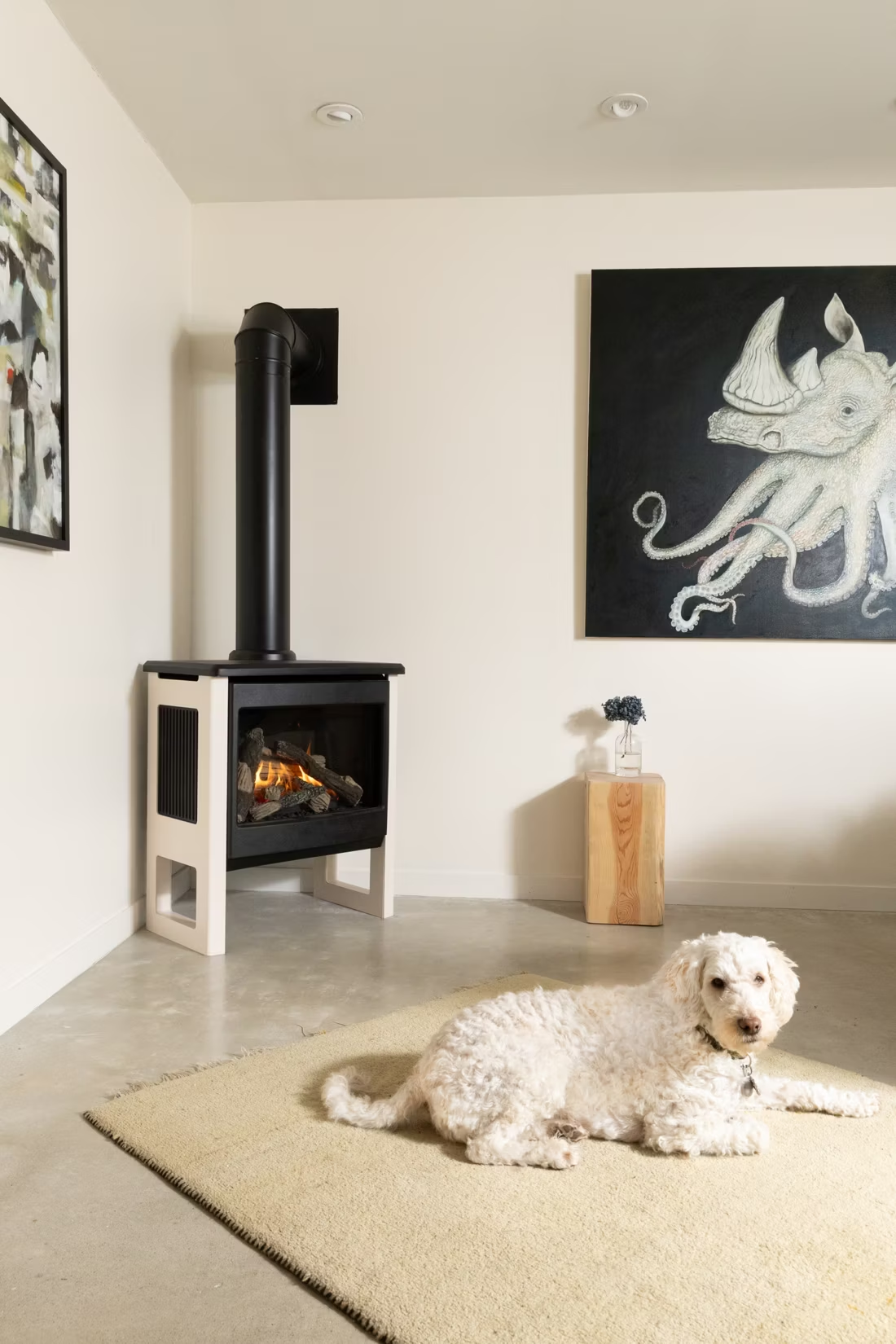
A gas insert is built to slide into an existing masonry firebox—the right call for most Druid Hills homes with an original fireplace opening. A built-in gas fireplace is framed into a wall from scratch, which fits new construction, additions, or gutted renovations without an existing chimney. A freestanding gas stove sits on the floor on its own hearth pad and vents through a wall or chimney—less common in this neighborhood's architecture, though it can work in a converted porch or sunroom. For the majority of the neighborhood's pre-war housing stock, the insert is the natural fit.
Do I need a permit—and does Druid Hills' historic status affect the project?
Yes, DeKalb County requires a building permit and gas permit for new fireplace installations, and a licensed gas-fitter has to handle the line work. Because much of Druid Hills sits within a National Register historic district, exterior changes visible from the street—including new vent terminations or chimney caps—can also draw review attention from the county's historic preservation process or the Druid Hills Civic Association's design guidelines. A local installer experienced in the neighborhood will typically route venting so it's unobtrusive from the front of the house, which avoids most of that friction entirely.
Should I get a vented or vent-free gas fireplace?
Vented (direct-vent) units draw combustion air from outside and exhaust it back outside through sealed venting—they're the standard recommendation almost everywhere, including Druid Hills. Vent-free units burn directly into the room air and are legal in Georgia within specific room-size and ventilation limits, but they release some moisture and combustion byproducts indoors. Given the age of the housing stock here—plaster walls, older HVAC, sometimes limited mechanical ventilation—most local installers steer homeowners toward vented units for both air quality and long-term wall condition. Vent-free stays a fallback for rooms where running venting genuinely isn't possible.
How often does a gas fireplace need to be serviced?
Plan on an annual inspection—a technician checks the burner, pilot assembly, venting, and gas connections, and cleans the glass. This runs roughly $150 to $250 in the Atlanta area and is far less involved than the chimney sweeping wood-burning units require. Because Druid Hills' mild winters mean most gas fireplaces here get used for evening ambiance more than round-the-clock heat, wear is generally light, but annual service still matters for the pilot and gas connections.
Why not a wood or pellet stove instead of gas?
Wood and pellet stoves are essentially a non-factor in Druid Hills—with such a mild winter climate and lows that rarely dip much below freezing, there's neither the sustained cold nor the practical setup (woodshed, hauling cordwood, hopper deliveries) that makes those fuels worthwhile. A handful of homeowners with existing masonry fireplaces still burn oak or hickory occasionally for atmosphere, but as a heating strategy it doesn't pencil out here the way it does in a place like Duluth, MN. Gas gives Druid Hills homeowners the visual warmth of a fire with none of the fuel logistics, which is why it's the dominant choice in this neighborhood.
Why is my open fireplace making my house colder?
Open fireplaces suck—literally. As the fire burns, it consumes air your furnace already paid to heat and pulls it out through the chimney, so the house is actually colder after the fire goes out than before you lit it. An insert fixes this: it seals the chimney, puts fixed glass across the front, and turns that hole in your house into a real heat source.
Can I put a TV above my fireplace?
Yes—with an asterisk. Fireplaces are hot and TVs don't like heat. Either put a mantel between them to deflect rising warmth, or choose a fireplace with heat-management technology that creates a cool zone on the wall above—the wall stays around 125 degrees, barely warm, while the room still gets full heat. If you like clean lines and don't want a mantel, heat management is the answer.
Can I install a fireplace myself?
If you're putting a fire in your house on purpose, it's best to work with an expert. Unless you're genuinely experienced in framing, gas line, vent pipe, and the national code on clearances to combustibles, have a professional do it—and ideally the same company that sells you the fireplace, so warranty, service, and liability all live under one roof.
Can a fireplace actually lower my heating bill?
Yes—by creating a comfort zone. A furnace heats every square foot of the house just to warm the one room you're in; a gas fireplace on low burns roughly a sixth of the gas a typical furnace does. Set the furnace around 55–60 degrees as a baseline, then heat the rooms your family actually uses. Families who heat this way commonly save $20–$60 a month.
Nearby Dealers
Hearth shops serving Druid Hills and the surrounding area. Every listing shows whether it is a WhyFire partner, a dealer we have verified as authorized for the brands we recommend, or a local business carrying hearth products. No manufacturer pays for placement. How we verify dealers →
North Atlanta Fireplace Grill & Patio
Atlanta Chimney Worx
Construction Resources - Decatur
Cr Design Center - Westside
Authenteak
The Man Cave Store
Builder Specialties, Inc.
Fireplace Depot
Fireplaces By Mike
Old Hat Chimney
EarthCore Industries
Tara Residential
Find your gas fireplace in Druid Hills.
Tell us about your home—historic masonry fireplace, new build, or renovation—and we'll send you a free Project Guide & Parts List with the exact insert or unit, vent kit, and a trusted local DeKalb County dealer to install it.
Find Your Fireplace →