
Pellet Heat Is Uncommon in Druid Hills—But Not Impossible.
With a relatively short, mild heating season and winter lows averaging 33°F, most Druid Hills homes never need a pellet stove's steady output. For the homes that do, we'll help you find out if it's the right call.
Every Project Starts From One of These Five Situations
A mild Georgia climate doesn't ask much of a pellet stove.
Druid Hills sits at 863 feet in DeKalb County, in ASHRAE climate zone 3A, where winter lows average a relatively gentle 33°F and the area has a relatively short, mild heating season. Compare that to a place like Duluth, MN, which has a winter heating season more than three times as long and intense, and it's easy to see why pellet stoves never became standard equipment here. Many of Druid Hills' Olmsted-era homes, built in the 1900s through 1920s, already came with masonry wood-burning fireplaces that burned local oak, pine, and hickory—which covered most of what a homeowner wanted from a hearth: ambiance and occasional supplemental warmth.
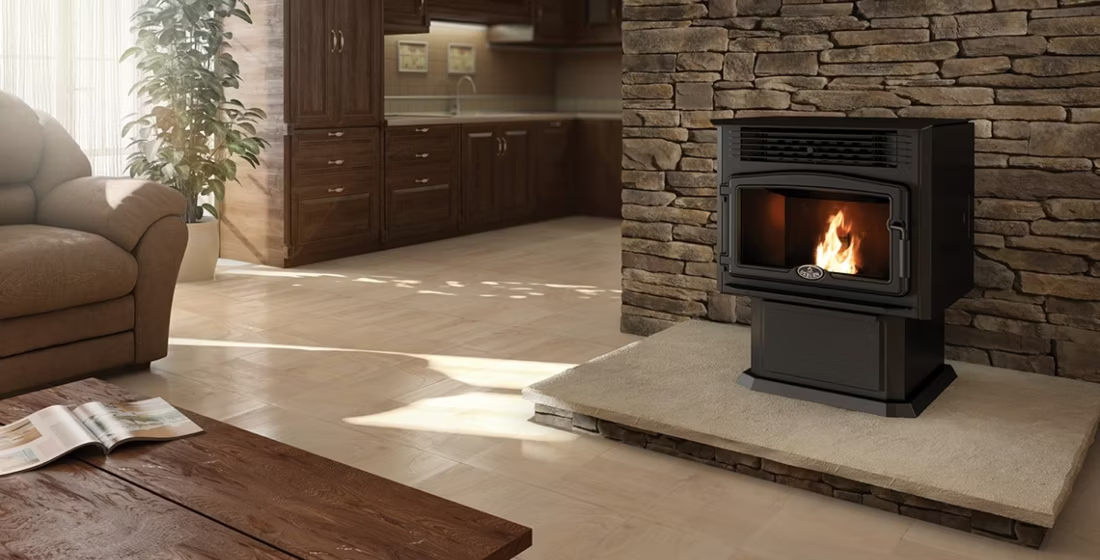
Where pellet stoves do show up in Druid Hills, it's usually for a specific reason: a sunroom or converted garage that central HVAC doesn't reach well, a homeowner who wants sealed-combustion heat without an open flame, or a second property in the north Georgia mountains where winters run colder. Regional pellet brands like Lignetics, Hamer Pellet Fuel (produced in McRae, Georgia), and Greenway Renewable Energy are available through metro Atlanta hearth dealers, though supply is thinner than in colder-climate markets. Because a pellet stove's auger and blower run on electricity, Georgia Power's residential rate of roughly 15.5 cents per kWh is worth factoring into the operating cost too.
Three steps. No salesperson until you're ready.
Tell us about your project
Your zip code, your situation, and the fuel you're leaning toward—or let the answers point you to one.
See what's actually available
The brands dealers within 100 miles genuinely carry—real options, never a catalog mirage.
Get your dealer & Project Guide
A trusted local dealer, plus the free Project Guide & Parts List that names every component of the job.
Frequently Asked Questions
Are pellet stoves actually used in Druid Hills?
Not often. With winter lows averaging 33°F and a relatively short, mild heating season, Druid Hills falls into climate zone 3A—mild enough that most homes rely on central HVAC or a gas insert rather than a dedicated pellet appliance. The handful of pellet stoves we do see locally tend to go into sunrooms, converted garages, or drafty additions that central heat doesn't reach well. It's a legitimate option, just not a mainstream one here the way it would be in a place like Minneapolis or Duluth.
How much does a pellet stove installation cost in the Druid Hills area?
Because pellet stoves are a specialty request here rather than routine business, pricing varies more than in a market where installers do them every week. Nationally, a typical pellet stove install runs $3,000 to $6,000 including the unit, venting, and hearth pad, with straightforward installs on an exterior wall landing on the lower end. In Druid Hills' historic homes—many built in the 1910s and 1920s with plaster walls and original masonry—venting sometimes takes extra carpentry work, which can push the total higher. A local dealer can give you a firm number after seeing your space.
Where can I buy wood pellets near Druid Hills?
Pellet fuel isn't stocked at every hardware store in DeKalb County the way it might be in a heavier pellet-heat market. Regional brands like Lignetics, Hamer Pellet Fuel (produced in McRae, Georgia), and Greenway Renewable Energy are distributed through hearth retailers and some farm supply stores around metro Atlanta. Because demand is low, it's worth confirming with your dealer that they can keep you supplied through the winter, or planning to buy pellets by the pallet rather than picking up bags as needed.
Do pellet stoves work during a power outage in Druid Hills?
No—this is one of the bigger tradeoffs. Pellet stoves need electricity to run the auger that feeds fuel and the blower that distributes heat, so a Georgia Power outage takes the stove down with it. Some homeowners pair a pellet stove with a small battery backup or generator for exactly this reason. If reliable heat during outages matters more, a gas insert or gas log set with a standing pilot—far more common in Druid Hills—will keep working without power.
Do I need a permit to install a pellet stove in Druid Hills?
Yes. Druid Hills is unincorporated, so building permits go through the DeKalb County Building Department rather than the City of Atlanta. A permit is required for the venting penetration through an exterior wall and for the hearth pad and clearance setup. Hearth dealers in the metro Atlanta area who do handle pellet installs will usually pull the permit for you as part of the job—worth confirming up front, since it's not a request they field often.
Pellet stove or gas insert—which makes more sense for a Druid Hills home?
For most homes here, gas wins. Natural gas service is well established in Druid Hills, a gas insert or log set gives instant heat with none of the pellet hopper loading or ash removal, and it's the fuel local installers work with constantly. Pellet stoves make more sense in a specific situation: a room without gas access, a preference for a renewable wood-based fuel, or wanting sealed combustion without an open flame. If convenience in a mild climate is the priority, ask your local dealer to walk you through both before you commit.
How does a pellet stove compare to the wood-burning fireplace already in my Druid Hills home?
Many Druid Hills houses—especially in the Olmsted Historic District—were built with masonry wood-burning fireplaces as a standard feature, often burning local oak, pine, or hickory. A pellet stove is a different animal: it's a sealed, thermostatically controlled appliance built for steady heat rather than ambiance, and it doesn't use an existing chimney the way a wood insert would. If your fireplace is mostly decorative and you want real heat output from that opening, a wood or gas insert generally makes more sense than trying to fit a pellet appliance into a masonry firebox that wasn't designed for it.
Is a pellet stove a better fit for a vacation cabin than my Druid Hills home?
Often, yes—and it's one of the more common reasons Druid Hills homeowners ask us about pellet stoves at all. If you own a second property in north Georgia or western North Carolina where winters run colder and firewood access is less convenient, a pellet stove can make more sense there than at your primary residence in DeKalb County. We can match you with a dealer near either property, depending on where the installation will actually happen.
Are there any air quality restrictions on burning pellet stoves in Druid Hills?
No—DeKalb County isn't a designated non-attainment area, and there are no winter burn bans or curtailment periods like you'd find in western states dealing with inversion issues. Pellet stoves also burn cleaner than cordwood, producing minimal visible smoke, so air quality simply isn't a factor in the decision here.
Why is my open fireplace making my house colder?
Open fireplaces suck—literally. As the fire burns, it consumes air your furnace already paid to heat and pulls it out through the chimney, so the house is actually colder after the fire goes out than before you lit it. An insert fixes this: it seals the chimney, puts fixed glass across the front, and turns that hole in your house into a real heat source.
What's the difference between an insert and a zero-clearance fireplace?
An insert is a fireplace that slides into a pre-existing wood-burning fireplace—if you don't have one, there's nothing to insert it into. A zero-clearance fireplace is built into a framed wall, which makes it the answer for remodels and new construction. Simple test: existing masonry fireplace means insert; blank or framed wall means zero-clearance.
How much should I budget for a fireplace?
For an average home—covering the fireplace, the vent pipe, and basic installation—a budget between $3,900 and $5,500 gives you a lot of options across wood, gas, and pellet. By the time you add finish work, gas line, and electrical, the average complete installation lands between $5,000 and $12,000 all-in. In a remodel or new build, a good rule is to put about 2.5% of the total project cost toward the fireplace.
Should the dealer who sells my fireplace also install it?
Ideally, yes. A fireplace project involves vent pipe, gas line, electrical, and often tile or stone. Hire three or four separate trades and you own the liability and the game of telephone between them. One company selling and installing means one accountable party, start to finish—ask about factory training, on-time completion records, and what happens if an inspection fails.
Nearby Dealers
Hearth shops serving Druid Hills and the surrounding area. Every listing shows whether it is a WhyFire partner, a dealer we have verified as authorized for the brands we recommend, or a local business carrying hearth products. No manufacturer pays for placement. How we verify dealers →
North Atlanta Fireplace Grill & Patio
Atlanta Chimney Worx
Construction Resources - Decatur
Cr Design Center - Westside
Authenteak
The Man Cave Store
Builder Specialties, Inc.
Fireplace Depot
Fireplaces By Mike
Old Hat Chimney
EarthCore Industries
Tara Residential
Pellet Brands Stocked Around Druid Hills
Manufacturers will point you to the nearest stocking dealer.
See if a pellet stove fits your Druid Hills home.
Tell us about your space and we'll match you with a local dealer who actually installs pellet appliances in the Atlanta area—plus a free Project Guide & Parts List with the exact parts, vent kit, and dealer recommendation for your project.
Find Your Fireplace →