
Keep Your Family Warm and Safe—No Matter What
With winter lows averaging 31°F and just a mild, short heating season, most Dalton homes don't need wood heat to get through the season—but plenty of homeowners still want the real thing. We'll match you with a local dealer who can tell you honestly what fits.
Every Project Starts From One of These Five Situations
Dalton's winters rarely call for wood heat.
Dalton sits at 769 feet in the Ridge and Valley region of north Georgia, in climate zone 4A, with an average winter low around 31°F and a mild, short heating season overall. That's a fraction of what a place like Duluth, Minnesota sees in a single winter—Dalton's cold snaps are short, and central heat pumps and gas systems from Georgia Power, Dalton Utilities, and North Georgia EMC handle the vast majority of home heating here without ever needing a backup wood source.
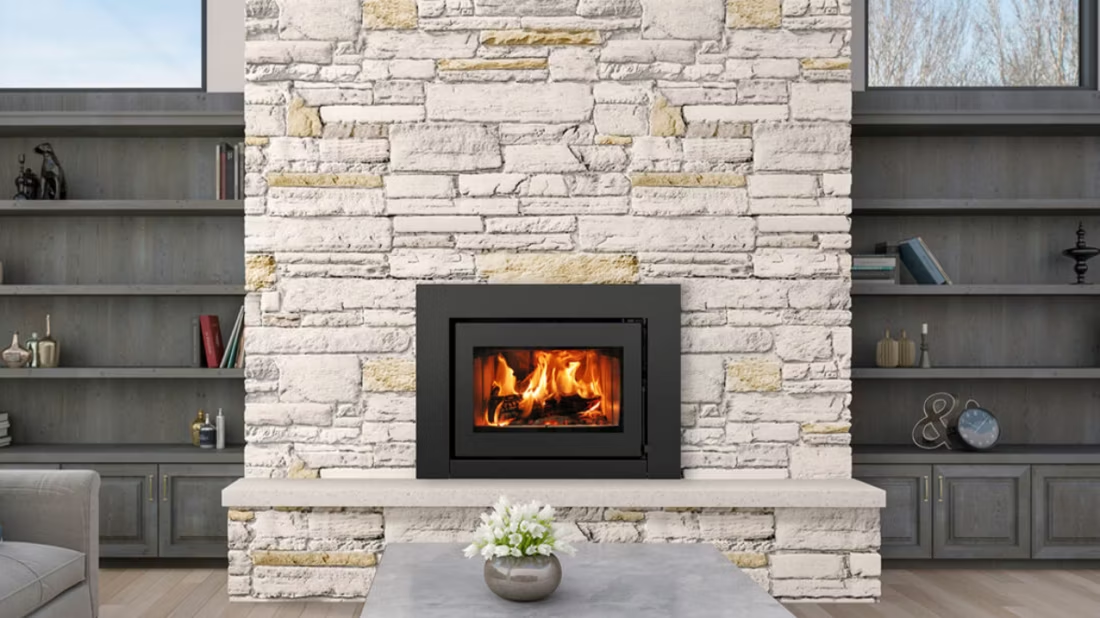
That said, a wood-burning fireplace or stove still has a real place in some Dalton homes—as a design centerpiece in a den or great room, as occasional heat during the handful of nights each winter that dip into the 20s, or as backup warmth if an ice storm knocks out power (which does happen in this part of north Georgia). Local wood species like oak, hickory, and pine burn well and are widely available, and homeowners who want to cut their own can pull a permit through Cherokee National Forest for $20 per cord during the May-to-October season. If you're set on wood heat in Dalton, it's less about necessity and more about getting the right small unit installed correctly by someone who knows the local building codes.
Firewood Cutting Permits Near Dalton
Three steps. No salesperson until you're ready.
Tell us about your project
Your zip code, your situation, and the fuel you're leaning toward—or let the answers point you to one.
See what's actually available
The brands dealers within 100 miles genuinely carry—real options, never a catalog mirage.
Get your dealer & Project Guide
A trusted local dealer, plus the free Project Guide & Parts List that names every component of the job.
Frequently Asked Questions
How much does a wood stove or fireplace installation cost in Dalton?
Because wood-burning installs are less common in Dalton than in colder markets, pricing here tends to track national averages rather than a tight local range: expect roughly $3,000 to $7,500 for a freestanding stove or insert, with masonry chimney work or a new hearth pad pushing costs higher. A local dealer will give you a firm number after seeing your home, but don't expect the volume-driven pricing you'd find in a place like Duluth, Minnesota, where wood installs happen year-round.
Does it actually make sense to install a wood stove in Dalton's climate?
For most Whitfield County homes, no—not as a primary heat source. With average winter lows around 31°F and a mild, short heating season overall, Dalton's heating load is modest, and gas or heat-pump systems from Dalton Utilities or Georgia Power cover it comfortably. Where wood still makes sense is as a secondary feature: ambiance on the occasional cold night, a design element in a living room, or backup heat if an ice storm takes out power for a few days. If you're chasing efficiency and lower bills, gas is almost always the better fit here.
What firewood species are available locally in Dalton?
Oak, hickory, and pine are the common species around Whitfield County, and all three burn well in a properly sized stove—oak and hickory for longer, hotter burns, pine for easier-lighting kindling and shoulder-season fires. If you want to source your own wood rather than buy it split and seasoned, Cherokee National Forest issues cutting permits for $20 per cord during the May-through-October season.
Do I need a permit to cut my own firewood near Dalton?
Yes, if you're cutting on public land. Cherokee National Forest issues firewood cutting permits for $20 per cord, valid during the May-to-October season. If you're only buying split, seasoned firewood from a local supplier, no permit is needed—just budget for the fact that demand (and pricing) for firewood in this area is lower than in colder climates, since fewer households burn it as primary heat.
Do I need a building permit to install a wood stove in Dalton?
Most likely, yes—new wood-burning appliance installations typically require a permit through Whitfield County's building department, covering clearances, hearth protection, and chimney or vent penetrations. Because wood stoves are installed less frequently here than gas units, it's worth confirming with the county directly before work starts, and choosing an installer who's pulled these permits before rather than a general contractor unfamiliar with solid-fuel clearance rules.
What's the best wood stove for a Dalton home?
Given how mild Dalton's winters are, most homeowners don't need a large, long-burn catalytic stove built for sub-zero nights. A small to mid-size non-catalytic stove—the kind sized for a single room or open living area—is usually the right fit, since it's meant to supplement occasional cold snaps rather than run around the clock. If backup heat during power outages is your main goal, ask your local dealer about models that don't rely on electricity for blowers or ignition, which matters more here for storm resilience than for daily heating.
Wood vs. gas—which makes more sense in Dalton?
For most homes here, gas wins. Natural gas and propane fireplaces deliver instant, thermostat-controlled heat without the ash, smoke, or wood-handling that comes with a solid-fuel stove, and with Dalton's mild, short heating season, that convenience matters more than raw BTU output. Wood still has an edge in one scenario worth considering: it works without electricity, which is useful if a north Georgia ice storm knocks out power for a few days. Some Dalton homeowners install gas for daily use and keep a small wood stove or fireplace as backup—a reasonable hedge in a climate where outages are more likely than sustained deep cold.
Is wood heat common in Dalton, or is it unusual?
It's uncommon as a primary heat source. Dalton's economy and housing stock—much of it tied to the carpet manufacturing industry that built the city—lean heavily on central gas and electric heat pump systems, and the area's mild winters (average lows around 31°F) don't create much demand for cordwood heating. Homeowners who do install wood stoves or fireplaces here are usually after the look and feel of a real fire, occasional supplemental warmth, or storm-outage backup, not a full home-heating solution.
Will a wood stove keep my Dalton home warm if the power goes out?
Yes, and this is one of the strongest arguments for wood heat in a climate like Dalton's—where deep cold is rare but ice storms and downed power lines happen most winters. A properly sized wood stove, especially a model that doesn't depend on an electric blower to circulate heat, will keep a living area comfortably warm through a multi-day outage even when the rest of the house goes cold. It's worth discussing this use case specifically with a local dealer, since sizing for occasional backup heat is different than sizing for daily, all-winter use.
Why is a fireplace insert so efficient?
An insert does two things: it seals the chimney completely, so you stop losing air you already paid to heat, and it radiates warmth into the room through the firebox and glass. Most add a heat-exchange fan that pulls cool room air underneath, wraps it around the hot firebox, and pushes it back out warm. Your home is more efficient before you've even lit the first fire.
Why won't my new wood stove get going like my old one?
New wood stoves are 70%+ efficient, so far less heat goes up the flue—which also means less draft to get a fire established. The rule: build a genuinely hot fire for about 45 minutes before you choke it down. Skip that and you get smoke in the room, creosote in the chimney, and a fire that never takes off. Most performance complaints trace straight back to this.
Can I install a fireplace myself?
If you're putting a fire in your house on purpose, it's best to work with an expert. Unless you're genuinely experienced in framing, gas line, vent pipe, and the national code on clearances to combustibles, have a professional do it—and ideally the same company that sells you the fireplace, so warranty, service, and liability all live under one roof.
How much should I budget for a fireplace?
For an average home—covering the fireplace, the vent pipe, and basic installation—a budget between $3,900 and $5,500 gives you a lot of options across wood, gas, and pellet. By the time you add finish work, gas line, and electrical, the average complete installation lands between $5,000 and $12,000 all-in. In a remodel or new build, a good rule is to put about 2.5% of the total project cost toward the fireplace.
Find your wood fireplace in Dalton.
Tell us about your home and how you'd actually use a wood stove or fireplace—ambiance, backup heat, or both—and we'll match you with a trusted local dealer and a free Project Guide & Parts List built around your project in Dalton.
Find Your Fireplace →