
Find the right hearth for a north Georgia winter.
Wood, gas, pellet, and electric fireplace resources for every city and community in Whitfield County—from Dalton to Cohutta and Tunnel Hill. Find the right unit and connect with a trusted local hearth retailer.
Every Project Starts From One of These Five Situations
Mild winters, moderate heat load, across Whitfield County, Georgia.
Whitfield County sits in the foothills of the Appalachians in northwest Georgia, with about 3,151 heating degree days a year—roughly a third of what a place like Duluth, MN sees, and winter lows averaging in the low 30s. That's a milder heating season than the mountain counties to the north, but it's still cold enough that a properly sized wood stove, gas fireplace, or pellet insert earns its place through December, January, and February. Oak, hickory, and pine are the common local firewood species, and with no regional air quality non-attainment designation, wood burning here isn't subject to the curtailment programs you'd find in western basin communities.
What you'll find on this hub: hearth retailers, service technicians, and fuel suppliers serving every community in the county—Dalton, the county seat and carpet-industry hub, plus Cohutta, Tunnel Hill, and Varnell. Pick your fuel below to drill into specifics—local dealers, installation costs, recommended units, and the resources that match your project. Whether you're heating a Dalton subdivision home or a farmhouse near the Cherokee National Forest boundary, this is the starting point.
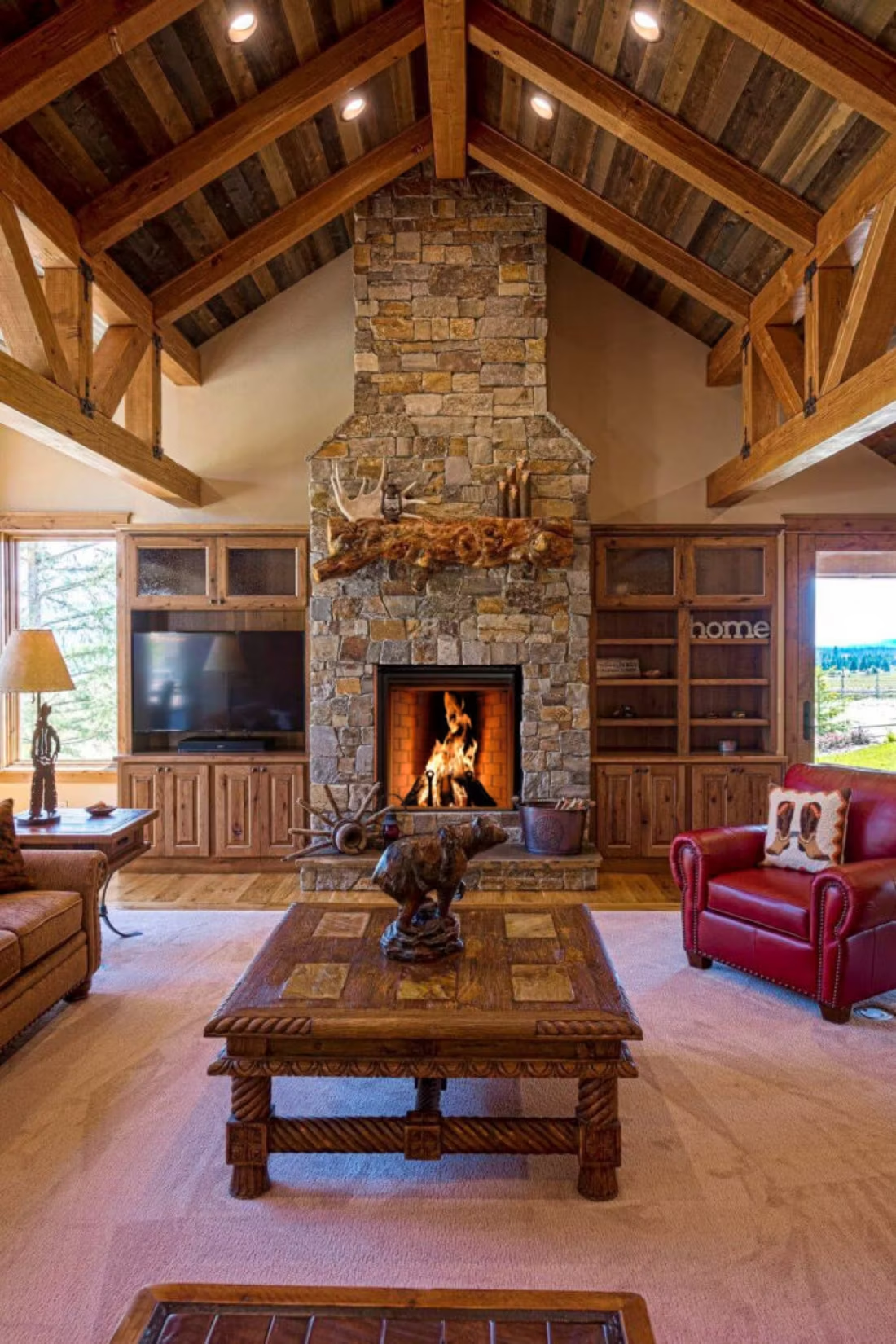
Four fuels. One honest answer for Whitfield County.
Three steps. No salesperson until you're ready.
Tell us about your project
Your zip code, your situation, and the fuel you're leaning toward—or let the answers point you to one.
See what's actually available
The brands dealers within 100 miles genuinely carry—real options, never a catalog mirage.
Get your dealer & Project Guide
A trusted local dealer, plus the free Project Guide & Parts List that names every component of the job.
Frequently Asked Questions
Which fuel works best in Whitfield County?
With about 3,151 heating degree days and winter lows that average in the low 30s, Whitfield County doesn't demand the extreme-duty heating that mountain or northern-plains counties need—but the choice still matters. Wood is popular for supplemental heat and ambiance, especially with oak and hickory readily available locally and no air quality curtailment restrictions to work around. Gas is the convenience pick for Dalton homes on natural gas service or on propane in the more rural parts of the county—instant on, no wood to split or stack. Pellet stoves are a solid middle option, and Lignetics and Hamer Pellet Fuel both have regional distribution into this part of Georgia, so supply isn't a concern. Electric is common as a secondary or accent unit—bedrooms, basements, sunrooms—since the mild climate here means it can genuinely carry a room without struggling the way it would in a colder zone. Most Whitfield County homes end up with one primary fuel plus an electric unit somewhere for ambiance or zone heat.
Do I need a permit to install a fireplace in Whitfield County?
In most cases, yes. New wood stoves, wood inserts, gas fireplaces, gas inserts, gas stoves, and pellet stoves typically require a building permit through the applicable local jurisdiction—the City of Dalton for in-city addresses, or Whitfield County for unincorporated areas including Cohutta, Tunnel Hill, and Varnell. Gas installations also need a licensed gas-fitter for the line connection and typically a separate gas permit. Electric fireplaces usually don't require a permit unless it's a built-in unit that involves new wiring or a dedicated circuit. Most local hearth retailers handle the permitting paperwork as part of the installation, so it's rarely something the homeowner has to navigate alone.
Are there air quality restrictions on wood burning in Whitfield County?
No—Whitfield County has no designated air quality concerns and isn't subject to the winter curtailment programs or burn advisories you'd see in a basin community prone to inversions. That said, new wood stove installations are still expected to meet current EPA emissions standards, and a properly installed, well-maintained stove burning seasoned oak, hickory, or pine will run cleaner and more efficiently than an older, uncertified unit regardless of local air rules. If you're replacing an aging stove, ask your dealer about current EPA-certified models—better emissions performance and better fuel efficiency go hand in hand.
Can one local hearth retailer handle all four fuel types?
Many hearth retailers serving Whitfield County carry three or four fuel types, since a moderate-HDD market like Dalton tends to reward dealers who can offer options across wood, gas, pellet, and electric rather than specializing narrowly. If you're not sure which fuel fits your home, a multi-fuel dealer can show you working displays side by side and walk through the trade-offs—installed cost, venting requirements, fuel availability, and day-to-day operation—for your specific house and budget. If a dealer only carries one or two fuel types, the county + fuel pages above will point you toward others in the area that carry what you're after.
How does service work in rural parts of Whitfield County?
Service technicians covering Whitfield County are generally based in or near Dalton and travel out to Cohutta, Tunnel Hill, Varnell, and the unincorporated areas near the Cherokee National Forest boundary. Expect a modest trip fee for calls outside the immediate Dalton area, though the county's relatively compact geography keeps those distances shorter than in sprawling rural counties out west. Fall (September–November) is the easiest window to book annual chimney sweeps, gas inspections, or pellet stove cleaning before the first cold snap—waiting until a January cold front hits usually means a longer wait for service.
What's the typical cost range for fireplace installation across all fuel types in Whitfield County?
Costs vary by fuel type. Wood stove or insert installation: roughly $3,500–$8,000 for a typical install, more if new chimney or hearth work is required. Gas fireplace, insert, or stove: roughly $3,500–$9,500 depending on whether an existing gas line is in place or new line work is needed. Pellet stove or insert: roughly $3,500–$6,500 for a standard install. Electric fireplace: $200–$2,500 for the unit itself, plus $300–$1,000 in labor for anything beyond a simple plug-and-play placement. For details specific to your fuel, see the county + fuel pages above—each one breaks down cost by local retailer pricing.
Can a fireplace actually lower my heating bill?
Yes—by creating a comfort zone. A furnace heats every square foot of the house just to warm the one room you're in; a gas fireplace on low burns roughly a sixth of the gas a typical furnace does. Set the furnace around 55–60 degrees as a baseline, then heat the rooms your family actually uses. Families who heat this way commonly save $20–$60 a month.
Does a fireplace add value to my home?
On average, a fireplace adds back to the home about the same amount you spent installing it. Add the monthly savings from heating the rooms you actually use instead of the whole house—often hundreds of dollars a year—and the value case is strong before you even count what a fire does for how your family uses the room.
Can I install a fireplace myself?
If you're putting a fire in your house on purpose, it's best to work with an expert. Unless you're genuinely experienced in framing, gas line, vent pipe, and the national code on clearances to combustibles, have a professional do it—and ideally the same company that sells you the fireplace, so warranty, service, and liability all live under one roof.
How much should I budget for a fireplace?
For an average home—covering the fireplace, the vent pipe, and basic installation—a budget between $3,900 and $5,500 gives you a lot of options across wood, gas, and pellet. By the time you add finish work, gas line, and electrical, the average complete installation lands between $5,000 and $12,000 all-in. In a remodel or new build, a good rule is to put about 2.5% of the total project cost toward the fireplace.
Stove and Fireplace Dealers in Whitfield County
Listings include WhyFire partner dealers, dealers we have verified as authorized for the brands we recommend, and established local businesses that carry hearth products. Every listing shows which one it is. The ones marked Preferred run on WhyFire's software, so they can show you real pricing and book your appointment right here. No manufacturer pays for placement. How we verify dealers →
Hearthside Fireplace Patio & Barbeque Center
America's Hearth & Patio Warehouse
Therm-Con, Llc
Blossman Gas And Appliance
Neal's Heating & Air D/b/a Fireside Hearth & Patio
Find your fireplace in Whitfield County.
Pick your fuel below and we'll match you with a trusted local dealer and send you a free Project Guide & Parts List—the exact parts, vent kit included, and the dealer we recommend for your home.
Find Your Fireplace →