
Consistent pellet heat for Dade County's mild mountain winters.
From Trenton up onto the benches of Lookout Mountain, a pellet stove gives you thermostat-controlled warmth without splitting or hauling cordwood. Find the right unit and get matched with a trusted local dealer.
Every Project Starts From One of These Five Situations
A mild climate that still calls for supplemental heat.
Dade County sits wedged into Georgia's far northwest corner between Lookout Mountain and Sand Mountain—so isolated from the rest of the state by ridgelines that in 1860 the county briefly declared itself the independent 'State of Dade.' With just 4,388 residents spread across Trenton and the surrounding valley and mountain communities, it's a rural county with a climate to match its geography: Climate Zone 4A, roughly 3,080 heating degree days a year, and average winter lows around 33°F. That's noticeably milder than the deep cold of Appalachian counties further north, but homes on the mountain benches and ridgetops still see real temperature swings—cold, damp nights that make a supplemental heat source worth having even in a county that never sees extended sub-freezing stretches.
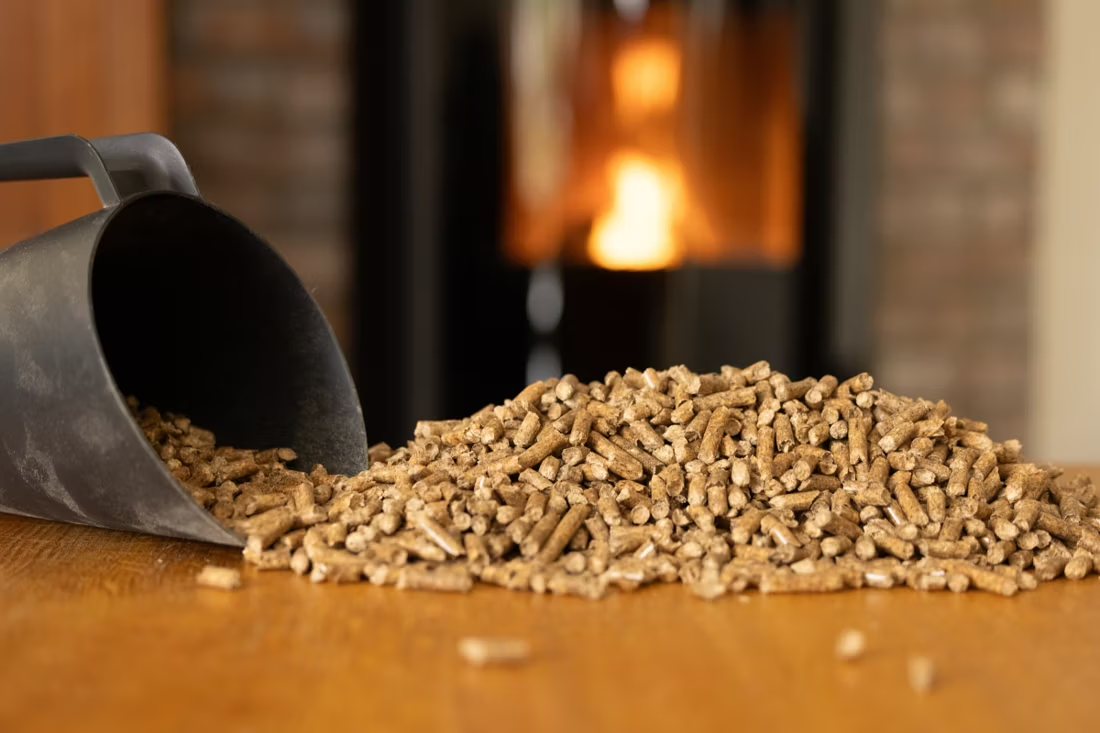
That's the profile pellet stoves are built for. Regional pellet brands including Lignetics, Hamer Pellet Fuel, and Greenway Renewable Energy are all distributed through the Southeast, so fuel supply isn't a concern for Dade County homeowners. The county has no air quality non-attainment designation and no winter inversion or wildfire smoke issues on record, meaning there's no burn-curtailment bureaucracy to navigate—you can run a pellet stove on a cold snap without checking an advisory first. For homeowners who also have access to oak, pine, and hickory on their own land, or who cut wood under a Cherokee National Forest permit ($20 per cord, May through October season), a pellet stove is often the easier second heat source: no splitting, no stacking, just a bag of pellets and a thermostat dial.
Three steps. No salesperson until you're ready.
Tell us about your project
Your zip code, your situation, and the fuel you're leaning toward—or let the answers point you to one.
See what's actually available
The brands dealers within 100 miles genuinely carry—real options, never a catalog mirage.
Get your dealer & Project Guide
A trusted local dealer, plus the free Project Guide & Parts List that names every component of the job.
Frequently Asked Questions
How much does a pellet stove installation cost in Dade County?
Most pellet stove installations in Dade County land in the $3,000 to $6,000 range, depending on the stove model and whether you're venting through an existing masonry chimney or running a new through-wall vent kit. Pellet stoves vent through a simple 3- or 4-inch PL pipe rather than a full masonry chimney, which keeps installation costs lower than a comparable wood stove project in most cases. Homes on the mountain with longer wall runs or a second-story install may see a modest bump for extra venting material and labor. A local dealer will give you a firm number after an in-home walkthrough.
What size pellet stove do I need for my home?
Given Dade County's mild winter average—around 33°F lows and roughly 3,080 heating degree days—most valley homes around Trenton do well with a small to mid-size pellet stove used for zone or supplemental heat rather than whole-house heating. Homes further up on Lookout Mountain or Sand Mountain, where wind exposure and elevation add a few extra degrees of chill on winter nights, sometimes step up to a mid-size unit if they're heating an open living area. A local dealer will size the stove to your actual square footage and layout during a consultation—oversizing a pellet stove wastes fuel and leads to excess cycling, so it's worth getting right rather than guessing.
Where can I buy pellets locally in Dade County?
Lignetics, Hamer Pellet Fuel, and Greenway Renewable Energy are the three brands most commonly stocked at farm supply and hardware retailers serving Dade County and the broader Chattanooga metro area. Bagged hardwood and softwood pellets from these regional producers typically run somewhere in the $230 to $300 per ton range depending on brand and season—buying a full season's supply (roughly 2-3 tons for a supplemental-heat stove) before cold weather hits is the usual strategy, since demand and pricing tighten up once winter arrives. Your local dealer can usually point you toward the nearest stocking retailer when you buy your stove.
Pellet stove vs. wood stove—which makes more sense in Dade County?
Wood is genuinely cheap here if you're willing to do the work: oak, pine, and hickory are all common on Dade County land, and a Cherokee National Forest cutting permit runs just $20 per cord during the May-to-October season. But wood requires cutting, splitting, seasoning, and hauling—and an annual chimney sweep. A pellet stove trades that labor for a bag of pellets and a thermostat, with a simpler through-wall vent and far less creosote buildup to manage. For a full-time wood-heat household with land and time, wood often wins on raw cost. For anyone who wants consistent, low-maintenance heat—including retirees, second-home owners on the mountain, or anyone without a truck for hauling cordwood—pellet is usually the better fit.
Do I need a permit to install a pellet stove in Dade County?
Yes—new pellet stove installations typically require a building permit through the Dade County Building Department, covering the appliance placement, clearances, and vent termination. Because pellet stoves vent through a small-diameter PL pipe rather than a full masonry chimney, the permit and inspection process is usually more straightforward than a wood-burning fireplace install. Most local dealers handle the permit application and schedule the inspection as part of the installation, so it's rarely something you need to manage yourself.
Will my pellet stove work during a power outage?
Not without a backup power source. Pellet stoves rely on an electric auger to feed fuel and a blower to distribute heat, so they shut down when the power goes out—a real consideration in a rural, mountainous county like Dade where ice storms and downed lines can knock out power for a day or more. Some homeowners pair a pellet stove with a small battery backup or a portable generator sized to run the stove's low electrical draw. If uninterrupted heat during outages is a priority, a wood stove or a battery-backed gas unit is worth comparing—ask your local dealer about backup options either way.
How much maintenance does a pellet stove need?
Less than a wood stove, but it isn't maintenance-free. Plan to clean the burn pot and ash pan every few days during regular use, vacuum the interior every few weeks, and have the vent pipe and exhaust fan professionally cleaned once a year—typically before the start of the heating season. Because Dade County has no reported air quality restrictions or curtailment periods, there's no seasonal burn-ban schedule to work around, which simplifies planning that annual service visit compared to counties with winter inversion advisories.
What's the difference between a pellet stove and a pellet insert?
A pellet stove is a freestanding unit that sits on the floor and vents through a wall or existing chimney—it can go almost anywhere with the right clearances, which makes it a common choice for the many Dade County homes without an existing fireplace. A pellet insert is built to slide into an existing masonry fireplace opening, converting an old wood-burning hearth into a self-feeding, thermostat-controlled heat source while reusing the chimney cavity (with a proper liner) for venting. If you already have a fireplace you want to upgrade, an insert is usually the cleaner option; if you're starting from scratch, a freestanding stove gives you more placement flexibility.
Pellet vs. electric heat—which fits Dade County better?
Both are considered standard, workable options for Dade County's climate, so it comes down to what you're trying to accomplish. Electric inserts and stoves are the simplest to install—often a few hundred dollars and no venting required—and work well for ambiance or light supplemental warmth in a mild-winter county like this one. Pellet stoves cost more upfront and need a vent kit and fuel storage, but they put out real, sustained heat that can meaningfully offset a propane or electric heating bill during the coldest stretches. For a mountain home that sees real winter chill on exposed ridges, pellet is usually the better investment; for a milder valley home that just wants ambiance and minor supplemental warmth, electric may be all you need.
Why is my open fireplace making my house colder?
Open fireplaces suck—literally. As the fire burns, it consumes air your furnace already paid to heat and pulls it out through the chimney, so the house is actually colder after the fire goes out than before you lit it. An insert fixes this: it seals the chimney, puts fixed glass across the front, and turns that hole in your house into a real heat source.
What's the difference between an insert and a zero-clearance fireplace?
An insert is a fireplace that slides into a pre-existing wood-burning fireplace—if you don't have one, there's nothing to insert it into. A zero-clearance fireplace is built into a framed wall, which makes it the answer for remodels and new construction. Simple test: existing masonry fireplace means insert; blank or framed wall means zero-clearance.
Does a fireplace add value to my home?
On average, a fireplace adds back to the home about the same amount you spent installing it. Add the monthly savings from heating the rooms you actually use instead of the whole house—often hundreds of dollars a year—and the value case is strong before you even count what a fire does for how your family uses the room.
Can I install a fireplace myself?
If you're putting a fire in your house on purpose, it's best to work with an expert. Unless you're genuinely experienced in framing, gas line, vent pipe, and the national code on clearances to combustibles, have a professional do it—and ideally the same company that sells you the fireplace, so warranty, service, and liability all live under one roof.
Pellet Brands Stocked Around Dade County
Manufacturers will point you to the nearest stocking dealer.
Find your pellet stove in Dade County.
Tell us a bit about your home and we'll match you with the right pellet stove or insert—plus a free Project Guide & Parts List with the vent kit and your recommended local dealer.
Find Your Fireplace →