
Electric heat built for Dade County's mild winters.
With winter lows averaging 33°F and modest heating demand across the county, an electric fireplace or insert can carry a room in Trenton, Wildwood, or Rising Fawn without a chimney, a gas line, or a wood pile. We'll match you with a local dealer who installs it right.
Every Project Starts From One of These Five Situations
A mild climate makes electric a practical fit.
Dade County sits tucked into the Appalachian foothills of northwest Georgia, between Lookout Mountain and Cloudland Canyon State Park, with Trenton as the county seat and small communities like Wildwood and Rising Fawn spread across the valley. With a moderate winter heating load and a winter low averaging 33°F, this is a climate zone 4A county—nowhere near the sustained sub-zero stretches you'd see in a place like Burlington, VT or Duluth, MN. That matters for fireplace selection: homes here rarely need a furnace-replacing heat source, which is exactly the gap an electric fireplace or insert is built to fill.
With a population under 5,000 spread across mostly rural and unincorporated land, a lot of Dade County housing stock is older ranch homes, cabins near Cloudland Canyon, and modest additions where running new gas line or building a masonry chimney doesn't pencil out. An electric fireplace plugs into an existing outlet or a dedicated 120V/240V circuit, mounts into a wall or existing mantel opening, and delivers zone heat to a den, sunroom, or bonus room in an afternoon—no venting, no combustion byproducts, and no permit hassle for most plug-in units.
Three steps. No salesperson until you're ready.
Tell us about your project
Your zip code, your situation, and the fuel you're leaning toward—or let the answers point you to one.
See what's actually available
The brands dealers within 100 miles genuinely carry—real options, never a catalog mirage.
Get your dealer & Project Guide
A trusted local dealer, plus the free Project Guide & Parts List that names every component of the job.
Frequently Asked Questions
How much does an electric fireplace installation cost in Dade County?
Plug-in electric fireplace inserts and mantel units typically run $300 to $1,200 installed, since most just need an existing outlet and a mounting bracket. Built-in wall units or linear electric fireplaces that require a dedicated 240V circuit and some framing or drywall work run higher—often $1,500 to $3,000 depending on the unit and whether an electrician needs to run new wiring. Because Dade County's winter demand is modest, most homeowners here are sizing for a single room rather than whole-home heat, which keeps most projects on the lower end of that range.
Will an electric fireplace actually heat a room in Dade County's climate?
Yes, for the kind of heating load Dade County sees. With a moderate winter heating load and winter lows that average in the low 30s, most rooms don't need anywhere near the BTU output a furnace or a wood stove is built to deliver in a place with harsher winters. A quality electric insert or built-in unit with a 1,500-watt heater (roughly 5,000 BTU) can comfortably carry a bedroom, den, or sunroom in Trenton or Rising Fawn on its own, or take the edge off a larger open living area alongside central heat. Where electric struggles is heating an entire drafty farmhouse from scratch—for that, pair it with your existing HVAC rather than expecting it to replace it.
Electric vs. wood—which makes more sense for my Dade County home?
Wood has deep roots here—oak, pine, and hickory are all common locally, and Cherokee National Forest issues cutting permits from May through October at around $20 per cord for residents willing to cut their own. If you already have a chimney and enjoy tending a fire, wood remains a low-cost, no-permit-to-burn option. But wood means ash cleanup, chimney sweeping, and smoke, and it requires an existing flue or new chimney construction if you don't have one. Electric skips all of that—no permit to burn, no creosote, no combustion air needed—at the tradeoff of needing grid power to run. For a supplemental heat source in a spare room or a low-maintenance ambiance piece, electric is usually the simpler call in a mild-winter county like this one.
Do I need a permit to install an electric fireplace in Dade County?
Most plug-in electric fireplace inserts and freestanding units don't require a permit since they use an existing outlet and don't involve structural or electrical modification. If you're installing a built-in unit that requires a new dedicated circuit, running wire through a wall, or any framing changes, that electrical work typically needs a permit through the Dade County Building Department, and it should be done by a licensed electrician regardless of the paperwork. A local dealer who regularly installs electric units in the county can tell you within a few minutes of looking at your setup whether your project crosses that line.
What's the difference between an electric insert, a built-in unit, and a freestanding electric stove?
An electric insert is sized to slide into an existing fireplace opening—a common choice if you have an old masonry fireplace in a Dade County farmhouse that you want to convert away from wood without losing the look of a fireplace. A built-in electric unit is designed to be framed into a wall, often with a linear, modern profile, and is the typical choice for new construction or a remodel. A freestanding electric stove sits on the floor like a small wood stove and just needs to be plugged in—no framing, no insert opening required, which makes it the easiest option for renters or homes without an existing fireplace.
What happens to my electric fireplace during a power outage?
It won't run. This is worth being honest about in a rural county like Dade, where ice storms and downed lines can knock out power for stretches, particularly on the more remote roads toward Lookout Mountain and Rising Fawn. An electric fireplace is a great everyday heat source and ambiance piece, but it isn't backup heat. If losing heat during an outage is a real concern for your household, plan on a wood stove, a vented gas unit, or a generator as your outage plan, and treat the electric fireplace as your day-to-day convenience heater rather than your emergency one.
What's the best electric fireplace for a Dade County home?
For the kind of supplemental, room-by-room heating most Dade County homes actually need, look for a unit with a true 1,500-watt heater rather than a decorative-only model—brands like Dimplex and Napoleon make electric inserts and built-ins with real heat output and adjustable thermostats. If you're converting an existing masonry fireplace, measure your opening carefully before shopping, since insert sizing is exact. A local dealer can walk you through options that fit your specific room size and existing fireplace opening rather than guessing off a box-store shelf.
How do I size an electric fireplace for my room?
As a rough guide, a 1,500-watt electric heater unit can comfortably heat 400 to 600 square feet in a climate as mild as Dade County's—smaller than you'd need in a colder region because you're not fighting sustained single-digit nights. For larger open rooms, look at units with higher wattage or plan on the electric fireplace as a supplement to central heat rather than the sole source. A dealer who's actually walked your room, checked your ceiling height, and noted your window exposure will get you a tighter number than any general chart.
Electric vs. pellet stove—which is right for my home?
Pellet stoves burn compressed wood pellets from regional suppliers like Lignetics, Hamer Pellet Fuel, or Greenway Renewable Energy, and they put out real, sustained heat—useful if you want to heat a larger area or reduce reliance on central HVAC. But pellet stoves still need electricity to run the auger and blower, so they share electric's outage vulnerability without electric's simplicity of installation. If your goal is low-maintenance supplemental heat in one or two rooms with zero fuel handling, electric is the easier path. If you want a bigger heat contribution and don't mind loading a hopper and buying pellets by the ton, pellet is worth a look—a local dealer can lay out both options side by side.
Can I put a TV above my fireplace?
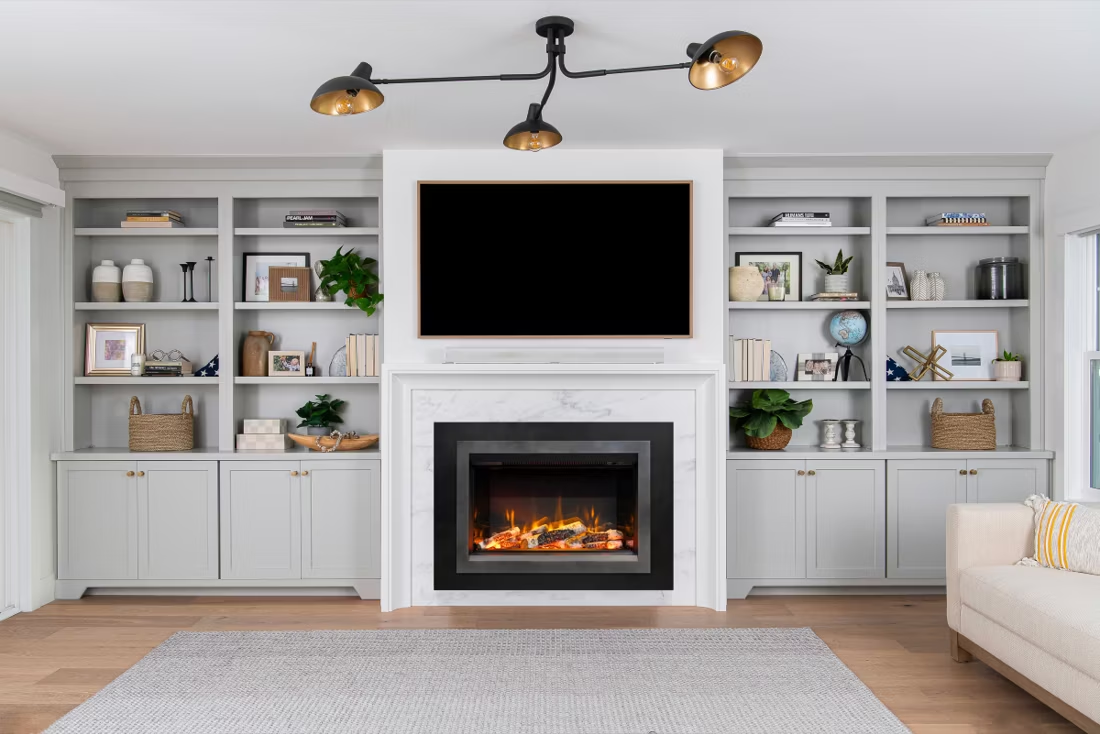
Yes—with an asterisk. Fireplaces are hot and TVs don't like heat. Either put a mantel between them to deflect rising warmth, or choose a fireplace with heat-management technology that creates a cool zone on the wall above—the wall stays around 125 degrees, barely warm, while the room still gets full heat. If you like clean lines and don't want a mantel, heat management is the answer.
Do electric fireplaces actually produce heat?
Yes—most put out around 4,800–5,000 BTUs from a standard outlet, which comfortably warms a bedroom, office, or den as a comfort-zone heater. What they won't do is carry a whole house the way wood, gas, or pellet can. Think of electric as ambiance-first with honest supplemental heat: flames on with no heat in July, flames plus warmth in January.
How much should I budget for a fireplace?
For an average home—covering the fireplace, the vent pipe, and basic installation—a budget between $3,900 and $5,500 gives you a lot of options across wood, gas, and pellet. By the time you add finish work, gas line, and electrical, the average complete installation lands between $5,000 and $12,000 all-in. In a remodel or new build, a good rule is to put about 2.5% of the total project cost toward the fireplace.
Does a fireplace add value to my home?
On average, a fireplace adds back to the home about the same amount you spent installing it. Add the monthly savings from heating the rooms you actually use instead of the whole house—often hundreds of dollars a year—and the value case is strong before you even count what a fire does for how your family uses the room.
Find your electric fireplace in Dade County.
Tell us about your room and your existing setup, and we'll match you with a trusted local dealer and send over a free Project Guide & Parts List—sized to your space and ready to install.
Find Your Fireplace →