
Find the right hearth for Dade County's mild winters.
Wood, gas, pellet, and electric fireplace resources for Trenton, Wildwood, and the small communities tucked between Lookout and Sand Mountains. Get matched with a trusted local dealer who knows what actually works here.
Every Project Starts From One of These Five Situations
Mountain-valley heating in Georgia's northwest corner.
Dade County sits isolated between Lookout Mountain and Sand Mountain in Georgia's far northwest corner, closer to Chattanooga than to most of Georgia. With a winter heating season on the milder-to-moderate side and average winter lows around 33°F, this is a mild-to-moderate heating climate—nothing like the sustained cold of Burlington VT or Duluth MN, but cold enough that most homes here run a fireplace or stove several months a year. Oak, pine, and hickory are the wood species locals actually burn, split from their own land or bought from a neighbor, and that heritage still shapes what gets installed in homes around Trenton and Wildwood.
What you'll find on this hub: hearth retailers, service technicians, and fuel suppliers serving the whole county—a small, rural population of under 4,500 spread across a narrow valley. Pick your fuel below to see local dealers, typical installation costs, and the units that make sense for a Dade County home, whether you're near town in Trenton or up toward the state line by Cherokee National Forest.
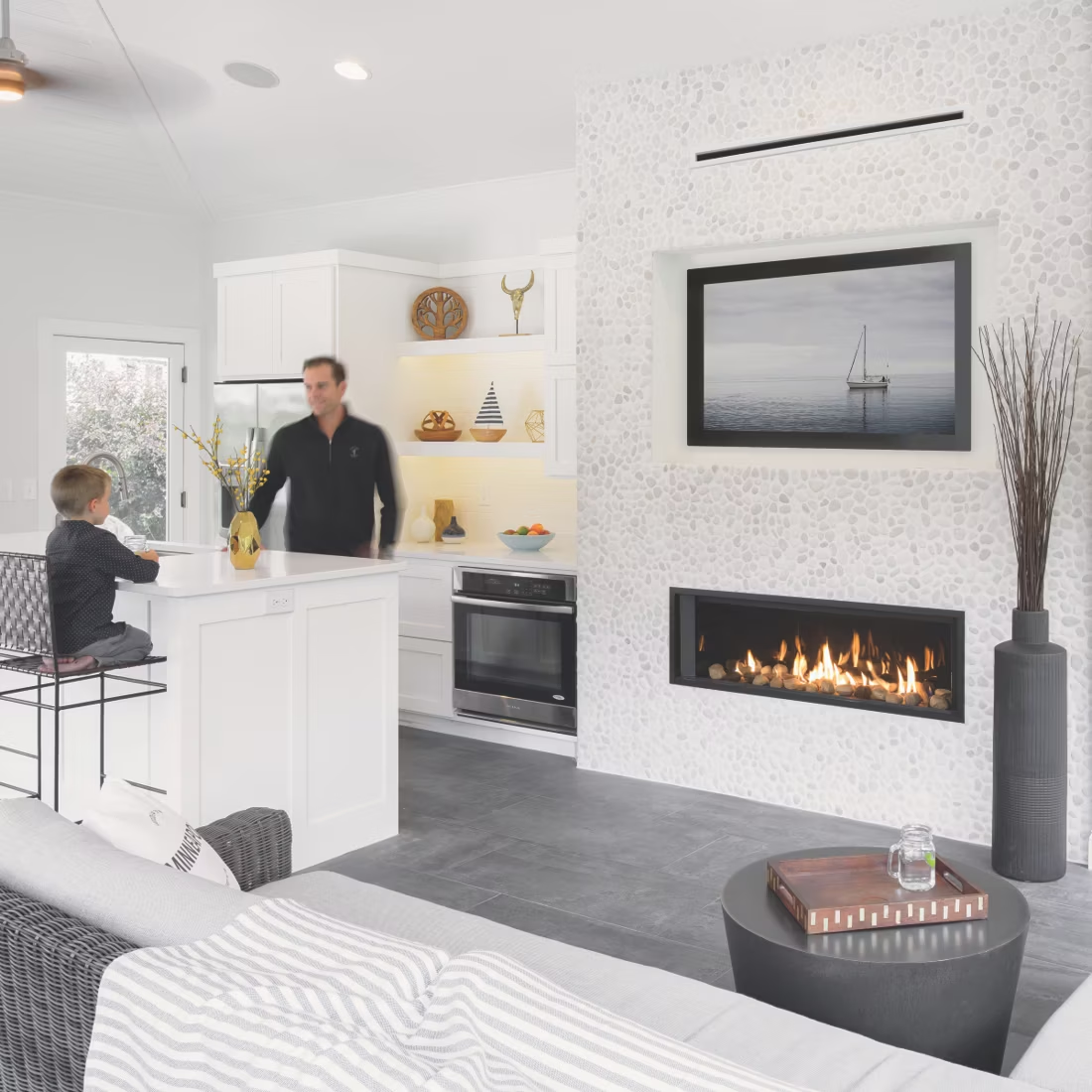
Four fuels. One honest answer for Dade County.
Three steps. No salesperson until you're ready.
Tell us about your project
Your zip code, your situation, and the fuel you're leaning toward—or let the answers point you to one.
See what's actually available
The brands dealers within 100 miles genuinely carry—real options, never a catalog mirage.
Get your dealer & Project Guide
A trusted local dealer, plus the free Project Guide & Parts List that names every component of the job.
Frequently Asked Questions
Which fuel works best in Dade County?
With a winter heating season on the milder-to-moderate side and winter lows averaging in the low-to-mid 30s, Dade County's climate is moderate—closer to a shoulder-season heating need than a serious cold-climate one. Wood remains popular because oak and hickory are abundant locally and a lot of homeowners split their own or buy from a neighbor; a mid-size wood stove or insert handles the coldest weeks here without needing the 20-hour overnight burns you'd want in Fargo ND. Gas (mostly propane, since natural gas service is limited in this rural valley) is the low-maintenance choice—instant heat with no wood handling. Pellet stoves are a solid middle option, especially with regional brands like Lignetics and Hamer Pellet Fuel supplying the area. Electric fireplaces work well as supplemental heat or ambiance in a den or bedroom, but given the mild winters, plenty of Dade County homes lean on electric as their only secondary unit without issue.
Do I need a permit to install a fireplace in Dade County?
Generally yes for anything involving new venting, gas lines, or structural work—wood stoves, wood inserts, gas fireplaces, gas inserts, gas stoves, and pellet stoves typically require a building permit through the county. Gas installations also need a licensed gas-fitter and a separate gas line permit if you're running new propane line. Electric fireplaces usually skip the permit process unless it's a built-in unit requiring new wiring and a dedicated circuit. Because Dade County is a small, rural jurisdiction, permitting can move faster than in denser counties, but it's still required—most local hearth retailers handle the paperwork as part of the installation rather than leaving it to the homeowner.
Are there air quality restrictions on wood burning in Dade County?
No—Dade County has no listed air quality non-attainment status, winter inversion issues, or wildfire smoke concerns, unlike counties in places like the Klamath Basin or parts of the Mountain West. That means there are no curtailment days or burn bans tied to local air quality here. New wood stove installations still need to meet EPA emissions standards for the appliance itself, but that's a manufacturing requirement, not a local restriction on when you can burn. Practically, this means Dade County homeowners can plan wood heat around their own schedule rather than watching for advisory days.
Can one local hearth retailer handle all four fuel types?
In a county this size, most hearth retailers serving Dade County are based across the state line in Chattanooga or up in Walker County, and many of them do carry a mix of wood, gas, pellet, and electric—which is useful if you're not sure yet which fuel fits your Trenton or Wildwood home. A smaller number focus mainly on wood and pellet, since those are the fuels most closely tied to local wood-cutting habits and regional pellet supply from brands like Greenway Renewable Energy. If you want to compare fuels side by side, look for the multi-fuel dealers noted on the retailer listings above—they can walk you through working displays of each type.
How does service work in a rural county like Dade?
Most chimney sweeps and gas/pellet service techs covering Dade County are based out of the Chattanooga metro area and make regular runs into Trenton and Wildwood, so service here is more reliable than the county's small population might suggest. Expect a modest travel fee for stops further up the valley toward the Alabama or Tennessee lines. Scheduling annual service in late summer or early fall—before the first cold snap—is the easiest way to avoid a mid-winter wait, especially since Cherokee National Forest access roads and rural driveways can complicate emergency winter calls.
What's the typical cost range for fireplace installation across all fuel types in Dade County?
Wood stove or insert installation: roughly $4,000–$8,500 for a typical install, higher if new masonry chimney work is needed. Gas fireplace, insert, or stove: roughly $4,000–$10,000, with propane line work and venting driving most of the variation—conversions where propane service already exists run toward the lower end. Pellet stove or insert: roughly $4,000–$7,000 for a standard install. Electric fireplace: $200–$3,000 for the unit itself, plus $400–$1,200 in labor for anything beyond a plug-and-play setup. Because Dade County's mild climate keeps most installs standard-size rather than heavy-duty, costs here tend to sit at or below the middle of these ranges compared to colder-climate counties.
Can I install a fireplace myself?
If you're putting a fire in your house on purpose, it's best to work with an expert. Unless you're genuinely experienced in framing, gas line, vent pipe, and the national code on clearances to combustibles, have a professional do it—and ideally the same company that sells you the fireplace, so warranty, service, and liability all live under one roof.
Does a fireplace add value to my home?
On average, a fireplace adds back to the home about the same amount you spent installing it. Add the monthly savings from heating the rooms you actually use instead of the whole house—often hundreds of dollars a year—and the value case is strong before you even count what a fire does for how your family uses the room.
What is an in-home preview and do I need one?
It's a visit where a hearth professional measures your space, confirms the model you picked actually works in your home, and walks the specs—framing, gas line, venting, finish work—before anything is ordered. Some details you just can't know until you see the house. Never make a down payment without one; it's the single most-skipped step that burns buyers.
I know I want a fireplace—where do I actually start?
Do two things today: snap a photo of the wall or fireplace you want to transform, and take a tape measure to the space—width, height, depth. Those two artifacts answer most of a hearth professional's first questions. Then settle fuel (wood, gas, pellet, or electric) and set a realistic budget: $3,900–$5,500 covers fireplace, vent, and basic install for most homes.
Stove and Fireplace Dealers in Dade County
Listings include WhyFire partner dealers, dealers we have verified as authorized for the brands we recommend, and established local businesses that carry hearth products. Every listing shows which one it is. The ones marked Preferred run on WhyFire's software, so they can show you real pricing and book your appointment right here. No manufacturer pays for placement. How we verify dealers →
Allgas, Inc. - Ider
Blossman Gas And Appliance
Neal's Heating & Air D/b/a Fireside Hearth & Patio
America's Hearth & Patio Warehouse
Therm-Con, Llc
Smith's Ace Hardware
Hearthside Fireplace Patio & Barbeque Center
Get matched with a hearth dealer in Dade County.
Tell us your fuel and we'll put together a free Project Guide & Parts List—the exact parts, including the vent kit, and our recommended local dealer for your Trenton or Wildwood project.
Find Your Fireplace →