
See if a pellet stove makes sense for your Columbia County home.
With winter lows averaging 36°F and only a light winter heating load overall, Columbia County rarely needs the sustained output pellet stoves are built for. We'll help you figure out if one still fits your home—and connect you with a trusted local dealer if it does.
Every Project Starts From One of These Five Situations
Pellet heat is the exception, not the rule, in Columbia County.
Columbia County sits in climate zone 3A, part of the Augusta metro area, where winters are short and mild—an average low of 36°F and a light winter heating load overall. Compare that to a place like Duluth, MN, which has a winter heating load nearly four times as heavy in a typical winter, and it's easy to see why pellet stoves haven't caught on here the way they have in colder regions. Most Columbia County homes, from Evans to Martinez to Grovetown to Harlem, rely on heat pumps or gas furnaces for the bulk of the season, with a fireplace serving more as an accent than a heat source.
Regional pellet brands like Lignetics, Hamer Pellet Fuel, and Greenway Renewable Energy do distribute in the Southeast, but their strongest markets are the colder counties of north Georgia and the Carolinas, not the Augusta metro. That means Columbia County homeowners who do want a pellet stove—often for a sunroom, a workshop, or a second home up in the mountains—may need to special-order fuel or drive a bit farther for consistent supply. Oak, pine, and hickory are the common local wood species, but even traditional wood-burning is uncommon here for the same reason: the heating season is just too short for full-time solid-fuel appliances to pay off the way they do in colder climates.
Three steps. No salesperson until you're ready.
Tell us about your project
Your zip code, your situation, and the fuel you're leaning toward—or let the answers point you to one.
See what's actually available
The brands dealers within 100 miles genuinely carry—real options, never a catalog mirage.
Get your dealer & Project Guide
A trusted local dealer, plus the free Project Guide & Parts List that names every component of the job.
Frequently Asked Questions
How much does a pellet stove installation cost in Columbia County?
Nationally, a pellet stove installation typically runs $3,000 to $6,000 depending on the unit, venting path, and any hearth pad work required. In Columbia County specifically, expect that range to have more variability than it would in a market with an established pellet install pipeline—because pellet stoves are a niche request here, you may end up getting quotes from Augusta-area hearth dealers who install them occasionally rather than as their bread-and-butter product. It's worth asking directly how many pellet installs a dealer has done in the past year before committing.
Why aren't pellet stoves more common in Columbia County?
It comes down to climate. Columbia County's winter low averages 36°F, and the county has a mild winter heating load overall—a fraction of what a place like Fargo, ND or Burlington, VT sees. Pellet stoves are designed to deliver steady, all-day output over a long heating season, which is exactly what Columbia County doesn't have. Most homes here get by with a heat pump or gas furnace for the handful of genuinely cold weeks each winter, which leaves little economic case for a dedicated pellet appliance.
Can I still buy and install a pellet stove in Columbia County?
Yes, though options are limited. A small number of hearth dealers serving the Augusta metro area—including Evans, Martinez, Grovetown, and Harlem—carry pellet stoves alongside their gas fireplace lineup, since gas is the standard fuel choice locally. Homeowners who do go this route are usually adding supplemental heat to a sunroom or detached workshop, or outfitting a second home in a colder part of the state, rather than heating a primary living space.
What's the difference between a wood stove and a pellet stove, and does either make sense here?
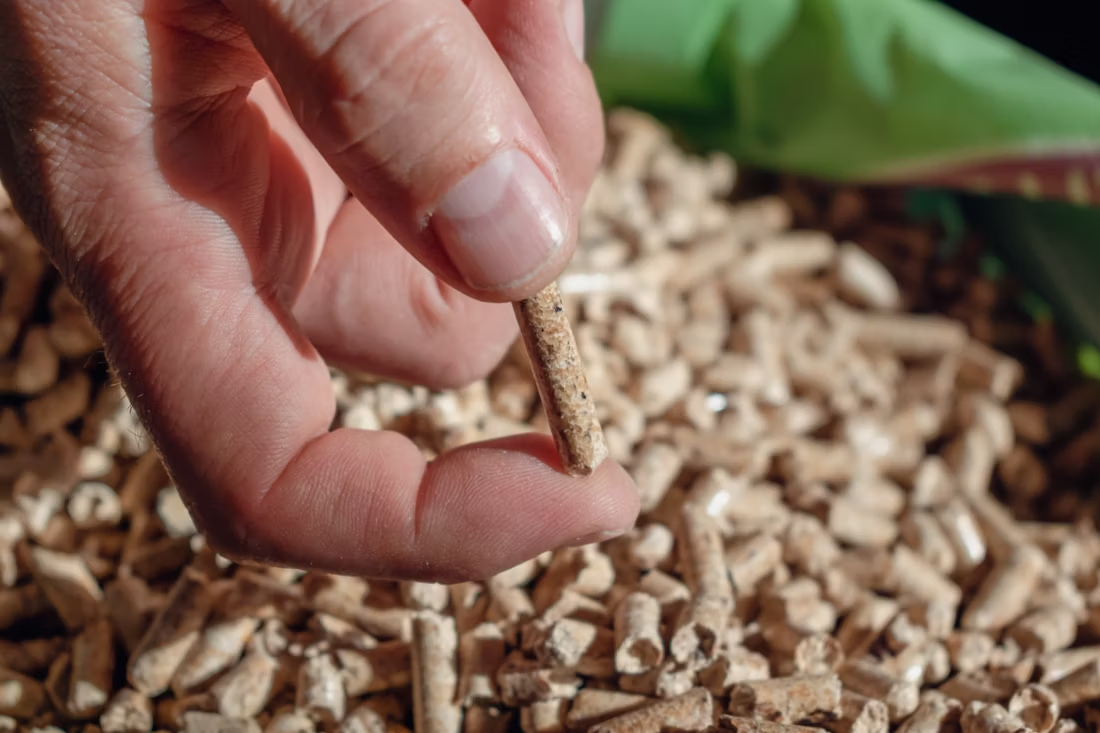
A wood stove burns cordwood—oak, pine, and hickory are the common local species—and needs no electricity to run, but it also requires ongoing wood handling and a real chimney. A pellet stove burns compressed wood pellets, is easier to load and control, but needs electricity for its auger and blower. In Columbia County, both are genuinely uncommon fuel choices given the mild climate; most local fireplace activity leans toward gas inserts and fireplaces, which deliver instant, thermostat-controlled heat without the fuel-handling downsides of either wood or pellet.
Do I need a permit to install a pellet stove in Columbia County?
Most jurisdictions require a building permit for any new solid-fuel appliance installation, including pellet stoves, and Columbia County is no exception. Check with your local building department before work begins—a reputable installer will typically handle this as part of the job. Because air quality isn't a concern in Columbia County (there are no non-attainment or inversion issues here), permitting is mostly about code compliance for venting and clearances, not emissions restrictions.
Where can I buy pellet fuel in Columbia County?
Regional brands like Lignetics, Hamer Pellet Fuel, and Greenway Renewable Energy supply the Southeast, but their distribution is heaviest in colder parts of Georgia and the Carolinas where pellet stoves see daily winter use. In Columbia County, expect to special-order through a farm supply store, order online, or check with the dealer who installed your stove about their supplier relationships. Because demand is low locally, don't count on finding pellets on the shelf at every big-box store the way you might in a colder market.
Is a pellet stove a good backup heat source during a power outage?
Not really—pellet stoves need electricity to run their auger and blower, so they shut down the moment the power goes out, which is the opposite of what most homeowners want from backup heat. This matters in Columbia County given the region's exposure to fall tropical systems and occasional winter ice storms that knock out power. If backup heat during outages is your priority, a wood-burning unit or a battery-backed gas fireplace is a more reliable choice than pellet.
What should I consider instead of a pellet stove for my Columbia County home?
Given the mild climate here, gas and electric fireplaces are the standard, well-supported options in Columbia County. A direct-vent gas fireplace or insert delivers instant heat at the flip of a switch, works well as supplemental or zone heat, and is what most local hearth dealers stock and install regularly. Electric fireplaces are a good fit for ambiance or light supplemental warmth with minimal installation work. Both are far better matched to the county's short, mild heating season than a pellet stove.
Pellet vs. gas—which is right for a Columbia County home?
For most Columbia County homeowners, gas wins. It's the fuel local dealers know best, it requires no fuel storage or hopper-loading, and it performs exactly as well during the county's brief cold snaps as it does year-round. Pellet stoves can still make sense for a specific situation—a workshop, sunroom, or a getaway property in a colder part of the state—but as a primary heat source for a home in Evans, Martinez, Grovetown, or Harlem, gas is the more practical, better-supported choice.
Why is a fireplace insert so efficient?
An insert does two things: it seals the chimney completely, so you stop losing air you already paid to heat, and it radiates warmth into the room through the firebox and glass. Most add a heat-exchange fan that pulls cool room air underneath, wraps it around the hot firebox, and pushes it back out warm. Your home is more efficient before you've even lit the first fire.
Why is my open fireplace making my house colder?
Open fireplaces suck—literally. As the fire burns, it consumes air your furnace already paid to heat and pulls it out through the chimney, so the house is actually colder after the fire goes out than before you lit it. An insert fixes this: it seals the chimney, puts fixed glass across the front, and turns that hole in your house into a real heat source.
What is an in-home preview and do I need one?
It's a visit where a hearth professional measures your space, confirms the model you picked actually works in your home, and walks the specs—framing, gas line, venting, finish work—before anything is ordered. Some details you just can't know until you see the house. Never make a down payment without one; it's the single most-skipped step that burns buyers.
Can a fireplace actually lower my heating bill?
Yes—by creating a comfort zone. A furnace heats every square foot of the house just to warm the one room you're in; a gas fireplace on low burns roughly a sixth of the gas a typical furnace does. Set the furnace around 55–60 degrees as a baseline, then heat the rooms your family actually uses. Families who heat this way commonly save $20–$60 a month.
Pellet Brands Stocked Around Columbia County
Manufacturers will point you to the nearest stocking dealer.
Find out if pellet heat fits your Columbia County home.
Tell us about your home and how you'd use a pellet stove, and we'll give you an honest read on fit—plus match you with a trusted local dealer and a free Project Guide & Parts List if it makes sense for your project.
Find Your Fireplace →