
Warmth That Fits Georgia Winters—No Woodpile Required.
Fireplace resources for Evans, Grovetown, Harlem, Martinez, Appling, and every community in Columbia County. Find the right unit and connect with a trusted local hearth retailer.
Every Project Starts From One of These Five Situations
Mild winters, modern comfort across Columbia County, Georgia.
Columbia County sits in climate zone 3A, part of Georgia's Central Savannah River Area outside Augusta. Winters here average a low around 36°F with a mild, short heating season—a fraction of what a place like Duluth, Minnesota logs in a typical season. Oak, pine, and hickory grow throughout the county, and plenty of homeowners still enjoy a wood fire for ambiance, but almost nobody here depends on wood as a primary heat source the way homeowners do in colder climates. The heating season is short, mild, and rarely demands the kind of sustained, all-night burn that drives wood or pellet adoption elsewhere.
That's why this hub centers on gas and electric fireplaces—the two fuels that actually make sense for most Columbia County homes. You'll still find wood and pellet listings if you're building a cabin retreat or just want the look and smell of a real fire on the occasional cold night, but gas offers instant, thermostat-controlled heat for the handful of chilly weeks each winter, and electric works well for supplemental warmth in a bedroom, sunroom, or apartment. Pick your fuel below for local dealers, installation costs, and recommended units—whether you're in Evans, Grovetown, Harlem, Martinez, or out toward Appling.
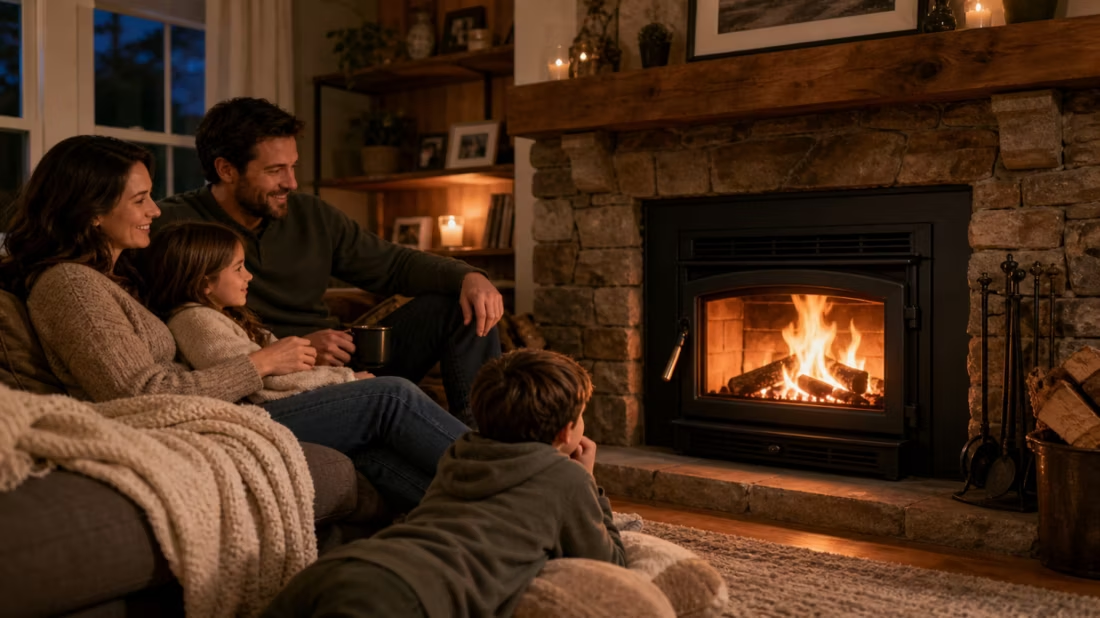
Four fuels. One honest answer for Columbia County.
Three steps. No salesperson until you're ready.
Tell us about your project
Your zip code, your situation, and the fuel you're leaning toward—or let the answers point you to one.
See what's actually available
The brands dealers within 100 miles genuinely carry—real options, never a catalog mirage.
Get your dealer & Project Guide
A trusted local dealer, plus the free Project Guide & Parts List that names every component of the job.
Frequently Asked Questions
Which fuel works best in Columbia County?
For most homes here, it's gas or electric. With winter lows averaging around 36°F and a short, mild heating season, Columbia County just doesn't get the sustained cold that makes wood or pellet heat practical as a primary source—nothing like Buffalo, New York or Bozeman, Montana, where an all-night catalytic burn matters. Gas fireplaces and inserts give instant, thermostat-controlled warmth for the handful of genuinely cold nights each winter, and they read as a modern amenity in homes throughout Evans and Grovetown. Electric fireplaces are a strong fit for bedrooms, sunrooms, and secondary living spaces, or for renters who want the look without venting or gas lines. Wood stoves and pellet stoves show up occasionally—mostly for homeowners who want the ambiance of a real fire, or for cabins and hunting properties outside the main developed areas—but they're the exception, not the rule.
Do I need a permit to install a fireplace in Columbia County?
Generally yes, for anything beyond a plug-in electric unit. Gas fireplace, insert, or stove installations require a building permit through Columbia County's building department, plus a separate gas line permit performed by a licensed gas fitter—this applies whether you're on natural gas service in Evans or Grovetown or running propane in a more rural part of the county. Electric fireplaces typically skip the permit process if they're simply plugged into an existing outlet, but built-in units that require new wiring or a dedicated circuit do need an electrical permit. Most local hearth retailers handle the permitting on your behalf as part of the installation quote, so you generally aren't filing paperwork yourself.
Are there air quality restrictions on burning in Columbia County?
No—Columbia County doesn't have the winter inversion or non-attainment issues that drive burn bans and voluntary curtailment days in places like the Klamath Basin or parts of the Pacific Northwest. There are no local air quality advisories tied to wood or gas appliances here. That said, because wood heat is uncommon in this climate zone, most new installations lean toward gas or electric anyway—not because of regulation, but because they're the more practical fit for a short, mild heating season.
Can one local hearth retailer handle both gas and electric?
Yes—most Columbia County hearth retailers are built around exactly that combination. Because wood and pellet demand is limited in this market, dealers here typically stock showroom displays of gas fireplaces, gas inserts, and a range of electric units side by side, which makes it easy to compare real-flame gas against a modern electric insert in the same visit. If a dealer also carries wood or pellet, it's usually a smaller part of their business geared toward custom or rural builds—worth asking about directly if that's what you want, rather than assuming it's their focus.
How does service work in the more rural parts of Columbia County?
Technicians based in Evans or Grovetown travel out to Harlem, Appling, and the rural stretches along the Savannah River for both installation and annual service—expect a modest trip fee for jobs outside the core Evans-Martinez corridor. Gas units in particular benefit from a pre-winter inspection (ideally September or October) to check the igniter, gas line connections, and venting before the first cold snap. Electric fireplace service is rare beyond occasional wiring or remote-control troubleshooting on built-in units, so most electric owners never need a service call at all.
What's the typical cost range for gas and electric fireplace installation in Columbia County?
Gas fireplace, insert, or stove: roughly $4,000–$9,500 depending on whether you're tapping into existing gas service or running a new line, plus venting work. Propane conversions in rural parts of the county sometimes run higher due to tank setup. Electric fireplace: $200–$2,500 for the unit itself, with labor around $300–$1,000 for anything beyond a simple plug-in—built-in and wall-mount installs with new wiring fall on the higher end. For county-specific pricing tied to local retailers, see the gas and electric fuel pages linked above.
How much should I budget for a fireplace?
For an average home—covering the fireplace, the vent pipe, and basic installation—a budget between $3,900 and $5,500 gives you a lot of options across wood, gas, and pellet. By the time you add finish work, gas line, and electrical, the average complete installation lands between $5,000 and $12,000 all-in. In a remodel or new build, a good rule is to put about 2.5% of the total project cost toward the fireplace.
Can a fireplace actually lower my heating bill?
Yes—by creating a comfort zone. A furnace heats every square foot of the house just to warm the one room you're in; a gas fireplace on low burns roughly a sixth of the gas a typical furnace does. Set the furnace around 55–60 degrees as a baseline, then heat the rooms your family actually uses. Families who heat this way commonly save $20–$60 a month.
Wood, gas, pellet, or electric—how do I choose?
Match the fuel to your life, not the other way around. Wood: lowest fuel cost and total power-outage independence, but you're hauling and stacking. Gas: press a button, set a thermostat, no maintenance to speak of. Pellet: wood economics with automatic feeding, in exchange for weekly cleaning and a need for electricity. Electric: plugs in anywhere with honest supplemental heat. Nobody regrets the fuel that fits how they actually live.
I know I want a fireplace—where do I actually start?
Do two things today: snap a photo of the wall or fireplace you want to transform, and take a tape measure to the space—width, height, depth. Those two artifacts answer most of a hearth professional's first questions. Then settle fuel (wood, gas, pellet, or electric) and set a realistic budget: $3,900–$5,500 covers fireplace, vent, and basic install for most homes.
Stove and Fireplace Dealers in Columbia County
Listings include WhyFire partner dealers, dealers we have verified as authorized for the brands we recommend, and established local businesses that carry hearth products. Every listing shows which one it is. The ones marked Preferred run on WhyFire's software, so they can show you real pricing and book your appointment right here. No manufacturer pays for placement. How we verify dealers →
Augusta Overhead
Thompson Gas
Fireside Outdoor Kitchens
Find your fireplace in Columbia County.
Tell us about your home and we'll match you with a trusted local dealer and send a free Project Guide & Parts List—the exact parts, including venting, and the local pro who can install it right.
Find Your Fireplace →