
The fireplace upgrade built for Columbia County's mild winters.
No chimney, no gas line, no venting—just real ambiance and on-demand warmth for homes in Evans, Grovetown, Martinez, Harlem, and Appling. Get matched with a trusted local dealer who can size and install the right unit for your space.
Every Project Starts From One of These Five Situations
Heat when you want it, ambiance the rest of the year.
Columbia County sits in climate zone 3A, with an average winter low around 36°F and a fairly light overall winter heating load—a fraction of what a place like Duluth, MN or Bismarck, ND racks up in a single season. Most winters here bring a handful of nights in the 20s, not weeks of sustained cold. That changes the calculus on heating equipment: homeowners in fast-growing subdivisions across Evans and Grovetown, and longtime neighborhoods in Martinez and Harlem, don't need a wood-burning or pellet system sized for brutal cold. They need something that looks like a real fire, adds zone heat on the occasional cold snap, and doesn't require a chimney, gas line, or annual sweep.
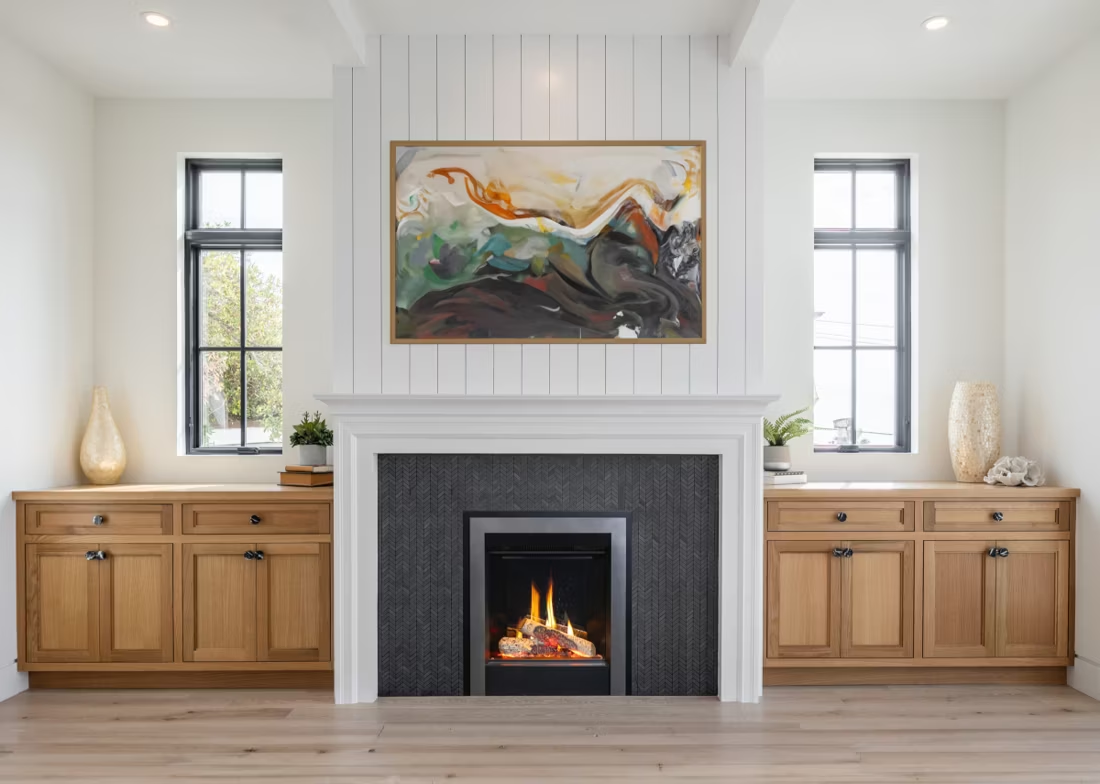
That's exactly the gap electric fireplaces fill here. With no combustion, no venting, and no air quality concerns to navigate (Columbia County has none of the winter inversion or burn-ban issues that shape wood-heat decisions elsewhere), an electric insert or built-in unit can go into a new-construction great room, replace an old wood-burning firebox in an older Harlem or Appling farmhouse, or mount flush on a wall in a Martinez condo. Georgia Power serves most of the county, with electric membership cooperatives covering some of the more rural pockets—either way, running a 1,500-watt electric fireplace for supplemental heat is a modest add to a monthly bill, especially compared to running central HVAC harder on a 25°F morning.
Three steps. No salesperson until you're ready.
Tell us about your project
Your zip code, your situation, and the fuel you're leaning toward—or let the answers point you to one.
See what's actually available
The brands dealers within 100 miles genuinely carry—real options, never a catalog mirage.
Get your dealer & Project Guide
A trusted local dealer, plus the free Project Guide & Parts List that names every component of the job.
Frequently Asked Questions
How much does an electric fireplace installation cost in Columbia County?
Plug-in electric fireplaces—freestanding units or simple wall-mounts that use a standard 120V outlet—typically run $150 to $1,200 installed, with most of that being the unit itself. Built-in or insert-style units that require a dedicated 120V or 240V circuit run higher, generally $1,500 to $4,000, once an electrician runs new wiring and a local dealer handles the surround or mantel finish work. Converting an existing wood-burning fireplace in an older Harlem or Appling home to an electric insert is usually on the lower-to-middle end of that range, since the existing firebox opening and mantel are already in place. A local dealer can give you a firm number after seeing your electrical panel and the space.
Will an electric fireplace actually keep a room warm in Columbia County?
For the way most homeowners here use them, yes. With an average winter low around 36°F and relatively few nights that drop into the 20s, a standard 1,500-watt electric fireplace (roughly 5,000 BTU) is enough to comfortably heat a bedroom, den, or open living area as supplemental zone heat, letting you turn down the central thermostat on the coldest nights. Electric fireplaces in this climate aren't typically asked to be a home's primary heat source the way a wood stove might be in a colder region—they're built for the occasional cold snap and the ambiance the rest of the year. If you want maximum heat output for those colder nights, ask your dealer about units with dual-stage heat settings rather than single-setting models.
Can I put an electric insert into my existing wood-burning fireplace?
Yes, and it's a common project for older homes in Harlem, Appling, and other longer-established parts of Columbia County that still have a wood-burning firebox built with local oak, pine, or hickory framing in mind. An electric insert slides into the existing masonry opening, uses the same mantel and surround, and typically just needs a nearby outlet or a short electrical run—no chimney liner, no venting, no annual sweep. It's one of the fastest ways to retire a fireplace that rarely gets used for an actual wood fire while keeping the look of the original opening.
Do I need a permit to install an electric fireplace in Columbia County?
It depends on the unit. A plug-in freestanding or wall-mount fireplace that uses an existing outlet generally doesn't require a permit. A built-in unit or insert that needs a new dedicated circuit does require an electrical permit, since that work falls under Columbia County's building and electrical code and should be pulled by a licensed electrician. Most local dealers either have an electrician on staff or coordinate directly with one, so the permit gets handled as part of the installation rather than becoming a separate errand for you.
What type of electric fireplace makes sense for a Columbia County home?
For most homes here, the choice comes down to how much you want the fireplace to double as heat versus pure ambiance. Wall-mount units are popular in newer Grovetown and Evans construction where an open floor plan calls for a linear, modern look without giving up floor space. Mantel and built-in units fit better in Martinez and Harlem homes with a more traditional layout, especially where an old wood-burning firebox is being converted. If you want real supplemental warmth on the county's occasional 20-degree mornings, prioritize a model with a dual heat setting rather than one built purely for the flame effect—a local dealer can walk you through which models handle both well.
Electric vs. gas—which is right for my home?
Gas fireplaces are common in Columbia County too, particularly in homes already plumbed for natural gas or set up for propane, and they can serve as a genuine backup heat source during a power outage. Electric fireplaces skip the gas line and venting entirely, which makes them a simpler retrofit in newer subdivisions where gas infrastructure isn't in place, and they're often the lower-cost and lower-hassle option when the goal is ambiance plus light supplemental heat rather than whole-room primary heating. If backup heat during outages matters to you, ask about that specifically—a standard electric fireplace won't run without power, while some gas units will.
How much does it cost to run an electric fireplace in Columbia County?
Running a typical 1,500-watt electric fireplace on the heat setting costs roughly 15 to 25 cents per hour at current Georgia Power residential rates, depending on your specific rate plan. Used a few hours an evening during the county's cooler months, that adds up to a modest monthly cost—far less than running central heat harder to compensate for a chilly room. Most homeowners here run the flame effect without heat for ambiance most of the year and only switch on the heat setting during the handful of colder weeks in December and January.
Do people still use wood-burning fireplaces in Columbia County?
Some do, mostly in older rural properties around Harlem and Appling where a wood-burning firebox has always been part of the house, and burning oak or hickory on a cold evening is more tradition than necessity. But with a fairly light overall winter heating load and no air quality restrictions requiring cleaner-burning appliances, wood heat isn't a meaningful part of how most Columbia County homes are heated today—new construction in Evans and Grovetown rarely includes a wood-burning fireplace at all. Electric and gas have largely taken over for both new builds and fireplace replacements, which is a big part of why electric options are so widely available through local dealers here.
What brands or features should I look for in an electric fireplace?
Look for brands with a track record on flame realism and heat performance—Dimplex, Napoleon, and Touchstone are widely carried by dealers in the Augusta metro area and hold up well over years of daily use. Beyond brand, the features that matter most are flame-only operation (so you can run ambiance without heat most of the year), a dual heat setting for the county's colder nights, and, for insert conversions, a trim kit sized correctly for your existing fireplace opening. A local dealer can match features to your specific room and electrical setup rather than you guessing from a spec sheet.
Can I put a TV above my fireplace?
Yes—with an asterisk. Fireplaces are hot and TVs don't like heat. Either put a mantel between them to deflect rising warmth, or choose a fireplace with heat-management technology that creates a cool zone on the wall above—the wall stays around 125 degrees, barely warm, while the room still gets full heat. If you like clean lines and don't want a mantel, heat management is the answer.
Do electric fireplaces actually produce heat?
Yes—most put out around 4,800–5,000 BTUs from a standard outlet, which comfortably warms a bedroom, office, or den as a comfort-zone heater. What they won't do is carry a whole house the way wood, gas, or pellet can. Think of electric as ambiance-first with honest supplemental heat: flames on with no heat in July, flames plus warmth in January.
What is an in-home preview and do I need one?
It's a visit where a hearth professional measures your space, confirms the model you picked actually works in your home, and walks the specs—framing, gas line, venting, finish work—before anything is ordered. Some details you just can't know until you see the house. Never make a down payment without one; it's the single most-skipped step that burns buyers.
How much should I budget for a fireplace?
For an average home—covering the fireplace, the vent pipe, and basic installation—a budget between $3,900 and $5,500 gives you a lot of options across wood, gas, and pellet. By the time you add finish work, gas line, and electrical, the average complete installation lands between $5,000 and $12,000 all-in. In a remodel or new build, a good rule is to put about 2.5% of the total project cost toward the fireplace.
Find your electric fireplace in Columbia County.
Tell us about your home and we'll match you with a trusted local dealer and send over a free Project Guide & Parts List—the exact parts and installation plan for your Columbia County electric fireplace project.
Find Your Fireplace →