
Pellet heat is rare in Clay County—but not impossible.
With only about 1,330 residents and a short, mild heating season along the Chattahoochee River, Clay County sees very little demand for pellet stoves. For the handful of homes and river cabins that want one, we connect you with a real dealer and a clear plan.
Every Project Starts From One of These Five Situations
A mild climate means most homes don't need one.
Clay County sits in climate zone 3A in southwest Georgia, along the Chattahoochee River near Fort Gaines—hot, humid summers and winters mild enough that most homes get by with a heat pump or gas furnace for the few genuinely cold stretches each year. With a population of just 1,330, it's one of Georgia's smallest and least densely populated counties, and that combination—short heating season plus small customer base—is exactly why pellet stoves have never really caught on locally the way they have in colder states. The fuel storage, hopper loading, and electrical draw of a pellet appliance are hard to justify when the furnace only runs a few weeks a year.
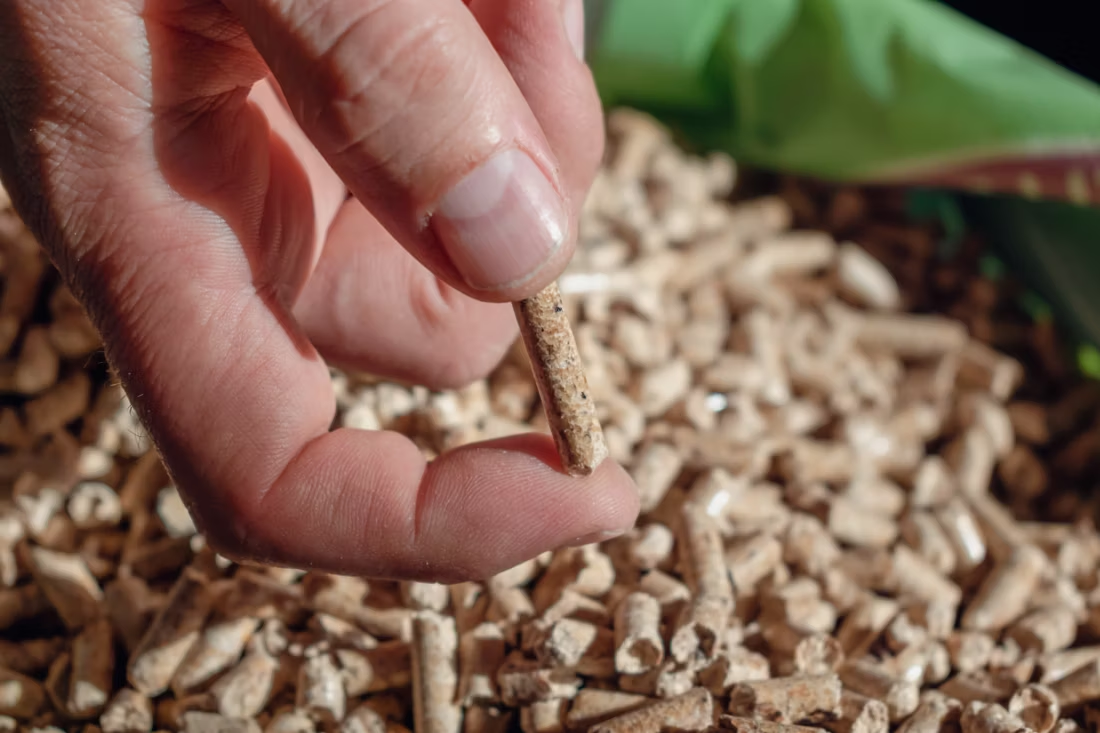
That said, pellet stoves aren't unheard of here. A small number of Clay County homeowners install one for a hunting camp or river cabin near the Chattahoochee that wants clean, thermostatically controlled supplemental heat without the daily work of feeding a woodstove—even with oak, pine, and hickory as plentiful and locally common as they are. Because there's no dedicated pellet retailer inside the county, most buyers end up working with a dealer based out of Albany, Columbus, Bainbridge, or across the state line in Dothan, Alabama. Those dealers typically stock regional brands like Lignetics, Hamer Pellet Fuel, and Greenway Renewable Energy—all of which mill Southern yellow pine, the same species growing throughout this part of Georgia, into fuel pellets.
Three steps. No salesperson until you're ready.
Tell us about your project
Your zip code, your situation, and the fuel you're leaning toward—or let the answers point you to one.
See what's actually available
The brands dealers within 100 miles genuinely carry—real options, never a catalog mirage.
Get your dealer & Project Guide
A trusted local dealer, plus the free Project Guide & Parts List that names every component of the job.
Frequently Asked Questions
Are pellet stoves actually common in Clay County?
No, not really—and we'd rather tell you that upfront than oversell the fuel. Clay County's climate zone 3A winters are mild and short, so most homes rely on a central heat pump or gas furnace and never need a dedicated wood-pellet appliance. The exceptions tend to be river cabins, hunting camps, and older farmhouses near the Chattahoochee that want a self-contained, thermostat-controlled heat source without running new ductwork. If that describes your situation, a pellet stove can still make sense—it's just a niche purchase here rather than the default choice it is in colder parts of the country.
How much does a pellet stove installation cost near Clay County?
Because there's no pellet dealer physically located inside Clay County, most installs are handled by retailers traveling in from Albany, Columbus, Bainbridge, or Dothan, Alabama, which adds a modest travel charge on top of typical statewide pricing. Expect a full installation—unit, venting, and hearth pad if needed—to run somewhere in the $3,000 to $6,000 range depending on the model and whether you need new wall penetration for the exhaust vent. Get a firm number from whichever dealer serves your part of the county; travel distance from Bainbridge versus Dothan can shift the quote.
Where can I buy wood pellets near Clay County?
There's no pellet fuel retailer based in Clay County itself, so most homeowners stock up during trips to Albany, Columbus, or Bainbridge, or pick up bags when a dealer delivers the stove. Regional brands like Lignetics, Hamer Pellet Fuel, and Greenway Renewable Energy are widely distributed across southwest Georgia and eastern Alabama and are milled from Southern yellow pine—the same species common in the timberland surrounding the Chattahoochee. Given the thin local supply chain, it's worth buying a season's worth of bags at once rather than counting on finding pellets in a pinch during a cold snap.
What size pellet stove do I need for a Clay County home?
Because winters here are short and mild, most Clay County installations are sized for supplemental heat rather than whole-home heating—a small to mid-size unit rated for 1,000 to 1,800 square feet is plenty for the handful of cold nights each winter, even in a drafty older farmhouse. If you're heating a hunting camp or river cabin that's used intermittently, an entry-level hopper capacity is usually fine since you won't be running the stove around the clock the way a homeowner in a colder climate zone would.
Will a pellet stove work as backup heat if the power goes out?
Not on its own. Pellet stoves need electricity to run the auger that feeds fuel and the blower that distributes heat, so a power outage shuts the stove down along with everything else—a real consideration in Clay County, where rural ice storms occasionally take out power for a day or more. Some homeowners pair a pellet stove with a small battery backup or generator specifically to keep the stove running through an outage. If true off-grid backup heat is your priority, a gas unit with a standing pilot is generally a more reliable choice for this area.
Pellet vs. gas—which makes more sense for my home in Clay County?
Gas is the more common and more practical choice for most Clay County homes. It lights instantly, needs no fuel storage, and many models keep working during a power outage with battery backup. Pellet stoves offer a more traditional flame appearance and burn a renewable, regionally-sourced fuel, but they require you to keep bags of pellets on hand, empty the ash pan periodically, and accept that the unit goes dark without electricity. Given how mild and short the heating season is here, gas tends to fit daily-use living spaces better, while pellet remains a more occasional choice for camps and cabins where ambiance matters as much as output.
Do I need a permit to install a pellet stove in Clay County?
Yes—new pellet stove installations require a building permit through the Clay County Building Department, and the unit needs to meet current EPA emissions standards. Because pellet installers here are typically traveling in from Albany, Columbus, or Bainbridge, most will handle the permit paperwork as part of the job rather than leaving you to coordinate it separately. It's worth confirming this is included before scheduling, since not every out-of-county installer automatically manages local permitting.
How much maintenance does a pellet stove need?
Pellet stoves need more routine attention than a gas unit but less than a wood stove chimney sweep. Plan on emptying the ash pan every few days during regular use, vacuuming the burn pot weekly, and scheduling a full inspection and hopper cleaning once a year—ideally before the short cold-weather stretch each winter. Given the limited number of pellet-certified technicians who regularly service this part of southwest Georgia, it's worth booking that annual service early rather than waiting until a cold snap is already underway.
What pellet brands are actually available to Clay County homeowners?
Dealers serving this part of southwest Georgia and eastern Alabama typically carry Lignetics, Hamer Pellet Fuel, and Greenway Renewable Energy—all regional producers that mill Southern yellow pine, abundant throughout the area, into fuel-grade pellets. Availability can shift a bit by dealer depending on which distributor they work with, so it's worth asking your installer which brand they stock consistently before you commit to a stove that requires a specific pellet diameter or blend.
Why is a fireplace insert so efficient?
An insert does two things: it seals the chimney completely, so you stop losing air you already paid to heat, and it radiates warmth into the room through the firebox and glass. Most add a heat-exchange fan that pulls cool room air underneath, wraps it around the hot firebox, and pushes it back out warm. Your home is more efficient before you've even lit the first fire.
What's the difference between an insert and a zero-clearance fireplace?
An insert is a fireplace that slides into a pre-existing wood-burning fireplace—if you don't have one, there's nothing to insert it into. A zero-clearance fireplace is built into a framed wall, which makes it the answer for remodels and new construction. Simple test: existing masonry fireplace means insert; blank or framed wall means zero-clearance.
Can I install a fireplace myself?
If you're putting a fire in your house on purpose, it's best to work with an expert. Unless you're genuinely experienced in framing, gas line, vent pipe, and the national code on clearances to combustibles, have a professional do it—and ideally the same company that sells you the fireplace, so warranty, service, and liability all live under one roof.
Can a fireplace actually lower my heating bill?
Yes—by creating a comfort zone. A furnace heats every square foot of the house just to warm the one room you're in; a gas fireplace on low burns roughly a sixth of the gas a typical furnace does. Set the furnace around 55–60 degrees as a baseline, then heat the rooms your family actually uses. Families who heat this way commonly save $20–$60 a month.
Pellet Brands Stocked Around Clay County
Manufacturers will point you to the nearest stocking dealer.
Find your pellet stove in Clay County.
Tell us a bit about your home or cabin and we'll match you with a real regional dealer, plus a free Project Guide & Parts List—the exact venting and parts your pellet stove project needs, and who locally can install it.
Find Your Fireplace →