
A gas fireplace built for Clay County's mild Georgia winters.
From Fort Gaines to the farmland along the Chattahoochee, Clay County doesn't need heat around the clock—but a gas fireplace still earns its keep on cold snaps and stormy nights. Find the right unit and connect with a trusted local dealer.
Every Project Starts From One of These Five Situations
Ambiance most nights, real heat when it matters.
Clay County sits in USDA/IECC climate zone 3A—hot, humid summers and short, mild winters where lows in the 20s show up only a handful of nights a year. With a population of roughly 1,330 spread across Fort Gaines and the farmland along Lake Walter F. George and the Chattahoochee River, there simply isn't the year-round heating demand—or the dealer density—to support much of a wood stove or pellet stove market here, despite plenty of oak, pine, and hickory on local land. Gas is a different story. It doesn't ask for daily use to earn its place.
Most of rural Clay County runs on propane rather than piped natural gas—natural gas mains are limited to a handful of Georgia's larger towns, and a county this size and this spread out typically isn't on that grid. A propane-fed direct-vent gas fireplace or insert gives you instant flip-of-a-switch warmth on the occasional 20-degree morning, adds real value to a farmhouse or a lake property near Fort Gaines, and—with the right ignition system—keeps working through the power outages that come with southwest Georgia's ice storms and summer thunderstorms. A local dealer will confirm what your home's existing propane setup can support before recommending a unit.
Three steps. No salesperson until you're ready.
Tell us about your project
Your zip code, your situation, and the fuel you're leaning toward—or let the answers point you to one.
See what's actually available
The brands dealers within 100 miles genuinely carry—real options, never a catalog mirage.
Get your dealer & Project Guide
A trusted local dealer, plus the free Project Guide & Parts List that names every component of the job.
Frequently Asked Questions
How much does a gas fireplace installation cost in Clay County?
Most gas fireplace and insert installations in a rural county like Clay run somewhere between $3,500 and $8,000, with the biggest cost drivers being whether you already have a propane tank and line in place, whether you're converting an existing masonry fireplace or building new, and how much venting work is required. Homes near Fort Gaines with an existing propane tank and a fireplace opening to convert are usually on the lower end; new construction or homes needing a fresh propane tank installation from a local supplier run higher. Because the county is small and rural, expect your quote to include a modest travel charge if the nearest certified installer is based in Bainbridge, Blakely, or another neighboring town—a local dealer will give you a firm number after an in-home visit.
Is natural gas available in Clay County, or do I need propane?
Piped natural gas service is not something most Clay County homes have access to—the county's rural layout and small population (around 1,330 residents) put it outside the natural gas distribution footprint that serves Georgia's larger towns and cities. Propane is the standard fuel here, whether you're near downtown Fort Gaines or out along the lake. Nearly every gas fireplace model on the market can be configured for propane with the correct orifice and regulator, so fuel choice isn't a limiting factor—you'll just need either an existing propane tank or a new one set by a local propane supplier before installation.
Can I convert an old wood-burning fireplace to gas?
Yes, and it's a common project in older Clay County farmhouses that still have their original masonry fireplace but see it used only occasionally. A propane insert fits into the existing firebox and vents through the same chimney with a stainless liner, which preserves the look of the original hearth while giving you push-button heat instead of the work of a wood fire. Given how few homes in the county run wood as a primary heat source in this mild zone-3A climate, this is usually a straightforward ambiance-and-backup upgrade rather than a heating overhaul—a local installer can confirm your chimney and flue are sound before running a liner.
Will my gas fireplace still work if the power goes out?
It can, and that matters in a county where the power grid runs through a rural electric distribution system that's especially exposed to downed lines during ice storms and summer thunderstorms. Gas fireplaces with intermittent pilot ignition (IPI) include a battery backup that keeps the unit lighting on demand when the grid drops—just remember to swap the batteries before storm season. Some brands, notably Valor, generate their own electricity from the pilot's thermocouple and never need batteries at all. If reliable backup heat during outages is a priority for your Fort Gaines or lakeside property, ask your local dealer specifically about the ignition system on any model you're considering.
What's the difference between a gas fireplace, insert, and stove?
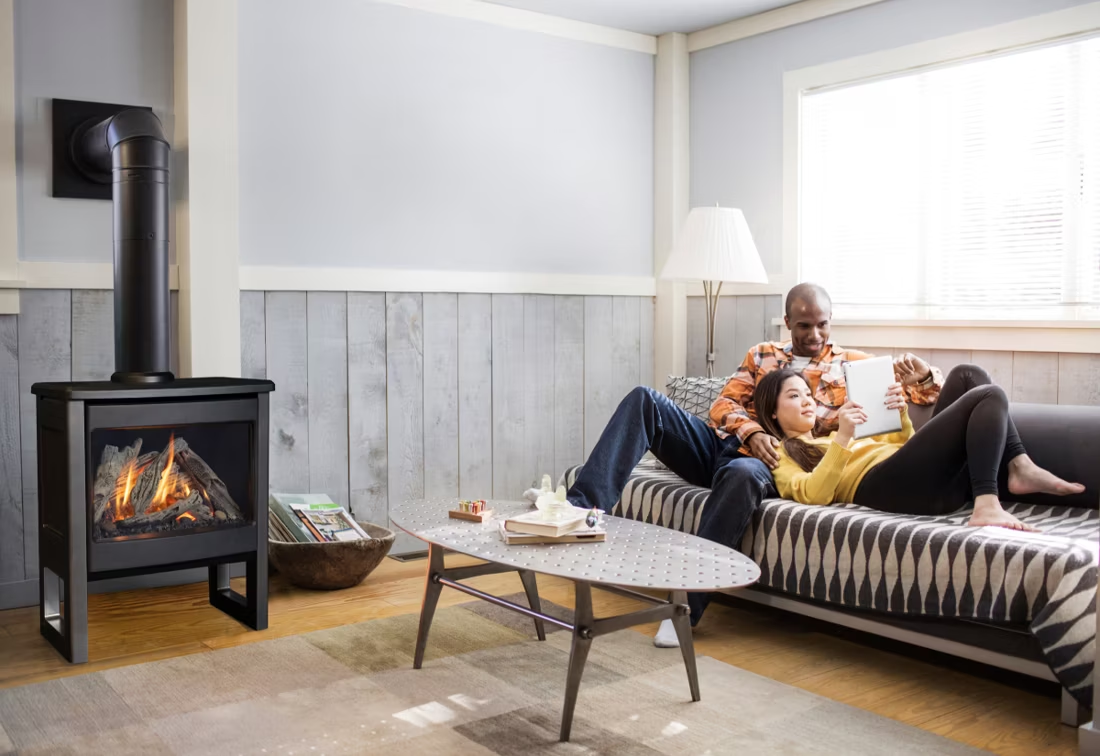
A gas fireplace is a fully built-in unit framed into a wall—the right call for new construction. A gas insert slides into an existing masonry firebox and uses the chimney as its vent, which fits the older farmhouses common throughout Clay County. A gas stove is a freestanding cabinet-style unit that sits on the floor, useful in a room without any existing fireplace. For most homeowners here upgrading an existing hearth, an insert is the simplest and most cost-effective path.
Do I need a permit to install a gas fireplace in Clay County?
Yes—new gas fireplace and insert installations require a building permit, and the propane line work requires a licensed gas-fitter, generally coordinated through the Clay County Building Department. In a county this size, permitting is handled through county administration rather than a dedicated hearth inspector, so timelines can vary—most installers factor that into their scheduling and pull the permit on your behalf so you don't have to track it down yourself.
Vented vs. vent-free gas fireplaces—which should I choose?
Vented (direct-vent) gas fireplaces draw combustion air from outside and exhaust it back outside through sealed venting—they're the cleanest and most universally recommended option, and Georgia doesn't restrict them. Vent-free units burn directly into the room without external venting; they're legal in Georgia but come with strict room-sizing and oxygen-sensor requirements, and some states (California, Colorado, Washington) prohibit them outright. For most Clay County homes, especially older farmhouses with an existing chimney to vent through, a direct-vent unit is the straightforward choice—ask your local dealer to walk through both options for your specific room.
How often does a gas fireplace need to be serviced?
Plan on an annual inspection, even for a fireplace that only runs occasionally, which is typical for gas units in a mild zone-3A county like this one. A technician checks the burner, pilot assembly, propane connections, and venting, and cleans the glass and interior. Because certified hearth technicians aren't based in every small Georgia county, your local dealer may schedule service visits seasonally for Clay County customers rather than on demand—worth asking about when you buy.
Gas fireplace vs. electric fireplace—which makes more sense here?
Given Clay County's mild winters and small population, both are reasonable choices for ambiance-first use, but they solve different problems. A propane gas fireplace produces real radiant heat, works during power outages with battery-backup ignition, and adds resale value to a rural property—worth it if you want genuine backup heat for the occasional cold snap or storm-driven outage. An electric fireplace needs no venting or gas line, installs in an afternoon, and costs far less upfront, but it depends entirely on grid power and produces less real heat—a fine fit for a room where you mainly want the look and glow. A local dealer can help you weigh the two against your specific home and budget.
Why is a fireplace insert so efficient?
An insert does two things: it seals the chimney completely, so you stop losing air you already paid to heat, and it radiates warmth into the room through the firebox and glass. Most add a heat-exchange fan that pulls cool room air underneath, wraps it around the hot firebox, and pushes it back out warm. Your home is more efficient before you've even lit the first fire.
What's the difference between an insert and a zero-clearance fireplace?
An insert is a fireplace that slides into a pre-existing wood-burning fireplace—if you don't have one, there's nothing to insert it into. A zero-clearance fireplace is built into a framed wall, which makes it the answer for remodels and new construction. Simple test: existing masonry fireplace means insert; blank or framed wall means zero-clearance.
Does a fireplace add value to my home?
On average, a fireplace adds back to the home about the same amount you spent installing it. Add the monthly savings from heating the rooms you actually use instead of the whole house—often hundreds of dollars a year—and the value case is strong before you even count what a fire does for how your family uses the room.
Should the dealer who sells my fireplace also install it?
Ideally, yes. A fireplace project involves vent pipe, gas line, electrical, and often tile or stone. Hire three or four separate trades and you own the liability and the game of telephone between them. One company selling and installing means one accountable party, start to finish—ask about factory training, on-time completion records, and what happens if an inspection fails.
Get your Clay County gas fireplace project planned right.
Tell us about your home and we'll put together a free Project Guide & Parts List—the exact parts, including the vent kit, and a recommended local dealer for your Clay County gas fireplace or insert.At the end fields ok,
Find Your Fireplace →