
Pellet Heat in Canton: A Niche Fit, Not a Mainstream One.
Cherokee County's mild winters mean pellet stoves aren't the default heating choice they'd be up north—but for the right home, they still make sense. Here's the honest picture, plus how to reach a local dealer who won't oversell you.
Every Project Starts From One of These Five Situations
Canton's winters don't ask much of a heating system.
Canton sits in the north Georgia foothills at just under 1,000 feet elevation, in climate zone 3A. Winters here are short and mild by national standards—average lows hover around 29°F, and the area logs roughly 3,400 heating degree days a year, less than half what a place like Duluth, Minnesota racks up in a typical winter. Heat pumps from Georgia Power and Amicalola Electric Membership Corp, along with gas furnaces, handle the overwhelming majority of home heating here. Few Cherokee County homes are built around a wood or pellet appliance as a heat source, and pellet stoves in particular occupy a small niche.
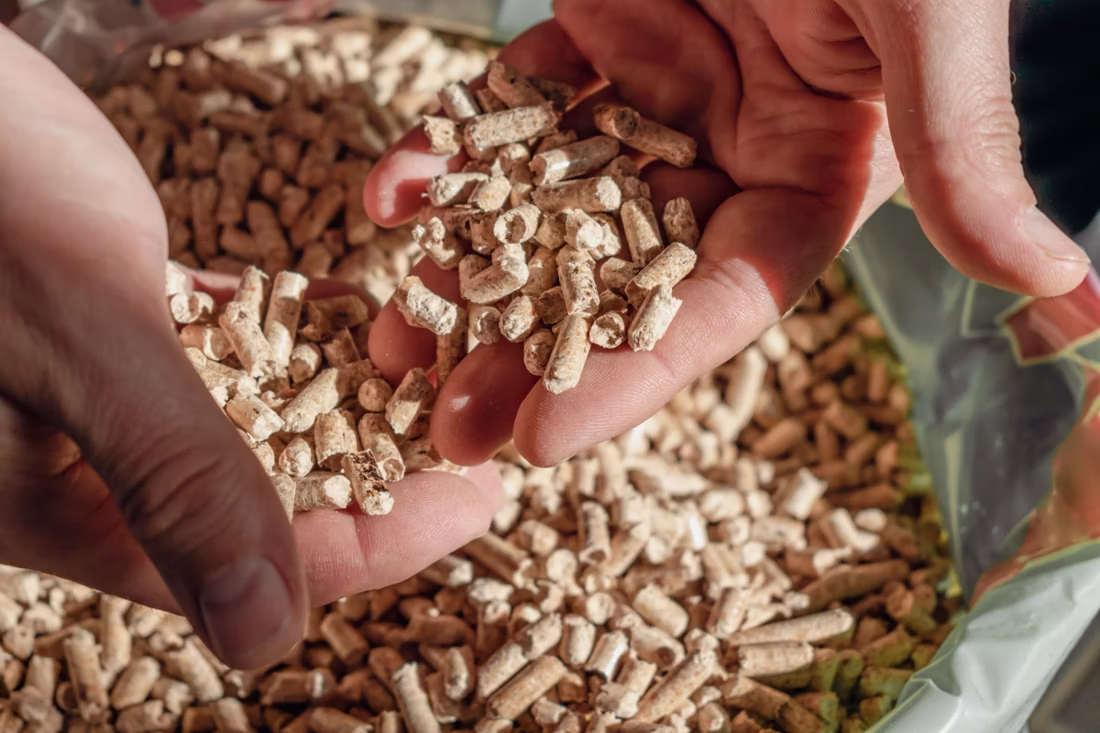
That doesn't mean a pellet stove is off the table—it means going in with clear eyes. Homeowners who choose pellet in Canton are usually after a specific thing: the look and ambiance of a real fire without hauling and stacking cordwood, a supplemental heat source for a sunroom or basement, or a solid-fuel option for a property with no gas line. Regional pellet fuel is available through brands like Lignetics, Hamer Pellet Fuel, and Greenway Renewable Energy, but dedicated pellet stove dealers are thinner on the ground this far south, so finding an installer who actually knows the appliance—not just a big-box associate—matters more here than it would in a market where every third house burns pellets all winter.
Three steps. No salesperson until you're ready.
Tell us about your project
Your zip code, your situation, and the fuel you're leaning toward—or let the answers point you to one.
See what's actually available
The brands dealers within 100 miles genuinely carry—real options, never a catalog mirage.
Get your dealer & Project Guide
A trusted local dealer, plus the free Project Guide & Parts List that names every component of the job.
Frequently Asked Questions
Are pellet stoves actually common in Canton, GA?
Not really, and it's worth saying plainly: pellet fuel use in Cherokee County is classified as not-applicable for typical home heating, not because pellet stoves don't work here, but because the climate rarely demands them. With average winter lows around 29°F and roughly 3,400 heating degree days a year, heat pumps and gas systems cover most homes' needs without a supplemental solid-fuel appliance. The homeowners who do install pellet stoves in Canton are usually drawn to the fire experience, a basement or sunroom that runs cold, or a rural property without a gas hookup—not primary heat replacement.
How much does a pellet stove installation cost in Canton?
Because pellet stoves are a smaller market here, there isn't a deep local pricing history the way there is for gas fireplace installs. As a general range, a pellet stove or insert with venting typically runs $3,000 to $6,000 installed nationally, with the low end covering a freestanding stove venting through an exterior wall and the higher end covering an insert into an existing masonry fireplace with a full liner. Get a firm quote from a local dealer before assuming either number applies to your home—with fewer installers specializing in pellet appliances around Canton, pricing can vary more than it would for a gas or electric project.
Where can I buy pellet fuel near Canton?
Regional pellet brands including Lignetics, Hamer Pellet Fuel, and Greenway Renewable Energy supply bagged hardwood and softwood pellets to the broader Georgia market, and you'll typically find them stocked seasonally at farm supply and home improvement retailers in and around Canton and Woodstock rather than through dedicated hearth shops. Because demand is lower here than in colder states, it's smart to buy a season's supply early in fall rather than assume you can restock mid-winter—some stores sell through their pellet inventory and don't reorder until the following year.
Why isn't pellet heat more popular in Canton compared to colder states?
It comes down to degree days. Canton logs about 3,408 heating degree days a year—roughly the winter workload of a mild coastal city, not a place like Fargo, North Dakota, which sees more than double that. In a climate this mild, a heat pump from Georgia Power or Amicalola EMC keeps a house comfortable through nearly the entire heating season, so there's little financial or practical incentive to add a solid-fuel appliance and its associated venting, hopper loading, and ash cleanup. Pellet stoves make the most sense where winters are long and cold enough that fuel cost and burn time actually matter—Canton's winters just aren't that long.
What kind of venting does a pellet stove need?
Pellet stoves use a smaller-diameter PL (pellet-listed) vent pipe, typically 3 or 4 inches, that can run horizontally through an exterior wall rather than requiring a full masonry chimney. That makes them genuinely easier to retrofit into a Canton home without an existing fireplace than a wood stove would be. If you're installing into an existing masonry fireplace, a pellet insert uses a liner run through the flue instead. Either way, a local installer will confirm clearances and termination location meet your jurisdiction's building code before pulling a permit.
Will a pellet stove keep my house warm during a power outage?
Not on its own—this is one of the most important honest answers to give a Canton homeowner. Pellet stoves rely on an electric auger to feed fuel and a blower to circulate heat, so they shut down when Georgia Power or Amicalola EMC service drops, which happens occasionally during summer thunderstorms and the rare winter ice event in Cherokee County. Some homeowners pair a pellet stove with a small battery backup or inverter setup to bridge a short outage, but for true off-grid emergency heat, a wood-burning appliance or a battery-backed gas unit is the more reliable choice.
What size pellet stove do I need for a Canton home?
Given how mild the heating season is here, most Canton installs are sized for supplemental heat rather than whole-house duty—a small to mid-size unit rated for 1,000 to 1,800 square feet comfortably handles a den, basement, or open living area on the coldest nights of the year. Whole-home sizing calculations that make sense in a place with a 6,000-plus heating degree day count generally overstate what's needed here. A local dealer can size the room correctly during an in-home look at your layout and insulation.
Pellet stove or gas fireplace—which makes more sense in Canton?
For most Canton homes, gas wins on practicality. Natural gas and propane service are well established across Cherokee County, gas fireplaces run on demand with no fuel storage or hopper loading, and installation costs are generally more predictable given the larger pool of local gas hearth dealers. Pellet stoves make sense for the homeowner who specifically wants a real, visible flame and the option to burn a renewable solid fuel, and who doesn't mind storing bags of pellets and loading the hopper every day or two during the (short) heating season. If convenience and simplicity are the priority, start with a gas quote; if the fire itself is the point, pellet is worth a conversation.
Where do I find a qualified pellet stove installer near Canton?
Look for NFI (National Fireplace Institute) pellet-specialist certification—it's a narrower credential than general wood or gas certification, and given how few Cherokee County homes run pellet appliances, not every hearth retailer in the Canton area carries it. It's worth calling ahead and asking directly whether pellet installation and service is something the shop does regularly, rather than occasionally. Whoever installs the unit should also coordinate the wall-vent permit through your local building department, since pellet vent terminations still need to meet clearance-to-combustibles code even though the venting itself is simpler than a masonry chimney.
Why is a fireplace insert so efficient?
An insert does two things: it seals the chimney completely, so you stop losing air you already paid to heat, and it radiates warmth into the room through the firebox and glass. Most add a heat-exchange fan that pulls cool room air underneath, wraps it around the hot firebox, and pushes it back out warm. Your home is more efficient before you've even lit the first fire.
How often does a pellet stove need cleaning?
A clean pellet stove is a happy pellet stove. Plan on cleaning the burn pot about once a week when you're burning regularly—ash and clinkers gum up the air holes just like a pellet barbecue. Most pellet stove problems trace back to skipped cleaning that nobody explained up front. Some designs make it easy with a trapdoor burn pot: pull a lever and the gunk drops into the ash pan.
How much should I budget for a fireplace?
For an average home—covering the fireplace, the vent pipe, and basic installation—a budget between $3,900 and $5,500 gives you a lot of options across wood, gas, and pellet. By the time you add finish work, gas line, and electrical, the average complete installation lands between $5,000 and $12,000 all-in. In a remodel or new build, a good rule is to put about 2.5% of the total project cost toward the fireplace.
What is an in-home preview and do I need one?
It's a visit where a hearth professional measures your space, confirms the model you picked actually works in your home, and walks the specs—framing, gas line, venting, finish work—before anything is ordered. Some details you just can't know until you see the house. Never make a down payment without one; it's the single most-skipped step that burns buyers.
Pellet Brands Stocked Around Canton
Manufacturers will point you to the nearest stocking dealer.
Find your pellet stove option in Canton.
Tell us about your home and we'll put together a free Project Guide & Parts List for your Canton pellet project—the right unit, the vent kit it needs, and a trusted local dealer who actually installs pellet appliances, not just sells them.
Find Your Fireplace →