
Warmth and ambiance without the venting hassle in Canton, GA.
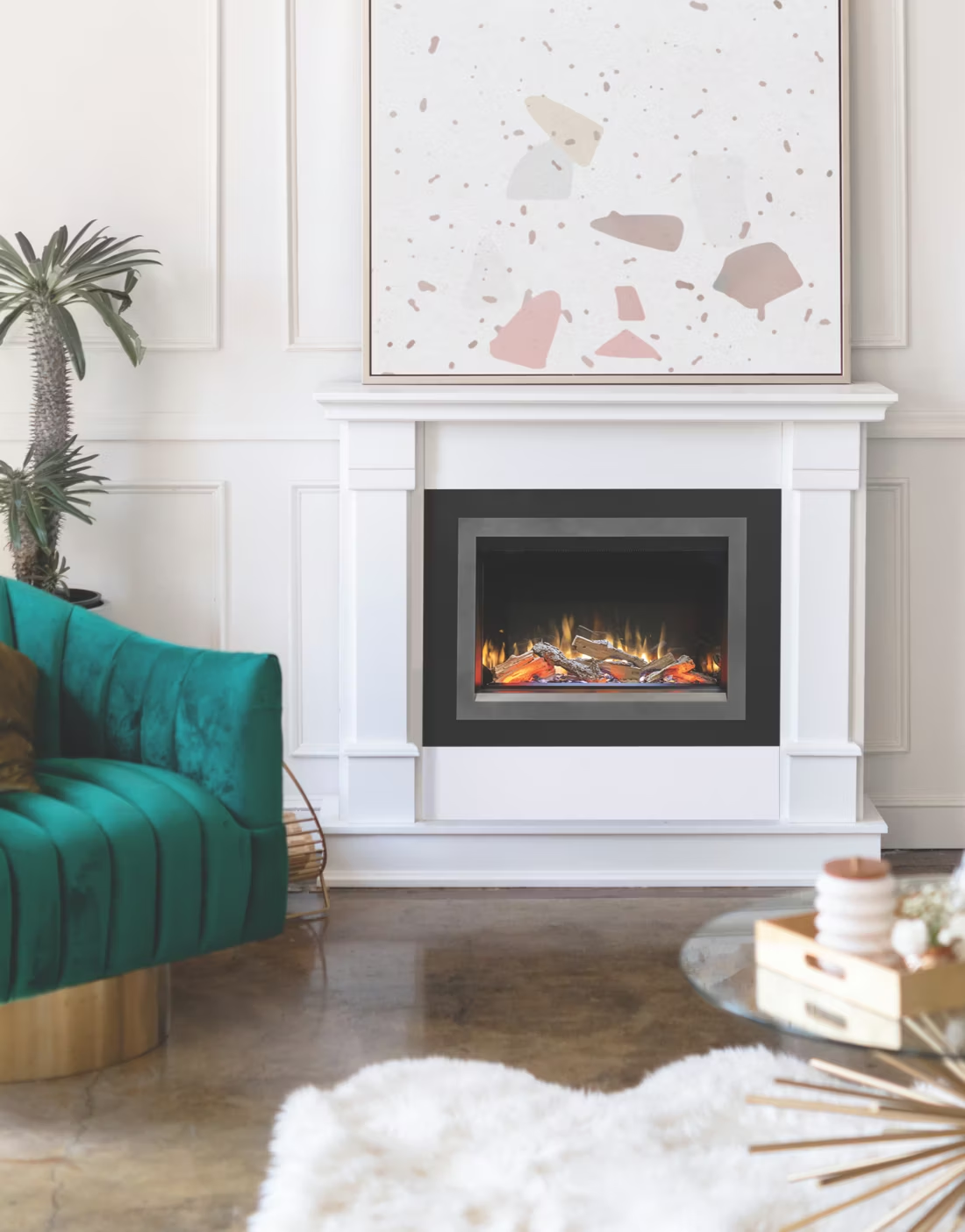
No chimney, no gas line, no waiting. Find the right electric fireplace or insert for your Canton home and connect with a trusted local dealer.
Every Project Starts From One of These Five Situations
Electric heat that fits Canton's mild winters.
Canton sits in Cherokee County at the northern edge of the Atlanta metro area, about 958 feet above sea level in climate zone 3A. Winters here are short and mild by national standards—the average winter low is 29°F, and the entire heating season adds up to a light overall heating load, a fraction of what a place like Duluth, Minnesota logs in a single winter. Central heat pumps handle the bulk of the load in most Canton homes, which is exactly the kind of climate where electric fireplaces make the most sense: not as a survival heat source, but as targeted, no-hassle warmth for the room you're actually sitting in.
Cherokee County has been one of the fastest-growing counties in the Atlanta metro for two decades, and that growth shows up in Canton's mix of new subdivisions, finished basements, and sunroom additions—spaces that often don't have a masonry chimney or a nearby gas line. An electric fireplace insert or built-in unit solves that problem without any venting, gas piping, or combustion byproducts to worry about. Power comes from Georgia Power Co. in most of the city, or Amicalola Electric Membership Corporation in parts of unincorporated Cherokee County, with residential rates running about 15.5 cents per kWh and 12.4 cents per kWh respectively—a detail worth knowing before you settle on a wattage.
Three steps. No salesperson until you're ready.
Tell us about your project
Your zip code, your situation, and the fuel you're leaning toward—or let the answers point you to one.
See what's actually available
The brands dealers within 100 miles genuinely carry—real options, never a catalog mirage.
Get your dealer & Project Guide
A trusted local dealer, plus the free Project Guide & Parts List that names every component of the job.
Frequently Asked Questions
How much does it cost to install an electric fireplace in Canton?
Cost depends heavily on the type of unit. A plug-in freestanding or tabletop electric fireplace needs no installation at all beyond finding an outlet—you're looking at $150 to $800 for the unit itself. A built-in wall insert or mantel package with custom framing, trim carpentry, and a dedicated 20-amp circuit run by an electrician typically lands between $800 and $2,500 installed. Because there's no chimney, gas line, or venting to run, electric is consistently the least expensive fireplace fuel to install in Canton—a fraction of what a gas insert or wood-burning unit costs once venting is factored in.
Will an electric fireplace actually heat my room, or is it just for looks?
Most electric fireplaces include a built-in fan-forced heater rated around 1,500 watts, which is enough to comfortably heat a single room of 300 to 400 square feet—plenty for a den, basement, or primary bedroom in a Canton home. Given the area's mild winters (average lows in the high 20s, not the sub-zero cold of somewhere like Bismarck, North Dakota), an electric fireplace works well as the primary heat source for an addition or converted space, or as zone heat to take the load off your central heat pump on the coldest nights. It won't heat an entire house, but very few electric units are designed to.
How much does it cost to run an electric fireplace in Canton?
A typical 1,500-watt electric fireplace on its heat setting draws 1.5 kWh per hour. At Georgia Power's residential rate of about 15.5 cents per kWh, that's roughly 23 cents an hour. If your home is served by Amicalola Electric Membership Corporation instead, at about 12.4 cents per kWh, it's closer to 19 cents an hour. Running the flame effect alone, without heat, draws only a few watts and costs pennies a day—most homeowners run the ambiance year-round and switch on the heater only when it's actually cold.
Do I need a permit to install an electric fireplace in Canton?
A plug-in electric fireplace that runs off an existing outlet doesn't require a permit. A built-in insert or wall unit that requires a new dedicated circuit does—that electrical work needs to be pulled through the City of Canton or Cherokee County building department, depending on your address, and inspected. Most licensed electricians and hearth dealers handle this paperwork as part of the installation, so it's rarely something homeowners have to manage themselves.
What's the difference between an electric insert, a wall-mounted unit, and a freestanding electric fireplace?
An electric insert is built to slide into an existing fireplace opening or a custom-framed cavity, giving you a built-in look. A wall-mounted (linear) unit hangs flush on the wall like a flat-screen TV, popular in newer Canton builds with contemporary interiors. A freestanding electric fireplace is a self-contained cabinet or stove-style unit you can plug in and place almost anywhere, then move if you redecorate or relocate. For a finished basement or sunroom without an existing fireplace, a wall-mounted or freestanding unit is usually the simplest option; for a home with an old, unused masonry fireplace, an insert is the cleanest way to bring it back to life.
Should I get an electric or a gas fireplace for my Canton home?
Both are common choices here. Gas—natural gas or propane—delivers a larger, more authentic-looking flame and real heat output, but it requires a gas line and venting, which adds cost and limits where it can go. Electric skips the venting entirely, costs far less to install, and can go on almost any interior wall, which matters in a lot of Canton's basement and addition projects where running a gas line isn't practical. Given how mild winters are here, electric is often the better fit for supplemental warmth and ambiance, while gas tends to win in primary living rooms where homeowners want a stronger flame and heat output. A local dealer can walk you through both side by side.
Is an electric fireplace a good fit for a finished basement or sunroom?
Yes—this is one of the most common electric fireplace projects in Cherokee County. Basements and sunroom additions often sit far from the home's existing chimney or gas meter, which makes venting a gas or wood unit expensive or impossible. An electric insert or wall-mounted unit needs only a standard or dedicated circuit, produces no combustion byproducts, and can be installed in an afternoon rather than over several days of venting and framing work.
Are electric fireplaces efficient?
Electric fireplaces convert essentially 100% of the electricity they draw into heat in the room—there's no flue losing warm air up a chimney the way there is with a masonry wood fireplace. The tradeoff is that electricity generally costs more per unit of heat than natural gas, so an electric fireplace makes the most financial sense as supplemental, targeted heat rather than as a whole-home heating strategy. In a climate like Canton's, with a fairly short heating season, that tradeoff works in electric's favor—you're not running it for months on end.
What should I look for in a local dealer for an electric fireplace installation?
For a plug-in unit, almost any retailer will do since there's no real installation involved. For a built-in insert or wall-mounted linear unit, look for a hearth dealer or electrician familiar with proper framing clearances, the unit's specific mounting bracket system, and—if it's a heater-rated model—sizing the circuit correctly. A dealer who also carries gas and gets asked to compare the two will usually give you a straighter answer about which fuel actually fits your space than a big-box store selling only one option.
Do electric fireplaces actually produce heat?
Yes—most put out around 4,800–5,000 BTUs from a standard outlet, which comfortably warms a bedroom, office, or den as a comfort-zone heater. What they won't do is carry a whole house the way wood, gas, or pellet can. Think of electric as ambiance-first with honest supplemental heat: flames on with no heat in July, flames plus warmth in January.
Can I put a TV above my fireplace?
Yes—with an asterisk. Fireplaces are hot and TVs don't like heat. Either put a mantel between them to deflect rising warmth, or choose a fireplace with heat-management technology that creates a cool zone on the wall above—the wall stays around 125 degrees, barely warm, while the room still gets full heat. If you like clean lines and don't want a mantel, heat management is the answer.
Can I install a fireplace myself?
If you're putting a fire in your house on purpose, it's best to work with an expert. Unless you're genuinely experienced in framing, gas line, vent pipe, and the national code on clearances to combustibles, have a professional do it—and ideally the same company that sells you the fireplace, so warranty, service, and liability all live under one roof.
What is an in-home preview and do I need one?
It's a visit where a hearth professional measures your space, confirms the model you picked actually works in your home, and walks the specs—framing, gas line, venting, finish work—before anything is ordered. Some details you just can't know until you see the house. Never make a down payment without one; it's the single most-skipped step that burns buyers.
Electric Service in Canton
An electric fireplace's heater draws about 1,500 watts—pennies per hour at local rates.
Georgia Power Co
Amicalola Electric Member Corp
Find your electric fireplace in Canton.
Tell us about your space and we'll match you with a trusted local dealer and a free Project Guide & Parts List—the exact parts and recommended installer for your electric fireplace project in Canton.
Find Your Fireplace →