
Steady, low-maintenance heat for Cherokee County's mild winters.
From Canton to Woodstock to Ball Ground, pellet stoves give North Georgia homeowners thermostat-like control without splitting wood or feeding a live fire all evening. Find the right unit and connect with a trusted local dealer.
Every Project Starts From One of These Five Situations
Convenient heat for a climate that doesn't demand a woodpile.
Cherokee County sits in climate zone 3A on the northern edge of metro Atlanta, with an average winter low around 29°F and a winter heating load that's just a fraction of what a place like Duluth, MN sees, and mild enough that most homes here run heat pumps as their primary system. That's exactly the scenario where pellet stoves earn their keep: a family room, basement, or sunroom in a Canton or Woodstock home gets steady, even heat during the handful of genuinely cold weeks each winter, without anyone needing to buy a chainsaw or stack cordwood along the fence line.
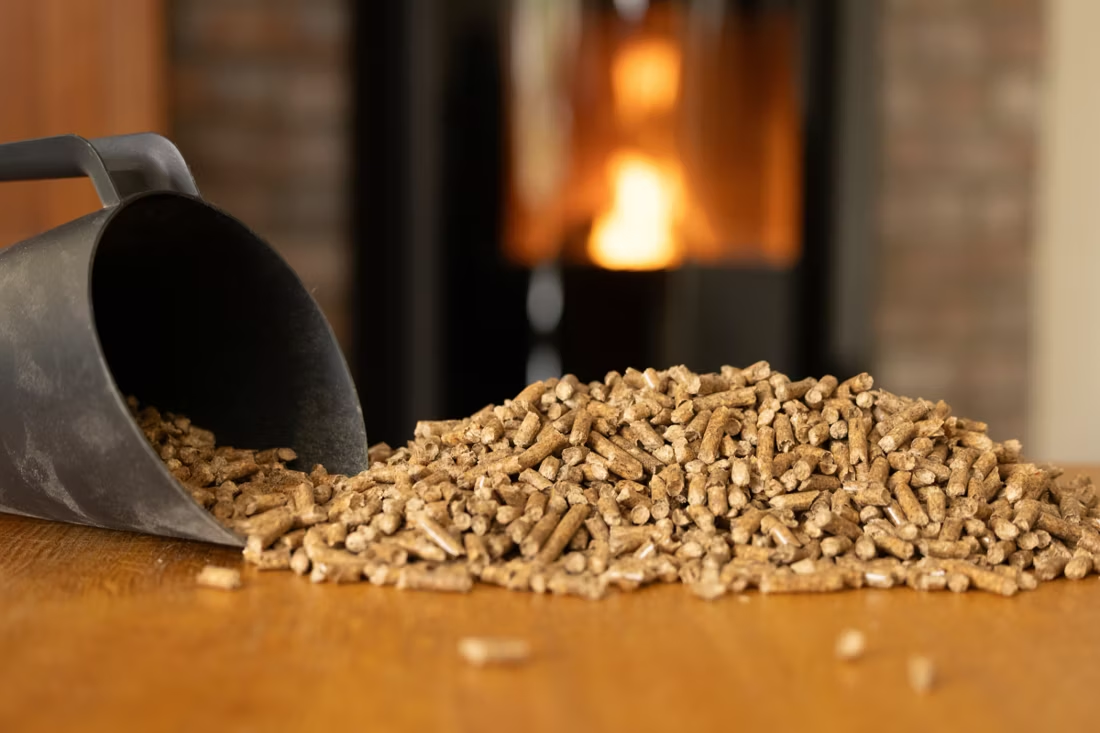
Cherokee County's oak, pine, and hickory forests feed a regional pellet supply chain rather than a firewood culture for most pellet-stove owners—brands like Lignetics, Hamer Pellet Fuel, and Greenway Renewable Energy all serve the North Georgia market, and bagged pellets are easy to find at hardware stores and farm supply outlets around Canton and Ball Ground. With no local air-quality non-attainment issues to navigate, the appeal here isn't regulatory—it's the auger-fed convenience, the even burn, and the ability to load a hopper before bed and wake up to a warm room, no damper adjustments required.
Three steps. No salesperson until you're ready.
Tell us about your project
Your zip code, your situation, and the fuel you're leaning toward—or let the answers point you to one.
See what's actually available
The brands dealers within 100 miles genuinely carry—real options, never a catalog mirage.
Get your dealer & Project Guide
A trusted local dealer, plus the free Project Guide & Parts List that names every component of the job.
Frequently Asked Questions
How much does a pellet stove installation cost in Cherokee County?
A freestanding pellet stove installation in Cherokee County typically runs $3,000 to $6,000, and a pellet insert into an existing masonry fireplace usually lands between $3,500 and $6,500. The spread depends mostly on the venting path—pellet stoves vent through an exterior wall with a simple power-vent kit, which keeps costs down compared to a full masonry chimney liner. Homes in newer Woodstock or Holly Springs subdivisions without an existing fireplace will need wall penetration and venting run from scratch, which sits toward the higher end. Local dealers will quote a firm price after seeing the room and the wall or chimney involved.
What size pellet stove do I need for my home?
Given Cherokee County's mild winters—a 29°F average low and a winter heating load that's just a fraction of colder climates—most homeowners here are heating a single zone rather than the whole house, since central heat pumps typically handle the base load. A small to medium pellet stove (rated for 1,000 to 1,800 square feet) is usually plenty for a great room, finished basement, or open living area in a Canton or Ball Ground home. If you're aiming to offset your heat pump's electric bill on the coldest nights of the year rather than just add ambiance, size up slightly and talk to a local dealer about your room's ceiling height and insulation.
Where can I find certified pellet stove installers near me?
Look for installers with NFI (National Fireplace Institute) pellet certification—it signals training specific to auger, hopper, and power-vent systems, which differ meaningfully from wood stove installs. Local hearth retailers serving Cherokee County typically cover Canton, Woodstock, Holly Springs, and the surrounding towns without a travel surcharge, though homes farther out toward Waleska or the Pickens County line may see a small trip fee. Because pellet stoves rely on electronic controls and a wall-vent kit rather than a full masonry chimney, most installs are completed in a single day once the wall location is finalized.
What's the difference between a pellet stove and a pellet insert?
A pellet stove is a freestanding unit that sits on a hearth pad and vents through a nearby exterior wall—it can go almost anywhere in a room with wall access. A pellet insert is built to slide into an existing masonry fireplace opening, using a vent kit run up through the existing chimney rather than a full stainless liner like a wood insert needs. For Cherokee County homes with an existing wood-burning fireplace that rarely gets used, an insert is often the simpler upgrade; for basements, sunrooms, or homes without a fireplace, a freestanding stove is the more common choice.
Do I need a permit to install a pellet stove in Cherokee County?
Yes—Cherokee County requires a building permit for new pellet stove and insert installations, since the work involves a wall penetration for venting and, in many cases, a dedicated electrical circuit for the unit's auger and blower. Most local dealers handle the permit application and inspection scheduling as part of the installation, so it's rarely something homeowners have to manage themselves. New pellet stoves must also meet current EPA emissions standards, which every model sold by a legitimate local retailer already satisfies.
What's the best pellet stove for Cherokee County's climate?
Because Cherokee County winters are short and mild compared to the northern half of the country, most homeowners here don't need the extended 20-plus-hour burn times that matter in places like Bozeman or Fargo—a mid-size hopper that runs 12 to 24 hours on a fill is plenty. What matters more locally is having a model with a reliable auto-ignition and thermostat control, since pellet stoves here are often used intermittently rather than run around the clock. One honest caveat: pellet stoves require electricity to run the auger, hopper feed, and blower, so during the ice storms that occasionally knock out power in North Georgia, a pellet stove goes cold unless it's paired with a battery backup or generator—worth discussing with your local dealer if backup heat is a priority.
How much maintenance does a pellet stove need?
Pellet stoves need more frequent light maintenance than wood stoves but far less heavy cleaning. Plan on emptying the ash pan every few days during regular use, wiping the glass weekly, and vacuuming the burn pot and hopper area every couple of weeks. A full professional service—checking the auger motor, exhaust blower, and gaskets—is recommended once a year, ideally before the first cold snap hits Cherokee County in late fall. Because there's no chimney creosote buildup the way there is with wood, there's no annual sweep required, which is one of the trade-offs homeowners like about pellet heat.
Where can I buy pellet fuel in Cherokee County?
Bagged pellets from regional brands like Lignetics, Hamer Pellet Fuel, and Greenway Renewable Energy are widely available at hardware stores and farm supply retailers around Canton, Woodstock, and the rest of the county, typically running in the $250 to $300 per ton range when bought by the pallet. Buying a season's supply in late summer or early fall, before demand picks up with the first cold nights, is the most common way local homeowners avoid picking through picked-over pallets in December. A ton of pellets generally covers a full winter of supplemental heating for a single-zone stove in Cherokee County's climate.
Pellet stove vs. wood stove—which is right for my home?
Wood stoves burn Cherokee County's abundant local oak, hickory, and pine, work without electricity, and offer the lowest fuel cost if you're willing to source and season your own firewood—but they require more hands-on tending and annual chimney sweeping. Pellet stoves are simpler to operate day to day, produce a cleaner and more consistent flame, and need far less maintenance, but they depend on electricity to run and go cold in a power outage, which matters given the occasional winter ice storm here. For most Cherokee County homes using the stove as supplemental zone heat in a family room or basement, pellet's convenience tends to win out; homeowners prioritizing storm-proof backup heat often lean wood instead.
Why is a fireplace insert so efficient?
An insert does two things: it seals the chimney completely, so you stop losing air you already paid to heat, and it radiates warmth into the room through the firebox and glass. Most add a heat-exchange fan that pulls cool room air underneath, wraps it around the hot firebox, and pushes it back out warm. Your home is more efficient before you've even lit the first fire.
What's the difference between an insert and a zero-clearance fireplace?
An insert is a fireplace that slides into a pre-existing wood-burning fireplace—if you don't have one, there's nothing to insert it into. A zero-clearance fireplace is built into a framed wall, which makes it the answer for remodels and new construction. Simple test: existing masonry fireplace means insert; blank or framed wall means zero-clearance.
What is an in-home preview and do I need one?
It's a visit where a hearth professional measures your space, confirms the model you picked actually works in your home, and walks the specs—framing, gas line, venting, finish work—before anything is ordered. Some details you just can't know until you see the house. Never make a down payment without one; it's the single most-skipped step that burns buyers.
Can a fireplace actually lower my heating bill?
Yes—by creating a comfort zone. A furnace heats every square foot of the house just to warm the one room you're in; a gas fireplace on low burns roughly a sixth of the gas a typical furnace does. Set the furnace around 55–60 degrees as a baseline, then heat the rooms your family actually uses. Families who heat this way commonly save $20–$60 a month.
Pellet Brands Stocked Around Cherokee County
Manufacturers will point you to the nearest stocking dealer.
Find your pellet stove in Cherokee County.
Tell us about your home and we'll match you with the right pellet stove or insert, along with a free Project Guide & Parts List and a trusted local dealer to handle the install.
Find Your Fireplace →